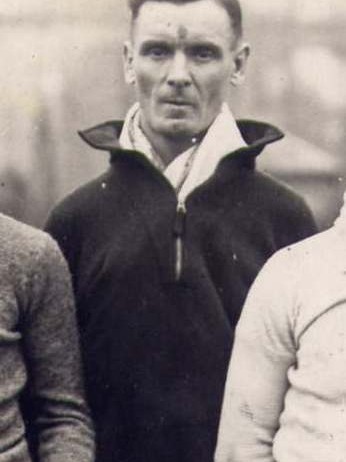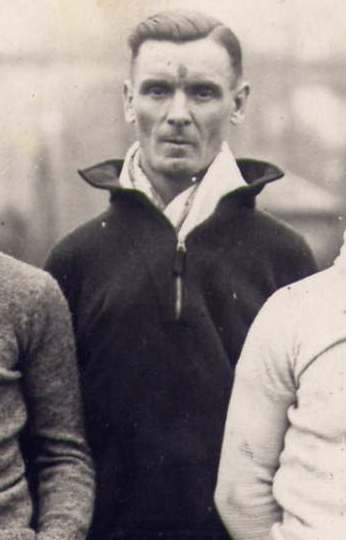
George McCrae


George McCrae

George McCrae

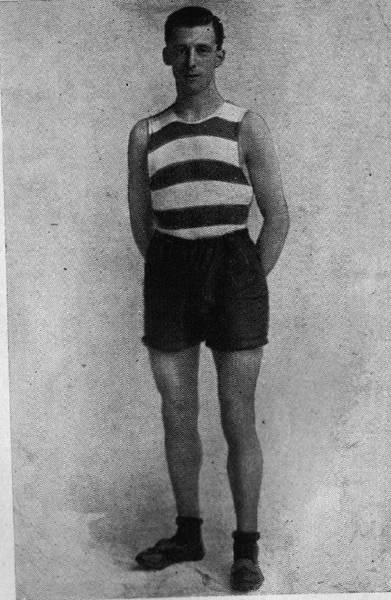
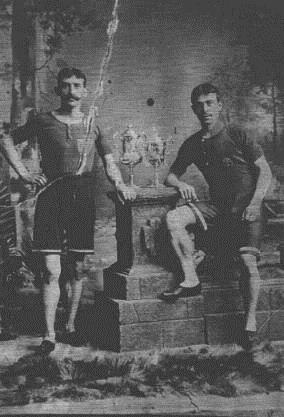
Alastair  Douglas (Victoria Park) was one of the best Scottish runners of his generation  and he got in touch about one of his relatives who was a professional runner in  the early 20th century.    His name as a ped was George McCrae.     Many, if not  all professional runners used false names right up to fairly recent times: not  as glamorous as in the 18th or 19th  centuries when they used false names and  had nicknames such as the Gateshead Clipper or Crowcatcher.  Read on until the  final paragraph where some information from Alex Wilson, a real student of the  period, in included.    Alastair continues with the story:

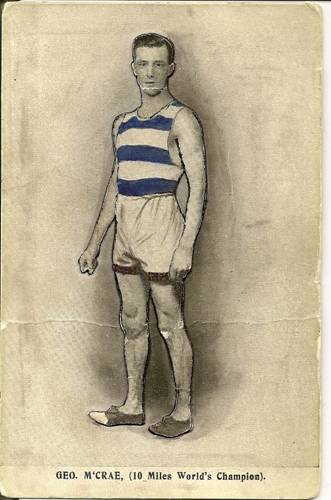
“George  McCrae was a postman from Banknock who was one of the best distance runners of  his time – he was running at the time of the First World War and the 1920’s and  he held the title of World Professional 10 Mile champion.       His real name was Gavin Sorbie and he was born in 1893.   During the war he was  working in the mines, which explained the fact that he was not overseas on war  duty.   He was a professional long distance runner, although a lot of the best  distance runners were amateur.   He used to compete in front of huge crowds  although the crowd was sometimes there for a football match.   People would  place bets on the outcome of races between these ‘pedestrians’.   He was the  first Scottish winner of the Powderhall Marathon and was champion 6 times.    Powderhall was a famous professional athletics meeting in Edinburgh and the  ‘Marathon’ was actually a 10 or 15 mile track race.   He also competed in many  handicap events (usually from scratch) and in several head-to-head encounters,  often over 10 miles, against other British or European long distance running  stars.

George McCrae 2

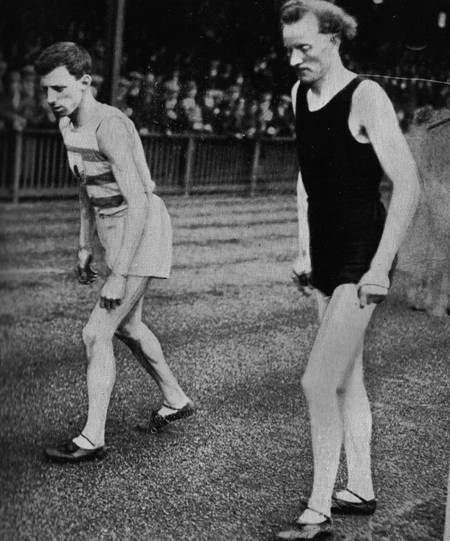
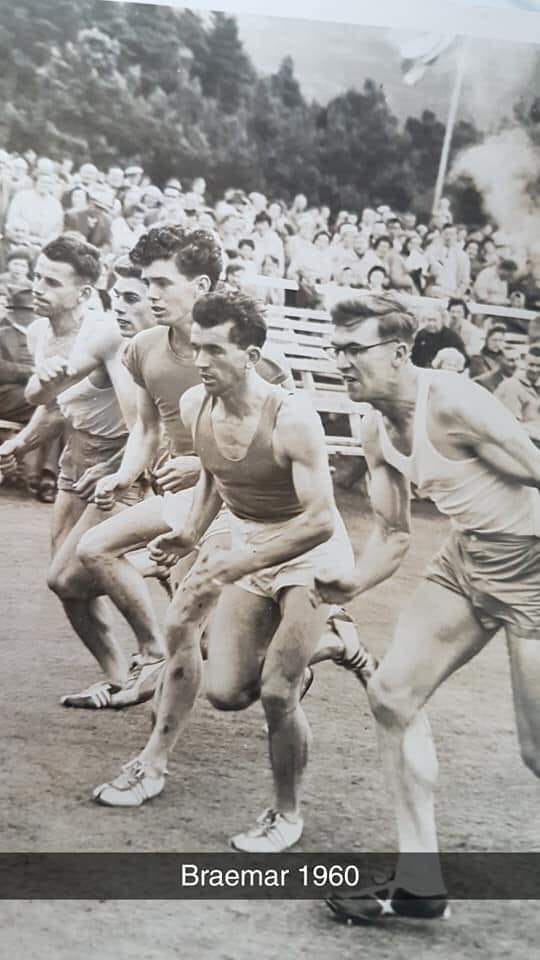
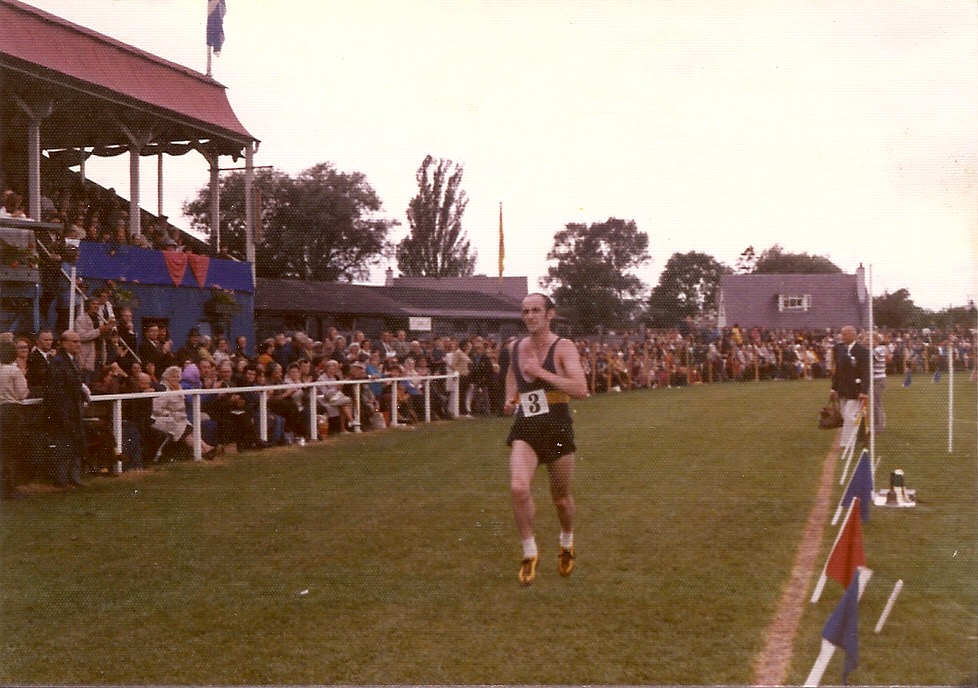
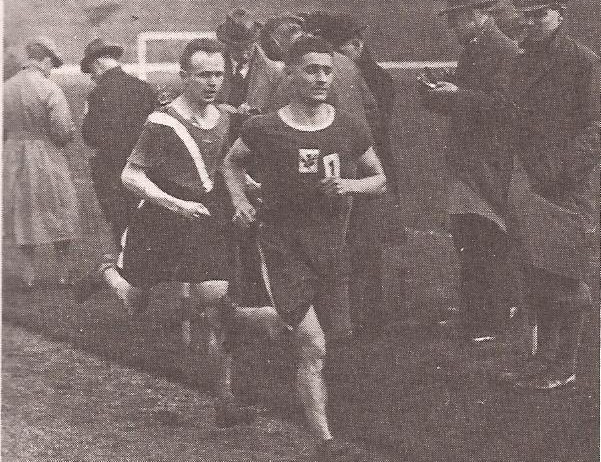
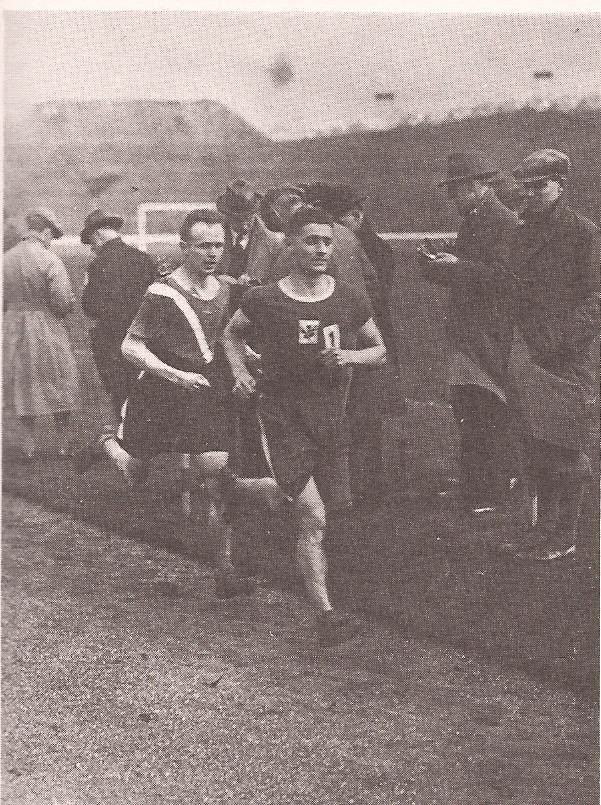
Lining up against RE Cole of  England at the start of a 10 miles championship at Powderhall Grounds on August  2nd, 1924.   McCrae won in 52:39 to retain his title of “World Professional 10  Mile Champion”.

1918 was  his best year in athletics.   That year at Powderhall he broke the world  professional 10 mile record (also breaking the 8 mile record during the same  race.)   The report on the race states that he would probably have broken the  amateur record also if the financial inducements had been worthwhile!       It  was common practice in those days to take a competition name.   Although most of  the top runners of the day were amateur it sounds as if he was probably still  one of the best distance runners in Britain, amateur or professional, at that  time.   His times are still respectable today.   He ran his last race when he  was about 30 and was forced to retire after an injury that I am sure he would  have been treated for nowadays.   Indeed he could have gone on in his 30’s to  better his times.   When he retired from athletics he became a football trainer  with Heart of Midlothian FC and eventually died in 1971.”

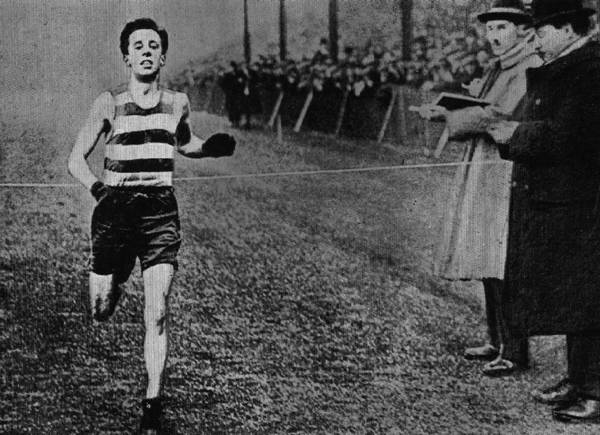
Alastair also  provided this link to a video clip which showed a brief glimpse of him winning  the Powderhall Marathon in 1923 where he led from gun to tape beating Willie  Kolehmainan of Finland (no relation to the 1912 Olympic champion) and Hans  Holmer of the USA.   His time was 1:20:30.        www.britishpathe.com/video/powderhall-marathon/query/Edinburgh

George McCrae 3

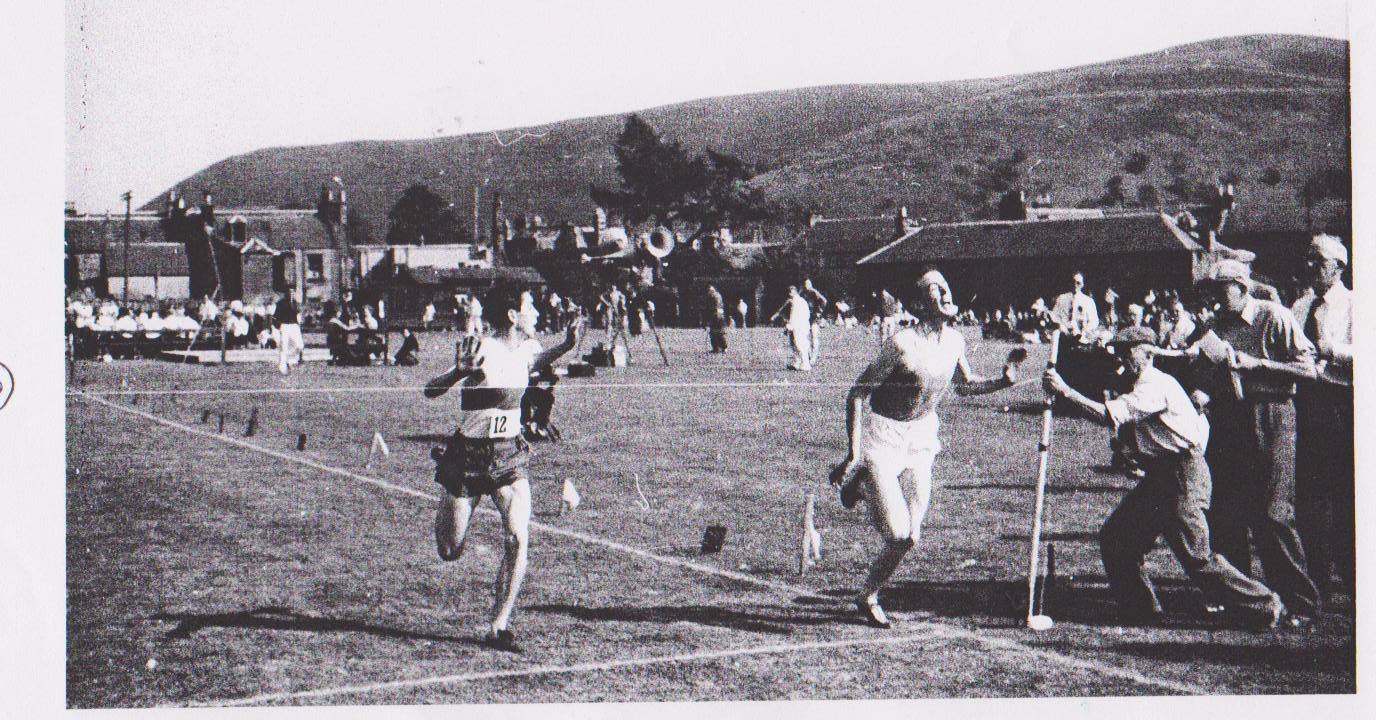
George McCrae winning at  Powderhall in 1915

There is a lot  to interest us here including the reference to the fact that in 1918, after he  set new world professional record, he could have broken the amateur record had  the reward been high enough.   ‘Peds’ went for the victory every time, after the  money of course, the contest was the thing rather than the time hence the fact  that in reports of many races no time was given.   Reading about the amateur WG  George racing the professional William Cummings from Paisley and other  professional matches, once the opposition was broken, there was no need to push  on too hard..   Alastair also mentions races where the principal attraction on  the day was a football match.   When I came in to the sport there were many  athletics sports meetings at football grounds and they almost invariably  included five a side football matches.   In the very late 20th century, Frank  Horwill of the BMC was  claiming a first for having races held at half-time in  big football matches.

Powderhall was  a purely professional meeting and was the highlight of the year for most  Scottish peds.  All the best men turned out there and to win the championship  there was a real mark of a man’s talent – George won six times!   I well  remember in the 1960’s many wanting a race between the Powderhall Champion Ricky  Dunbar and the SAAA champion WM Campbell but it was not to be – amateurs could  not race against pedestrians!   In addition professionals used to on a ‘prep’  before the meeting.   This often meant the runner going to stay with his coach  or trainer for several weeks of concentrated preparation for the race: no food  was consumed without the trainer having a spoonful first to ensure that it was  cooked properly; it was bed at the same time every night (often as early as 9:00  pm); training two or three times a day and daily massage.   It was said that a  man after such a ‘prep’ had a glow about him when he removed his sweats or  tracksuit; that he walked differently and had an air of confidence about him.    There’s no evidence that McCrae did it but it is an indication of how seriously  this meeting was taken.

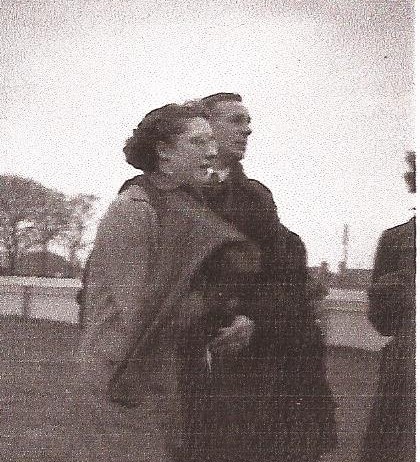
Although this  is a website dedicated to the amateur endurance athletes of Scotland, we have  already a page dedicated to Paddy  Cannon who  was also a professional although slightly before McCrae’s time and it is felt  that George McCrae is a worthy addition..  Finally, Alastair has been a VPAAC  runner all his days, and although George was running before Victoria Park were,  have a look at this picture

George McCrae 4

Alex Wilson  from Fife, currently employed in Germany, who is writing a book about this  period has this to say about George.   “The  Sorbies were a famous family of distance runners from Draffan and today Gavin,  or George McCrae, is the best known of them.   I believe that a Sorbie won the  famous Red Hose Race in the mid 1800’s but I can’t say for sure.   He was  coached by his Dad who himself had apparently been quite a useful runner in his  day.   There are a couple of pictures of him in ‘Powderhall & Pedestrianism’ .   He won the Powderhall Marathon for the first time in 1914 the distance then  being 15 miles.   The Evening News finally gave him a trophy to keep in 1919.    His 10 mile world record of 50:55, set at Powderhall in 1918 was pretty amazing  given the circumstances.   He was lucky to have been in an essential occupation  or he would have been running from bullets.   He had a great race with John  Lindsay in 1923, winning just yards from the finish.   By 1926 the writing was  on the wall and he was eclipsed among others by Allan Scally who never got  anywhere near his times but who is better known today.”    He  went on to say, “Historically  I’d put him down as the successor to William Cummings and Paddy Cannon and the  last of the truly great Scottish professional distance runners.   He had a very  light frame and ran with a pitter-patter stride, a little reminiscent of Jm  Dingwall.   You can see that on the Pathe News film that Alastair recommended.    He moved to Edinburgh and took up a coaching post with Hearts.   Within a year  of him taking up the reins, Hearts did the double against the Rangers in the  League which back then was an amazing achievement.   After George/Gavin quit  running, his Dad emigrated to Canada and took up a coaching post there.   After  the War he ran a confectioner’s and tobacconist’s shop in Tynecastle with his  son John.”


Michael Glen

The professional running scene in Scotland threw up many excellent athletes who went unrecognised despite very good performances, usually on poor tracks of variable distances.   Most of the better known ‘peds’ were sprinters such as Ricky Dunbar and George McNeill but many of the endurance runners were of a good standard – note how well Alastair Macfarlane performed when he switched codes in the late 1960’s.   One of the very best was Michael Glen from Bathgate who would have been a top class runner in any era and in any company.    I asked Alastair whether he had run against Michael and he replied:    

“Indeed I did compete against him. I first competed at the professional games in 1965 when I was 19. At that time Michael was past his best but was something of a legend. He was holder of the World Professional Mile record at 4m 7s which he did on a grass track at Keswick on August 1st 1955. During my time as a professional Michael didn’t compete very often, I suppose because of his  poor handicaps due to his reputation. He tended to run in scratch races and invitation short limit handicaps. I consider as one of my best ever races an invitation short limit mile handicap at Lauder in August 1968. I was off the back mark of 20yards and Michael was off 30. I was soon with him and we had a momentous struggle all the way to the tape as I won by a couple of yards. In July 1968 at Innerleithen, I paced Alan Simpson  to a new Scottish record when he won the British Professional Mile Championship in 4m 9.2s. I took him to just beyond the half mile and I remember that Michael was furious with me afterwards for doing it! His brothers Jimmy, Eddie and Cornelious were all useful runners also. ”   Clearly a top class athlete whose career deserves a closer look.

MICHAEL Glen was born in Bathgate in 1934 and still lives there in a street called Race Road.    He comes from a family of runners and his brothers Jimmy, Eddie and Cornelius were all useful runners too.    His running career began in 1944 when, aged 11, he won what was called a “boy’s marathon” at the Paulville Gala Day Sports at Bathgate and won a small amount of money.   That made him a professional – it’s a story that was repeated many times in Scotland during the amateur era and many very good athletes were lost to the sport as a consequence.   (Robert Reid  could have been one lost who applied and got reintsatement as an amateur)     The likes of Gus McCuaig and Alastair Macfarlane who were reinstated showed just some of the quality that was lost.

For 26 years, he competed the length of the country (but principally in the Borders and Lake District)  in many, many of races on the track and also in some of the hill races that were fairly common in the professional meetings.    He was undoubtedly the “king” of professional middle distance  running.   If we look at any of the records for the many Games he competed in, his name is studded all the way through.   eg some of his performances in the records of the Jedburgh Meeting we get first in the Mile and in the two miles in 1955, first in the same two events in 1956 (two miles in 9:25.3 on a heavy grassy track) in 1956,  won the British One Mile Championship in 1958 in 4:20.4.    It should of course be noted that the nature of the tracks and the distance round them was almost always inferior to the 440 yard cinder tracks used by the amateurs.    There were two results that emanated from his continued and high quality success.   The first was that he became well known to althletics aficionados of both codes and the second was that he was marked man as far as the handicappers were concerned and was know to have started as much as 30 yards behind the scratch mark in handicap races so that there were occasions when his Mile time was for 1790 yards!   A long Scots mile indeed.

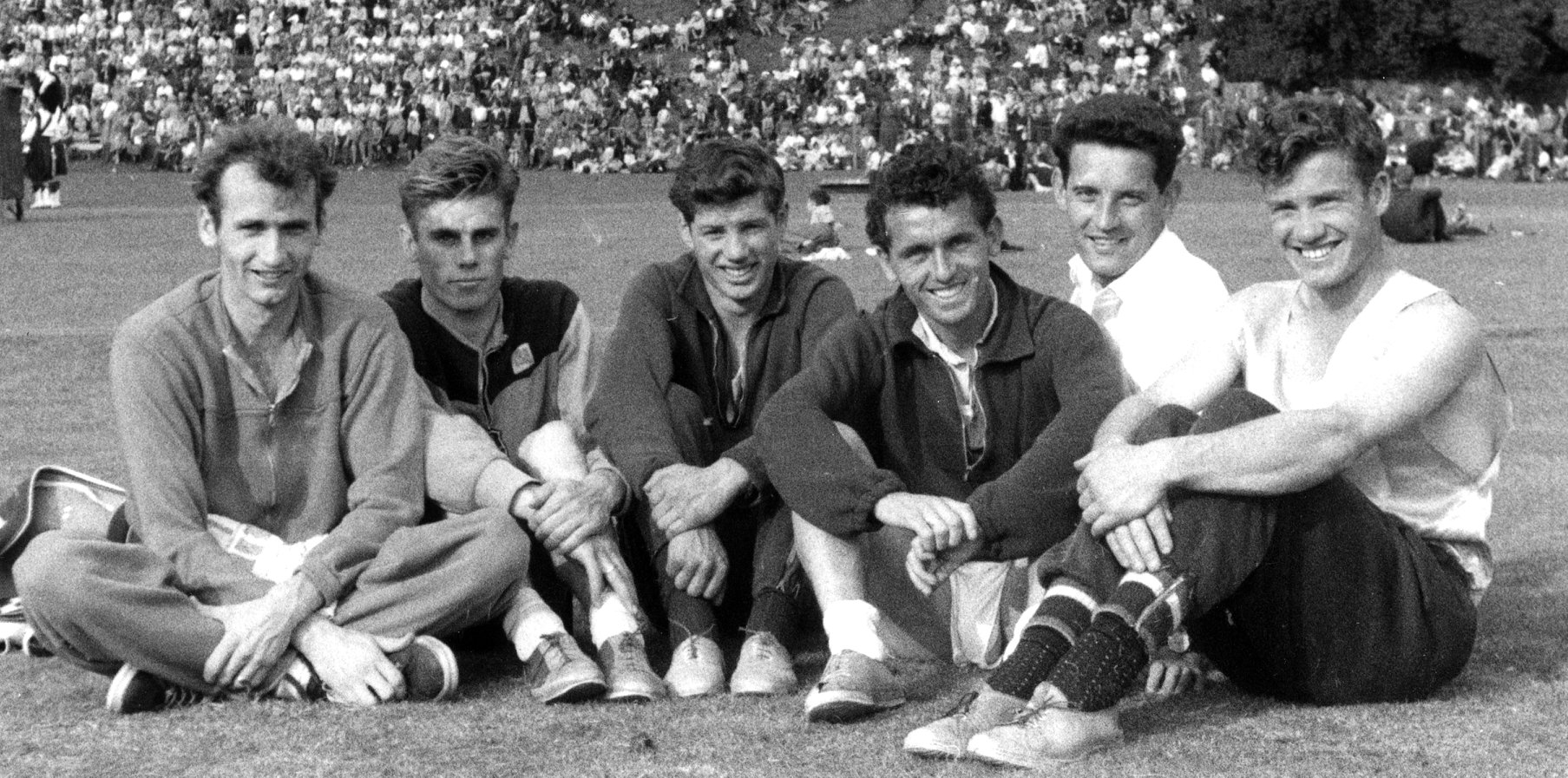
Michael is third from the right in this group

What was his best ever run?   Well, the article “Monarch of the Mile” by Jack Davidson in the “Scotsman” on 27th July, 2013 (an article worth reading in its entirety), says that  “His “day of days” was at the Keswick Games in the Lake District when he set a new world and British professional mile record on grass. That Bank Holiday meeting was a big event, part of the annual Keswick Show in Fitz Park in the town. Professional running was very  popular in the Lake District and had a long tradition. There must have been over 20.000 people there that day – a great atmosphere!

“The grass track was just laid out for that event and had a slight rise towards the finishing line. I hadn’t set out specifically to beat the record but I’d been in good form. I was the backmarker off  scratch conceding handicaps up to 250 yards to my 25 or so fellow competitors. I threaded my way through the field and crossed the line in 4min 7sec to set a new world and British record, beating the legendary Walter George’s mark of 4m 12sec set back in 1886.”

The obstacles posed by so many rivals and the deficiencies  of a rudimentary grass track surely detracted from his  performance?

“I reckon if it had been a proper track with a limited field of quality runners, including a pacemaker, I could have got the time down to about 4m 2 or 3sec.”

The top three Scotsmen in 1955 were 4:07.0, 4:07.8 and 4:13.2; in 1956 were 4:06.2, 4:07.6 and 4:08.6, in 1957 the men and their times were A Gordon (Achilles) 4:03.4, M Berisford (Sale) 4:04.8 and G Everett 4:05.3.   That was the best of the decade which ended with 1959’s top three all timed at 4:06.    Clearly not too far away.    The GB Mile championship winning times were: 1954: Roger Bannister   4:07.6;   1955:  Brian Hewson  4:05.4;   1956:  Ken Wood  4:06.8;   1957:   Brian Hewson 4:06.7;   1958: Graham Everett   4:06.4;   1959:   Ken Wood  4:08.1.    Even GB Championships were not too far away!

At about the same time, Ricky Dunbar was the top paid sprinter in the country and I remember another professional talking about the ‘preps’ tha the top runners had for major meetings, telling me that when Dunbar stripped off for a big race “he looked like Superman.”   There was a suggestion that a head-to-head be arranged between Menzies Campbell and Dunbar to determine who was Scotland’s top sprinter and both men were ‘up for it’, as they say.   The SAAA would not hear of it and that was that.   Were similar challenges on for Glen?   Whether or not there was, the answer would have been the same.   As Davidson says in the article already quoted,

“I would have loved to have run against  Bannister and in the Olympics but it was not to be. Discreet enquiries were made on my behalf after my Keswick record about me joining the amateurs, but the response was a curt “No”. You see, by then, I had been running as a professional for about 11 years.”

A local trainer, Jimmy Gibson, a friend of his dad, took him and some others under his wing and soon had them running at games across the country. As prizes were in cash, Michael and his young pals were all deemed professionals. In those days, there was a wide chasm separating the amateurs from  the professionals, with the latter being unable to compete in big international events like the Olympics.

“I never really had any personal issues with the amateurs of the time. We trained in our groups and they trained in theirs. I knew some quite well, including Graeme Everett, the top Scottish amateur miler of the time. He was a fine lad. Another top amateur I got to know was the famous Gordon Pirie, who was also a smashing guy. He turned professional not long  after the Rome Olympics and I actually ran against him – and  beat him – at Jedburgh Games in 1962. We got talking about the amateur/ pro issue and, when I told him my level of  winnings, he thought the “amateurs” did much better overall – first-class travel all over the world, all expenses paid and  “bonuses” thrown in.”

So he went on doing what he enjoyed doing – all endurance runners, whatever their background, understand the compulsion to run.   He ran in the Highland Gatherings in the North, on the Fife circuit, in some of the Midland events, at the Border Games and in the Lake District.

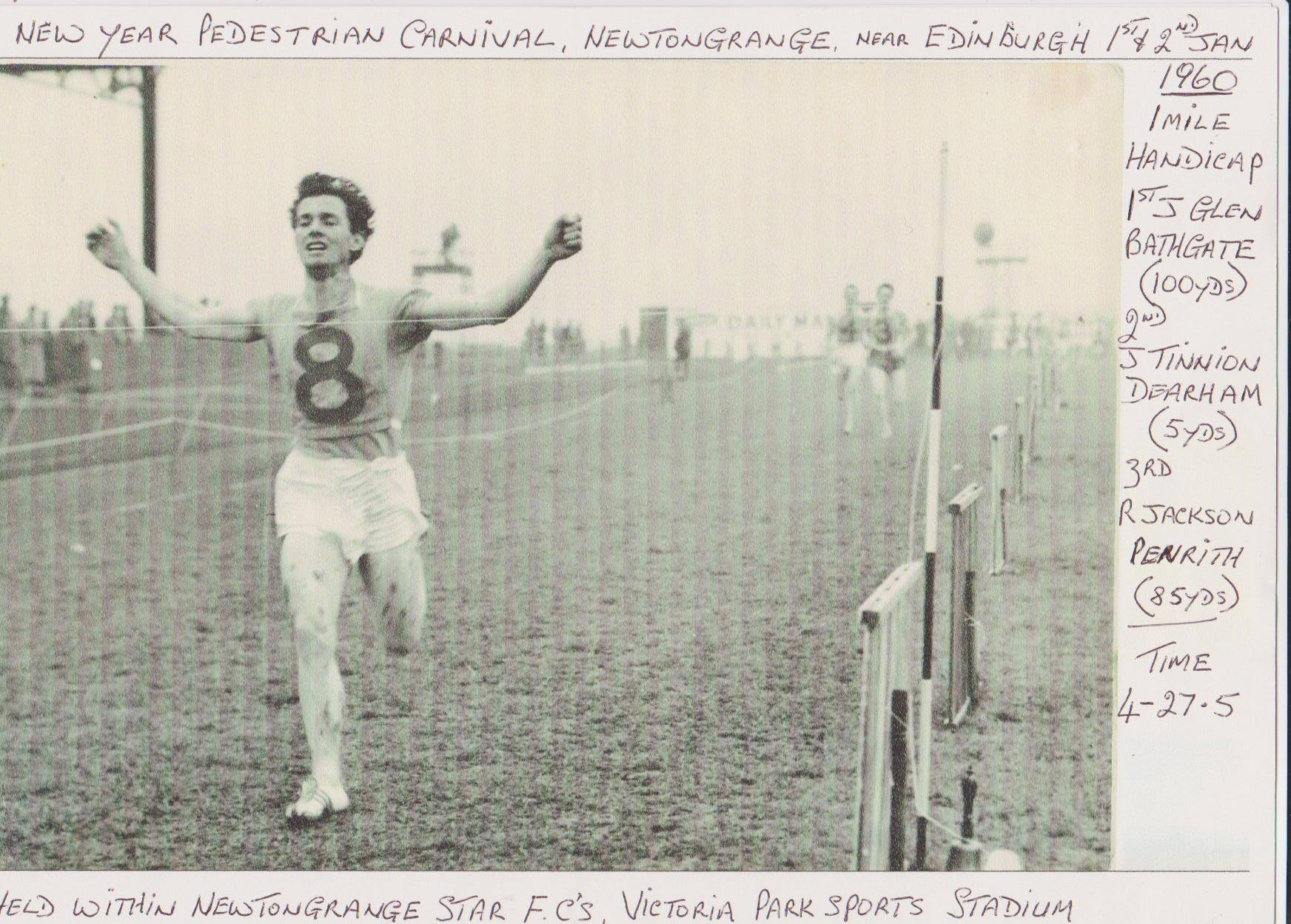
Brother John winning at Newtongrange in 1960

That was in the summer: what about the winter  when Graham Everett and company were running in the short road relays and over the country?   Another quote:

“In the winter, my main focus was on the Powderhall New Year events for which I would go on “special preparations” for six weeks at a time. In summer, on a good week, I could win up to about £60 or £70. Sometimes you’d also be paid petrol expenses and appearance money. It doesn’t sound much now, but then it was about two or three times a working man’s weekly wage. But competing and winning  were the really important things for me. I just had to be the best, that was what drove me.

“I think I got that from my dad. He’d been a miner and instilled that will to win in me. My three brothers Neil, James and Edward, and my sister Mary  were all good runners who had success at the games, but it was my will to win that made me better.”

“Special  preparations” have been mentioned already and mean nothing to anyone not versed in the professional game.   They were explained to me by a runner who had done several of them for Powderhall over the years.    His version (and they were not all identical but followed the same general principal)  lasted for two months when he went to live with his trainer.    He trained twice or even three times a day, each session followed by a massage; there was a nap in the afternoon; his  food would be specially prepared and tasted by the trainer before he was allowed to eat it; he would be in bed every night at 9:00 pm.    The end point was to get the man to the starting line as ready to produce his very best as possible.      (Any further information about the ‘preps’ would be well received)   He won Powderhall twice.


I have spoken to several sources about Michael and they all say that he worked with Bernard Gallagher, the golfer, working on fitness training.    In the late 1960’s Glen who had been self-coached formost of his career, begam a coaching career and in 1969 applied for and won a Churchill Fellowship Athletics Scholarship to travel to America to study coaching methods.  The late 1960’s and into the 1970’s was a period when professional training methods were being looked at seriously by John Anderson and then Frank Dick and former professional athletes like Jimmy Bryce were being questioned about their methods and there is no doubt that professional training techniques were employed by Allan Wells on his way to Moscow in 1980.   About the Churchill Scholarship he says, “That was a fantastic experience for three months in Los Angeles San Francisco and New York. I learned from top American coaches, including Olympic ones. Actually, at the end of my trip I was offered a coaching job in Los Angeles but family  circumstances prevented me taking it.”

In 1969, he was invited down to the Guildhall in London where he was presented with the Churchill Fellowship Gold Medal by the Queen Mother. That completed a nice double for Michael as, in 1955, he had been presented to the Queen at Braemar Highland Games.

Brother Eddie winning Innerleithen Youths Mile in 1959

Michael, at 81 years old,  had no active involvement in the sport, but still followed it closely. He was

  • Twice a winner at Powderhall,
  • winner of  countless championships and races at Highland and Border Games,
  • 14-times winner of the world’s oldest continuous foot race, the Red Hose at Carnwath, established by Royal Charter in 1508
  • and, of course, that Keswick race with his British record there still standing 58 years on.

During his career, the emphasis was on competing and winning, often as many as four track races and a hill race  the same day. As a result, times suffered. There was no opportunity to “peak” to achieve a special time in one particular race, nor were there pacemakers to facilitate that nor tracks as good as the amateurs’.

His talent waBs recognised in 2014 when Glasgow hosted the Commonwealth Games and he was asked to carry the torch on its way to Glasgow – his stretch, needless to say, was through Bathgate.   

He was undoubtedly a vey talented athlete who was the equal of most of the top middle distance men in the country and would almost certainly have been a Games competitor and track title holder as an amateur.   Michael died on 27th June 2017 at the age of 84. 


Strathallan Gathering

Bridge of Allan 1973

Willie Day winning the road race at Strathallan in the 1970’s

The Strathallan Gathering is held in Bridge of Allan on the first Sunday in August.   It is a meeting with a long and noble history and was a professional meeting until well into the twentieth century when it joined the amateur ranks.   It is now back in the professional fold.

As an amateur athlete running in the 1960’s and 70’s, there were not that many Highland Games that I was able to run in if I were to retain my amateur status.   The Strathallan Gathering was one though and it was always a great day out.   The meeting, on a dedicated Games Field, with a wonderful stand (now sadly gone), before a very good crowd with genuine personalities as Chieftain and with a fair in the adjacent field and pony trotting after the Games had ended, was a real experience.    I still go most years as a spectator but gone are the fireside rugs, cake stands and casserole sets as prizes and money prizes are good.   As well as being easy for the Committee to organise and hand out, they are often most welcome to the athletes.   Their permanent trophies for the various events are a good reminder of who has won what – they even have specific trophies for the younger age groups such as the Bastable Trophy for Under 17’s .    The following historical appreciation is from the meeting programme.

*

The Strathallan meeting in its present form has held a central place in traditional Scottish sport for 150 years.  Before that its origin can be found in the sports gatherings of ordinary country folk when the Lairds met to play at, “Tilting at the ring” under a charter granted by James I in 1453.  A link to the old Wappenschaws, (a kind of medieval “Home Guard” when every grown man had to show his weapons in good order), is tenuous, but what is certain is that by the early 19th century competitive sports were taking place here on a regular basis.   William Litt of Cumbria wrote in 1823 of “The famous old school of wrestlers in Strathallan, Stirlingshire”.

There is no record of when The Country Archery and Rifle Club was founded but it was probably about 1825 and it also held sports competitions at its meetings.  Their competitions became the Strathallan Highland Games and were organised by JA Henderson of Westerton from at least 1848 until 1858 when he died.   Major General Sir James Alexander, K.C.B., became Laird of Westerton in 1863 and reorganised the games which have been held annually ever since then with the exception of the duration of the two World Wars.

Strathallan’s committee has a unique claim to fame, it is intimately connected with the birth of the modern cult of Body-building.  In 1888 it was responsible for organising the Highland Gathering at the Glasgow International Exhibition and in 1889 at the Paris International Exhibition.  When the Strathallan Committee and the highland games stars they had brought to Paris for the Exhibition arrived, they found to their surprise that the world’s first Body-building competition was about to be held.  The competition was to be a team competition and had already attracted an entry of 300 strongmen, but nothing daunted, the Scots led by the famous wrestler Jimmy Esson of Aberdeen, entered and won.  Sadly Jimmy Esson died of his wounds in A German Prisoner of War camp in 1916.

In 1999 the meeting reverted to its roots.  Until 1956 it was a traditional games with money prizes, then from 1957 till 1998 it affiliated to the amateur sports organisations.  A new era demands a new start and in 1999, the year of the first Scottish Parliament for almost 300 years, we once again affiliated to the Scottish Games Association to continue to promote for the benefit of the coming generations, the old traditional Scottish sports, dances and music.

There have been many changes to the programme.   For example at the urging of the Scottish Marathon Club in the 1950’s, it introduced a 20 miles road race that took runners along through Bridge of Allan straight out towards Alloa and over the hill at Sauchie to Tillicoultry, along the Hillfoots villages of Alva and Menstrie to Blairlogie, down to the main road again and back to the Games Park.  Because of the low number of entries, the race was cut first to a half marathon, then to a 10K and finally it was dropped altogether.   The Games always had novelty events which were very popular – parachute drops, police dog handlers giving a display, and so on.   The programme is a varied one with field events not found everywhere such as the long jump, at times the triple jump too.   Trophies are keenly fought for – eg the aforementioned Bastable Trophy for the Best Youth of the meeting for performances across all the events for U17’s.   For many years there were only two events for this group – the 100 yards and the half mile – but there are now several more available, and all with good prize money.

It is a popular and well attended meeting with lots of stands displaying and selling local produce such as fruit, cheese alongside hand made jewellery and craft stands.

Highland Games

Al Cowal

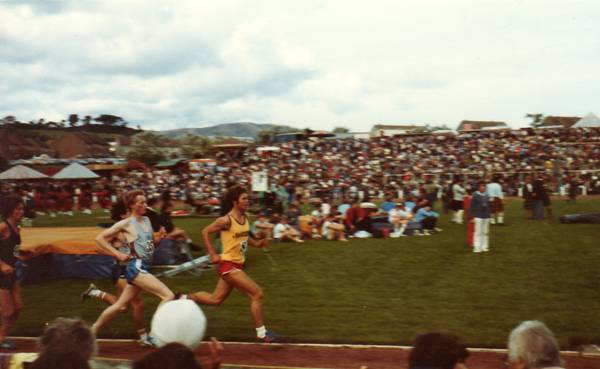
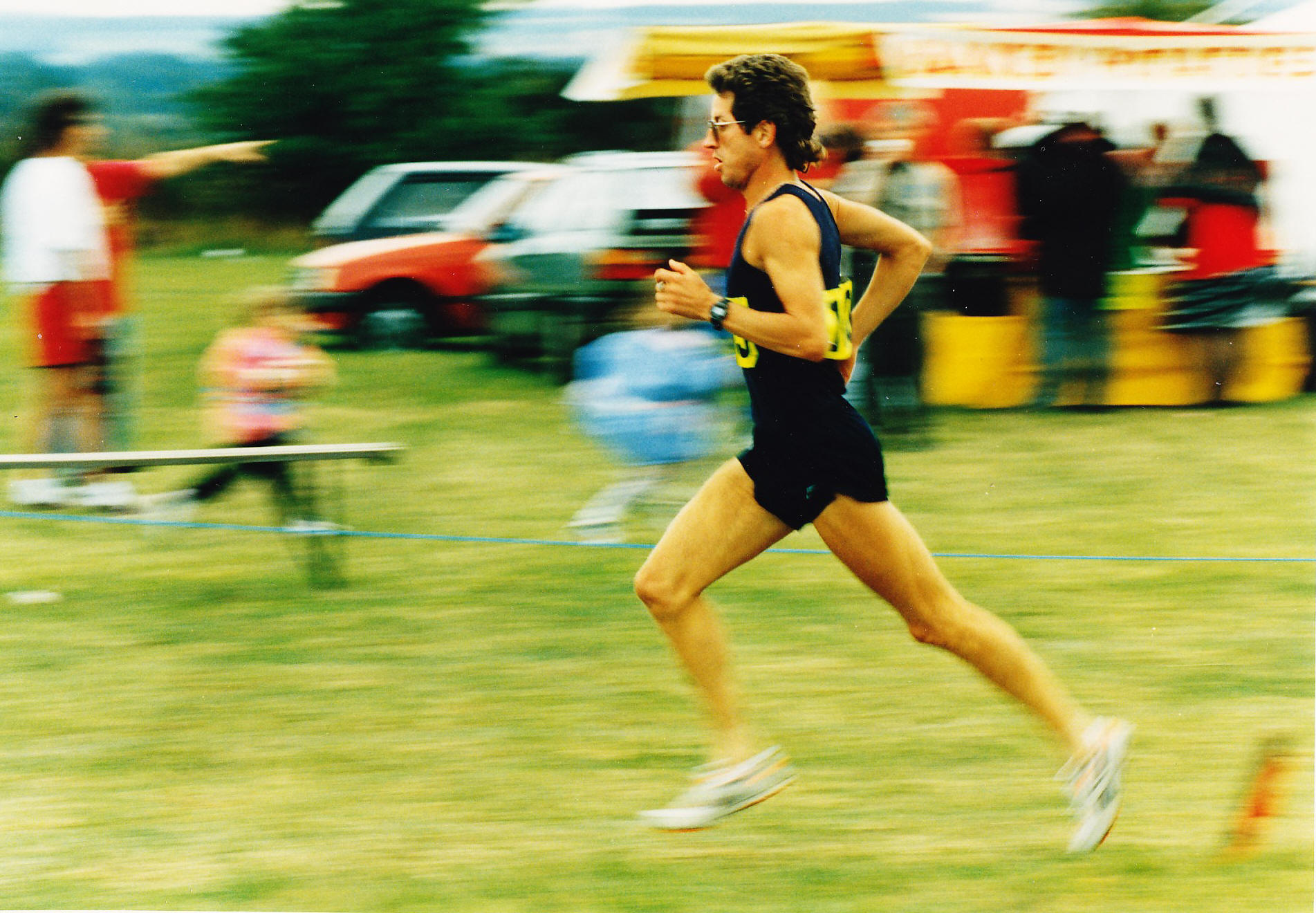
Alastair Douglas (in yellow) running before the crowds at Cowal

The Highland Games and various Gatherings around Scotland are a large part of the Scottish athletics tradition, including as they do all areas of athletics excellence.    Almost all of the top athletes in the country have at one time or another taken part in such an event and in fact the Edinburgh Highland Games of the post-war years featured many of the very best athletes from around the world.    Before the Commonwealth Games in 1970 and 1986 in Edinburgh, many of the foreign athletes had a go at some of the highland games before or after the Commonwealth Games.   The difficulties that arose when the amateur era began in the 1880’s and the governing body would not countenance any amateur competing for money.    This led to many an anomaly and many an injustice (see the profile of Robert Reid ).    Menzies Campbell was asked to race Ricky Dunbar who was the top ped of the time when they were both in their prime but the authorities would not wear that one either.   Not all Games were professional though, many altering to embrace the amateur code and some like Strathallan have been professional, then amateur and are now basically open and offering good prize money.   We are now in what is more or less a post-amateur athletics scene and it may be that eventually all athletics will be local but that’s a much bigger debate.   As an introduction to the subject Shane Fenton has contributed the following piece as an introduction to the Highland Gatherings.   The picture is of Graham Crawford racing in the 2 miles race at Blairgowrie.

Graham at Blairgowrie

Games in the Highlands of Scotland

It is reported in numerous books and Highland games programs, that King Malcolm Canmore, in the 11th century, summoned contestants to a foot race to the summit of Craig Choinnich (overlooking Braemar). Some have seen in this alleged event the origin of today’s modern Highland games[2].

Following the repeal of the Act of Proscription, various Highland Societies, beginning in the 1780s, began to organize around attempts to retain or revive Highland traditions. It was these early efforts that eventually led to the Highland Games as we know them today.

This modern revival of the Highland games received an enormous boost with the visit of King George IV to Scotland in 1822, although events were held in the years just prior to that. In 1819, for example, the St. Fillans Society organized a full scale Highland games with piping, dancing, and athletics and the Northern Meeting Society’s Highland Games – the forerunner of The City of Inverness Highland Games – was first held in 1822.

In the 1840s, in Braemar, Games began as a fund raising effort by local artisans to support a “Friendly Society” and their charitable activities. Soon thereafter, Queen Victoria who, together with her consort Prince Albert, had made Balmoral Castle their special retreat, began to patronize the Games. The Queen first attended the Braemar Games in 1848 and the following year, they were moved to the grounds of the Castle itself. Later, in 1868, the first in a series of “Highland Memoirs” excerpted from Victoria’s Journals, would be published.

Together with the earlier 1822 event, Queen Victoria’s patronage of the Games constituted one of the most significant factors in the popularization of the Games and what some have called the Highlandification of Scotland.

Among better-known games in Scotland are the ones held at Braemar, Inverness, Cowal, Lonach, Ballater and Aboyne. The Aboyne games have been running since 1867 without a break apart from the two world wars.

In the latter part of the 19th century, the Highland games played a role in the development of the Olympic movement. As part of his efforts to organize the first games, Baron Pierre de Coubertin visited a number of athletic competitions in order to determine which sports should be included in the Olympic Games, to standardize rules, and to examine the technical aspects of running such a competition. Among the events he visited for this purpose were a Highland Games event organized in conjunction with the Paris Exhibition of 1889. That event, in addition to what we today would call track and field events, also contained wrestling, tug-of-war, cycling, as well as competition in piping and dancing.

Events

Heavy Events

In their original form many centuries ago, Highland games gatherings centered around athletic and sports competitions. Though other activities were always a part of the festivities, many today still consider that Highand athletics are what the games are all about – in short, that the athletics are the Games, and all the other activities are just entertainment. Regardless, it remains true today that the athletic competitions are at least an integral part of the events and one – the caber toss – has come to almost symbolize the Highland games.

Although quite a range of events can be a part of the Highland athletics competition, a few have become standard.

  • Caber toss: a long tapered wooden pole or log is stood upright and hoisted by the competitor who balances it vertically holding the smaller end in his hands. Then the competitor runs forward attempting to toss it in such a way that it turns end over end with first, the upper (larger) end striking the ground and then the smaller end, originally held by the athlete, following through and in turn striking the ground in the 12 o’clock position measured relative to the direction of the run. If successful, the athlete is said to have turned the caber. Cabers vary greatly in length and weight, both factors increasing the difficulty of a successful toss. Competitors are judged on how closely their throws approximate the ideal 12 o’clock toss.
  • Stone put: this event is similar to the modern-day shot put as seen in the Olympic Games. However, instead of a steel ball, a large stone, of variable weight, is used. There are also some differences from the Olympic shot put in allowable techniques. The Highland games stone put exists in two versions. One version, called the “Braemar stone”, uses a 20 to 26 pound stone for the men (13 to 18 pounds for women). It is a standing put in which no run up to the toeboard or “trig” is allowed. The other version, called the “Open Stone”, uses a 16 to 22 pound stone for the men (8 to 12 pounds for women). The athlete is allowed to use any throwing style, including a spin, provided that the stone is delivered with one hand.
  • Scottish hammer throw: this event is similar to the hammer throw as seen in modern-day track and field competitions, though with some differences. In the Scottish event, a round metal ball (weighing 16 or 22 lbs for the men or 12 or 16 lbs for women) is attached to the end of a shaft about 4 feet in length and made out of wood, bamboo, rattan, or plastic. With the feet in a fixed position, the hammer is whirled about one’s head and thrown for distance over either the right or left shoulder. If conditions and event rules permit, hammer throwers may use special equipment consisting of flat blades attached to the footwear which are used to dig into the turf to maintain their balance and resist the centrifugal forces of the implement as it is whirled about the head. This substantially increases the distance attainable in the throw.
  • Weight throw, also known as the weight for distance event. There are actually two separate events, one using a light (28 lb for men, or 14 lb for women) and the other a heavy (56 lb for men, 42 lb for masters men, and 28 lb for women) weight. The weights are made of metal and have a handle either directly attached to the weight or attached to the weight by means of a chain. The implement is thrown using one hand only, but otherwise using any technique. Usually a spinning technique is employed. The longest throw wins.
  • Weight over the bar, also know as weight for height. The athletes attempt to toss a 56 pound weight with an attached handle over a horizontal bar using only one hand.
  • Sheaf toss: A bundle of straw (the sheaf) weighing 20 pounds (9 kg) for the men and 10 pounds (4.5 kg) for the women and wrapped in a burlap bag is tossed vertically with a pitchfork over a raised bar much like that used in pole vaulting.

In the 19th century, the athletic competitions at Highland games events resembled more closely a track and field meet of modern times. Some of the games preserve this tradition by holding competitions is these events. This could include, in addition to standard track and field events, a tug-of-war, kilted mile run and other foot races, shinty (a game somewhat like field hockey and dating back to the 18th century or earlier), and the stone carry.

Many of the Heavy Events competitors in Scottish highland athletics are former high school and college track and field athletes who find the Scottish games are a good way to continue their competitive careers.


Jim Morton

Molly Morton

Jim Morton with Molly Wilmoth

Jim Morton was a Springburn Harrier all his life – first as a runner, then as a good committee member – who represented his club at national level in both SAAA and SCCU.   I knew him as a genial and insightful member of the SAAA General and West District Committees in the late 1970’s and a finer committee man I never met.   Colin Youngson who was a member of several Scottish groups who trained at Cleland with Jim’s teams said, “ everyone found him to be motivating, efficient, supportive, cheerful, pleasant and very easily the best and most popular of all the top officials/team managers”   He is almost certainly remembered by those of mine and succeeding generations as an administrator and official, he was a very good runner too and we will begin this profile by looking at his career as a runner.

Jim really arrived on the Scottish distance running scene in the Midlands Championships of 1939.   Colin Shields describes the event for us: “There were three ex-Novice champions in the Midland Championships at Pollokshaws – R Simpson (Motherwell), WG Black (Plebeian) and D Fyfe (Springburn) – but there was a surprise winner in James Morton of Springburn who was later to become Union President.   Morton defeated D Fyfe by seven seconds when winning Springburn’s club championship a week earlier.   Running with fine judgment and plenty of spirit he finished with a fine sustained challenge over the final half-mile to win the 7 mile race by 7 seconds from WG Black.   Morton had, to that date spread his talents equally between hockey and running but this win encouraged him to concentrate on cross-country with many rewarding events both competitively and administratively  resulting from his choice of cross-country as his main sporting interest.”    

He had in fact been third in the National Novice championship in 1937 behind R Reid and AT Peters in 1937.   Click on the date for a report on that race.   He continued to run regularly for his club although like many of his generation the War probably deprived him of what would have been the best years of his running career.   His next notable run over the country was in the Midlands Championships of the 1950-51 season when he was eighth and third counter for the second-placed Springburn team.   The eight-man Edinburgh to Glasgow Relay was started up in 1930 and Jim ran in it a total of six times between 1938 and 1952.   His performances are summarised in the table below.

Jim’s Six Edinburgh to Glasgow Relays

Year Stage Position Team Place

1938

4

7th to 6th

5th

1939

4

10th to 9th

9th

April 1949

6

6th to 6th

7th

1950

4

9th to 7th

5th

1951

3

6th to 4th

3rd

1952

4

12th to 13th

12th

His career as an official and administrator overlapped with the end of his running career and developed quickly at National level.   He was always an athletes’ man   I remember on one occasion at a West District Committee of the SAAA Committee Meeting, when it was asked to have an exact timetable for the various events, the secretary of the time said it was difficult to do because the officials needed a break in the middle of the afternoon because they couldn’t be expected to stand as timekeepers or judges otherwise.   If they could hurry the events along early in the meeting, then they could have a break.   The vote was a close-run thing and the status quo (ie no timetable) was maintained.    Administrators such as Jim (along with others like Colin Shields , Eddie Taylor and  Alex Naylor ) always stood up for the athletes.   Another example of this is the SAAA post-mortem on the team at another Commonwealth Games.   Another highly respected official was waxing eloquent on the shameful behaviour of some male athletes spending time with female athletes (who were accommodated on a different floor) and what they might have been getting up to.    The speaker was on the left end of the top table, Jim was at the right end of the table.   He looked directly along the table and said in a good-natured way, “Come off it, X, you know that the officials were all at it as well.    If you’re going to criticise the athletes, then let’s be fair and bring out all the names.”   Am effective contribution.

There are often times when competitors complain about ‘officials’ when their complaints should be directed to the administrators – Jim served in both capacities and no athlete or coach that I knew of ever complained about either.    His efficiency as an all-round track official and more than capable referee ensured that he was the sole track referee appointed for the 1970 Commonwealth Games.

Bob Club Gp 62

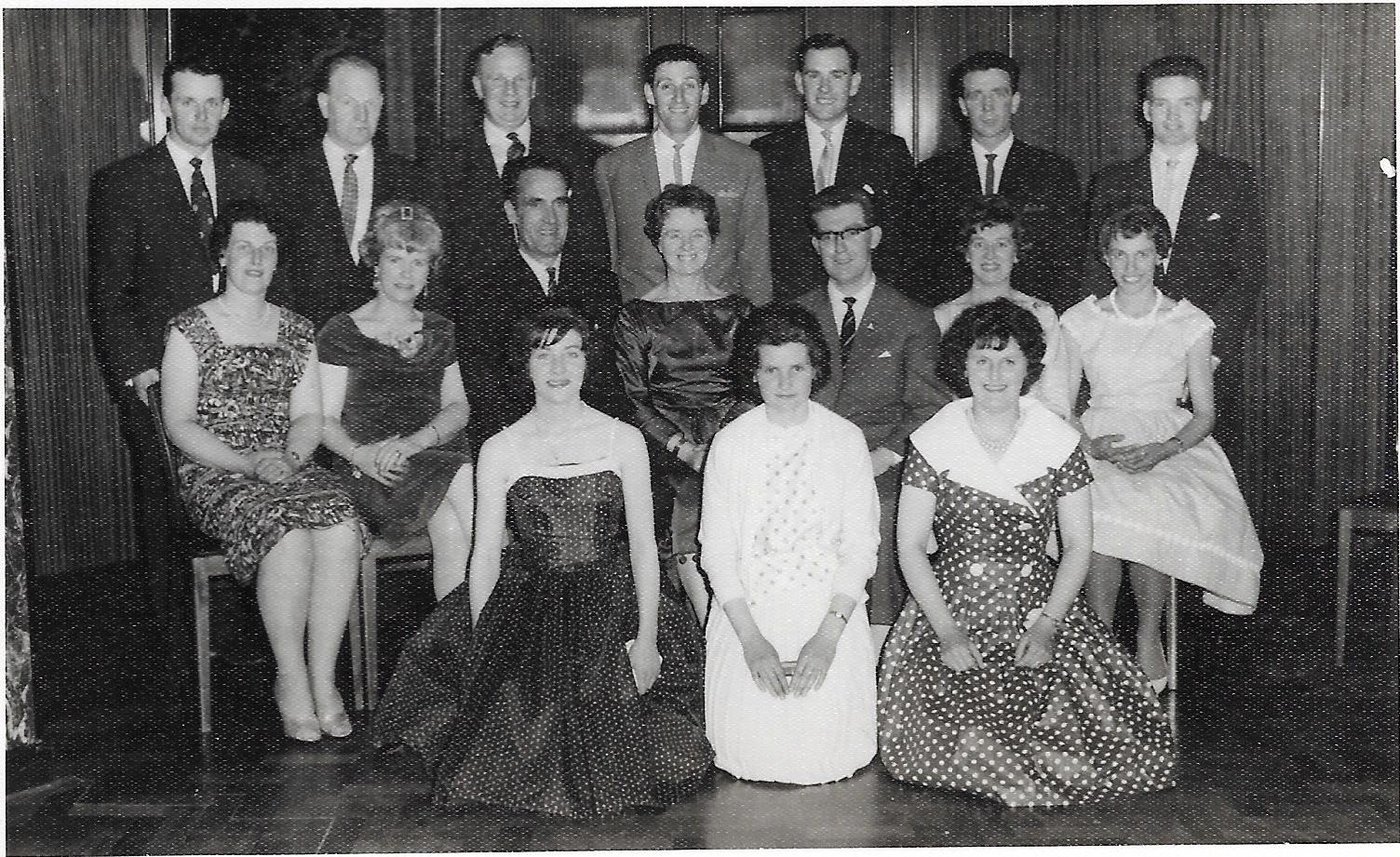
Jim Morton, third from left in the back row at a Springburn Harriers dinner in 1962

Colin Shields tells us that Morton had been, along with his son Forbes, an Assistant Secretary of the SAAA and was a top-class track referee – occupying this position at the 1970 Commonwealth Games at Meadowbank Stadium.   He delighted in telling the story of the 10000m race on the opening day of the Games, won by Lachie Stewart in record time from Ron Clarke of Australia and Dick Taylor of England.   Such was the downpour of rain throughout the race that the recorders lap scoring sheets were soaked and reduced to mushy pulp.   It was only after Morton took them home, and dried them carefully in his gas oven, that they could be deciphered to determine the finishing order of runners after the first three medallists and discover the intermediate lap times of all the runners in the race.”

Jimwas also involved in officials’ education and is quoted as saying to some intending timekeepers that they needed concentration, good eyesight, keenness and a strong bladder because you were out there for the duration of the meeting.

He was Scottish cross-country international team manager from 1968 to 1979 and it was during this time that Scottish middle and long distance running reached a peak never since attained.    Runners such as Jim Alder, Lachie Stewart, Ian McCafferty, Ian Stewart, Jim Brown, Ron McDonald, Fergus Murray and many others were to represent their country in the world championships.    Teams under Jim’s control performed well as can be seen from the statistics below.

Record as Scottish Cross-Country Team Manager: 1968 – 1979

1968:   Tunis:   Team 4th.  First Scot:  Ian McCafferty 10th

1969:   Clydebank:   Team 5th.   First Scot:   Ian McCafferty 3rd

1970:   Vichy, France: Team 5th.   First Scot: Lachie Stewart 12th

1971:   San Sebastian: Team 9th.  First Scot 7th

1972:   Cambridge:   Team 4th.  First Scot

1973:  Waregem, Belgium:   Team 8th.   First Scot   N Morrison 13th,   NB:  Jim Brown 1st Junior

1974:   Monza, Italy: Team 7th.   First Scot Jim Brown 4th

1975:   Rabat, Morocco:   Team  6th (of 23)   First Scot Ian Stewart 1st

1976:   Chepstow, Wales:   Team 10th   First Scot  Jim Brown 24th

1977:   Dusseldorf:   Team 10th.   First Scot Allister Hutton 14th

1978:   Glasgow:   Team 9th.   First Scot Nat Muir 7th

Performed well certainly, with some outstanding individual performances too, but over the piece there was  a feeling of disappointment.    In 1968 new manager Morton made his intentions clear with a very professional approach to the team competition.   Colin Shields tells us that The preparations for thr ICCU International Championships at Tunis were the most methodical and carefully organised that the Union had ever carried out.   Monthly training sessions were carried out under the supervision of team manager Jim Morton at Cleland Estate, Motherwell, where a mock-up course, shaped like the one the runners would encounter at Tunis was available for practice.   Arrangements were so precise that, on the day of travel, a training run was arranged for the team at a sports ground near London Airport to alleviate a two hour delay between planes.   The careful preparations were fully rewarded when the Scottish team returned their best performance in 32 years by finishing a close-up fourth of thirteen competing countries.   The Scots were not to the ore at the start and the first five counters were scattered up to fortieth position at half distance.   In the final three miles of the race the Scots improved greatly, and Ian McCafferty who had achieved two individual wins in Belgium during a severely restricted competitive season, again showed his great ability when he charged through the field to gain seven places to be the first Scot home in tenth place.   His achievement was matched by 35 year old team captain Andrew Brown who after placing 48th in 1966 and 43rd in 1967, drove the team nwards while pushing himself into the first 20 finishers.   From a team score of 172 points at half distance the Scots gained an average of six places per man for a final total of 137 points, just eight points behind Spain who gained the bronze medals with 129 points.”

Fifth in Clydebank a year later, they could have been among the medals but there were under-performances from some athletes who were normally reliable and a fifth place in the event won by Gaston Roelants, and in which Mohammed Gammoudi dropped out less than a year after winning two medals in the Olympics in Mexico, was a disappointment.    Ian McCafferty had a first class race to finish third with Lachie Stewart twentieth and Fergus Murray twenty third.   Even ‘Athletics Weekly’ considered the team capable of medals.   Ian Stewart was third but several established stars failed to reproduce their best form and the country was fourth.   Jim was quoted at the time as saying, “This should have been Scotland’s year.   It can only be called a bloody disaster.  When the established men let you down, and can give no explanation afterwards, then there’s something far wrong.   It’s time for a major rethink on the Senior men’s team.”  

Jim was the man in the hot seat in 1973 when the IAAF decided that the event became a true world championship with its first race at Waregem, Belgium n 1973.   The team was 8th

His and Scotland’s hopes were really high in 1978 – his last year in the post and a race in Glasgow.  Unfortunately all did not go smoothly for the team.   Let Colin describe the event.   “His high hopes were quashed when Ian Stewart who had finished second in the English National Championships, caught ‘flu and had to drop out of Scotland’s team, joining Rees Ward who had earlier withdrawn due to injury.   On race day the weather deteriorated badly and appalling conditions of rain, hail and sleet were blown by strong winds horizontally into the faces of runners and spectators.   Twenty year old Nat Muir, judged too young to compete in the Senior  National race was selected for the World Championship Senior team.   He started slowly in the race and worked his way through from mid Twenties to fourth at one point before slipping back to finish seventh.   The team finished ninth of twenty teams.”  

Jim had done a good thorough job during his years and the Scots team had some results that were the best since the thirties with individual victories in both Senior and Junior races as well as silver and bronze medals and the team with two fifths and a fourth did not do badly.   Jim had worked so hard over the period that he really deserved at least one set of team medals.  He had been a runner and he remained a runners’ man.

Frank Stevenson

FLS 2

Frank Stevenson following Suttie Smith in the 10 miles championship of 1930

Frank Stevenson was one of the best runners in the country in the late 1920’s and early 1930s and he went on competing for his club (Monkland Harriers) when he was well past his best right up to the start of the Second World War.   The Coatbridge club was comparatively strong at the time with Intenational vests being won by to more of his colleagues at the time.   He was good on the track with gold, silver and bronze medals in the SAAA Championships defeating such good runners as J Suttie Smith, Dunky Wright and many others; he won silver and bronze in the Scottish Cross-Country Championships and even led the Scottish team home in the International Championships in 1927; and although it probably came too late for him, he ran in three Edinburgh to Glasgow Relays turning in the fastest time on his stage in 1930 and having two third fastest runs.    Nor did he just hang up his spikes when he had, as Emmet Farrell said in a different context, ‘shed his silk’ – he ran right up to 1939 in the national finishing twice in the 40’s and twice in the 60’s.    He sounds like a ‘runner’s runner’ to me!

He first appears in the prize lists on 18th April, 1925 when at Celtic Park he was third in the SAAA Ten Miles championship behind Dunky Wright and John Mitchell.   The ‘Glasgow Herald’ reported as follows: “The 10 Miles championship was an interesting race.   Twenty two out of an entry of twenty nine faced the starter.   Soon it was observed that the race would resolve itself into a tussle between D McL Wright (Shettleston), James Mitchell (Mauchline) and F Stevenson (Monkland), a comparatively new recruit to distance running.   Wright and Mitchell eventually got clear of the field and despite repeated efforts on the part of Wright to shake off Mitchell, the latter refused to be dropped  on the way.   At the bell, Wright piled on the pace and still Mitchell clung on.   Coming into the straight the latter was unable to withstand the final burst and Wright ran home a winner by nearly 10 yards in the time of 54 mins 2 3-5th secs.    F Stevenson (Monkland), W Plant (Monkland), A Pettigrew (Greenock Glenpark), ME Anderson (Shettleston), W Stewart (Paisley Harriers) and D Mussell (Aberdeen University) succeeded in getting inside standard time.”    This bronze was the first of seven consecutive medals that he would win in the event.

On 6th Match 1926 he ran in the National Championships where he finished third and Colin Shields describes the race: “After a long absence the 1926 National championship returned to Hamilton Park Racecourse where a flooding River Clyde prevented the use of the grassland between the river and Hamilton Palace with the result that the race distance did not exceed 9 miles.   The rapidly improving James Micthell, now running for Kilmarnock H, had just finished 10 yards behind Dunky Wright in the previous summer’s 10 miles track race, quickly went into the lead.   At half distance Mitchell had Wright (Caledonia AC) on his heels, with Frank Stevenson (Monkland) and WH Calderwood (Maryhill) a fair distance behind.   Over the final two miles, Mitchell powered clear from the defending champion  to win from right by 14 seconds, with Stevenson winning the Junior title in third position. ”   The run gained Stevenson his first international cap with the race being run in Brussels and he was 16th finisher and the team was third.  

In 1926 the Ten Miles track championship was again held at Celtic Park and this time he gained another bronze medal, this time behind Dunky Wright and D Quinn.   “At the start champion D McL Wright was content to maintain a forward position without actually assuming the lead.   For the first three miles F Stevenson made the pace, but when another half-mile had been covered, Wright forged ahead and thereafter the issue was never in doubt.  At the tape the margin in favour of the title holder was but a few yards short of a quarter of a mile.   Wright’s time last year was quicker by some 16 seconds but on that occasion he was chased all the way by James Mitchell, Kilmarnock Harriers, whereas on Saturday he did not have to exert himself unduly.   Mitchell who last month deprived Wright of his Scottish cross-country title, was an absentee owing to a foot injury sustained after the international in Brussels three weeks ago.    Result:   1.   D Wright   54:25; 2.   D Quinn, Garscube Harriers,   55:48.6; 3.   F Stevenson, Monkland Harriers,   56:13.4′  4.   J S Smith, Dundee Thistle Harriers,  56:43.2.   The foregoing were the only competitors to complete the distance within the standard time of 57 minutes”.   On 26th June he had a good run in the SAAA Four Miles where he finished behind WH Calderwood but turned the tables on Dunky Wright who was third.   Wright had run in he AAA marathon just two weeks before had probably not helped his cause.

In the 1927 National held  at Redford Barracks in Edinburgh on 6th March, he was second.   “Three times National Champion Wright led from 6 miles followed by Frank Stevenson and West District champion CH Johnston.   On the final lap he opened up a 50 yard gap over Stevenson to win in 60 minutes 23 seconds – the slow time reflecting the heavy going over the tough country which slowed him to one of the slowest winning times over 10 miles since the race was inaugurated,  ”    was how Shields reported on the event.    He goes on to report on the international race “The International Championship was held at Caerleon Racecourse in Newport and, as so often was the case at this Welsh venue, the weather was appalling.   Frank Stevenson had the best run of his career when finishing fourth, just beaten by two seconds in the finishing sprint for third place with H Gallet (France).    With the rest of the Scottish team performing without merit Scotland took third place behind France and England in the five nation competition.” Stevenson’s  team mate WC Plant (fourth in the 1925 SAAA 10 miles championship) was also selected for the Scottish team and finished forty second.

Later that year, on 16th April at Celtic Park, he turned out in the SAAA 10 Miles and defeated two really outstanding runners at whose hands he suffered many defeats –  Suttie Smith and Dunky Wright.  The ‘Glasgow Herald’  report read as follows.   “Duncan Wright, Maryhill Harriers, last year’s 10mile champion had to country strong opposition from which CH Johnstone, Glasgow University, was a notable absentee.   At the end of the first mile, A Mitchell, Maryhill Harriers, led the field, Wright being second in 4 min 58.2-5th sec.   From this point until being dispossessed of the lead in the final mile, Wright fulfilled the duties of pacemaker.   The order practically throughout was Wright, F Stevenson (Monkland Harriers) and J Suttie Smith (Dundee Thistle Harriers), all being in close succession, with A Pettigrew (Glenpark Harriers) temporarily on the lead in the third mile.   Except those mentioned none of the eighteen starters at any stage appeared likely to disturb the leaders and with Pettigrew also dropping back in the sixth mile, the race resolved itself into a contest with Wright, Stevenson and Suttie Smith.   The last named headed Wright at nine and a half miles but had in turn to give way to Stevenson whose sustained effort over the last 600 yards carried him to the tape some 20 yards ahead of the Dundee runner with Wright 35 yards behind Smith.  

Result:   1.   F Stevenson (Monkland Harriers) 53 min 31.1 sec;   2.   J Suttie Smith (Dundee Thistle Harriers)  53 min 35 sec;   3.   D Wright  (Maryhill Harriers)   53 min 43 sec;  4.   A Pettigrew (Greenock Glenpark Harriers) 55 min 33 2-5th sec; 5.   W Stewart (Paisley Harriers)  56 min 41 3-5th sec.   These all qualified for standard medals.”   

In the SAAA Championships at Hampden on 25th June Suttie Smith regained the initiative when he won the Four Miles Championships.   “Smith ran a well-judged race.  He allowed Stevenson to make the pace and still had sufficient speed left in reserve to win with something in hand.”   

In the National in March 1928 he was again second.   Coln Shields chronicled the event as follows.  “Excellent weather with good, fast underfoot conditions welcomed 220 runners from 20 clubs to the National Championships at Hamilton Racecourse.   There were two one and a half mile laps round the button-hook race track and two large 3 mile laps sweeping out into the country at Low Park by the River Clyde.   The leading group of runners were together until the 6 mile point when Suttie Smith and Frank Stevenson, running together, opened up a 50 yard gap from WH Calderwood (Maryhill).   Over the final 3 mile lap, the Dundonian raced away to establish a winning 120 yard gap over Stevenson with Calderwood a similar distance behind in third position.”   His second second place in the National had him safely intto the International team for the match to be held that year in Ayr.    Stevenson was fourteenth.

 Into summer 1928 and in the Ten Miles at Celtic Park on , he split Suttie Smith (1st) and Dunky Wright (3rd) to take the silver medal.   It was a similar result at Craiglockhart in Edinburgh in the Four Miles when he was second to Suttie Smith with JF Wood behind him in third.   “Suttie Smith in the Four Miles had to extend himself to shake off his great rival, FL Stevenson who despite the fact that the Dundonian had beaten him every time they have met this season, always comes back pluckily to make a fight of it.   Smith’s time of 20 min 24 2-5th sec has been equalled only twice in the history of the championships.”

The 1929 national was held at Hamilton over a course with difficult underfoot conditions – a slight thaw the previous night making footing difficult.   Stevenson was only one of several who had to drop out following a heavy fall.    He was nonetheless selected for the International to be held in Paris where there were ten countries competing.   Stevenson finished in twenty first place to be a scoring runner for the team which was fifth.

On the 20th April 1929, the Ten Miles was held at Hampden Park and he was again second to Suttie Smith, who had had an unusual off day at the international, with H McDonald third.   It was some race and the ‘Herald’ was quite excited about it!   “SUTTIE SMITH’S NARROW WIN FROM STEVENSON.”   was the headline and the article read “At Hampden Park on Saturday an exciting race between J Suttie Smith, Dundee and F Stevenson,  Monkland, for the ten miles championship of Scotland resulted in four Scottish records being broken.   In winning the race Smith broke the record for the distance.   Over seven miles he created a new record and Stevenson set up new records over eight miles and nine miles.  For the ten miles Smith was 26 3-5th seconds inside the record established at Celtic Park in 1920 by James Wilson of Glenpark Harriers.    The detailed report followed  “once the field had settled down, it was seen that a repetition of last year’s duel between  J Suttie Smith (holder) and F Stevenson (winner in 1927).   These two great rivals were of a class apart, and soon there was a wide gap between them and the rest of the field.   Smith was invariably in the lead but Stevenson was always in close touch with the champion and kept him from taking things easy had he been so inclined.   Thus the miles were reeled off until at half-distance it was obvious that there was a prospect of  some records being broken.   Smith’s time at six miles was only a couple of seconds slower than the record, but when another mile had been covered it was found that the old figures had received a bit of a shake-up.   The further they went the better the time returned, new figures being set for 8, 9 and 10 miles, the time for the full journey being almost half a minute inside the old record.   A better race has not been seen in Glasgow for a long time, for not only was the issue in doubt right to the end, but the form of the two leaders that they are just about the best pair of ten milers Scotland has produced.  

While Stevenson failed to regain the title – there was little more than ten yards in it at the tape – his was nevertheless a glorious failure, for besides placing the Scottish records for his credit, he also had the satisfaction of knowing that his time for the full distance, even if 3 1-5th seconds slower than Smith is considerably faster than anything recorded in the past.   The old and new figures follow (old figures bracketed).  

7 Miles: J  Smith 36 min 01 sec (36 min 7 3-5th sec);   8 Miles :  F Stevenson  41 min 17 sec (41 min 29 3-5th sec); 9 Miles: F Stevenson  46 min 30 sec (46 min 48 3-5th sec); 10 Miles: JS Smith 51 min 37 4-5th sec (52min 04 3-5th sec).     The old records stood to the credit of James Wilson, Greenock Glenpark Harriers,  and were set at Celtic Park nine years ago.”     The rivals met up again  in the Scottish Championships in June in the SAAA Four Miles at Hampden.   The ‘Herald’ had little to say of the race only that it surprised them that Suttie Smith had eighteen rivals in the four miles.   He won comfortably in 20:25.4 from Stevenson and JF ‘Ginger’ Wood.    –

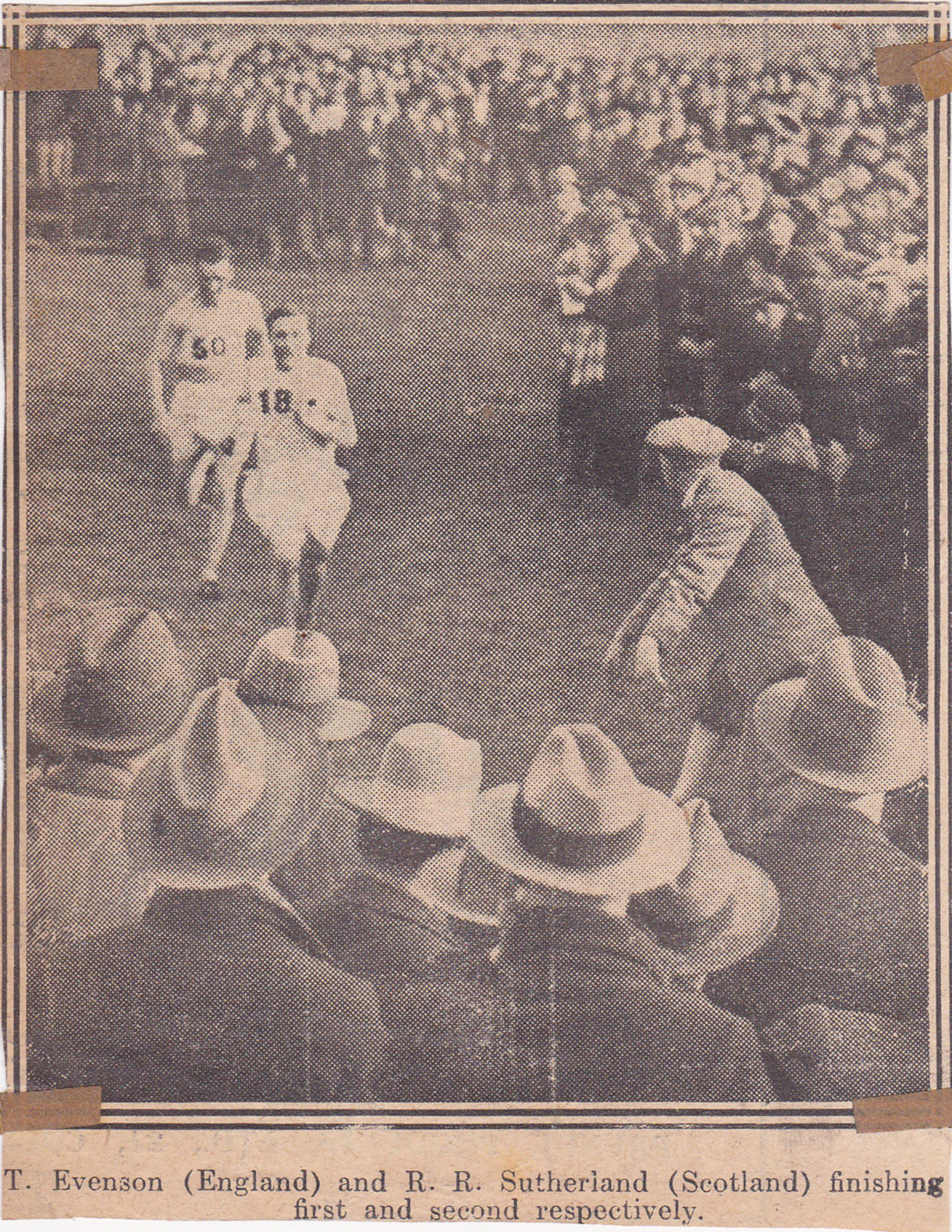
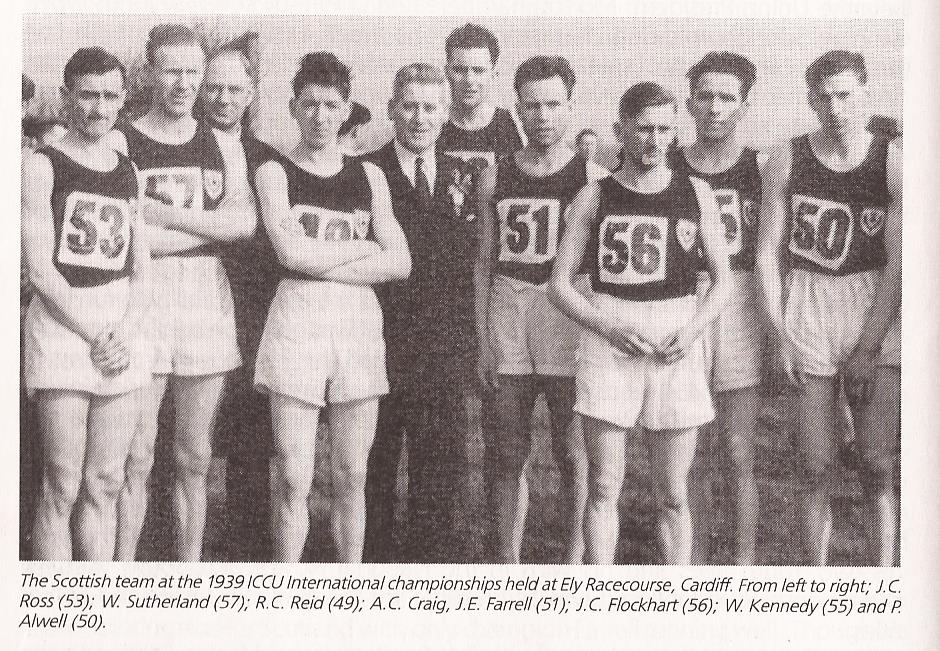
In the 1930 National cross-country championship, he was third – not a bad record – two seconds, two thirds and a dnf (injured) in five years.   This time Suttie Smith won by 150 yards from Robert Sutherland with Stevenson a further 150 yards down.   The International at Royal Leamington Spa was run in front of a huge crowd of 30,000 spectators.   Stevenson was twenty second in this race which was notable for the tough finish in which Robert Sutherland was second to Evenson of England (look at the picture in Sutherland’s profile on this website).

 There are many rivalries in sport where an excellent athlete continually finishes second to the same victor time after time with very few exceptions – Mimoun behind Zatopek, Lincoln behind Elliot are two that spring immediately to mind – and Frank Stevenson certainly finished second to Suttie Smith very often.   It was no different in the Ten Miles of 1930 at Hampden Park when he was behind the great man once again after a race in which he actually led Smith by over 50 yards.  “Twenty six of the twenty eight entrants faced the starter and 16 of them finished the course.   Suttie Smith, the holder jumped into the lead right away and, with FL Stevenson at his heels, rapidly drew away from the field.   The pair ran together until five and a quarter miles when Smith had some trouble with one of his shoes.   Ere he had this adjusted Stevenson had gained a lead of 60 yards, but before the seven miles ark had been passed, Smith was in front again.   The pair ran together until the ninth mile when Smith began to draw away from his rival, and eventually broke the tape 60 yards ahead.   Stevenson put up a plucky fight but was beaten for pace in the final half-mile.   It had been pointed out earlier in the report that a strong wind was blowing from one end of the field to the other and that during the ten miles there was a heavy shower of hailstones.   The times were irrelevant and the race was all.   For the record, Suttis Smith ran 53:17 and it should be noted that JF Wood and RR Sutherland both failed to finish.       In the Four Miles at Hampden on 28th June, there was no Suttie Smith in the field and after a hard race, Robert R Sutherland won from ‘Ginger’ Wood with Frank Stevenson third.   The Edinburgh to Glasgow eight man relay was first run in 1930 and Stevenson ran on the eighth stage into the finish in Glasgow – he set the fastest time of the day and it was a record that would last for many years.

In 1931, he did not run in the National, and there were to be no more international appearances for him – his run of five consecutive appearances ended in 1930.    He had more medals to win on the track however and in the Ten Miles at Hamden on 18th April he was third behind JF Wood and DT Muir.  His time of 55 minutes 04 seconds was almost a minute behind the winner. In the Edinburgh to Glasgow that year he was ‘promoted’ to the long sixth stage where he held on to sixth position with the third fastest time of the afternoon.

Finishing twenty ninth in the National, he was not even in the running for the international but his club mate P Peattie was fourth and was called into the Scottish team to be the third from Monkland Harriers in the team in four years.   In the Edinburgh to Glasgow later that year he was equal third fastest time on the eighth stage to start a winter that would lead to him finishing fortieth in the National in 1933.   Edinburgh to Glasgow details for the years 1933, ’34, ’35 are not available for Monkland Harriers although they were in the race in each of these years,  and they were not included in the event between 1936 and ’19 inclusive.

He went on running in the National and finished  twenty ninth in 1934, twenty fourth in 1935, sixty fourth in 196 when the Monkland team was seventeenth, forty sixth in 1937 running as an individual and sixty fifth in 1938 when his team was eleventh.

Frank Stevenson clearly loved his sport turning out year after year, on all surfaces, always with the same club, regardless of its fortunes, and was the kind of runner who garners respect from athletes of all generations.   He raced against the very top men of his generation and more than held his own.

Robert R Sutherland

Robbie Sutherland 1935

Robert Sutherland

Robert R Sutherland of Garscube Harriers and Birchfield Harriers was probably the best unknown runner that Scotland has ever had.   Seven cross-country international appearances (first Scot to finish three times), two silver medals in the ICCU International, three silvers in the Scottish cross-country championships,  14 Army Championships, 5 inter-services championships, twice third in the English Cross-Country championships, three times fifth in the same championships, and as a member of Birchfield Harriers led them to the team championship seven times in eight years.    And he is not known at all in Scottish cross-country circles.    His problem?    He was running at the same time as Suttie Smith and Jim Flockhart.    In summary, his cross-country feats included twice second in the International Championships where he was first Scot to finish three times and seven appearances in ten years in the International team.   On the track he he won the Scottish four miles title twice being the only man ever to get under 20 minutes for the championship and third in the AAA’s championship, as well as winning the national steeplechase championship.


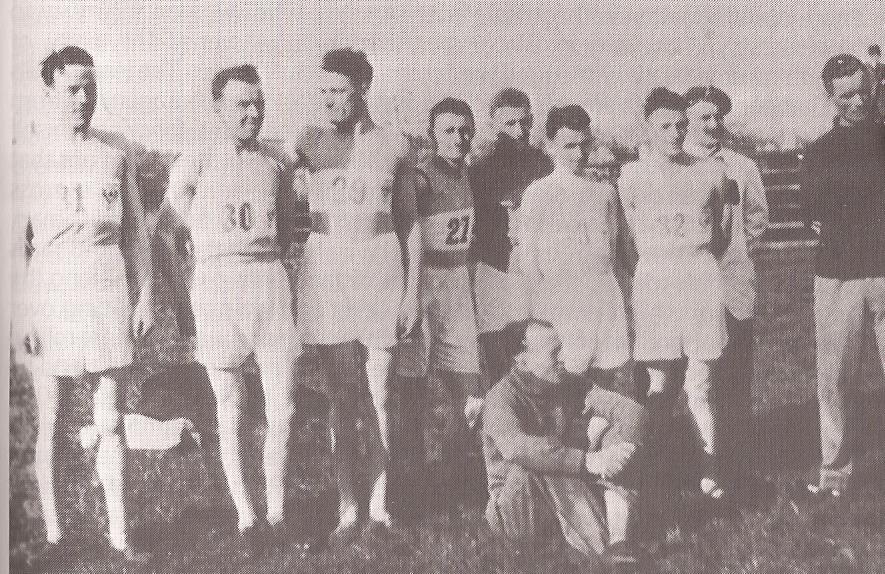
RRS 1933Sutherland on the right in the black jersey

Sutherland first came to prominence in the National Cross-Country Championship of 1928 where, finishing fourth, he won the National Junior title.   Colin Shields says, Lance-Corporal Robert R Sutherland of the Scots Dragoon Guards, running as an individual for Garscube Harriers, finished fourth and gained the National Junior title.   Sutherland, a Govan man, had own the British Army 10 mile cross-country championship just seven days earlier and was to run in the English National a week later for Birchfield Harriers with whom he was to win many English team honours.”   In the international itself he finished eighteenth and third Scot behind Suttie Smith (second) and Frank Stevenson of Monkland Harriers (fourteenth).

Sutherland missed the championships of 1929 and most of his running career came during the 1930’s and in the introduction to this period, Shields remarks: “The Thirties was by far the most successful period in international competition.   In the 27 years since the inception of the international championships in 1903, Scotland had won just five medals, together with placing runners-up in the team championship on just four occasions, all before the First World War when no more than five countries took part in the championshi

The Thirties were completely different with six medals gained –  one gold from James Flockhart (1937), three silvers from Robert Sutherland (1930, 1933) and WC Wylie (1935) and two bronze medals from J Suttie Smith (1933) and Alex Dow (1936).”   He goes on to mention that one of the two memorable high-spots was in 1933 when Sutherland and Suttie Smith finished second and third behind England’s Jack Holden.

The ‘Glasgow Herald’ described the 1930 Championship as follows: “The competitors were set to cover a course of fully nine miles in four laps, the first of one and a half miles, the other three of fully two and a half miles each.   When the first lap had been covered in 8 min 06 sec, the field was led by a group of a dozen of the strongest candidates, including of course J Suttie Smith and Frank Stevenson.   The next time round (time 24 min 51 2-5th sec), Smith and Stevenson were running together with Sergeant Sutherland 10 yards behind.   At the end of the third lap (41 min 49 1-5th sec), Suttie Smith was 60 yards ahead of Stevenson with Sutherland another 15 yards in the rear.   These three were well clear of the field.   Going out for the last lap, Sutherland who gained the junior title two years ago, soon passed Stevenson but the champion kept well in front.   He doubled his lead to run out a splendid winner by 150 yards.   Stevenson finished a like distance in the rear of Sutherland.”

In the English National, he had come twelfth  and was a member of the winning Birchfield team.

The Herald reported on the international race in the edition of 24th March under the headline “Sutherland’s Fine Running” and commented, “Thirty thousand saw the big field cover the course of nine miles and the finish between Evenson (of England) and RR Sutherland (Garscube Harriers) was a fine finish to a splendid race.   …..   Sutherland began to pull up rapidly in the last mile and he challenged Evenson in the final hundred yards, the Scot being beaten by a matter of two yards …     From the Scottish point of view the most satisfactory thing was the forward place taken by RR Sutherland of Garscube Harriers.   Sutherland who was Army champion in 1927 and 1928 has finished second in three big events this season.   He was second to J Suttie Smith in the National Championship at Hamilton and to Lance-Corporal Broadley in the Army Championships last Tuesday.   On Saturday he defeated both but had the misfortune again to run up against another runner who just defeated him.”

1930 ICCU race Evenson & SutherlandThe finish of the international; in 1930: see how close Sutherland was to Evenson, the winner.

(Picture from Alex Wilson)

Colin Shields reports that after running so well in these races (three quality long distance races in fifteen days), Sutherland was invited to race in an invitation race in Paris on 30th March.   There were 1600 runners and over 7 miles.   Would you believe it – Sutherland was second only one second behind the winner!   A superb season but he could be forgiven for thinking that it was not his year.   Calling him the great unsung hero of Scottish cross-county, Shields remarks that it had been a daunting programme but one that Sutherland repeated regularly over the next few years with great success but little recognition as he never won either the Scottish or English nationals or the international any of which would have won him eternal fame and inclusion in the cross-country record books.

In summer 1930, Sutherland won the first of his three Scottish titles over Four Miles in a time of 20:15.4.    Big and strong – look at him in the photographs with the Scottish team – he was demonstrating speed as well.   For this victory, he was awarded the Crabbie Cup for the most meritorious performance in the SAAA Championships.    He was also third in the English championship, one place behind JF Wood of Heriot’s.   The first ever Empire Games was held that year in Hamilton and he was the only Scot in the Three Mile event where he finished fourth only 0.4 seconds behind third place.    Maybe ironically fifth finisher was England’s Tom Evenson who had defeated him in the international!   This was an incredibly close finish with places and times being: 3rd 14:29.0; 4th 14:29.4; 5th 14:29.6; 6th 14:29.8!   The SAAA Championship was described in the ‘Glasgow Herald’ as follows: “The four miles was expected to be the race of the afternoon and anticipations were fully realised.   It was full of incident from the pistol, and was capped by as brilliant and spectacular burst of speed from Sutherland over the final 300 yards as has been seen on a Scottish track for a long time.   The earlier stages of the race were notable for a duel between Suttie Smith and JF Wood for the leading place and the Heriot man’s worrying tactics proved so disastrous for the champion that he dropped out at two and a half miles after losing the lead and being 60 yards behind.   They had no effect however on Sutherland, who continued to move with powerful stride and obvious reserve, and although Wood continued to contest the issue until the bell, he was left standing on the last lap.   On this running the soldier is in the first rank of British distance runnersand it will be interesting to see how he fares at Stamford Bridge on Saturday first.”

The National championships in March 1931 were again at Hamilton and Sutherland was second.   In the English Championships however, he was third finisher and led  Birchfield to the team title.   In the ‘Herald’ we are told that in the international, Sutherland was thirty fourth at the end of the first lap finished in eighth place.   Scotland and France were equal second.

Summer 1931 was another good one for him.   He again won the SAAA Four Miles title -this time in 19:59.8 which was the only time that twenty minutes was beaten in this championship.

The 1931-32 winter season was to be yet another good one for the consistent Scot.   The national was run again at Hamilton and was remarkable for the very fast start ‘for which JF Wood was chiefly responsible’.     Sutherland was not mentioned in the report of the early part of the race but towards the end when Suttie Smith was clear,  “Sutherland managed to get on terms with Wood, as did Stobbs, but the real struggle for second place was between the first two.   It was a great duel over the last few hundred yards.   Sutherland got in front at last and stayed there despite repeated challenges.  The result was in doubt until the last few yards, but in the end the soldier, for the third year in succession, filled the position of runner-up.”    Tenth in the English National championship, again leading Birchfield to team gold, he was unable to run in the international in Brussels as he was “prevented by Army duties from running.”

Season 1932-33 was the one which was to be Jim Flockhart’s big break-through season – Sutherland had been second to Suttie Smith since he came into the sport and here was another phenomenon!   It is probably not stretching it too far to say that those three – Smith Sutherland and Flockhart – were probably the best in Britain throughout the 30’s.   Some, including Alex Wilson would beg to differ and say that Jack Holden (who won the ICCU Cross-Country title four times between 1933 and 1939) was THE top man but they’re at least in very good company!Sergeant Sutherland was fourth in the National in March 1933 behind Flockhart, Wilson and Suttie Smith.   One week later and he was third in the English National and again Birchfield won the team race – for the sixth year in succession – and again Sutherland held back from the early pace and came through on the last lap to finish 14 seconds behind the winner.   The 1933 international was held in heatwave conditions and Flockhart injured his foot leaving the battle to Sutherland and Suttie Smith.   They ran the final two miles together with Sutherland proving the stronger and finishing second with Suttie Smith third.

In summer 1933 he again won the SAAA Four Miles title – this time in 20:24 – before heading into the 1933 – 1934 season.   In the National in March 1934, there was another silver medal for Sutherland who was 150 yards behind Flockhart.     In the English championship he was sixth individual, first Birchfield Harrier and the team again struck gold.    In the International Championship Sutherland was sixth and second Scot to finish but the ‘Glasgow Herald’ felt obliged to say “Sutherland obviously felt the strain of his mud-week race in the Army Championships, this being his fourth big race within the month.”    The Army 10 mile cross-country championship in the middle of the week leading to the international would hardly have been ideal preparation for the international championship.

In March 1935 he missed the National in Scotland and the International.    The reasons for this are not clear but he was back in 1936 and ran a very good National in March 1936 to be second to Flockhart.    Not mentioned in the exceptionally short ‘Herald’ report on the English National (which did mention that Birchfield who had lost their title in 1935, won it back again in 1936).    On a very warm day in Blackpool for the international Sutherland finished fourteenth after running in tenth for much of the race, to be second counting runner for the third placed Scottish team ahead of both Flockhart and Suttie Smith.

The SAAA Steeplechase championship had been first run in 1934 and Sutherland took part in and won it in 1937 in 10:59.9.   With his height, natural strength (4 major cross country championships in one month almost every March) and speed as demonstrated in some of the fast finishes and pace over the 4 miles distance, it might be thought that he would have been a natural for this event.   It would have been interesting to note what he could have done earlier in his career.    The following winter he was third in the National championship 9 seconds behind second placed Emmet Farrell: needless to say Jim Flockhart took the title.   In the International in Belgium, the big talking point was the Scottish victory by Jim Flockhart while Sutherland was twentieth and third placed Scot in what was to be his final cross-country championship in the blue of Scotland.

He had had a superb career – one that 99% of athletes could only dream of – with individual gold medals on the track and in Army championships, team golds in the English championships, silver and bronze individual medals in Scottish, English and international championships as well as several fine runs in other events.

www.rastervect.comInternational 1933:  Flockhart 25,  Suttie Smith 27 and Sutherland 28

I am indebted to Alex Wilson for the following information on Sutherland’s track career.

  “Robbie’s pb for the  mile was 4:26.4, set when winning the 1930 Army title at Aldershot; his pb for  the 2 miles steeplechase was 10:29.0, set when finishing runner-up to WC Wylie  in the 1937 AAAs; and his pb for 6 miles was 30:50.0, set when finishing  runner-up to Jack Holden in the 1933 AAAs. He was nothing if not  versatile!
I have in my notes (maybe from Birchfield historian Wilf  Morgan, I`m not sure!) that he was an Army PE instructor. His Army chores  were such that much of his time was spent in the gymn demonstrating and  lecturing on a variety of sports including boxing. 
Another little-known  fact about this little-known runner was that he also tried his hand at the  marathon in the twilight of his athletic career, when he ran 13th in his one and  only marathon – the 1936 Poly – in 2:51:01.”

Thanks, Alex

Stewart Duffus

Stewart-James-Duffus-150x150[1]

Stewart Duffus was originally a member of Arbroath Harriers who, after winning the Scottish Junior Cross Country Championship joined Clydesdale Harriers.   He had a glittering career on the track and over the country and was undoubtedly a superb talent.   However he was involved in various scandals involving money – accepting travelling expenses, impersonating other athletes and so on – and ended his career a disgraced athlete.   We should not get ahead of ourselves though.    His career came first.

 He burst on to the National scene when he won the National Junior Cross Country Championships in 1893 in the colours of the unfashionable Arbroath Harriers.   As a Senior the following year he was second to Clydesdale’s Andrew Hannah after a hard fought race in which he was the only runner able to stay with the great man.  In 1895 he was again second – this time to Edinburgh’s P Hay and again there were only two runners together at the finish with Duffus being outsprinted in the race for the line.   1894 was repeated in 1896 when he was behind Andrew Hannah at the finish after a hard race over a heavy course with a lot of ploughed land.   The club at that time awarded gold medals and badges for particularly outstanding performances and the Committee Minute for September 1896 reported: Mr Stewart Duffus was granted a gold medal for establishing a record in the 4 Miles Championship in the time of 20 minutes 10 4/5th seconds and a silver medal for winning a mile race at Maybole on 17th July in 4 min 29 sec off 35 yards start.   His claim for a record medal in the Three Miles Race at the Rangers Sports on 1st August in the time of 15 minutes 6 3/5th seconds was held over formally till the Union had passed the performance.”  On the track there were many fine races over one, four and ten miles but his only SAAA victory was in the four miles in 1896 in a Scottish record of 20:10.8 for which the above claim was made..

 In 1897, not only was he a club member but his brother James Smart Duffus had joined the club in January of that year. After three years in second place he went one better in 1897 when he won the national Senior Championship for the first time.   In 1898 it was a reversion to second place: he was returning from a six week lay off due to injury but was aided by his team mate William Robertson losing ground due to torn shorts (!) but just failed to win gold.   He was really doing well and was highly thought of at this time and was winning races all over the country: in August 1898 the team of WS Robertson (1st), John S Duffus (2nd) and Stewart Duffus won the gold cup, three gold medals and three special prizes at the Berwick team race.   In September 1898 he was elected club captain at the AGM with John S Duffus vice captain.   The Committee nominated him as HQ Section Two Team Leader in September that year and another family member – cousin JH Duffus – was elected to the club in October.   An active Committee Member he was asked by the Committee to visit the Assistant Secretary who had resigned two months after election and enquire further into the matter and if possible persuade him to take up his duties again.   Everything was going well for him.

Events to be described below were to prevent his racing the following year.

S Duffus 2

Stewart and James Smart Duffus


Meanwhile : ~

An Athletics Abuses Committee was set up by the SAAA’s in November 1893 to enquire into various abuses in Amateur Athletics.    The sub committee of seven including the respected and experienced Clydesdale Harrier Alex MacNab met seven times and interviewed thirty one witnesses and reported back in January 1894.   Various abuses were uncovered and their principal points were as follows:

  1. The payment of athletics expenses, including hotel bills, was      general but only to athletes coming from a distance such as England.
  2. It was proved that payments of money had been made in particular  to three athletes: the sprinter Alf Downer the Scottish champion; to S Duffus (Arbroath) ‘an outstanding distance runner’ who admitted receiving  £2 in the name of expenses from a club:   and to RE Messenger, an English runner, who admitted receiving £5      in the name of expenses from a club;
  3. A club had paid a ‘round sum’ to an individual resident in England for a party of English athletes;
  4. In the West of Scotland it was found that payment of entry fees was not enforced as it ought to have been
  5. Betting was prevalent in Edinburgh      and Paisley and on the increase in Glasgow;
  6. Roping was spreading and this, together with the betting, was      found to be demoralising amateur sport.
  7. (*Roping was the practice of the best runners in a race getting together and agreeing to share the prizes/prize money equally; this often happened over a series of races among a few good runners and deprived the public and the meeting organisers of proper races.)

Athletes and others giving evidence had been guaranteed immunity from any action against them.   The findings however led to new definitions of amateurism and new rules dealing with the payment of expenses.   The next furore on the subject was not long in coming.

There were rumours in 1898 that there were some professional athletes competing in meetings in Scotland, Ireland and the South of England under assumed names. A sub-committee was set up by the SAAA on 6th October to make an enquiry into the matter on behalf of the three Associations.   The real culprits were almost all Scots.   In the investigations the allegations were virtually all upheld and the following proposals made:

  • 1.   William Robertson, S Duffus and  JS Duffus, Glasgow, be suspended permanently for being implicated in the personation of an Amateur by a Professional at the sports of Cliftonville FC, Belfast, held on 13th August 1898;

2.   JM Gow, JB Glass, Edinburgh, be suspended permanently for being implicated in the Personation of two Amateurs by Professionals at said sports and for betting;

3.   James Blackwood, Johnstone, J Rodger, Maybole and Robert Mitchell, Paisley, be permanently suspended for betting; and

4.   JH Duffus be suspended for failing to appear before the sub-committee to give evidence.

 Robertson, S Duffus, Rodger and Mitchell had been Scottish champions and record holders and their departure from the scene was a loss to the sport.   The moral demands on athletes were high.

 The ultimate punishment for his errors was banishment from the sport.   He could not appeal, he could not hold any office and could not coach or have any involvement in the sport thereafter.    Maybe harsh but possibly a model for dealing with drug cheats in the twenty first century.    As falls go, they don’t come much more dramatic than that.

Following the publication of the above, more information was received from Alex Wilson and he added the following.   “He set a Scottish 3 mile record of 15:09..0 at Glasgow on 27th July 1894 when he outsprinted his great rival Andrew Hannah.   His 4 mile record was actually a Scottish  native record as opposed to a Scottish record, that being the 19:49.4 by the Anglo-Scot Henry Ackland Munro when he won the 1894 AAA 4 miles championship.   He was presented with a valuable gold medal by Rangers Football Club bearing the inscription “Presented by the Rangers FC to Stewart Duffus for breaking the 3 miles Scottish record at their annual sports.   Time 15 min 6 2-5th sec.   1st Aug 1896.”   Again it was a native record since Munro had a faster time of 14:48.0  to his credit.   Duffus was born in Arbroath on 22.10.1873 and an iron worker by trade.    He emigrated to America in 1912 and got married, settling in Elmira, New York State, and was drafted by the US Army in 1917.    I have no idea of what happened to him after that.” 

Thanks Alex for the welcome addition to the profile.

Robert Reid

R Reid 1950

Robert Reid of Doon Harriers ran superbly wekk from the days when he was a Youth (Under 17) in Doon Harriers until after his last international appearance in 1952 winning track as well as cross country titles and was as Colin Shields says, “!the first runner whose lifestyle was lifestyle was to benefit from his running ability.”     Information for this profile has come from The Glasgow Herald, The Scots Athlete, Scottish Athletics by David Keddie but mainly from what is probably the best history of any athletics discipline in Britain, Colin’s “Whatever the Weather” which is a mine of information.   R Reid 1939

 The first trophy of any sort won by Robert Reid was in 1937 when he won the Scottish Youths cross-country championship which he won from John Muir of West of Scotland.   He won the title again in 1938 but made the headlines that season for another race altogether.    I quote directly from “Whatever the Weather”:   “The National Novice Championship amply justified its title as the most popular of all the NCCU Championships when over 300 runners from 41 clubs lined up for the start of the 1937 race at Bothwell Castle.   The strange rules of the event were demonstrated when 16 year old Robert Reid of Doon Harriers, the National Youth Champion, lined up with rivals twice his age who had been trying for years to win the title.   Reid followed AT Peters (Maryhill) the British TA mile champion, round the early stages of the five mile course.   He went into the lead at three miles and, displaying power and stamina far beyond that expected for a lad of his years, crowded on the pace to win in 24:36, 18 seconds in front of Peters, who had just 3 seconds to spare from Jim Morton (Springburn).

Reid’s victory caused great administrative trouble for it was subsequently revealed that he was a re-instated amateur.   A clause in the championship rules stated that ‘Competitors shall be ineligible who have been reinstated to the amateur ranks.’   But this had slipped through the scrutiny committee and Reid had been allowed to enter.   He was disqualified  and the novice title awarded to the runner-up, AT Peters.   As a schoolboy, just a few weeks after his fourteenth birthday, Reid had won a nominal prize of just a few shillings in an unpermitted Coronation Sports Meeting, when totally unaware of the amateur laws but nevertheless losing his amateur status.   Doon Harriers appealed against his disquaification, and there was a great deal of sympathy for Reid who had been wrongly advised that he was eligible to compete in the National Novice Championship.   A special meeting of the General Committee was called to determine ‘whether it was meant that the law should have specified clearly that it was not applicable to members whose certificate of re-instatement stated that their offences were of a minor nature, carrying no extreme penalties.’     

General Committee by an overwhelming majority approved an amendment to the law in question which ensured that Reid, and all the other runners whose re-instatement came under the category of Minor Offences would be eligible for the National Novice Championship.   At the AGM in September 1938 the rule change was approved and made retrospective to the start of the 1937-38 season, so that Reid was duly recognised as the National Novice Champion almost exactly a year after the race.”  

I think it’s clear from the above which side Colin is on – he was always an athletes’ man – and I think that any fair minded person would have been on Reid’s side.    The fact that the governing body took its decision by a great majority is to its credit but this is yet another example of the difficulties of enforcing laws on amateurism that have bedevilled Scottish athletics since the 1880’s.       Reid had a very good start to the following cross-country season which he started by winning the South-Western District title with ease after leading from start to finish, and followed this up with victory in the Ayrshire championship.   He then went on to win the National title in great style, and it was reported in The Glasgow Herald under the headline:   “Cross Country Triumph: Reid Invincible at Lanark:   Imposing record of achievement” and read as follows:

“As was anticipated R Reid of Doon Harriers won both the Senior and Junior by finishing an easy first over a course of  fully nine and a half miles at Lanark Racecourse on Saturday.   It was actually the first time that Reid had raced a greater distance than seven miles and it was also his first test against the entire array of Scotland’s experienced distance runners.   But Reid surmounted these difficulties in the manner of a real champion, winning by 200 yards from PJ Allwell and 450 yards from the holder, JE Farrell of Maryhill.   As in all his previous races, Reid finished quite fresh.   His list of achievements is already formidable: Scottish youths cross-country champion twice; SAAA one mile youths holder once;   national novice champion (later title was declared void); South-Western, Ayrshire and now junior and national   champion.”    

This was only the fifth time in the 53 year history of the event that the junior and senior titles had been won by the same runner – his predecessors being P McCafferty (1903), T Jack (1907), J Motion (1921) and J Flockhart (1933).      The international championship that year was held at Ely Racecourse in Cardiff and was a big disappointment for young Reid.   He started off as usual by going straight to the front at a fast clip and was twelfth at three miles.    However as the race developed he dropped further and further back to finish 31st, out of the counting six for the team race and probably learned a lesson or two.

The war intervened and his next chance to redeem himself in the blue vest of Scotland in an international came in 1946.    By this time he was living in Birmingham and running in the colours of Birchfield Harriers.    Colin Shields describes the move: “Reid, who initially ran for Doon Harriers, was the first runner whose lifestyle was to benefit from his running ability.   A baker’s apprentice at Dalmellington, Ayrshire, Reid was just 19 years old when, as Scottish champion, he ran in the 1939 International championships at Ely racecourse in Cardiff.    Overawed by the occasion he finished outside the Scottish counting six but his obvious potential attracted the attention and patronage of CAJ Emery, the 1938 international winner who arranged a job for him in the BSA factory in Birmingham.   Once settled there, he joined Birchfield Harriers as so many other Scottish runners did before and after him, and gained athletic honours in Midland and English championships.”

Reid did not run in the Scottish championships, preferring to race in England but his form was such that he was selected for the international where he finished twenty sixth – a big improvement on 1939 but not quite as well as had been hoped from his racing south of the border.    He did not race again in the Scottish championships until 1950 but was running so well that he never missed an international, finishing 20th in 1947, 12th (and first Scot home) in 1948 and 29th in 1949.

The Glasgow Herald report on the 1950 championship read simply: “R Reid (Birchfield Harriers, Birmingham) a former member of Doon Harriers, won the Scottish nine miles cross-country championships at Hamilton on Saturday, when  his powerful finishing burst proved too strong for another Anglo-Scot, F Sinclair (Blaydon), the former Scottish Mile champion.”    Not a lot there, but as usual the report on the race in “Whatever the Weather” gives a lot more insight, adding, “Reid’s victory came 11 years after his initial win in 1939 and was only his second competitive appearance in the championships, having preferred to run each year in the English National, but turning in such good performances in England that the selectors made him an ‘ever present’ in the Scottish team.    Indeed this victory gave him a unique record in the Scottish championship – that of having won every race he contested!    He won both the Youth titles in 1937 and 1938, and the two Senior titles in 1939 and 1950. “

What a career – packed with incident and illustrative of so many aspects of Scottish athletics: the professional/amateur interface; unbeaten in the Scottish National; profiting from his running, not by winning money but by getting better employment and housing.    Had it not been for the War, his eight internationals might have been 13 or 14.

Queen’s Park FC and Athletics

QP CREST

This is a follow up from Hugh Barrow to his earlier article on the subject – I’ve put it in a separate page because it links in several directions.    The thorny issue of amateurism comes up again and again through the pages of the website and for many years Queen’s Park was noted as the only amateur club in the Scottish football league.    Their role in the amateur/professional controversy is of interest, and this article should be taken with the DS Duncan profile and the earlier QPFC article.   Some of the actual sports are  here , here, and  here .

There is much truth in the statement that among the founders of the Queen’s Park Football Club in 1867 were many north-country men, who brought to Glasgow the inherent love of athletics possessed by every Highlander, particularly as regards muscalar events. Mr. J. C. Grant is strong on this point, and his testimony, that the Highland section, who had migrated from Strathbungo to the Recreation Ground at Queen’s Park, where better facilities were available, indulged in hammer-throwing, putting the ball, pole vaulting, and tossing the caber, and first learned the football game from the Y.M.C.A., is correct. The club had only been a very short time in existence when, 29th April, 1869, the advisability of holding athletic sports in connection with the Queen’s Park Football Club was considered, and ” it was finally agreed, after a great deal of reasoning and warm discussion, to defer the matter until a month or two, when it could be entered into with greater confidence to bring about a more successful result.” At this meeting a proposition was made to provide a ball and hammer for the general use of “the members of the Q.P.F.B.C,” but an amendment was carried to the effect that this matter “should be deferreduntil a future period, as the club at present was not in a fit state to incur any extra expense.” However, on 8th July, 1869, “after considering the state of the funds, it was agreed to purchase 121b. and 161b. hammers, and 16lb. ball, for the general use of the club.” It was announced, at the annual meeting held on 14th April, 1870, that, with a view to present additional attractions and amusement for the members, the club had been provided during the year with balls, hammers, and vaulting poles, which had proved valuable auxiliaries in keeping up the interest in the club. The necessity of procuring another set of flags and goal-posts was brought before this meeting by the secretary, and after a little deliberation—it was a serious expenditure at the time—the treasurer and secretary were commissioned to provide flags and stumps, same as before, with goal-posts eight feet high, and all to be painted white. It was further decided to raise a fund for the purpose of holding amateur athletic “games” in the month of September, 1870. Great undertakings were to be I accomplished during the winter months (they played summer football in early days), and ” an endeavour made to turn the football club into one of the best gymnasiums in the kingdom.” A lofty ambition truly, and probably the outcome of the quite recent visit to Hamilton to play the local Gymnasium Club. It has been ascertained that horizontal bars, etc., had been erected at the foot of the vacant piece of ground, used then by this Hamilton club, now built upon, and other forms of athletics practised. The club was an athletic development centre. It was, however, many a long day before this laudable ambition of Queen’s Park was gratified, certainly not until 1889, when the pavilion at second Hampden Park was raised a storey, a gymnasium added, and a competent instructor installed. The month of August is the period in which the great Highland gatherings or “games” are held, and the first Saturday in September was for several years consecrated to the Queen’s Park open sports. It is quite reasonable to suppose that the northern element had a say in fixing this date. There was “a good deal of deliberation on the subject of the date, etc., and whether it could not be possible to hold them—the sports—this year, 1869.” Messrs. Lewis Black and W. Klinger were the authors of this proposal. Mr. Gardner, at the annual general meeting, April,. 1870, said, ” that with a view to present additional attractions and amusement for the members, the club had been provided during the year with balls, hammers, and vaulting poles, which he was glad to see had proved valuable auxiliaries in keeping up the interest in the club.” The contemplated sports, however, did not take place in 1869, nor for that matter until 1872, and only after a letter was read from Mr. II. N. Smith, the president, proposing an athletic competition. Messrs. J. Taylor and A. Rae were appointed a committee, with power to add to their number, ” to manage the whole affair.” On 2nd October, 1872, “Mr. Rae, for the athletic sports committee, reported that the sports had been very successful—Mr. James J. Thomson took the first, and Mr. Joseph Taylor the second prize”—so that the sports would appear to have been a sort of all-round club competition. This was the first sports meeting held by the Queen’s Park Club, and was the precursor of a series of confined meetings held for the encouragement and entertainment of the members. In addition to Messrs. Thomson and Taylor, mentioned above—the former being an athlete in every sense of the word, while the latter shone in the sprints—Messrs. Edmiston and M’Hardy were two strong men, who figured prominently in the ball and hammer throwing. Mr. Charles Campbell too, joining the club as he did in 1870, came in at an opportune time, and was a frequent prize-taker with the hammer, and above the average as a quarter-miler. He, however, did not compete at open sports, devoting his attention to the confined events of the club. Mr. P. M’Hardy, who had only become a member 12th August, 1873, was appointed Second Eleven captain at the annual general meeting in April, 1874. He was one of a sub-committee with Messrs. J. B. Weir and W. M’Kinnon to inquire after suitable “athletic implements” for the general use of the members. They recommended, May, 1874, that a putting ball (161b.), one vaulting pole, and one horizontal bar be got, and they were authorised to procure these at a cost not exceeding £3 sterling. It having been intimated that Mr. M’Hardy intended leaving his set of throwing-hammers in the house for the use of members, a hearty vote of thanks was accorded that gentleman for his kindness. Mr. M’Hardy resigned the captaincy of the Second Eleven, March, 1875, and though asked to give his reasons for doing so, he declined to furnish particulars, and desired the matter should be passed over without further notice. He was re-elected captain of the juniors at the annual general meeting, 1875, which position he did not accept, and also to the match and ground committees. Mr. M’Hardy had a long connection with the Queen’s Park. He resigned 3rd June, 1884. J. D. Finlayson, admitted 17th April, 1873, was an amateur pedestrian who played in the Second Eleven, and obtained distinction on the track until he removed to Inverness. George Philips was also a great rival of Finlayson as a half-mile and mile runner. H. A. Watt, late member of Parliament for the College Division, held the champion-ship of Scotland, being invincible as a hurdle jumper. John Harvie had the honour of being walking champion of Scotland. Many famous athletes competed at open athletic meetings in the colours of the Queen’s Park. No reference is made in the minutes regarding sports, from the first confined meeting until 6th June, 1876, when the club decided to hold its first open athletic meeting. It was agreed at this meeting to have club sports, and the date was fixed, 9th September, 1876, and the secretary was instructed to make it public through the newspapers, and to advertise as thought fit. A scroll list of events was drawn up, and remitted to a strong sub-committee of seven to carry out all the arrangements. Open and confined events were included on the programme, and the list was printed and circulated among the principal clubs in Scotland and England. A number of leading gentlemen in Glasgow and district had been communicated with to secure their patronage, and had already signified their willingness to grant it. In the confined events, on the motions of Messrs. Weir and M’Neil, a 150 yards race was substituted for 200 yards, and the challenge cup half-mile was not to be handicapped. A grant of £30 was given to defray the preliminary expenses. The challenge cup referred to was to become the property of any winner lifting it twice.” The source from which it came is not stated. Messrs. Campbell, M’Neil, M’Kinnon, and Taylor (captain) were to represent Queen’s Park in the four-a-side competition. The other clubs that competed were Eastern, 3rd Lanark, and Dumbarton. There were also a place-kick event, a dribbling race (members), and tug-of-war between football clubs. This is the first reference to this contracted football game, which became popular at sports meetings afterwards. This initial amateur meeting, though the receipts amounted to £213, yet showed a loss of £55—the prizes were handsome, and cost £129. The sports had been ” highly satisfactory as regards the competitions and turn out of spectators, but from a financial point of view had not come up to the anticipations of the committee.” Stock had been acquired to the value of £25, which reduced the loss to this extent. Thus began the series of important athletic meetings held for many years under the auspices of the Queen’s Park Football Club. As the knowledge of athletics spread and developed, the balance was frequently often substantially on the right side; but should the financial result be adverse through bad weather or other causes, the club was in no way deterred from furthering amateur sport of this character. The modus operandi in connection with its first athletic meeting was exactly followed on all subsequent occasions, men of athletic experience being selected as a sub-committee to make and carry out all arrangements.

The Queen’s Park amateur athletic sports stood for years one of the most important in the kingdom, and maintained their position until the introduction by other clubs in the city of the subsidised amateur, who received his expenses, and often the expenses of his trainer, together with a certain sum for appearance money. With this system the Queen’s Park, in its decided abhorrence of everything bordering on professionalism, would have nothing to do. Those great performers who have appeared on the “classic slopes” from time to time had no monetary inducement given them. Members of the club were only too glad to entertain and house them while in Glasgow. It was against all the principles of the club to do more. However, great stars coming from all parts of the kingdom to other local meetings provided attractions which the public, asking no questions, was not able to resist, and the system paid. The strict amateurism of the Queen’s Park was not remunerative, and gradually the club, disheartened, dropped out of the active athletic arena in quite recent years; but now, after the war, more activity is being displayed, and sports were held 6th June, 1920, and, we are glad to relate, proved to be one of the most successful ever held by the club. The prizes set for competition were always of the handsomest description, which the winners could retain with abundant pride to the end of their days, not Brummagem stuff, manufactured for the purpose, so often to be seen now in shop windows. Everything the Queen’s Park undertook was carried out in the best manner possible. The evil of subsidising amateurs became so flagrant that the Scottish Amateur Athletic Association had to intervene and hold an investigation. The efforts to suppress the scandal were only partially successful. When both sports promoter and competitor are in collusion, it is difficult to prove an offence, the consequence being so serious to both parties.

The Queen’s Park committee, having carefully considered the situation, decided, after the athletic meeting in September, 1886 – the sports had been held in September now for ten years–to hold future meetings in June, commencing the following year. The change was made ” because September was considered too far on in the season for sports to be successful, the football season being too close at hand, and the majority of athletes then stale and out of training.” This change of date proved at first very successful, both athletically and financially. In the late ‘eighties and early ‘nineties there was a great influx to the club of athletic and •cycling members, who found the conveniences of the Queen’s Park track met a much-felt want, and these took full advantage of its amenities. The club at first was reluctant to take such men into full membership, as its first and last business was football. Permits were issued for training on the track, with full use of the pavilion and trainer to non-members. It was a great satisfaction to the club to find its efforts in this direction so fully appreciated. The track was constantly being improved, widened, and the banking brought up to the latest speed requirements.

On more than one occasion professional peds. have, under the disguise of amateurs, competed at the sports of the Queen’s Park. In the ‘seventies a famous professional miler ran against George Philips, a noted Queen’s Park amateur miler of the time, to settle some dispute in betting circles as to which was the better man at the distance. The professional won, but did not come forward to claim the prize, having apparently no criminal intent, bar the deception. The case was different at the September sports in 1878 with John Harvie, then Scottish champion walker, as the professional who won walked off with the prize. Mr. Harvie called the attention of the committee to his unfortunate position, but, of course, they had no responsibility in the matter, so he had to content himself with the second prize. BETTING Betting at athletic meetings caused considerable annoyance to the Queen’s Park, and other sports-holding amateur clubs, in the early ‘nineties. As professional pedestrianism had fallen on evil days, brought about by this same betting, and the chicanery associated with it, the scene of operations was transferred to the amateur grounds. This was a state of affairs which the Queen’s Park could not contemplate with equanimity. It was against all the principles of amateurism, and might eventually lead to the ruin of a then healthy pastime. This club was, therefore, the first to take action in the matter, a position which naturally fell to it.

Mr. William Sellar, writer, who was at this date president of Queen’s Park Football Club, took the matter up strenuously, and communicated, on behalf of his club, with the Town Council, May, 1897, regarding what steps the police authorities proposed to take to put down open betting at athletic meetings in the city. The Council remitted the matter to Mr. John Lindsay, then interim Police Clerk, now Sir John Lindsay, Town Clerk of Glasgow, for an opinion. The whole question rested on what was “a place” within the meaning of the Betting Act, 1853, the force of which was not extended to Scotland until amended in 1874. After quoting various decisions of the English and Scottish Courts, Mr. Lindsay gave the following opinion for the guidance of the Town Council :—

As all the meetings of the various athletic clubs of the city are held within closed grounds which are generally known by a name, and are certainly capable of reasonably accurate description, and to which persons from time to time, or on particular occasions or occasion, resort, it, in my opinion, necessarily follows that the areas of those athletic meetings are places within the meaning of the foregoing statutes, and that therefore the provisions of those statutes, prohibiting the using of such places for betting by professional betting men, can be enforced by the police, and thereafter at the instance of the Procurator Fiscal, or of any person, by process in the Sheriff Court.

Mr. Sellar in his letter referred to the decision by Mr. Justice Hawkins in the Dunn case. The learned judge laid it down that an inclosed racecourse was ” a place.” In 1885 the Court of Session, on appeal in the Henretty case—the defendant having been convicted in the Glasgow Sheriff Court tor betting at Shawfield—quashed this conviction ; but Mr. Lindsay was of opinion, notwithstanding these contrary decisions, that though the Procurator-Fiscal, in face of the final issue of the Henretty case, might refuse to prosecute, if that official, or any private person, prosecuted, and the case taken to the High Court, it is very probable it would be heard and disposed of by a full bench of judges.

In face of this decision in the Court of Session, the evil was allowed to continue. It was not until five years later that the Scottish Amateur Athletic Association concluded to move. On 19th May, 1902, a letter was received by the Queen’s Park committee from the honorary secretary of the Western District (S.A.A.A.), intimating that the Association had been in communication with the Chief Constable of Glasgow with a view to stopping the nuisance of betting at sports, and requesting the attendance of one or two delegates from the Queen’s Park Club to co-operate with the Association in the matter, at a meeting fixed by the Chief Constable. Messrs. Geake and Liddell were appointed. No prosecution followed against any bookmakers frequenting Hampden Park or elsewhere. Action was confined to posting notices prohibiting betting at the various grounds, and increased activity on the part of the police stationed there, to see that bookmaking was not carried on. By perseverance, and the invaluable assistance of the Chief Constable, things were made so uncomfortable for the bookies that they ultimately found the game did not pay, and withdrew from this new sphere, where their presence was not wanted. This satisfactory result must be mainly attributed to the initial action of Queen’s Park. One would have thought the Scottish Amateur Athletic Association would have been the first to move in the matter, but such was not the case.

Coupon betting had by January, 1914, become a curse to the game, and, indeed, is so still. Horse racing having been permitted only to a limited extent by the Government during the war, had driven the bookies to other fields to exercise their talents, and one which proved most lucrative was betting by coupon on football matches—an illegal practice which was carried on under various subterfuges. The Continental bookies were compelled to come home, or be interned, and found their occupation abroad gone. Many efforts were made to suborn players to sell matches, and it is painful to relate that some players, not many, accepted the tempting bait offered them. The evil is more rampant in England than in Scotland. Consequently the Football Association has been more active in its attempts to suppress these insidious attempts to ruin the game, and several English players have been severely punished, when direct proof has been forthcoming that they have been guilty. So far the Scottish Association has not been called upon to prosecute, though it has kept a watchful eye on what is occurring in regard to coupon betting in Scotland. No case of the kind has come before it, which proves that Scottish players are practically immune, and have the interests of football, which are also their own, at heart, and play the game in a cleanand honourable way. The Scottish League, however, thought at this period, 1914, probably because the professional player came more directly under its control, that it would be advisable to indicate its position on the subject. A circular was issued to the clubs, copies of which were to be hung in the players’ dressing rooms, the referee’s room, and the committee rooms, at each ground, condemning coupon betting. In this way the warning against the evil would be perpetually before the players and the clubs.

After a conference with the Scottish League, who stated coupon betting had become acute, the Scottish Association also took up the matter, and in January, 1916, passed the following resolution:—

Any director, official, player, or other person connected with football management w<h© participates directly or indirectly in betting upon the results of football matches shall be expelled from the game.

Further, in May, 1916, at an extraordinary general meeting of the Scottish Football Association, this resolution was added to articles of association as a new article, and all clubs were compelled to post in their pavilions a copy of the resolution as a warning to players and officials. Still the practice goes on. Only quite recently an English player was imprisoned (March, 1918) for trying to induce certain players to sell a game at the instance of betting men, who themselves escaped punishment.

The Queen’s Park was one of the first members of the Scottish Amateur Gymnastic Union. When the club was approached by the secretary of the 1st Lanarkshire Rifle Volunteers Athletic Club (Gymnastic Section), the committee appointed Messrs. D. C. Brown and Stewart Lawrie to represent the club at a meeting held on 6th June, 1890, to form this Union. Before August, 1891, the Union was in debt to the extent of £30, and appealed to the club to assist it in its difficulties. The Queen’s Park agreed to pay its just proportion of the indebtedness, on the understanding that its resignation be accepted afterwards. The club formally resigned from the Union in September, 1891. Mr. Stewart Lawrie, Queen’s Park, was the first president of this Union.

In the autumn of 1890 baseball teams were giving exhibitions throughout the country, of the American national pastime. Mr. M. P. Betts, secretary of the National Baseball League, made application for the use of Hampden Park on a week night, in an effort to popularise the game in this country. Baseball did not appeal to Scotland, nor, for the matter of that to England. All the efforts to introduce it into this country were still-born. Another attempt was made to interest football clubs in the game—November, 1906—when a meeting of clubs in and around Glasgow was held in the George Hotel to consider the advisability of starting a Baseball Association, but the the proposal met with small support. The Queen’s Park committee did not entertain the project. In 1918 another exposition of the game was given on Hampden Paris, between teams drawn from the American Navy, and the Canadian soldiers, who had come over to take part in the war. Played in the cause of charity, it proved a variation, no more.

The idea of a gymnasium for the members seems to have originated with Mr. James Lawrence, who was president of the Queen’s Park for three seasons. At the annual general meeting in May, 1889, he drew attention to the want of variety in the system of training, running being really the only form of exercise members could avail themselves of. The chairman, Mr. Stewart Lawrie, said that the erection of a small gymnasium had been thought of, and, as a substantial balance was in bank, the idea would probably take definite shape very shortly. It did take shape when the pavilion was enlarged in 1889, and a spacious gymnasium was built at the back, with Mr. Benson, Glasgow University Gymnasium, as instructor.