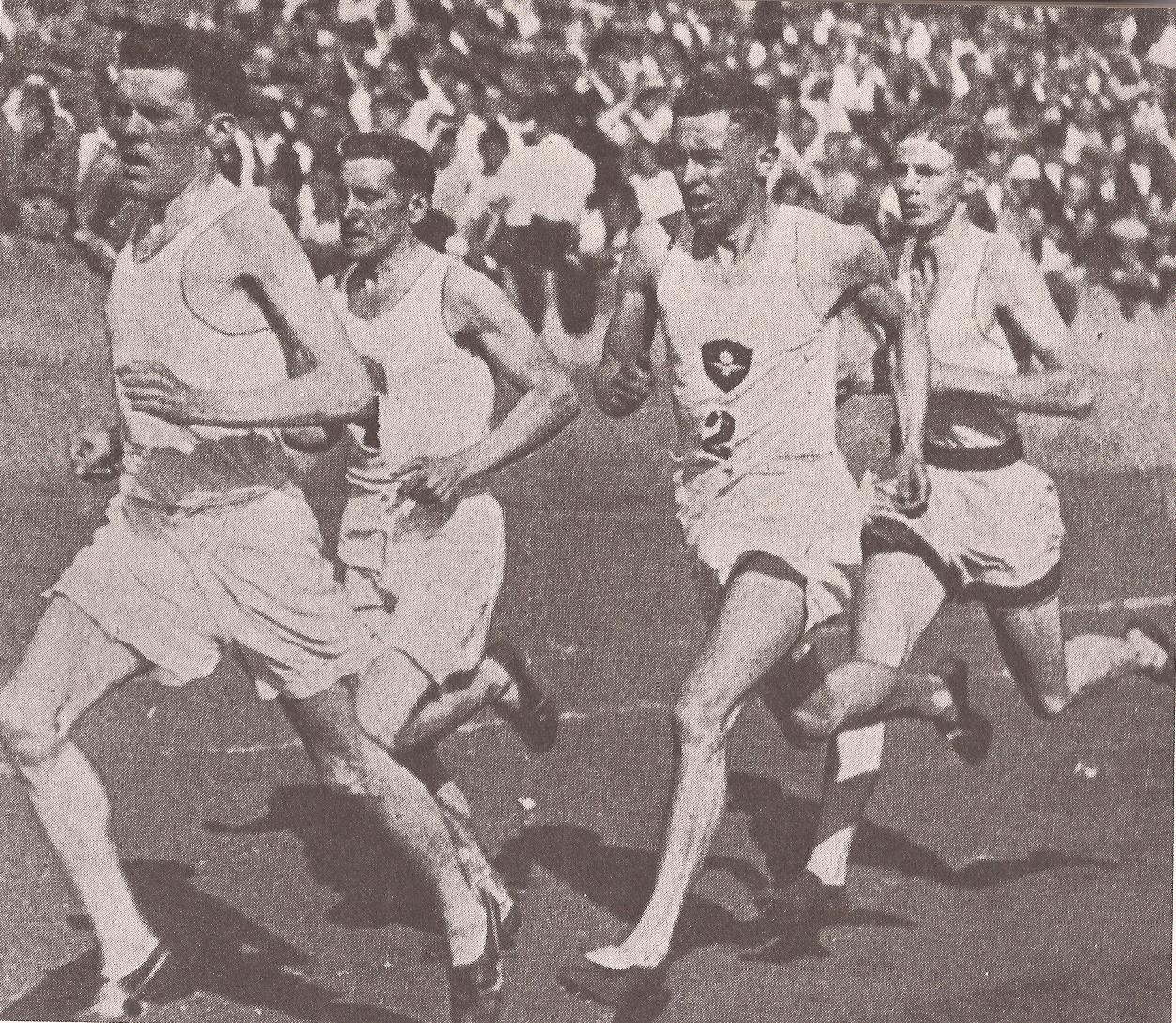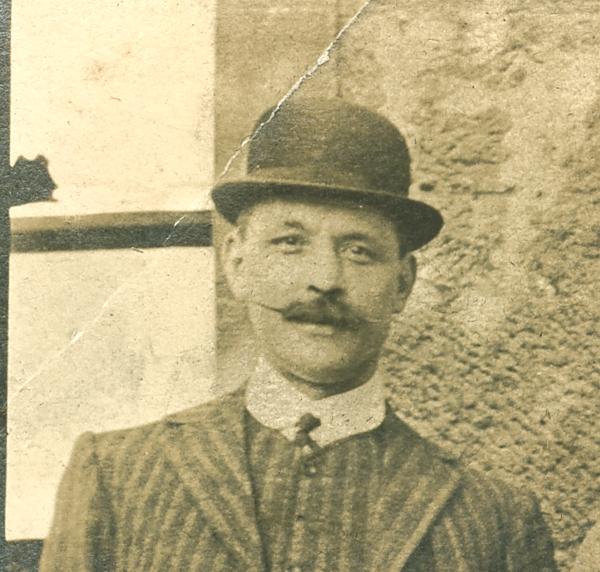
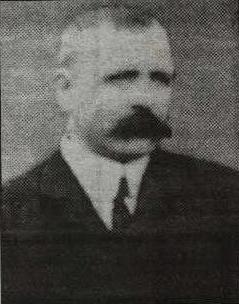
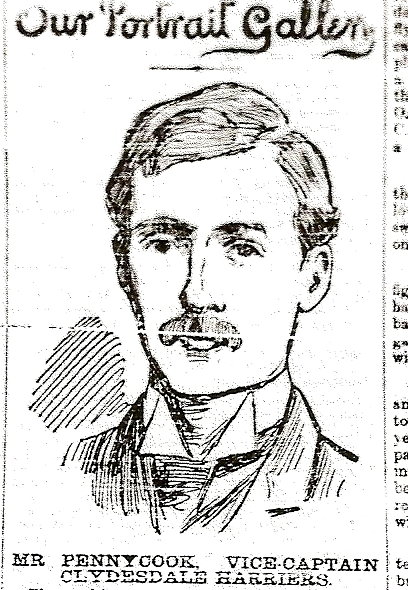
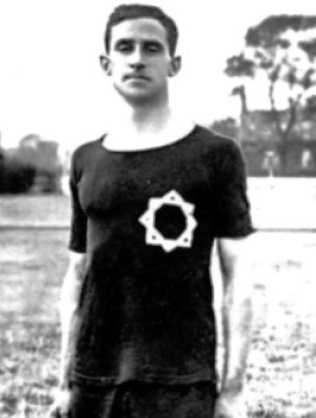
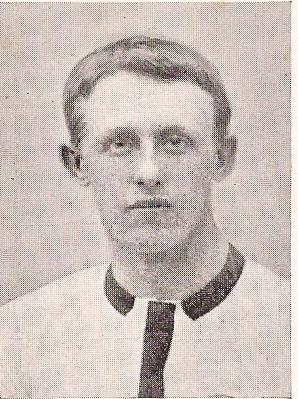
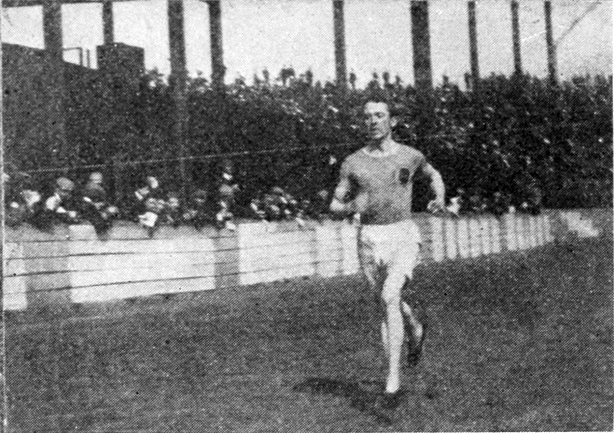
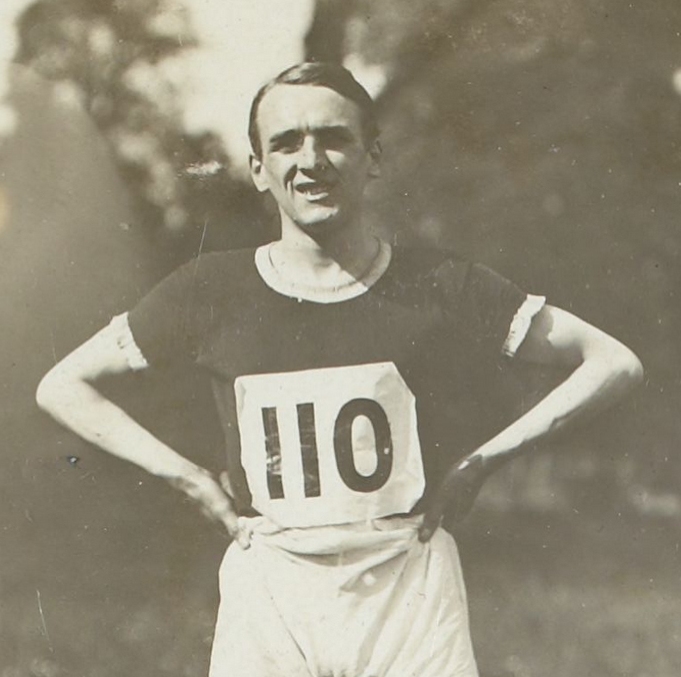
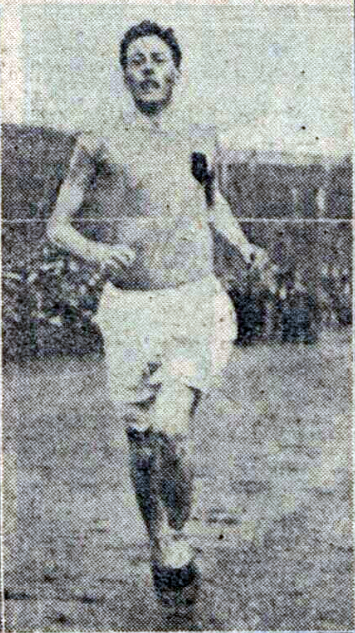
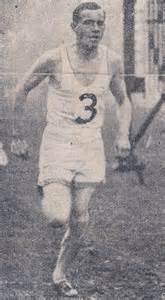
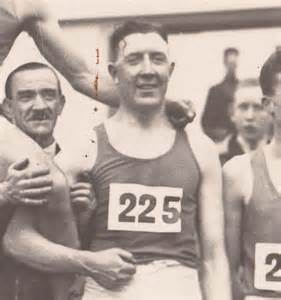
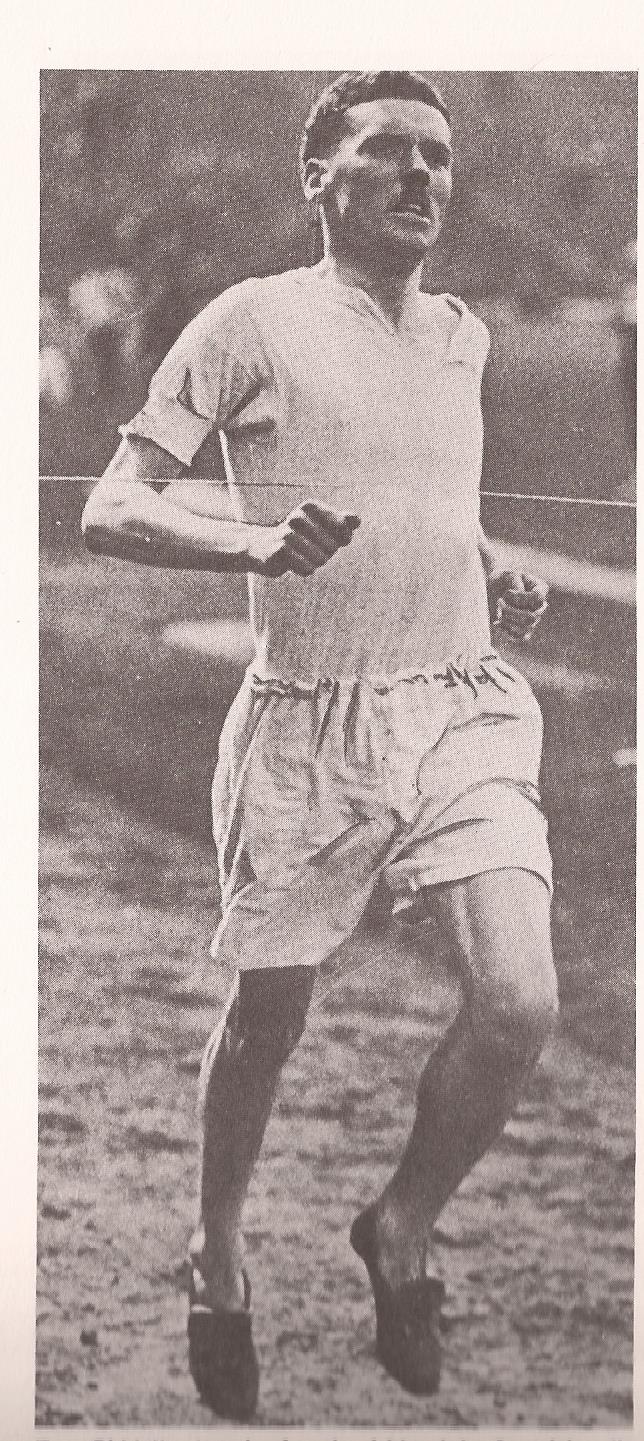
One of the first anti-official stories I ever heard on coming into the sport was by one of Scottish sport’s most respected officials, David M Bowman of Clydesdale Harriers. It was of the days when athletes achieving a particular time in their event were awarded a standard badge, whether they were medallists or not and the standard time for the marathon was marked by a starting pistol being fired into the air. It was about Tommy Rewcastle of Plebeian Harriers who finished the SAAA Marathon Championships in three hours and one second when the standard was three hours – the starting pistol was fired almost in his face as he crossed the finishing line one second outside the standard. David was always a runners’ man and a marathon runner himself but he was really incensed about this more than ten years after the event. Justifiably so in my opinion. I was told the story in about 1960 or 1961 when I was starting to get selected for the E-G and Plebeian Harriers were on their last legs by then – the last appearance in the E-G was in 1957 and although some individuals turned out on the national cross-country championship into the very early 60’s, it folded about that time. James Neilson, the founder and driving force had died towards the end of 1948 and the tribute to him will be printed below. Percy Cerutty said that only the forgotten are dead, so how is it that a really first rate club such as Plebeian Harriers is forgotten? And how is it that a club from south of Glasgow had such a name? Two questions ask themselves – was the club as good as it seems, and when did it appear on the stage?
First, it was undoubtedly a very good club. It was at its redoubtable strongest in the 1930’s and it overlapped the War. We could maybe start by looking at the statistics.
THE EDINBURGH TO GLASGOW RELAY
| Year | Position | Comments | Year | Position | Comments |
| 1930 | 1st | Ingram (1) and Gunn (2) set inaugural stage records | 1949 (1) | 12th | |
| 1931 | 1st | Clark (1, record), Rayne (2), Tombe (5) fastest on stage | 1949 (2) | 10th | |
| 1932 | No | Race | 1950 | 10th | |
| 1933 | 1st | Gunn(1), Rayne (2), McGregor (3), Armstrong (7, record) all fastest on stage. | 1951 | 7th | A Smith (2) fastest on stage, moved up from 4 to 2 |
| 1934 | 4th | Tombe (6) fastest on stage | 1952 | 10th | A Smith (2) fastest on stage, moved from 15 to 7 |
| 1935 | 3rd | Duff (3) and Tombe (6) fastest on stage | 1953 | 13th | |
| 1936 | 3rd | 1954 | 12th | ||
| 1937 | 6th | McAllister (3) and Connelly (5) fastest on stage | 1955 | 13th | |
| 1938 | 4th | 1956 | 18th | ||
| 1939 | 4th | 1957 | 20th |
If we have a look at the National cross-country results, starting in season 1925/’26 we have the following.
| Year | Team Position | Runners | Comments |
| 1925-26 | 5th | Gunn 22, Allan 26, Connelly 54, Tombe 57, Ferguson 66, McCallum 71 | |
| 1926-27 | 6th | Tombe 11, James 22, Ferguson 41, McCallum 63, Hollinger 76, Connelly 86 | |
| 1927-28 | 2nd | Tombe 4, Gunn 5, Rayne 10, Connelly 26, McCallum 36, James 41 | Rayne came in as a first year Junior. |
| 1928-29 | 3rd | Gunn 3, Connelly 20, James 23, McCallum 33, McKnight 39, Lamont 49 | |
| 1929-30 | 3rd | Gunn 3, Rayne 4, Ingram 21, McCallum 43, Connelly 48, Ferguson 53 | |
| 1930-31 | 3rd | Gunn 3, Connelly 26, Clark 27, McGhee 34, Tombe 45, Lamond 49 | |
| 1931-32 | 3rd | Rayne 5, Tombe 12, Armstrong 17, McGhee 30, Ingram 35, Fraser 57 | |
| 1932-33 | 4th | Tombe 2, Armstrong 24, Gunn 26, Illingworth 28, McGhee 44, Duff 53 | |
| 1933-34 | 1st= | Tombe 4, McGregor 8, Gunn 12, Illingworth 33, Rayne 34, Duff 35 | Equal first with Dundee Thistle |
| 1934-35 | 6th | Gunn 13, Duff 16, Hall 41, Rayne 43, Tombe 53, McGhee 56 | |
| 1935-36 | 4th | Gunn 3, Tombe, Hall 28, Kerr 30, H Wilkie 44, J Wilkie 49 | Equal fourth with Shettleston |
| 1936-37 | 3rd | J Wilkie 12, McGregor 24, Tombe 25, Kerr 41, McAllister 42, Gunn 54 | |
| 1937-38 | 8th | Moffatt 35, McGrath 46, J Wilkie 49, Robertson 63, Connelly 67, Aird 98 | |
| 1938-39 | 13th | J Wilkie 16, Moffatt 39, Connelly 68, Warren 84, Chalmers 134, McGrath 135 | The first year that any counting runner was outside the first 100 |
The club did of course provide several international athletes, the most prolific of whom was WJ Gunn who represented Scotland in 1928, 1929, 1930, 1931, 1932 and 1936. M Rayne with one run in 1930 and SK Tombe with three (1928, 1933 and 1934) were the others. I have shown enough above to indicate that the Plebeian Harriers was one of Scotland’s top clubs with many really first class runners in their ranks. Other than Alex Armstrong, I can’t see any who were members of other clubs prior to their debut for them, and Maxwell Rayne was a first year Junior when he was tenth in the National in 1927-28.
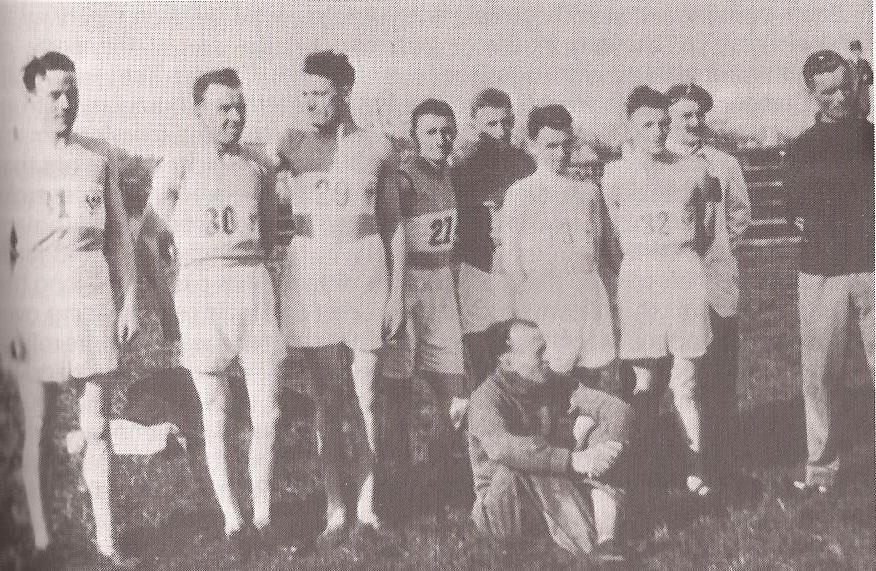
The Scottish team at the 1933 ICCU Championships at Caerleon, Wales. SK Tombe (Plebeians) is third from the left.
Others are H McIntosh, J Givin, J Suttie-Smith, J Flockhart, WD Slidders, W Hinde, R Gatons and RR Sutherland in black jersey. Seated: J Wilson.
Second behind England, Colin Shields says that this was the most successful team in international history
Photograph from ‘Whatever the Weather’
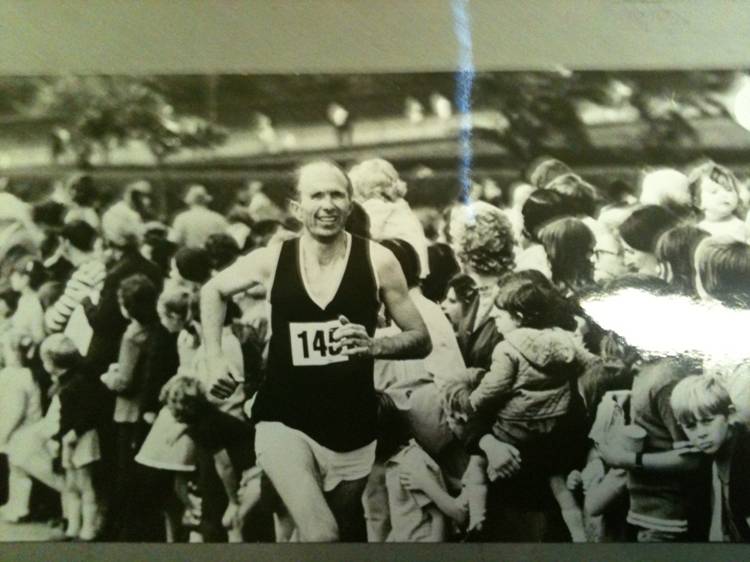
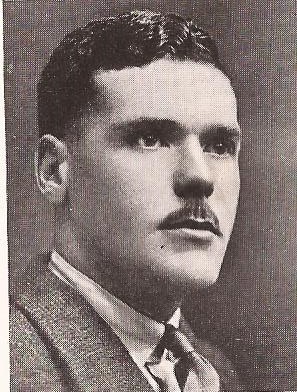
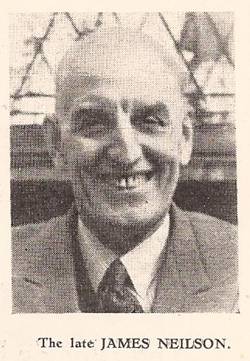
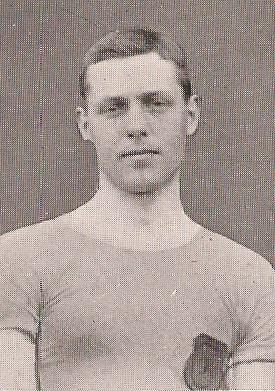
The photograph at the top of the page comes from a tribute to James Neilson published in the ‘Scots Athlete’ in the December 1948 issue of the magazine and it is reproduced in full here.
James Neilson: A Tribute.
Never could that much abused word ‘sportsman’ more literally or truthfully describe anyone than the genial, warm-hearted Jimmy Neilson, whose sudden death at his Netherlee home recently saddened a huge circle of friends in this and many other sports, for he was all that we mean when we speak of the perfect sportsman. Generous in victory and cheerful in defeat, he made friends quickly and kept their esteem always. His sage advice on athletics and there were few so shrewd advisers, was unstintingly given, but I think the secret of his success and popularity was the whole-hearted enthusiasm he threw into everything that took his interest.
From his youth he was vitally interested in sport, and he competed successfully as a Bellahouston Harrier, but it was with Plebeian Harriers, the club he founded, that his name became synonymous. And Jimmy really WAS Plebeian Harriers. Starting off with a bunch of young lads, he fired them with his own infectious zest, inspired in those around him a grand team spirit, so that Plebeian swiftly advanced to become one of our leading clubs and to win all the main honours in cross-country. Reward for the diligence of the young club’s pioneers working under Jimmy’s organising influence, came when the club won title after title, and particularly when racing for youths became general, for to catch them young was always his theory, one which he had to defend against many critics.
Under his guidance, Plebeian won
the Novice team title,
the individual title three times,
Western District junior championship,
Midlands District junior championship,
and individual title and
tied with Dundee Thistle Harriers for the National championship in 1934
But it was in relay racing that the “Plebs” made their biggest hit. They won the Western Relay and were four times successful in the Midlands relay, while their special training and Jimmy’s shrewd, carefully studied tactics made them supreme – against, man for man, more renowned teams – in the early Edinburgh to Glasgow relays. Successes in this race probably gave Jimmy Neilson a bigger kick than any other, for “Plebs” although they kept on winning were never the form selection.
As a legislator he was equally forthright and hard working. He was an Hon. Vice-President of the National Cross-Country Union. Aye, Scottish athletics is much the poorer by his passing. So many of us have lost a loyal affectionate friend.
Now we have a partial answer to the query about their origins: James Neilson was the founder, or one of the founders, although he is given sole credit in the article above. But when did they start up? Although they continued well after the War, their best days were clearly before 1939. They had been producing good young athletes with teams in Junior races so there is no telling what they might have achieved without the six year break in activities. They trained south of the Clyde and the last runner of note that graced their colours was Alec Small who eventually moved to Victoria Park in 1958 after Plebeian Harrers finished twentieth in 1957 and dropped out of the race. He trained for a while in Renfrew at the King George V Playing Fields with Alastair Johnston and Albert Smith of Victoria Park and Alastair had this to say: “I knew Alec back in the early 60’s – he and his pal Harry Carson were introduced to my older brother and myself by a friend who used to run for Renfrew YMCA. They had just left Plebeian Harriers and joined Victoria Park. We all used to train at Renfrew’s KGV Playing Fields when not at Scotstoun, and it helped us a lot in getting started. I think that the Plebeians, or what was left of them trained at the KGV playing fields.”
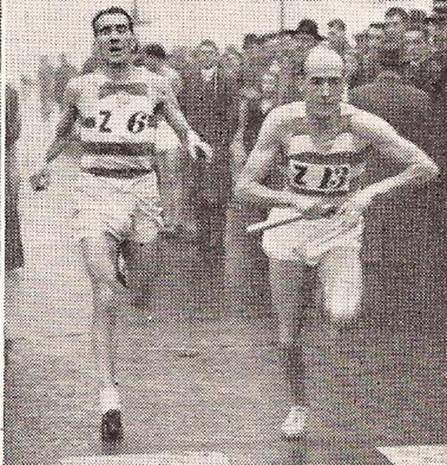 Andy Forbes to Alex Small in the Edinburgh to Glasgow Relay
After the war they kept on competing and turning out in the traditional road and country races but the results were not as good as before the war. They continued to slide down the team results sheet and by January 1955 they were twenty third in the McAndrew Relay. In November 1958 they were a lowly tenth in the South Western District Cross Country Relay at Paisley. They did produce some very good runners and there were two in particular worth looking at in detail. Their two best athletes after the War seemed to be Alex Smith and then Alec Small. Smith first appears in the records as a Youth in 1946-47 when he was thirty first and second scoring runner in the Plebeians third placed team. Two years later he was twenty second in the team that was third in the Junior championships and as a senior man he was thirty eighth in 50-51, and fourteenth in 51-52.
Alec Small appears as a Junior in the 1952-53 championships when he finished seventeenth before turning out as a senior the following year. He was forty fourth in 1953-54, missed two years before turning out for Victoria Park in 1956-57 and placing tenth, in 1957-58 where he was thirtieth and 1959-60 when he was away back in 122nd which was his last appearance in the National.
It was a bit different on the roads in the Edinburgh to Glasgow relay. Alex Smith’s first showing was in November 1949 when he was third fastest on the third stage and kept the club in thirteenth position. He was equal sixth fastest with Alex Breckenridge in 1950 when coming from nineteenth to thirteenth on the second stage. His first fastest stage time was in 1951 on the second stage when he brought his club from fourth to second although it would eventually finish fourth. 1952 was the first time the two Alex’s would be in the same team. Alex Smith was on the second stage where he brought the team from fifteenth to seventh with the fastest time of the day, and Alec Small was on the sixth stage where he dropped from seventh to eleventh. A year later they ran first and second in the team that finished thirteenth – Small was fourth on the first stage and then Smith dropped down to ninth on the second. In 1954, Smith was again on Two where he was eighth fastest and brought the team from fifteenth to tenth, while Small was on Six again and with a very poor time, was good enough to stay in fourteenth. No Alex Smith in 1955 meant that Alec Small was on the second stage and he came from thirteenth to ninth with the seventh fastest time. In 1956, with ninth time on Stage Two, he came from twentieth to fifteenth in the seventh fastest time. In 1957, when the club finished twentieth, he was not there and the following year Plebeian Harriers were out of the event for good and Alec was running for Victoria Park. He ran for Victoria Park for a couple of years but eventually emigrated to Canada.
Plebeian carried on but the last result in the SCCU Championships where they are mentioned is that for 1963 when only two men ran – and they finished 134th and 136th. So we now have approximate dates and as part of the search for the origins, I went to Colin Shields’s book “Whatever the Weather: the official history of the SCCU”. He says, “the sport grew in popularity after the War with new clubs constantly being admitted to the Union. These included Dumbarton AAC, Eglinton H, Plebeian H, Mauchline H, Canon ASC, Selkirk H and Beith H. …… One application caused such controversy that it was referred for consideration to the AGM. This was from the Socialist Harrier and Athletic Club and was, after a great deal of discussion, rejected by 19 votes to 14 with the justification that the proposed name and the red flag on their vest was objectionable.” One of the theories being floated by some of us was that the club had sprung from the Worker’s Educational Association, or the Trades Union movement following the English example of setting up Cycling Clubs, Swimming Clubs and even a ‘London Plebeian Harriers’. The latter seemed a promising lead but it would seem that the truth is simpler – it was set up in Glasgow and Renfrew by experienced Scots. The name is still a bit of a mystery – we know of the Roman Patricians and Plebeians of course but if anyone why the name was chosen it would be interesting.
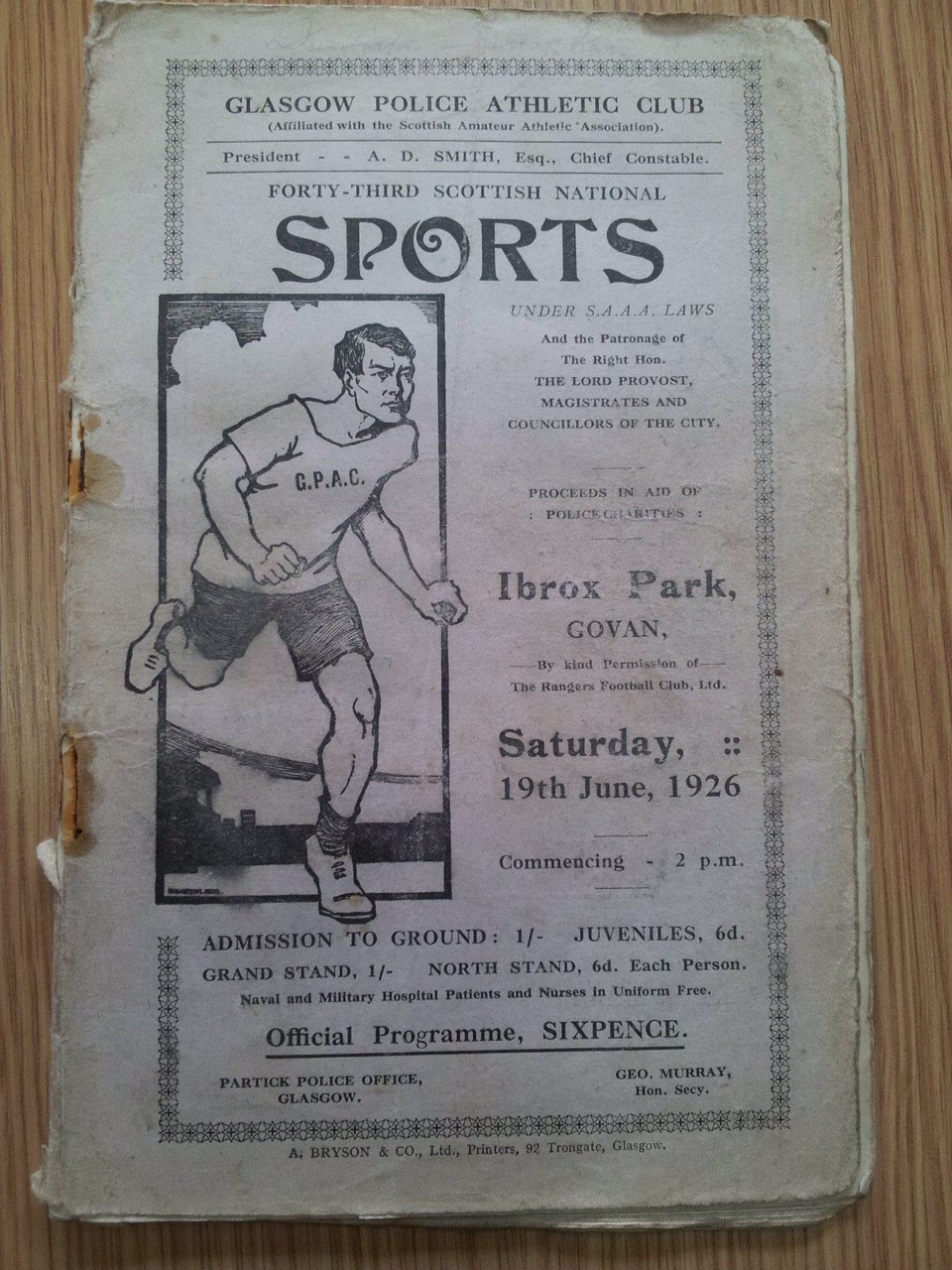
THE IBROX CARNIVAL
Although now run under the rules of the Scottish Amateur Athletic Association, the sports meeting in conjunction with the Glasgow Police Athletic Club maintains most of its old characteristics. Juvenile dancing and piping are prominent features, and on Saturday there were included in a long afternoon’s programme such Highland gathering events as tossing the caber, Cumberland wrestling, a high jump characterised as a running high leap and a tug of war. In the last named contest the Glasgow Police again proved their prowess by disposing of the Corporation Tramways representatives. The attendance was estimated at little short of 18,000, showing that the meeting had lost none of its attractiveness for those who like a feast of good things. The flat races, though few of the champions were present, provided some good finishes, there being two dead-heats in the open 100 yards and a very close finish in the final, while the closing stage of the furlong was almost equally thrilling. The meeting was well managed and expeditiously carried through, the last event on the programme being finished in advance of the time table.
The Glasgow Herald, 4 July 1921.
That was the report in its entirety for the first meeting of the decade. There was to me a wee bit of condescension in the first two sentences but the public clearly didn’t feel put off if we judge by the attendance which was bigger than it would be in most years thereafter. The absence of big names such as could be drawn to compete at the Rangers FC and Celtic FC Sports did not affect the quality of competition on a meeting which at this point came the week after the SAAA championships and clashed with the AAA’s in England. Later in the decade it would settle into a slot the week before the SAAA Championships and would prosper because of that.
Results
100 yards: 1. H Blair (Olympic Harriers 7 yards); 2. J Williamson (Dumbarton AAC 8). 10.2 seconds. Won by Inches.
220 yards: 1. H McDowell (Paisley YMCA 15 yards); 2. H Harvey (Shettleston Harriers 13 yards). 23.8 seconds. Close finish.
440 yards: 1. HJ Christie (West of Scotland 15 yards); 2. J McAlpine (Bellahouston H 12 yards) 51.8 seconds. Won by a foot.
880 yards: 1. M Anderson (Shettleston Harriers 53 yards); 2. J Pollock (Bellahouston 52 yards). NTG
Mile: 1. JB Craig (Bellahouston Harriers 100 yards); 2. AB Lawrie (Garscube Harriers 105 yards). 4:30.8. Won by two yards.
There were fourteen events in all plus of course a five a side football competition in which Rangers with 1 goal and 2 corners beat Clyde who only had 1 goal. The close finishes above indicate a good afternoon’s sport with decent handicapping and there were several competitors who would be well known to future generations – I select only George Dalls who was third in the quarter mile (‘a good third’) and fourth in the half mile.
*
The 1922 sports were held on 1st July – a date which again coincided with the AAA’s championships in England and press coverage suffered because of that. The weather was showery (for Glasgow in July, maybe to be expected) and a crowd of approximately 10,000 turned out for the event. The reporter seemed more accepting of the meeting than in 1923 with fewer asides incorporated in the report. The principal open results are noted.
100 yards: 1. H Savage (Glasgow YMCA 10 yards); 2. G Drummond (West of Scotland 4.5 yards). 10.2 second. Won by half a yard.
220 yards: 1. JK Braid (Shettleston Harriers 12 yards); 2. J Brown (Maryhill Harriers 13 yards). 23 seconds.
440 yards: 1. J Cromar (West of Scotland 18 yards: 2. LS Barton West of Scotland 8 yards). 51.6 seconds.
880 yards: 1. R Clark (Glasgow YMCA 50 yards); 2. TH Hamilton (Bellahouston Harriers 46 yards.) 2:02
Mile: 1. T McGill (Maryhill Harriers 135 yards); 2. JJ Quinn (Shettleston Harriers 135 yards). 4:25 seconds. A close finish.
Two Miles Walk: 1. E McLeod (Shettleston Harriers 100 yards); 2. W Armitage (Shettleston Harriers 155 yards); 3. C McLellan (Glasgow Police & Shettleston). Won by 10 yards, a similar distance between second and third.
The programme also included some races for ‘Youths’, field events, wrestling, tug of war and events confined to policemen.
*
On 30th June 1923, the Glasgow Police Sports were held, as usual, at Ibrox and the report began with some very interesting information on the history of the meeting. It read:
The Sports Meeting of the Glasgow Police Athletic Club has now achieved venerable antiquity, the gathering at Ibrox on Saturday last being the 40th of the series. For many years the meeting was a professional function, but latterly the organisers were persuaded to come under the laws of the SAAA and the sports have ever since been confined to amateur athletes. The club have had little reason to regret the change, as is evidenced by the attendance of fully 10,000 at Ibrox. As has always been the case, the sports combined the usual features of an athletic meeting with those generally associated with the Highland Games, the events including tossing the caber, piping and dancing, tug of war, and a variety of field and heavy events. The outstanding feature of the meeting was the success of TR Nicholson, the Scottish champion, who secured first place in the three events in which he competed – putting the ball, throwing the weight and tossing the caber. Duncan McPhee, the mile and half-mile champion, ran somewhat disappointingly in the former event, making little impression on the long start men, and he did not turn out in the mile having left for Edinburgh before that event was called.
CHAMPIONS BEATEN
In the Two Miles Walk Colin McLellan, the Three Miles champion, was unable to concede the starts asked of him. The distance, as has been previously stated is too short to allow him to display his staying powers. KM Smith won the high jump with a moderate performance buit he stood down from the pole vault owing to a recent injury. Duncan McPhee at the conclusion of his heat in the half mile travelled to Edinburgh where he was no more successful than at Ibrox, the mile being won from 140 yards and the half mile from 35. JG McColl the quarter mile champion is another champion who could not concede the handicaps although he did win his heat.”
In 1924, the meeting was held two weeks after the SAAA Championships which had been on 14th June with the AAA’s Championships on the 21st. With established meetings such as the Queen’s Park FC Sports on the first Saturday and the Greenock Glenpark meeting on the second Saturday and many other meetings also on these weeks, the only way for the Police Sports to go was to the end of the month. In poor weather conditions and with none of the really big names competing, the crowd was only an estimated 10,000. Results of the confined events were as follows:
100 yards: 1. J Crawford (QPFC 9.5 yards); 2. AMorrison (GUAC); 10 seconds. Won by inches.
220 yards: 1. P Gardiner (Bellahouston 9 yards); 2. P McIntyre (Maryhill H 9.5 yards). 23.2 seconds. Won by a foot.
440 yards: 1. JG McColl (GUAC 10 yards); 2. W Neilson (Plebeian Harriers 32 yards) 53 seconds. Won by 10 yards.
880 yards: 1. JW Stepley? (Shettleston H 46 yards); RR McIntyre (West of Scotland 13) 2:01.2. Won by inches.
Mile: 1. WH Calderwood (Maryhill H 40 yards); 2. J Mitchell (Mauchline H 65 yards). 4:32.8 Won by a yard.
The report on the meeting of 22nd June, 1925 read: The Glasgow Police Club are to be congratulated on the success of their forty second annual meeting at Ibrox Park, as it was so admirably organised that the somewhat unwieldy programme was finished ten minutes inside the estimated time schedule. The brilliant weather conditions also played their part with the result that few of the 20,000 spectators saw reason to depart before the programme was completed. In the circumstances it was not surprising that times ruled very fast. In the open sprint even times was clocked no fewer than six times in the Heats and semi-finals, and in the Final of the same event the winner, JNK Clarkson, of Edinburgh University was returned as having run 9 4-5th seconds. As he was running from the 10 yards mark, the old Watson’s College boy seems to have been generously dealt with. The feature of the sprint however was the strong running of J Crawford and R McLean. The first named, although unplaced in the final, won his heat and dead-heated in the semi-final in even time, and as he was running from the three-quarter yard mark, these efforts indicate that EH Liddell will have to travel to retain his title at Hampden. McLean who finished second, a yard behind Clarkson, also returned evens in his semi-final.
Clarkson almost brought off a double, being beaten only by inches in the final of the furlong, and another Edinburgh competitor, JS O’Hara, a Navy man who runs in the colours of Edinburgh Northern Harriers, captured the open mile in 4:23.
The meeting in 1926 was a success – if you call an attendance of 16,000 and a new Scottish record a success, that is. Held at Ibrox in dry but dull weather, A Smith set the new record for the shot putt with 32′ 8″which added 1′ 11″ to his previous best set at the SAAA Championships the previous year. There were six confined events with the half-mile being won by Donald MacLean from Greenock in 2:04 from scratch, the report read “won easily.” It was an enjoyable meeting but none of the recognised ‘;stars’ were in action in any of the 13 open events.
On 18th June 1927, the crowd was a bit smaller and the report read: “The 44th annual sports meeting of the Glasgow Police Athletic Club was held at Ibrox Park, Glasgow on Saturday afternoon in showery weather and before an estimated attendance of 14,000. The sport, especially in the flat events, was always interesting and the performances were of a fair level. Outstanding were Donald MacLean’s successes in the confined half-mile and in the mile. The latter event was run in two sections, first class and second class, the first embracing all runners under 95 yards, and the second those with concessions of 100 yards and over, and the experiment can be judged a success. AC Nicolson’s putt of 42′ 6″ and JF Mair’s pole vault of 10′ 3″ were the other individual performances of merit. A parade by the pipe bands taking part in the pipe band contest lent a picturesque touch to the proceedings.”
What constituted a fait standard in 1927? First two places in the open events are noted:
100 yards: 1. P McIntyre (Maryhill Harriers 6 yards); 2. A Mackintosh (Glasgow Harriers 9.5 yards). 10.4 seconds. Won by inches.
220 yards: 1. WG Lawn (Bellahouston H 9 yds); 2. J McColl (Bellahouston Harriers 9 yds) 23.8 seconds. Won by inches.
440 Yards: 1. TJ McAllister (Beith H 18 yds); 2. R Davie (Springburn H 26 yds). 52.2 Won by a yard and a half.
880 yards: 1. JR Orr (Glasgow YMCA 60 yards); 2. KA Smith (Glasgow YMCA 37) 2:01.8. Won by three yards.
Mile (first class): 1. D MacLean (Maryhill H 25 yards); H Boyd (Bellahouston H 65 yds). 4:27.8. Won by 10 yds.
Mile (second class) 1. J Dobbie (Garscube H 130 yards); 2. SC McKenna (Plebeian H 130 yds) 4:27.6. Won by four yards.
Interesting to note that the handicapping produced almost identical winning times for the two Mile races and to speculate on how they would have finished had the fields been amalgamated.
The event was held on June 16th in 1928 and the fairly common complaint about the length of the programme surfaced again. “As the years go on the programme submitted at the Glasgow Police gala grows bigger and bigger, and after Saturday’s experience it may be well in the officials responsible curtailed it somewhat, or held eliminating trials which would obviate the proceedings lasting inordinately long. Five hours of athletics, even of the variety submitted on Saturday, is too much for the ordinary individual, and while recognising that the police draw their support from persons who are more interested in themselves than in the sport, and have to cater accordingly, a little more consideration would enable their meeting to follow the proceedings in a more enlightened way. Nevertheless the sport, especially in the flat events, was always interesting and good.
The strong contingent from the Dublin Civic Guards who were competing met with success in good measure, and one of them, M Glynn, had the rare experience of winning three handicaps in one afternoon. Glynn won all three events – 100 yards and 220 yards confined and 100 yards open – with ease, and if, as we understand, his handicap at home is one yard more than he received on Saturday the standard in Ireland must be much higher than it is here. A compatriot, MM Abader, occupied second place in both confined sprints, and also took second place in the open furlong, so that he too had a good afternoon. In contrast W Shannahan, the Irish high jumper, would have had to clear 6′ 4″ to win the high jump, and his 5′ 10.5″ did not even find a place in the prize list.
A KEEN RELAY
Because of Saturday’s Scottish Championships, the racing in the mile relay attracted most attention. Here quite a number of potential candidates were in opposition, the half-mile leg bringing D McLean and JD Hope together. The Maryhill men had distinctly the better of Saturday’s argument handing over with fully four yards in advance of the present half-mile champion, and it may be that with weak opposition promised at his own distance, the mile, McLean will have a cut at the half-mile also. With HC Maingay added to the field, this would be a race worth seeing. With this advantage Maryhill looked winners, but with PW Brown holding his own against WP Andreoli and the two last West of Scotland men putting in a bit extra, the expectations of the crowd were upset. The final quarter was thrilling. Clark got away with actually a two yards lead, lost it to DE Duncan, Maryhill’s last man, in the back straight, yet had enough stamina left to deliver a challenge in the home straight that Duncan could not resist. The open half-mile, won by J Hood, a Shettleston Harrier, who has dropped from nowhere to the 20 yards mark, showed that we have here a winner of quality. He mastered his field in stylish fashion, and had reserve enough left to turn out later to win his heat in the quarter mile, and finish second in the final. D MacLean turned out in the first class mile, but as he had already run two fairly fast half miles earlier in the meeting he contented himself with a view of the leaders at the finish.”
The field events were reported to be not up to the standard pf some of the past meetings with the exception being GE Mitchell in the Hammer who threw 111′ 4″ which beat his own record of the previous year. Winners of the open track races were
100 yards: 1. M Glynn (Dublin Civic Guards 2.5 yards); 2. JC Blossom (GUAC 7.5. 10.4 Won by two yards
220 yards: 2. R Hamilton (Lenzie RFC 12 yards); 2. MM Abader (Dunblin CG 13 yards); 22.8 seconds. Won by inches.
440 yards: 1. EJ Wheeler (West of Scotland 32 yards); 2. J Hood (Shettleston H 12) 50.6. Won by two yards.
880 yards: 1. J Hood (Shettleston Harriers 20 yards; 2. J Hawthorn (Shettleston H 52 yards). 2:01. Won by five yards.
1 Mile (First Class). 1. WJ Gunn (Plebeian Harriers 65 yards); 2. SK Tombe (Plebeian Harriers 70 yards) 4:27.6. Won by two yards.
1 Mile (Second Class) 1. PJ Connolly (Plebeian Harriers 125 yards); 2. WH Bremner (West of Scotland 130 yards) 4:29.1. Won by ten yards.
The following year, the Police Sports were held on 15th June, again at Ibrox Park and before a crowd of 15,000 who had turned up on a dull day. As ever it was the week before the SAAA Championships and the report made great play of this:
“The fact that the Scottish Championships are to be decided this week lent more than ordinary interest to the meeting of the Glasgow Police Club held at Ibrox Park on Saturday afternoon, for with so many contenders for honours in opposition, it was felt that fresh light would be thrown upon their chances at Hampden Park five days hence. Particularly so was this the case in the 100 yards where RA Robb, the present holder, James Crawford and Ian Borland were all entered. Robb and Crawford ran from scratch, Borland from a yard and a half and when all three won their heats it looked as if we were to have a full dress rehearsal of next Saturday’s more important event. Fate, however, in the person of JS Smith, the old Govan High School champion and at present a student at Gilmorehill, interposed in the semi-finals where he defeated Crawford in even time by two yards.
In the final Smith again ran strongly to win from Borland by a bare yard with Robb fourth. It is rare that Glasgow University has provided three of the four finalists in an open sprint of any importance, nut it is consistent with public performances this season, as results have shown the present standard at Westerlands to be an excellent one. The riddle of who will be this season’s sprint champion will not be solved until Saturday. Crawford, who is apparently running as well as ever, is favourite in some quarters for the double event, and he has undoubtedly a great chance. On the other hand, Robb and Borland must be able to gauge their chances fairly accurately with their home running against W Wright and JS Smith both of whom have won open handicaps this season.
TWO NEW RECORDS
Two new Scottish records were created in the 56lb weight and the relay. In the weight, Alexander Smith of the Glasgow Police improved upon his own record of 1927 with a great throw of 35′ 1.5″, an advance of no less than 2′ 0.5″ , an excellent performance and one which it is questionable if any of our professional heavyweights could improve upon or even equal. The Edinburgh students returned 3:37 in the relay which is 3 sec faster than their time of 1922, when Eric Liddell was a member of their team. This accomplishment was mainly due to the fine running of HC Maingay in the half mile and D Paton in the first of the furlongs but both RL Howland and FP Reid contributed their quota to the victory over Beith Harriers and the other Western clubs. Maingay clearly showed that he has lost none of his running since last year, and in his public appearances this season he has been running well within himself. Opposed by J Calder of Beith who has shown himself to be the best of Western half-milers, the Yorkshireman let himself go and was timed as doing 1:59. He was some eight yards in front of Calder which shows that the Beith man ran a good race. The advantage gained at the handover was enhanced by Paton and the race was practically over when Howland took the baton. There is sure to be some discussion on the latter’s inclusion in the Edinburgh team as he has taken part in several competitions this season for the Achilles club.
A SUCCESSION OF DOUBLES
J Seton had a double first in the confined sprints, TJ Goldie a similar experience in the open half-mile and the first class mile, Alex Smith won the Caber in addition to the Weight. Goldie ran with fine judgment in both his races and thoroughly deserved his victories. In the Mile, WJ Gunn of Plebeian Harriers was the most prominent back-marker. He ran into second place and may well give some of the more fancied candidates something to think over when it comes to the championships. Donald MacLean won the confined half mile from scratch, but in the opinion of many, was favoured in getting the opinion of the judges.”
Results of Principal Open Events
100 yards: 1. JS Smith (GUAC 5 yards); 2. J Borland (GUAC 1.5 yards). 10.2. Won by a yard.
220 yards: 1. J Bryans (Glasgow Harriers 19 yards); 2. W Sinclair (Glasgow YMCA 14 yards). 22.4. Won by two yards
880 yards: 1. TJ Goldie (Shettleston Harriers 46 yards); EM Young (GUAC 48 yards). 2:02.5 won by 5 yards.
Mile First Class: 1. TJ Goldie (Shettleston 95 yards); 2. WJ Gunn (Plebeian Harriers 40 yards). 4:25.4. Won by 5 yards.
Mile Second Class: 1. D McSwein (Greenock Wellpark 115 yards); 2. J Gardner (Bellahouston H 130 yards). 4:26.2. Won by three yards.
Third in the second class mile was David Brooke of Garscube Harriers – along with Duncan McSwein who won the race he would also become one of the country’s top officials for a long time after th1 9139 – 45 war. Those of us who only see men like George Dallas, Duncan McSwein, David Brooke and more recently men like Rab Foreman as officials tend to assume that they were never competitors themselves. Many of them were – and they were better, more insightful, more understanding and more sympathetic officials because of it.
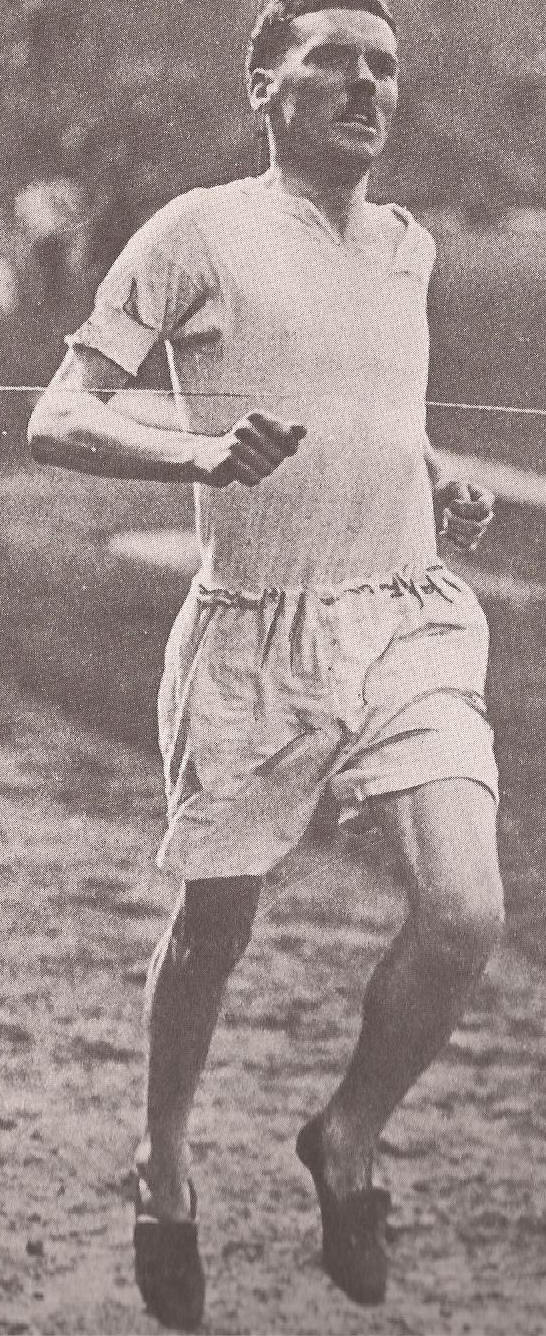
The Police Sports of the1930’s was a well-supported domestic meeting with crowds up to 20,000 attending. Famous for two things – the range of activities on offer (1939 at Hampden had a demonstration by working sheep dogs) and the time it took to get through the programme. The Glasgow Police Sports was always -with very few exceptions – held on the third Saturday of June which was the week before the SAAA Championships. In 1930 this fell on the twenty third and a crowd of approximately 15,000 attended and the report in ‘The Glasgow Herald’ repeated the complaint that there was too much on the programme – not a problem encountered very often in the twenty first century. This abbreviated report read:
“If fault were to be found with the 47th annual gala of the Glasgow Police Club, held at Ibrox on Saturday afternoon, that would not be on the score of the quality of the athletic fare provided. Competition was keen throughout and performances were up to the excellent level expected. But is it not time that the organisers gave some thought to the size of their programme? Five crowded hours of athletics can be a trial even to the most enthusiastic, and while sympathising with the aim of the promoters in seeking to cater for as wide an athletic field as possible, it looks as if a little judicious trimming to bring the programme to normal limits will have to be undertaken in the near future. Coming as it does on the eve of the Scottish Championships, this meeting of the Police has an interest of its own.
“In the first class mile, WH Calderwood served up quite a good display, although neither he nor WJ Gunn was concerned in the finish. The race was won by J MItchell of Shettleston in 4 min 22 4-5th secs, but Calderwood, in addition to defeating Gunn, was quite well placed in the time for the complete run out of 4 min 22 sec. The Mile Champion has evidently found his form in good time, for both last Saturday and this he has given good evidence of much better running than he did in the early part of the season when he appeared sluggish and stale.
“The half-mile was won in 1 min 57 1-5th sec by SF Kennedy, a member of West of Scotland Harriers, running from 38 yards and the ease with which he accomplished his victory suggests that this youth has a bright athletics career before him. Kennedy, a product of Glenalmond and possibly an inheritor of the Seagrove tradition, has been running mostly in sprints hitherto and has only recently turned his attention to the longer distance.”
How big was the programme that gave rise to the comments about its length? Well, the confined events were 100 yards (girls, boys and senior men), 220 yards, 880 yards and Mile. The open events were 100 yards (youths), 100 yards (men), 220 yards, 880 yards, one mile (first class), one mile (second class), high jump, one mile relay invitation. Women’s events were 100 yards 880 yards relay. Then there was the 880y relay schools, putting the weight, putting the 56 lb weight, throwing the discus, tossing the caber, wrestling, highland dancing and cycling. Maybe he had something to complain about!
*
The report on the meeting on 21st June the following year came up with it again. Under the headline “CHAMPIONS OUT AT IBROX” it said:
“The Glasgow Police meeting has always been noted for its comprehensive programme as well as for the excellent sport it provides, and Saturday’s gathering at Ibrox lived up to the reputation gained by its 47 predecessors. Yet, despite judicious pruning, the timetable set out by the promoters with characteristic optimism never looked like being kept to, and it was only after five hours activity that the programme reached its conclusion – much too long this for even the special public which the police club cater for, and next year the pruning knife will have to be called for again, although, frankly, it will be difficult to eliminate any of the features that make the meeting exceptional in Scottish amateur athletics. …”
The report went on to describe the sprints up to the quarter-mile and the relay although all events seemed to be well supported by good quality Scottish runners. The principal running results were as follows.
100 yards: 1. AD Turner (Maryhill) 2.5 yards; 2. LT Montgomerie (Springburn) 5.5 yards; 3. C Dale (Manchester City Police) 7 yards. Time: 10 sec
220 yards: 1. R Murdoch (Glasgow University) 2 yards; 2. DT Ferguson (Garscube H) 18 yards; 3. TL Neilson (Plebeian Harriers) 22 yards Time: 22 2-5th secs
440 yards (Invitation): 1. R Hamilton (Maryhill Harriers) 5 yards; 2. LT Montgomerie (Springburn Harriers) 13 yards; 3. JC Scott (Springburn Harriers) 11 yards. Time: 51 1-5th sec.
880 yards: 1. A Spencer (Shawfield Harriers) 54 yards; 2. J McWilliams (St Peters AC) 16 yards; 3. J McNaught (Shettleston Harriers) 58 yards. Time: 2 mins 01 sec
Mile (First Class): 1. WH Dunlop (Glasgow University) 90 yards: 2. WC Plant (Monkland Harriers) 110 yards; 3. A Ingram (Plebeian Harriers) 105 yards. Time: 4 min 26 4-5th sec
Mile (Second Class): 1. A McNie (Springburn Harriers) 135 yards; 2. W Sutherland (Shettleston Harriers) 100 yards; 3. SK Tombe (Plebeian Harriers). Time: 4 min 27 2-5th sec
The high jump was won with a height of 5’9.5″ by Sgt E Carey of the HLI and A Nicholson of Glasgow Police won the Open Pitting the Weight and Putting the 56lb weight.
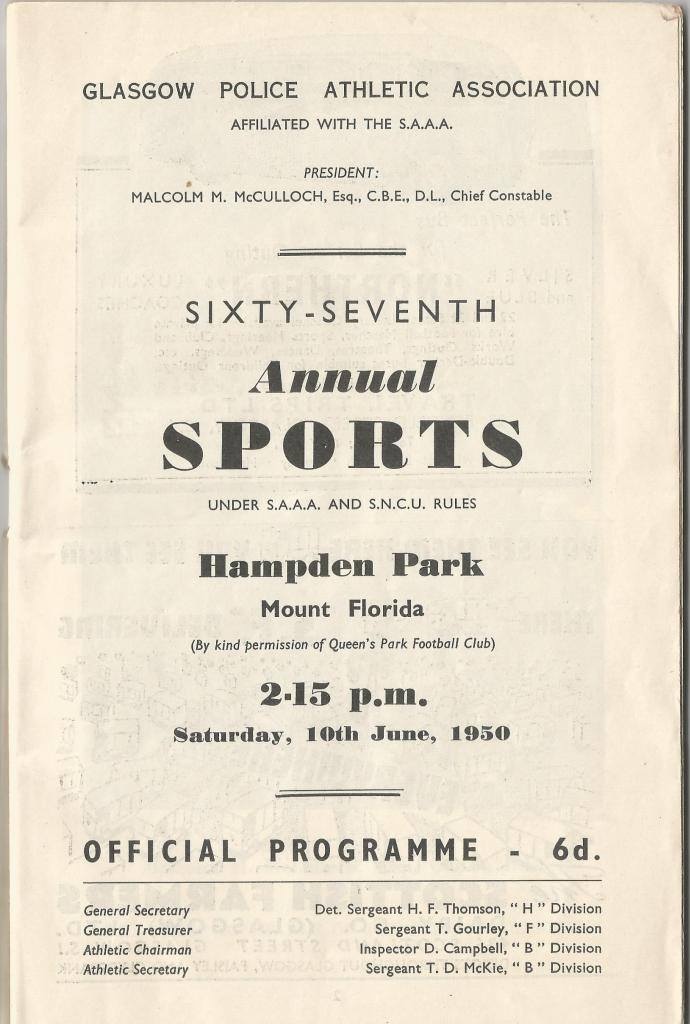
18th June 1932 was the date for the Police Sports that year and the main source of excitement was the relay. In those days ‘the relay’ meant the medley relay where teams consisted of runners over 880 yards, 2 x 220 yards and a 440 to finish. That was the Scots way of running the race, the English way was to switch the 880 and 440 so that to some minds it was a closer race for longer. It was only in about 1999 or 2000 that Scots started to mimic the English version and conclude with the 880. So for all the relays at this time, the teams started out with their 880 yard star! The meeting came the week before the SAAA Championships at Hampden, hence the sub-hgeadline of ‘Pointers for Hampden.’
“ATHLETICS. Record Relay Race. Glasgow Students success at Police Sports. If it were for nothing else than the fact that it provided the finest relay race seen in Scotland for many years, the Glasgow Police meeting, held at Ibrox Park on Saturday afternoon, must go down as one of the most successful in the long series extending back almost half a century. Promoters of a meeting such as that on Saturday are always handicapped by the size of the programme, and that it was brought successfully to a close within reasonable time reflects great credit on the organisation. With the track in excellent condition, and atmospheric conditions propitious, times ruled fast, and there were many fine performances recorded, not only by the leading runners but also by the handicap men.
NEW NATIVE RECORD. It is a coincidence that the existing native relay record of 3 mins 37 sec was made by the Edinburgh University team at the same meeting three years ago and that the figures should have been set up at the Police meeting again, and also by a students’ team, this time from Glasgow. There was some criticism on the last occasion on admitting the Edinburgh performance as a national record because of the fact the RL Howland, an Englishman, was a member of the team. There can be none this time, as M Morrison, M Stone, R Murdoch and IE Dorland are all Scottish born.
After the opening half-mile sector of the race a new record was always in prospect and it was no surprise when the time, 3 mins 34 3-5ths, 2 2-5th faster than the old time was announced. This represented excellent running on the part of all four students, and all four Maryhill men, as the national champions finished only inches behind the winners and well inside the record also. Figures on the record book, they say, are there for all to see, but what will matter to Saturday’s twenty odd thousand spectators is not so much the time, excellent though it was, but the memory of a magnificent race by both teams redolent of the highest courage.
So evenly were both teams matched that the decision was in doubt from the time the half-milers started racing seriously, three hundred yards from the first change-over, until the tape was broken. Where all did well it is possibly ungenerous to to select individuals for special mention, but it is an undoubted fact that the two men who contributed most to the excellence of the race as a spectacle were Neil Morison in the half-mile and FW Brown in the quarter. Morison has been well known as a miler for the past few seasons and has recorded many good performances over that distance, but few, even among his Westerlands admirers, realised that he could get the half-mile under even time as he did on Saturday. Nor was it expected that Brown, chiefly regarded as a sprinter, could concede Ian Borland three yards over the quarter and come close to springing the surprise of the season. Yet both things happened with the result that the race was intensely exciting.
POINTERS FOR HAMPDEN. The race itself threw some light on the problems to be solved next week-end, particularly in the half-mile which is the most open race on the championship programme. On his showing in Saturday’s race and his indifferent form during the present season, James Hood, the reigning champion, is not likely to repeat his victory, but JC Scott of Springburn, WH Calderwood of Maryhill and N Morison if he can reproduce the same form, are distinct possibilities. JC Scott has made a rapid advance during the season. He ran a very strong race on Saturday and, although beaten by both Calderwood and Morison, it must be recollected that earlier in the afternoon he had won the Police half-mile in 1 min 59 1-5th sec. Calderwood finished as strongly as he always does that he too must possess a decent chance.
Robin Murdoch and AD Turner met in the third sector and the champion getting away three yards clear of the Maryhill man and at the final change-over he had retained his lead and even slightly added to it. Murdoch was moving better than he has done this season but Turner was somewhat disappointing and it was evident that the break in his training caused by his leg injury has taken some of the fire out of him. The next week should see him better tuned up, though under the circumstances, his trainer expressed himself as satisfied.
To the best of recollection, FW Brown had only run one quarter in public prior to Saturday, and that at Knightswood earlier in the season, but after Saturday’s experience, he might be tempted to give more attention to that distance. Had he delayed his challenge for another 20 yards or so, he might have won. As it was, when he caught Borland 20 yards from the tape and got in front, it was only the reserve strength of the old Cantab that got him home by the barest margin.”
Relay result: 1. Glasgow University (N Morison, N Stone, R Murdoch, IH Borland); 2. Maryhill Harriers (WH Calderwood, D McBride (?), AD Turner, FW Brown).
The 1933 Games were almost a replay of the headlines for the meeting. “Exciting Relay At Police Meeting” topped the article and a sub-head halfway down read “A Championship Pointer”. The relay was just as exciting but the result was different – Glasgow Police won from Glasgow University with Maryhill Harriers third – although many of the personnel were the same. The big race of the meeting however was an invitation mile with all the best men in the country invited. Although there was one withdrawal on the day, the star miler of the thirties, the man with the charisma and talent to match, Tom Riddell did appear in what was a good race.
“TOM RIDDELL’S VICTORY. The invitation mile was shorn of some of its interest by the absence of JPLaidlaw, but Tom Riddell ran his usual sterling race under probably the worst conditions of the afternoon. The wind was at its strongest and the rain was falling, so that record breaking was out of the question, and the mile champion concentrated on running a race suitable to the conditions. He forced the pace in the first three laps, yet was strong enough to catch the leader, J Gifford, in the back straight, to go on and win comfortably by 10 yards in 4 min 25 sec, a time that was distinctly good under the circumstances.”
Comments on the weather were interesting: cold blustery rain with blustery showers kept the crowd down, but as the report said, most of the sports promoting clubs would be pleased if they could attract 15000 spectators under even the most pleasant of circumstances! Results of the Mile and Mile relay:
Mile: 1. TM Riddell (Shettleston) scr; 2. J Gifford (Victoria Park AAC) 15 yards; 3. WJ Gunn (Plebeian H) 40 yards. 4:26
Mile Relay: 1. Glasgow Police (J Scott, M Shaw, E McKinnon, and R Davie); 2. Glasgow University (N Morison, I Borland, R Murdoch and NM Glen); 3. Maryhill Harriers (WH Calderwood, AD Turner, FWBrown and R Graham) won by two yards. 3:40.2
JR Scott of the Glasgow Police was the star man of the meeting on June 2nd, 1934, when he won the first stage of the medley relay in 1:58.8 and Duncan MacLean in the confined handicap half-mile was not far behind when he won in 1:58.6 from a mark of 8 yards. The Police team won the relay for the second year in succession from Glasgow University and Maryhill Harriers in 3:37.6. No big names although there were several former SAAA Champions, but it was a good meeting with a good crowd on a good day weather-wise. The next year’s meeting was on June 17, 1935, when the big name on the programme was Tom Riddell and Bobby Graham and Harry Haughie -well known to post-1945 runners – were also on the programme. The ‘Glasgow Herald’ report said:
“The Glasgow Police Club have a public all their own and it was not surprising to find their annual meeting, the 52nd of the series, attracted the best attendance of the season to Ibrox Park on Saturday afternoon. Because of their particular place in the realm of Scottish athletics, the Glasgow club are committed to a programme which because of its variety is always colourful, but one is tempted to think that because of this same variety the purely athletic side is apt to be submerged.
TM Riddell was the outstanding competitor, and the Scottish champion chose to run in the ordinary mile handicap instead of a small selected field. This was reminiscent of old times, when the reigning Scottish champion made a practice of it, but it was obvious on Saturday that Riddell, with over 100 runners in front of him, had set himself a hard task. This was not so apparent in the first two laps, but in the third when he began to pick up his men he was compelled to chop his stride repeatedly in threading his way through with the result that his pace was slowed down. He was 50 yards behind the leaders at the bell, and although he made ground over the last quarter, was 30 yards behind when the winner broke the tape. Riddell’s lap times were 60 5-10th, 66, 70 and 66 1-10th sec. H Haughie of Springburn Harriers, who won the race off 140 yards in 4 mins 18 4-10th sec, has been competing at open meetings for nine seasons yet this represented his first prize in open handicaps. The runner-up, JL Ferguson of Motherwell YMCA, is having a good season this being the sixth time he has been in the prize-list.
As was foreshadowed on Tuesday evening by his running in the Renfrewshire championships, DJ Tait, West of Scotland Harriers, scored a ‘double’ in the sprints, and heredity was justified by the victory of N Corbett in the Youths sprint, and R Corbett in the high jump. Both are members of a well-known Falkirk family who have been prominent for the past three decades in Scottish athletics. When one recalls the stirring relay races seen at this meeting, that of Saturday was distinctly disappointing, for it clearly indicated the dearth of good half-milers which exists in the West at present. Maryhill were fortunate to have the call on R Graham who was compelled to stand down at Motherwell last week owing to a slight strain, and the master superiority of the Scottish record holder over his opponents in the half-mile sector transformed the race into something of a procession with Maryhill’s supremacy never in doubt. The time – 3 min 41 8-10th sec – compares unfavourably with those of past races yet it is a tribute to the all-round team-work of the winners.”
The remainder of the report was given over to cycling and wrestling but the results show that there were 16 track and field events from 100 yards to the mile. With 20,000 spectators it did indeed have a special place in the calendar as far as spectators were concerned and the comment that Tom Riddell lined up behind over 100 runners shows that it was popular with the athletes as well. It was probably used as a tune-up for the SAAA championships which always came a week later, but any similarity between charging through such a big field on a track churned up by previous races as well as the field in the mile and the smaller field on the better track of the championships, must have been slight.
The quality of the relay in 1935 may have been criticised by the Press but there was no doubt about the standard in 1936 when Bellahouston Harriers not only defeated all the previous star teams – Glasgow Police, Glasgow University, Maryhill Harriers – but set a record for the event. The short report read: “ATHLETIC MEETINGS. POLICE SPORTS. Bellahouston Record In Mile Relay. Although only one record was broken in the huge programme carried through by the Glasgow Police at Ibrox on Saturday, the crowd evidently enjoyed every minute of its four hours duration. There was one performance of the gathering demanding minute attention, and that was the win of Bellahouston Harriers in the one mile invitation medley relay race which they won in the new Scottish record time of 3 mins 34 2-10th sec, 2-10th sec faster than the time put up by Glasgow University at the same sports four years ago. It was the half-miler Jack Gifford who really did much to help Bellahouston achieve this performance. He went round the half-mile at the heels of Robert Graham, always appearing to have an abundance of pace, while it seemed that the joint mile record-holder (whose record was broken by SC Wooderson in Saturday’s Southern Championships) never relished the forcing tactics of the erect running style of Gifford. Coming into the straight Graham was in front trying hard to get rid of Gifford but the latter refused to be shaken off and became the challenger in chief, with the result that Bellahouston enjoyed the slight advantage of a change-over so close was the struggle; and the time for the half-mile was 1 min 58 2-10th sec, a sign of a record in the making.
Sprinter G Young and J Bone carried on the good work for Bellahouston and when Charlie France got the baton for the quarter-mile the race was virtually over, although Maryhill Harriers were putting up as big a fight as possible against the odds. Had France been compelled to race with more vigour there would have been a bigger cut on the previous figures for the distance.
The programme contained one invitation event, ten open track and field events, three confined (to policemen) events, two wrestling bouts, two tug-o’war competitions, two cycle races, and a five-a-side competition in which a Rangers team made up of Meiklejohn, McAulay, Venters, Turnbull and Stewart, lost 1-0 to a Celtic team of Hogg, Morrison, Buchan, Fagan and Fitzsimons. The other teams were Clyde and Partick Thistle. Five sports over four hours – quite an afternoon!
In 1937 JL Law of Shawfield Harriers won both sprints in good time: the 100 yards in 9.6 sec and 220 yards in 21.9 secs – and quite comfortably No stars in the competition, the attraction was the invitation to Salford Harriers to enter a team for the medley relay in which they had to concede 20 yards to the Scottish teams. They won anyway with their opening runner catching all the Scots except Robert Graham who only beat him to the change-over by a single yard. There were not other outstanding performances unless Andy Forbes.of Victoria Park winning the Mile off 160 yards in 4:14 is seen as the start of his subsequent glorious career over longer distances.
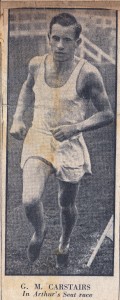
In 1938 one of the highlights was Bellahouston Harriers winning the relay – which was by now the official SAAA Championship – for the third successive year in a new record time of 3:32.9. Other stand-out items were the fast sprinting, Bilsland’s victory in the half-mile but the complaints about the length of the meeting re-surfaced when the event, which had started at 2:00 pm, did not finish until 7:00 pm. There was included in the programme a demonstration of sheep-dog trials was added. In the relay, GM Carstairs made the early running in the 880 sector but was overtaken in the finishing straight by Gifford of Bellahouston.
1939 might be seen as the first of the big Police Sports Meetings that would carry on after the war. Unusually, it was held at Hampden and not at Ibrox. There were AAA champions, Norwegians in the field events, a great win by Donald Robertson in the road race and controversy in some of the finishes. No sheep dogs anywhere to be seen though. The report is fairly lengthy and only extracts will be reproduced.
“THRILLING HALF-MILE FINISH AT IBROX. Champion’s Rally To Oust Scot at the Finish: Road Race Triumph. NORWEGIANS COMPLAINT AT POLICE SPORTS” shouted the headlines. The report read:
“In spectacular interest two events stood out in the splendid sports programme carried through at Hampden Park on Saturday. They were the invitation half-mile which provided many thrills in its closing stages, and the road race from Kilmarnock to Glasgow won by Donald Robertson of Maryhill Harriers, the noted marathon runner. In the half-mile JRS Robertson (Shettleston Harriers) made full use of his 33 yards allowance to lead the field right into the finishing straight, but he weakened at that crucial stage and a group of prominent back-markers then figured in a stirring struggle. AJ Collyer, the AAA’s champion (scr), and R Graham, the Scottish mile champion (15 yards), took up the running, with RTH Littlejohns, the Scottish half-mile champion, about seven yards behind. One hundred yards from the tape Littlejohns commenced the devastating finishing burst for which he is noted, and brought the spectators to a high pitch of excitement as he speedily closed the gap. Forty yards from the tape he passed Graham, ten yards farther and he was ahead of Collyer. It seemed certain that Littlejohns would win, buit the British champion rallied superbly, challenged strongly, and when Littlejohns faltered just at the tape, Collyer made his last bid winning by the most slender of margins in literally the last stride of the race. In such windy conditions the time of 1:56.3 was commendable.
There was tremendous applause for Donald Robertson. When the Maryhill runner finished after twenty one and three quarter miles the next runner was about three quarters of a mile from Hampden Park. The crowd marvelled at Robertson’s fresh condition and his remarkable sprint up the finishing straight. Robertson himself said that he is completely satisfied with his condition. He is to attempt to regain the AAA marathon title next month.”
The reporter was disappointed with the performances of the Norwegian students with only the field eventers performing up to expectations. Javelin thrower Erdahl Aase achieved ‘well nigh perfect trajectory’ and had a best of 183′ 2.5″, well clear of the nearest Scot, Helge Sivertsen in shot and discus threw 44′ 10.75″ and 143′ 10″ although neither of those won the events for him: S Sollid,another Norwegian, had a 4′ 9″ allowance in the shot, and DR Young had an allowance of 7′ in the discus which allowed them to win the events. However, “the visitors from Norway were astounded at the offhand manner with which the field events were treated. People frequently crossed their paths, and concentration in an arena of such animation was understandability difficult of attainment.”
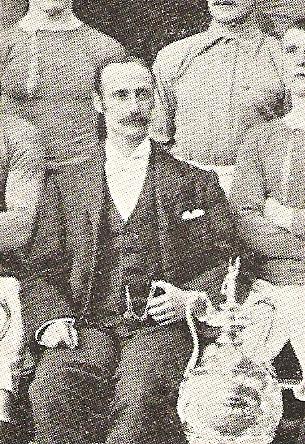
William Wilton, the Rangers manager and secretary
Photo supplied by Iain Duff
To those of us who knew the Rangers Sports from the 1950’s to their sad demise in the 1960’s it is maybe surprising that the attraction of the event to the best in the world goes back to the very beginning of the twentieth century – and maybe further. The joint Clydesdale Harriers and Rangers Sports go back to 1888. It is only right then that we look at what was on offer to the people of Glasgow in the way of athletic entertainment at the turn of an earlier century and compare it with the start of the twenty first. It might well be to the detriment of the latter. Sports were on offer to the public from almost all of the major football clubs at the time, the oldest being the Queen’s Park FC meeting, including Partick Thistle and Clyde (a professional meeting for a long time) with the ‘big two’ of Rangers and Celtic always ending the season with their regular dates of the first and second Saturdays in August. It was also fairly common for sports meetings to be held over two days – Cowal Highland Games being the biggest recent example north of the border – and both Rangers and Celtic had Tuesday ‘supplements’ to the bigger Saturday occasions. Glasgow people then had big meetings on the two consecutive weekends with two more meetings with invitation races on the Tuesday following giving the people four good meetings in ten days. This page will deal almost exclusively with the Saturday meetings to give a picture of what was on offer by the big clubs, although the ‘supplementary’ meetings will probably be added at some date not too far into the future.
The first Rangers Sports of the twentieth century were held at Ibrox Park on 4th August, 1900. The ‘Athletics’ column started with coverage of the Strathallan Highland Games before going on to the Rangers FC Sports. There were eight lines of reportage plus results of the events held, before going on to the Clyde FC Sports, which were compared to those held by Third Lanark a week previously. The report on the event, which had an estimated 10,000 attendance, read: “The Rangers FC were favoured with the finest weather conditions for the initial portion of their annual sports meeting on Saturday afternoon, with the result that a large and fashionable gathering assembled. Both for the flat and the cycle events the competitors turned out in good numbers and splendid sport ruled throughout. J Watson, Hamilton, who won the 100 yards off six and a half yards, ran cleverly in Heats and Final, and the same may be said of DL Turner, Greenhead Harriers who had first place in the 300 yards off a short mark. Though both the half and one mile handicaps filled well, the contests were not in any way noteworthy, the majority of the starters being well beaten long ere the finishing straight was reached. … “
In 1901 the event took place on 3rd August. “The racing, both foot and cycle, at the Exhibition on Saturday was exceptionally interesting and the Rangers are to be congratulated not only on the way the meeting was arranged but on the large amount of support they received from the public. The most popular win of the day was McLean’s in the 220 yards handicap. He ran even better than he did in the International between Scotland and Ireland on the same track a few months ago. The Scottish champion is one of the best men n the country over the distance and it will be interesting to see how he fares with Long and Wadsley at the Celtic sports this week. Of course he will be getting a start from these men but it will be a small one in view of his form at the Exhibition on Saturday. ….
It was almost entirely a domestic field but entries were more than healthy – eg 105 for the 100 yards – but in terms of quality the club had to give best to Celtic at this point. The difference was called Willie Maley who would go looking for talent to the AAA’s championships and entice athletics to the Celtic Sports. There was a note in the Glasgow Herald that contained the report on Rangers Sports which commented on the ‘elaborate arrangements made by Mr Maley’ which had resulted in several Americans being the trump cards at their meeting the following week. The position would be at least emulated, and probably exceeded, when Bill Struth took over at Ibrox and of course the Rangers version lasted much longer than their rivals.
1902 was Coronation year and Rangers Sports were not held for the simple reason that the coronation was held on that very Saturday. The ‘Glasgow Herald’ article began “London, Saturday night. Morning had barely broken when the booming of the guns from Hyde Park awoke the Metropolis to the fact that Coronation Day had come. So long looked forward to, so anxiously anticipated, so unexpectedly and dramatically delayed, the day had at last arrived when the solemn ceremony and enthronement of Kind Edward and Queen Alexandra was destined to take place ….” Then followed eight broadsheet pages covering every conceivable aspect of the coronation, with several line drawings and notes on how the various communities were celebrating. On what should have been Rangers Sports day, there was a service of praise in Glasgow Cathedral in the forenoon, there was a luncheon in the Banqueting Hall of the City Chambers with guests invited by the Council, banks, the stock exchange and many other businesses were closed. And there were all the local celebrations as well. So – no athletics at Ibrox on the first Saturday of the month. The ‘Glasgow Herald’ said that the Rangers date had been taken by Wishaw Cycling Club for a one-off sports meeting, there were several such as part of the jollifications.
The following year, on 1st August, 1903, had a tale of excellent sport however with two Scottish records set – one at 100 yards and one in the hammer event. The report read “This was the most important meeting in Scotland , for which the Rangers executive made faultless arrangements. The programme was rich in talent and nearly all of the champions in their own department of athletics were present from England, Ireland and Scotland – also Arthur F Duffey of Georgetown University, USA, who holds the world’s record in the 100 yards flat race. The meeting was held on Saturday afternoon at Ibrox Park, and while the weather was not all that could be desired, the attendance was satisfactory.”
Duffey was considered the fastest man in the world at the time. He had run as favourite in the 1900 Olympics but despite a very good run in the Heats had to pull up in the final with an injury. American 100 yards champion in 1899, he won the AAA’s in England four times between 1900 and 1904. He ran 9.6 for 100 in 1902, a world record, but after a quarrel with the AAU over his refusal to wear Spalding running shoes he was found guilty of breaking the amateur code. There is genuine dispute over this verdict – the AAU President worked for Spalding Shoes and it was after the refusal to wear these that the President brought the accusation. There seems to be little if any evidence that he did actually do a bad thing! However, when he came to Ibrox in 1903, he was still a world class athlete.
How did Rangers manage this coup? The ‘Glasgow Herald’ again. “Recognising that athletics in the city is not in as healthy a condition as they might be, the Rangers this season resolved to do something to improve matters. Mr Wilton, in the first place was given a free hand, and that gentleman, with the cordial support from his directors, entered into negotiations with several athletes who had distinguished themselves within their respective spheres, with a view to quickening public interest, and at the same time enriching their exchequer, and how he succeeded may be guessed when we mention that the attendance on Saturday, despite the fact that the weather was by no means inviting, was little short of 13,000. The cash drawings in fact totalled £390 which from every point of view must be considered highly satisfactory. From first to last the sport was brilliant.
Even the most captious in matters athletic were constrained to deal in superlatives, and no higher testimony than this could be offered to the character of the sport. That matchless sprinter, A Duffy, won the 100 yards invitation handicap in a way that will never be forgotten by those who can appraise such performances at their top value. JP Stark, of the Glasgow High School, with a concession of five yards, pushed the American to the last foot – indeed it was only in the last few yards that he caught Stark and won in 9 4-5th seconds. …. Duffy had a great reception at the end of the race and equally cordial was the reception of Stark’s plucky effort. …
Marvellous improvement was demonstrated in the mile handicap by AM Watson of Edinburgh Harriers. Quite recently he beat McGough off 95 yards, and at the Shamrock CC Sports a few days ago, the Scottish champion gave Watson 80 yards and a handsome drubbing, but on Saturday the latter, with the same mark, won as he liked in 4 min 27 2-5th sec which is fast running when we allow for the weather and track conditions that prevailed. All things considered, McGough ran up to his best form , although he only did 4 min 30 sec, and the natural inference is, therefore, that Watson must have improved greatly since the Shamrock Sports. JJ Daly preferred the half-mile to the mile, and it must be confessed right away that he made an excellent appearance. He won his Heat all-out in 1 min 59 4-5th sec, and in the final finished third, Roxburghe, the winner doing the same time. …
TR Nicolson threw the hammer 151′ 6.5″, which is a new record, the previous best being 149′ 4″ at the international between Scotland and Ireland last month. … “
So a good meeting financially, with a good crowd and top class athletics.
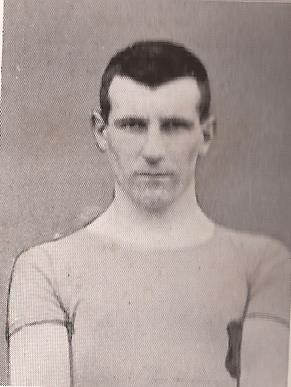
JP Stark, West of Scotland Harriers, Four Times Scottish Champion
August 4th, 1904 was the date to visit Ibrox if you wanted athletics that year. The preview in the ‘Glasgow Herald’ of Monday 1st August read as follows. “Enterprising as the Rangers always are, they have excelled themselves in the arrangements they have made for their annual amateur sports, which fall to be celebrated this week-end. “Half-heartedness”, if the language of fiscal discussion be not out of place, the Rangers have never been, and it will certainly be no fault of Mr Wilton and his directors is Saturday’s meeting does not take a very high place in athletic records – if, in fact, it does not eclipse anything and everything that the Rangers have attempted in the way of presenting sports. The programme is large – perhaps too large – and it will tax the resources of the management to dispose of all the items within a reasonable space of time. There are two invitation handicaps – the 100 yards and 300 yards – which should excite considerable interest. Both will have a pronounced international colouring. We all remember the brilliant performance of AF Dudley at Ibrox last year when he did the 100 yards in 9 4-5th seconds, and if the American is scarcely so speedy now as he was then, he is possessed of a turn of speed which few can equal. The 300 has been included in the programme with the view of seeing Jupp over the distance which he likes best. Hyman and Westney will also run in this race and the interests of Scotland will be confined to RL Watson and WH Welsh, who from the fact that they are both good quarter men, should find the 300 yards to their liking. It is still doubtful if A Shrubb will be among the competitors, he has engagements to keep which have been entered into early in the season, but pressure from an influential quarter may make him alter his arrangements, in which case we shall have a fine exhibition of distance running from him, John McGough of Bellahouston Harriers, and Butterfield of Darlington. In addition to others of lesser note, Tom Nicholson will meet Shevlin of Yale in the hammer under stirrup-handle conditions, and O’Connor will take part in the jumps along with RG Murray, J Milne, D McRae and a host of others.”
These were all fine competitors with Scottish champions and record holders meeting top men from other nations. The report the following week was fulsome.
“Seldom if ever have so many noted athletes, foreign and native talent, been gathered together as were seen on Saturday afternoon within the Rangers model and commodious enclosure. It was the work of many weeks in compiling a programme so rich in talent , and Mr W Wilton, the Rangers manager and secretary, is to be congratulated on his successful efforts and for his successful handling of the reins on Saturday when everything went off without a hitch. The handicapping of Mr R Livingstone was perfect, all the finishes being close. In all there were 21 items and the entry was a record one for the Rangers. The 100 yards flat race alone brought out a field of 200, divided into 30 preliminary Heats, all associated with fast times, and 5 semi-finals ere the final was reached.
In the great international 100 yards invitation race, amongst others there competed such well-known flyers as JS Westney, New York AC, who had two and a half yards from AF Duffy, Georgetown University, and JW Morton, South London Harriers, who were at scratch; HA Hyman, Pennsylvania University, 2 yards, JP Stark WSH, two and a half yards, WH Welsh, Edinburgh University, 4 yards, RL Watson, WSH, three and a half yards, AG Rutherford, Kennedy College, and E Green, Sefton Harriers, each with eight and a half yards. The first prize fell to Stark after a notable effort. RS Stronach and T Nicholson each created records in the hurdles and hammer throwing respectively. …As expected, Shrubb did not appear and the mile was won by Butterfield (15 yards) from Craig of Bellahouston (120 yards), with McGough third (scratch).
The 100 yards had to be the best race of the day with four Americans, two Englishmen and three Scots with the winner a home Scot in 10 seconds dead.
*Hyman was a high hurdler with a high reputation and
*Westney was a genuinely fast sprinter, almost Olympic class with victories at distances as short as 70 yards up to 220 yards back home in the States;
* Duffey had of course held the world record with a time of 9.6 seconds. * JW Morton of SLH made the headlines in 1904 when he defeated Duffey at the AAA’s Championships and the US headlines all told the same story “Arthur Duffey Meets Defeat” rather than “Morton Wins”!
*WH Welsh had done the triple of 100, 220 and 440 at the SAAA’s in 1900, * JP Stark had won the SAAA 100 yards in June 1904 and been second in both 100 and 220 in the Irish International in July of that year.
No further comment on the quality required.
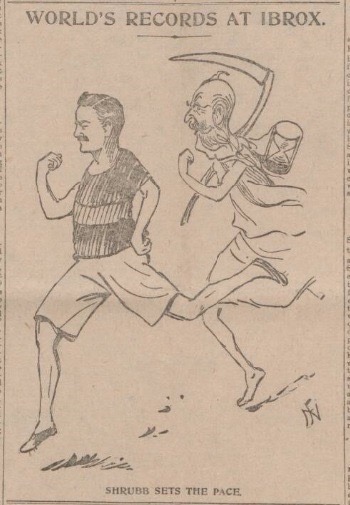
Although we are dealing here with the Rangers Sports, there was another wonderful evening of athletics at Ibrox in November 1904 when Alfred Shrubb set a world record for the one hour run plus a host of other records for shorter distances en route. Read a contemporary account here
Most of the domestic sprinters above would be competing at the 1905 version of the sports but the American contingent would be altered since there was an American party of athletes in Britain at the time. Again hopes were raised that Shrubb would be present, in which case there would be three scratch runners in the mile raising the prospect of a ‘rare dust-up’. The top American hurdler Amsler was said to be running raising the prospect of a meeting with the Glasgow Academical and WSH Harrier RS Stronach. Mr Wilton had received many entries just a week before the meeting and more were expected in the run-up. EA Amsler was a student from Princeton who was a record-breaking 120 yard hurdler on tour in Britain at the time.The report on the actual meeting read:
“BRILLIANT SPORT AT IBROX
From an athletic point of view, the Rangers FC scored a brilliant success with their sports on Saturday, but in other aspects the evidence of public apathy were again very apparent. The attendance, including the holders of paper admission, did not reach 8000, and this is scarcely a creditable response on the part of the citizens in view of the alluring attractions which were provided, mainly through the instrumentality of Mr William Wilton, secretary of the club. One record was broken and the honour fell to T Nicholson, who threw the hammer 153′ 3″, or one and a half inches better than the previous record established at the championships of 1904. Then in the hurdles, RS Stronach, in addition to defeating the American for the third time equalled his Connell Cup record, 15 4-5th sec. The Glasgow Academical is perhaps the most consistent performer there ever was in connection with hurdling, which from its very nature, does not lend itself to uniformity of motion and that fact makes his running all the more noteworthy. At the championships at Ibrox, at Ayr during the Fair Holidays and at the international match with Ireland, he did 16 sec, while at the Connell Cup contest and at Ibrox on Saturday he did 15 4-5th sec.
McGough for the second time in six days, got the better of Geo Butterfeld, who, in the mile on Saturday as in the mile and a half on Monday last, lost first place by inches only. It was a strenuous effort on the part of both, and the one was as cordially applauded as the other on retiring to the dressing room. The time in the special handicap was 4 min 27 sec and in the open handicap 4 min 26 2-5th, which shows that the latter was not any more difficult a task for the scratch men than the former. The 300 yards invitation handicap was all that was anticipated, except that the record did not go, and in such conditions this was scarcely to be looked for. Hyman just managed to beat C McLachlan of Blackheath Harriers at the post in 31 4-5th while Taylor, the coloured American, was third, just a foot behind. It was a fine race and will remain for some time to come one of the cherished recollections of Saturday’s meeting. The open and invitation specials were replete with interesting finishes, the finals in each case being as close as it was possible to make them. JP Stark captured the invitation. C McLachlan did wonderful day’s work winning heats in the first and second rounds of the open 100 and getting third in the final, second in the 300, second in the invitation sprint, in other words he covered 800 yards in all.
RS Stronach
The big attraction in 1906 was not American, English nor even Irish, although all three countries were represented – it was a Scotsman. Lt Wyndham Halswell was the man in question. Halswell had ‘done the treble’ of 100, 220 and 440 yards in the SAAA Championhips at Powderhall in June and won the 220 and 440 in the Irish International in July. Stark had won the 100m in the International after being second to Halswell in the championships. They were both in action at Ibrox in August. There was disappointment that Halswell did not break the record in the quarter mile but his time of 50 1-5th with a headwind up the finishing straight. Stark won the 100 yards invitation race in what was said to be his best ever performance and ‘gives him a position little short of that which AR Downer holds in the annals of Scottish athletics’. He was timed at 10 seconds from one yard with a yard covering seven runners at the post. McGough won the half-mile: he was in great form having won three races in a week – a mile and a half at Parkhead in 7 minutes on the Monday, won the mile at Larkhall in 4:27 and at Ibrox won the half mile in 1:58.8.
From the ‘Glasgow Herald’ of 27 July, 1907: “The Rangers are making very elaborate arrangements for their meeting on Saturday and Monday next, and it will not be their fault if the season does not end in a blaze of athletic fireworks. Being believers in the ‘star’ system, which has done so much for the popularising of athletics in the past, they have issued invitations to several leading pedestrians in England, and have received acceptances from some of the foremost amateurs. It so happens that the bulk of the acceptances are old favourites; but one or two have enhanced their reputations since last they were in Glasgow. Of these the most noted are JP George and EH Montague both of South London Harriers. The former achieved a brilliant win in the 220 yards championship at Fallowfield, Manchester, quite recently, while the latter, in the absence of Lieutenant Halswell, won the 440 yards championship. …. ” Other English star turns were noted but no Americans were mentioned in the preview. On the day in question, 12000 spectators turned up to see the action, and saw two fine invitation handicaps – over 100 yards and over 440 yards. There were eight starters in the 100 yards including the two favourites JW Morton and JP George but neither of them won. The race went to D Johnston of Bellahouston (‘who always manages to run well at Rangers Sports’) in 10.1 seconds. In the quarter-mile,“JP George would have won had he not been pocketed at the pavilion. As it was many thought that he was first, but the judge could scarcely be blamed for giving a tie, as the finish was exceedingly close, and the pace fast as the time shows. Vallance ran a plucky race, as indeed he always does, and his success was no less cordially received than was George’s.” The race was a dead-heat between George (6 yards) and J Vallance (Bellahouston, 12 yards )with a winning time of 49.8.
In the open races, Somerville of Motherwell won the four miles from SAAA Champion A Duncan and the mile was won by A McPhee of Paisley. The quality was undoubtedly in the sprints.
*
In the Rangers Sports of 1908, held on 1st August, the sprints were her highlight with Olympic champion of that year Reginald (Reggie) Walker from South Africa running. Walker was born in March 1889 and was the 1908 Olympic champion. He was the South African 100 yards champion but could not afford to go to London for the Games. A Natal sports writer raised a fund to pay for him to come to London, and once there he was coached by Sam Mussabini. He won his 100m first round in 11.0 seconds, his semi-final in 10.8 and the final also in 10.8, which tied the Olympic record. He was still in 2012 the youngest ever winner of the Olympic 100 metres. To have him at Ibrox in the Rangers Sports in 1908 was indeed an attraction.
“There was a considerable amount of character in the Rangers Sports at Ibrox on Saturday. This to some extent was anticipated with so many eminent athletes competing, but in several of the events, expectation was more than fulfilled, and that meeting, taken as a whole, will rank as one of the best that Rangers have provided in their long career as sports promoters. Again the sensitiveness of sprinting form was admirably illustrated in the 100 yards invitation handicap, which was won by JP Stark, the Scottish champion, in time which if correct makes him quite as smart as Reginald Walker, the Olympic winner. At all events he beat the South African handsomely at Ibrox on Saturday with a concession of three yards, and whatever may be said of the time, 9 3-5th seconds, it will be admitted that the Scotsman ran as he perhaps never did in his whole experience. Even in the open 100 yards, he disclosed rare pace winning the first round in 9 4-5th seconds, the second in 10 seconds, while in the final he had the misfortune to break down and failed to finish. It will be seen from these “times” that in each succeeding spin, the Scotsman was a couple of yards slower, and in the face of that, few will accept without some hesitation the 9 3-5th in the invitation race.
Walker was seen to better advantage in the open than in the invitation as, after winning the first round in 9 4-5th seconds, he was defeated on the post in the second round by the ultimate winner, H Gracie of YMCA Harriers, who had the distinction of winning both sprints. We have seen better 220 running but the running in the 100 has not been excelled at any meeting this season. Lieutenant Halswell was not at his best, as in the 300 yards special handicap he did not even equal his Hampden Park record, 31 1-5th seconds. Later in the programme Halswell was defeated in his 220 yards heat in 23 1-5th seconds, which lends some colour to the impression that he was not quite in record-breaking form.
ER Voigt of Manchester AC ran with superb judgment in the four miles finishing with a dazzling sprint of 300 yards amid a perfect hurricane of applause. It was a brilliant piece of running and has not been surpassed in the city since A Shrubb charmed supporters of amateurism. Voigt did the four miles in 19 minutes 40 1-5th seconds and as conveying some idea of his speed resource we may note that in the last quarter was done in 64 1-5th seconds. Only one in the first flight of runners could do that. JA Robertson, Birchfield Harriers, was a good second 25 yards behind , his time being 19 min 45 sec. The Scottish runners made a poor display in this race, and even Murphey, who ran so famously in the International between Ireland and Scotland was a pale reflection of what he was on that occasion and did not even finish. Having travelled overnight from England, HA Wilson, the mile champion, was not in form for the mile, his time being 4 min 29 4-5th against 4 20 3-5th by the winner, R Sinclair of Greenock Glenpark Harriers, who had the limit. John McGough, Bellahouston Harriers, to the delight of all, showed some of his old form and finished several yards ahead of Wilson. …”
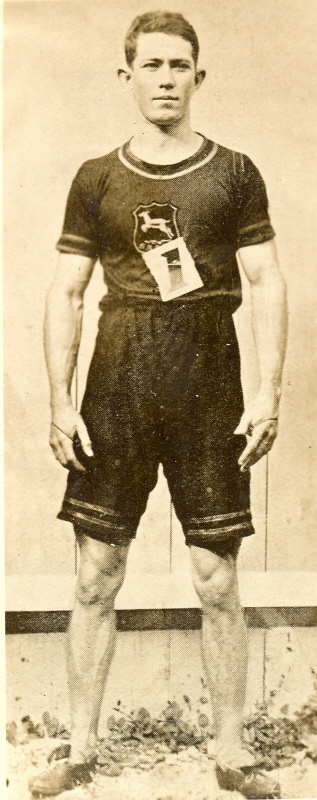
On Saturday 7th August 1909, Walker returned to Ibrox, McGough showed more of his old form (he had won the last of his six SAAA mile titles in 1907 but over his career is reckoned to have won more prizes at open meetings than any other Scot), Edward Owens from England ran a brilliant mile, there was a very good two miles walk with Scots an Englishman and a New Zealander competing, plus other quality athletes from South Africa and south of the Border.
“Where there were so many outstanding performances as was the case at the Rangers Sports at Ibrox on Saturday, it is not an easy matter to select the best. Some award the palm to RE Walker’s 9 4-5th sec in the invitation 100 yards handicap, others assert that Edward Owen’s 4 min 20 1-5th sec in the mile was the most brilliant incident in the proceedings, while those who regard record breaking as the stamp of athletics genius at once single out Ernest Webb’s 13 min 57 1-5th in the two miles walk. To our thinking all are alike impressive, and will give Saturday’s function an honourable place in athletic history. Walker had the help of a slight breeze, and possibly that may have aided him in breaking “evens”. All the same it is an effort that will not soon be forgotten by those who were privileged to witness it. The South African would like to get the Scottish record for the 100 yards, which stands at 10 seconds. No one has had a more earnest try as he has equalled Saturday’s effort three or four times at Ibrox. The SAAA however are very punctilious in these matters, and it is well that they are, as a record should be beyond cavil.
N Cartmell was a little disappointing in the invitation 100 yards, as he only finished third in the second heat, in 10 1-5th, or four yards slower than Walker in the final. RC Duncan, the SAAA champion, put up a plucky fight against Walker, and taking time as the infallible test of speed, the West of Scotland Harrier never ran a finer race. Owen was wreathed in smiles when he was told he had covered the mile in 4 min 20 1-5th sec. This is his best public performance, though it is stated he has come very close to it in practise more than once. The race was strenuous from start to finish. A McPhee Clydesdale Harriers, like the winner excelled himself, while John McGough has not run better for a couple of seasons than he did over the mile on Saturday, his time being 4 min 24 sec. McPhee is now a spirited finisher, and his half-mile running has done him a lot of good in this respect. He has designs on the mile championship next season and a slight improvement on the form displayed at Ibrox on Saturday will enable him to hold his own with Jameson and McGough.
As to the two mile walk, Webb was given too much to do though, if our information is correct, he has several times walked faster than he did at Ibrox. There was fully 40 yards between him and the winner – Bernard West – while Rowland of New Zealand, seemed to be covering the ground as fast as the English champion. West’s time was 13 min 33 sec and Webb’s 13min 57 1-5th sec, which is a new all-comer’s record. Quinn finished second, but had the misfortune to be disqualified for unfair walking. The pace of the walk may have incited him to “break”. The dividing line between scientific walking and running is so faint that it is extremely difficult to say which is which. Rowland will attempt to break the three miles record tonight, and will have the assistance of Quinn, Justice and West. …..
Frank Stoddart of West of Scotland Harriers Harriers won the first heat of the half-mile in 1 min 58 2-5th, and the final in 1 min 56 2-5th off 54 yards – very consistent running indeed although of course the time was an impossible proposition for the scratch man. Stoddart has been doing remarkably well since the Ayr Sports. Now that he has disclosed the capacity of his resources, he will doubtless have a far stiffer task the next time he takes part in a half-mile. There was however no more popular win during the afternoon among athletes than that of Frank Stoddart. ….
A Healey, the AAA hurdles champion could not give the starts he was asked to give, and this was confirmed by the times of the different heats. He was second to Hallegan, the SAAA champion in 19 sec, while V Duncker of South Africa won his heat and also the final in 18 1-5th sec. Duncker it may be mentioned had 3 yards from Healey. The two obstacle races imparted no little amusement, and appeared to be greatly appreciated. All round, the Rangers have great reason to be satisfied with the conspicuous success of their sports from an athletic point of view.!
The Monday night supplementary meeting referred to above brought a crowd of 6000 and several new records. Walker broke the 120 and 150 yards records, there were three records in the three miles walk, in the 1000 yards Adam Turnbull of Clydesdale Harriers broke McGough’s native record and in the mile and a half, AJ Robertson of Belgrave Harriers broke Shrubb’s record set at Ibrox in 1904 with new figures of 6 min 45 3-5th sec.
*
There is no doubt that the first decade of the twentieth century saw a transformation in the Rangers Sports from one which was very good to one with an international dimension. After the coronation in 1902 put a temporary halt to the event, thanks to William Wilton and his committee the meeting burgeoned into one which by the end of the decade had Scots, English, Irish, American, South African and New Zealand athletes appearing before the Glasgow public; the standard was incredibly high with Olympic British, American and South African champions, World, British, American and Scottish record holders all competed at the Rangers Sports. This was a trend that would continue and develop until the magnificent flowering of the event under the direction of Bill Struth in the 1950’s and early 60’s.
There were also Monday night meetings to ‘complete’ the Rangers Sports and they were usually of high quality. Short reports on the Monday Sports from 1905 – 1909 are here
Reginald Walker from South Africa,
a great favourite of the Glasgow athletics public in 1910.
The Rangers Sports at the start of 1910 were on a high after the efforts of William Wilton and his committee which had brought an international dimension to an event which in 1900 had been almost entirely a Scottish affair (with some English guests). It had also been slightly in the shade of the Celtic Sports, held a week later, organised by William Maley who always went out of his way to attract top athletes and introduce novelty attractions meant to draw in the crowds. By 1910, the two events were to some extent complementary with athletes often staying over from the Rangers meeting to compete at Parkhead, or some of those enticed to Celtic Park coming a week early and competing at the Rangers Monday meeting. This ten year period in the development of the sports saw them become really international over the first four years of the period before the War brought them back to a purely local event with the five-a-side competitions being developed to fill out the programme and bring in the crowds. The club – like most others – donated money to the War Effort throughout the period and the sports often held events confined to serving soldiers and sailors.
The first Rangers Sports of the decade was reported in the ‘Glasgow Herald’ on 8th August. There were two heats of the 100 yards invitation handicap and the runners included Reginald Walker from South Africa on scratch. He duly won the first heat from RC Duncan (West of Scotland Harriers – 3 yards) and A Law (Bellahouston Harriers off 7 yards) and the race was reported as “The Colonial just caught Duncan in the last stride and won by a breast.” The second heat was won by R Kitson (West of Scotland – 6 yards) from FL Ramsdell (Pennsylvania – scratch) and LJ deB Reed (South London Harriers – 2.5 yards). The final was won by Duncan from Walker and Ramsdell the report reading “All were despatched in a perfectly orderly start, Duncan passed those in front at 75 yards and though Walker and Ramsdell put in a punishing finish they could not get on even terms with the Scottish champion. It was a very fine thing however, a couple of feet covering the first four while Reed and Law were both in the picture at the post. Winning time:- 10 seconds.” For a Scot off 3 yards to defeat an Olympic champion and a an American over 100 yards must have been a source of great pride to the organisers and is a mark of the quality of Scottish running at the time. The reporter also commented that in conditions such as those prevailing at Ibrox on that Saturday, Walker was incomparable. Reed went on to win the special invitation 440 yards in 50.6 – “his methods were those of a runner who has given intelligent thought and study to the requirements (brain and pace) for such a distance” – from Hepburn (West of Scotland – 17 yards) and George Dallas (Maryhill – 13 yards). Emphasising the international nature of the meeting, H Inglis of Pretoria was the scratch man in the hurdles race where he finished third having conceded 10 yards to the winner and and four yards to the Welshman who was second. A South African and an American in the 100 yards, an Englishman in the 440 yards and a Welshman and another South African in the hurdles.
In the half-mile, E Owens from Broughton Harriers in England (scratch) was the favourite but could only finish second to McDougall of West of Scotland (40 yards) who won in 1:59.6 with A McPhee of Clydesdale Harriers (15 yards) third. In the mile, McGoughoff 60 yards was second to Stoddart of the West of Scotland who was off 105 yards and won in 4:19.2.
The supplementary meeting that was held on the following Monday was previewed with the comment that “Football will be the supreme attraction. Eight teams will take part in the five a side competition. This is an increase of two compared with earlier years but while the football fare is on a richer scale, that of the athletics has been reduced by at least two sources: in other words there are only two handicaps as against four, and sometimes five, in past seasons.”
For the record, the 9000 crowd who turned up to see the meeting saw Falkirk, St Mirren, Clyde, Partick Thistle, Rangers, Celtic, Queen’s Park and Third Lanark compete with Rangers winning the final against Third Lanark 3–1. The 100 yards was won by JA Coyle St Andrew,s despite the presence of Walker and Ramsdell, and the 220 was won by JC Cockburn of Gala Harriers.
HE Gissing wearing the winged foot of the New York Track Club
In 1911, the ‘Glasgow Herald’ previewed the Sports: “F Ramsdell is one of several ‘stars’ who will illumine the proceedings at Ibrox Park on Saturday. He is no stranger to Glasgow as he ran at the Rangers Sports last August and finished third in a great race which RC Duncan won off three yards in 10 seconds, RE Walker the South African being second. Ramsdell may not be so fast over 100 yards as he was last season – at least that is the impression in expert circles – but his furlong running on the other hand is even better, and it is over that distance that the American will appeal most to athletic imagination. Three weeks ago, in conditions not conducive to high speed, he won the fuirlong handicap at Ayr. The task was regarded by many as impossible, yet he triumphed over every form of opposition: bad corners, rough surfaces and smart runners. In fact it was an effort that will not readily be forgotten by those who witnessed it. There is a 220 yards handicap at Ibrox on Saturday, and Ramsdell, who cultivates this distance rather than the shorter one, will no doubt present us with an effort that will prove as memorable as that which lent distinction to the recent sports at Ayr. Others who will add to the gaiety of the proceedings are DF McNicol, JT Soutter, E Owen, T Nicolson and H Gissing. Instead of an invitation handicap the 100 yards will be divided into two classes, the one confined to runners with not more than 5 yards from the Scottish champion, and the other to those with that mark and upwards. This is an interesting departure and we expect very educative results from it. From information in our possession, the Rangers Sports this week will be, as indeed they always are, high class, disclosing not only variety but a standard of athletic efficiency in keeping with the character of the meeting and the eminence of the principal competitors.”
There were some disappointing performances at the Sports on the Saturday but the international dimension was further developed. One of the stars barely mentioned in the preview was HE Gissing from New York – he ran for the New York TC whose emblem was a winged foot which seems appropriate for an athletic club, but he also ran for the Irish American Athletic Club team that set the first IAAF- recognised world 4 x 440 yards record of 3:18.8, and their emblem was a winged fist. Running for the NYTC relay teams he often ‘turned defeat into victory’. More relevant to the Ibrox meeting, in 1908 he had won the AAU half-mile championship in 1:56.8 and went on to win the AAU 1000 yards championship three years running (1908, ’09, ’10) and in 1909 was second in the National AAU Championships. Incidentally, another member of the Irish American AC which set the 4 x 440 record was Mel Sheppard who is mentioned below.
The report on the meeting read: “No fewer than 10,000 witnessed the sports at Ibrox Park on Saturday afternoon. Fortunately the rain held off during the proceedings though before and after there were smart showers. The programme was more varied than usual, there being boxing and five-a-side football, in addition to the orthodox pedestrian handicaps. The racing was keen throughout and and the finishes in many cases could not have been any closer. FL Ramsdell, the AAA sprint champion, just beat AE Hunter (Edinburgh University AC) by inches in the invitation 100 yards handicap, while in the final of the furlong handicap G Sandilands (Edinburgh Harriers) was not more than a foot in front of TC Wright, another prominent East of Scotland runner.
But perhaps the finest performance of the proceedings was HE Gissing’s 1 min 56 1-5th in the invitation half-mile. This is only a fifth of a second worse than Melvin Sheppard’s all-comers record at the Rangers Sports in 1908. Had Gissing not eased up in the last ten yards he might have created a new record. As it was, he ran a memorable race and those who saw it are not likely soon to forget the easy way in which he travelled. JT Soutter of Aberdeen University AC was scratch with the American but the SAAA half-mile champion was obviously not at his best by any means. He was the last to finish which is a novel experience for him. Soutter has given up running for a season. He has achieved several fine performances although we understand that he is a little disappointed at his failure at Ibrox on Saturday, which is not to be wondered at, as he had set his heart on accomplishing something in keeping with his reputation as a half-miler. DF McNicol again demonstrated his marvellous consistence as a runner. He was second in the invitation half-mile in 1 min 58 1-5th sec off 10 yards; in the open half-mile he won the first heat in 1 min 58 3-5th sec and the final in 1 min 58 sec.
The mile fell short of expectation. E Owen, an ex-AAA champion, was scratch, and the fact that he did not finish in 4 min 26 3-5th sec clearly shows that he was not in running humour. Owen may have taken too much out of himself in the invitation half-mile, but even that can scarcely account for his indifferent display, especially in the light of the great work accomplished by McNicol during the afternoon. The winner was J McFarlane, Glasgow University AC, whose success was well received. If we mistake not, McFarlane was the winner of the Celtic mile last year. He ran with judgement and finished strongly, though the time was well within the reach of the scratch man.
The 100 yards confined to those with 5 yards and upwards of the Scottish champion was quite interesting, and it is noteworthy to mention that the final was won in the same time that Ramsdell accomplished in the special handicap, thus showing that the concessions in the one as in the other were in favour of the American crack. ….
Ralph Erskine, the world’s featherweight champion, gave an exhibition of boxing with his cousin George Barrie. It was much appreciated and proved an interesting variation to the proceedings as did also the hammer throwing in which TR Nicholson displayed all his old skill He was asked to give tolerably big concessions yet he won with something in hand. … Third Lanark won the five-a-side tournament.”
The by now normal Monday supplementary meeting took place in front of 5000 spectators and the feature race contained both of Saturday’s heroes, Gissing and McNicol over 1000 yards. “The feature of the evening was the fine running of HE Gissing, New York, and DF McNicol , Polytechnic Harriers, in the thousand yards flat handicap. Thirty three started but interest centred on the scratch men. Entering the last lap McNicol led Gissing b y about a foot and this lead he maintained until entering the straight. The American then made his effort, and going in magnificent style caught McNicol about 25 yards from the finish and then caught WF Taylor, Bellahouston Harriers, off 60 yards a few inches from the tape. Gissing’s time was 2 min 16 3-5th sec, thus creating a new Scottish all-comer’s record, beating George Butterfield’s time of August 1906 by one fifth of a second. McNicol who finished third and deserves all praise for the pace he set, had the satisfaction of creating a new native record , his time being 2 min 17 sec, which is four-fifths of a second better than A Turnbull’s record made in August 1909.. “
The meeting also had a 120 yards, a 300 yards and a mile-and-a-half with good competition but the 1000 yards was the only real stand-out race, with Clyde FC winning the football tournament.
Hannes Kohlemainen
James Tindal Soutter from Aberdeen University, who was mentioned above is one of the most interesting athletes in Scottish middle distance running history. Soutter was born in the Church of Scotland Manse in Echt, Aberdeenshire, on 1st January, 1885 and had been a pupil at Aberdeen Grammar School who went on to become an apprentice engineer. Deciding to become a minister he went to Aberdeen University where he graduated MA in 1910. This was hen the former rugby player made up his mind to concentrate on athletics.
1910 was a really dramatic first season for him:
* he won the Scottish Universities 880 yards championship on 18th June at Craiglockhart;
* on 25th June he was second in the SAAA half-mile;
* on 9th July at Ibrox he ran his first sub-2 minute half-mile inches behind SAAA Champion Burton in 1:59.4;
* on 5th August in Rangers Sports he equalled Burton’s half-mile record with 1:58.4;
* in the AAA’s championships he was second in his Heat to the Canadian Mel Brook in 1:57.4 after leading through 440 in 54.2, an amazing split.
In 1911 he was timed at 1:56.4 for the 880 yards leg of the AAA’s mile medley relay while running for Blackheath. 1912 was possibly his very best year though. In May he won the Olympic 400 metres trial at Celtic Park in 52.0. Then in June at St Andrews in the Inter-Varsity Sports he won 220 (22.8), 440 (53.6) and 880 (2:03.6) before winning both 440 (51.8) and 880 (2:01.8 at the SAAA Championships. In London only one weel later he was second to the very good German Hans Braun in the 880y in 1:58.2. This all earned him selection for the Olympic Games at Stockholm in the 400, the 800 and the 4 x 400. Running well up to his standard, he qualified for the second round of the 400m but was second in the second round behind Braun. In the 800m he won the seventh heat in 2:00.4 in front of Mel Sheppard (USA) but refused to run in the second round because it was run on a Sunday. It should be remembered that at this time he was a Presbyterian Divinity student. It was in the 4 x 400m though that he won his Olympic medal. The squad won its heat in an Olympic record time but Soutter was injured for the final and although he did his best the team finished third.
In 1913 he gave up track and field for missionary work and travelled to Africa. He came back and joined up for the First World War and also served in the Second World War in the Radio Intelligence base in East Lothian where he did a variety of jobs including such things as making dead letter drops using their base in Smeaton House. Thereafter he went back to being a minister in Aberdeenshire. And then in 1959, he simply disappeared and was never found again. After seven years he was presumed dead. He had simply disappeared.
A wonderful, if short-lived, athletics career, a dramatic life, the refusal to run on the Sabbath predated Eric Liddell by 12 years, and his whole dramatic life might have made a better than average film.
There were several outstanding athletes competing at the Rangers Sports of 1912. It was of course an Olympic year (Stockholm) and athletes had been in Europe for the Games and several were available for local meetings. One was Don Lippincott from Philadelphia who had competed for the USA in the 100 yards where he finished third in the 100 metres and second in the 200 metres. A high quality athlete, he was also the first 100m record holder recognised by the IAAF with a time of 10.6 and he also held the 100 yards record with 9.6 seconds. But big a name as he might have been, the star man had to be Hannes Kohlemainen of Finland. He had won three gold and one silver medal at the Olympic Games that year – gold in the 5000m, 10000m and individual cross-country with the silver being for the team cross-country. Two men, five Olympic medals! He also lived in the USA for a number of years and wore the Winged Fist of the Irish American AC. Among the other Olympians there were Mel Sheppard of America, H Braun of Germany and JE Meredith, also America and world class at all distances between 440 yards and the Mile. as well as English and Irish athletes.
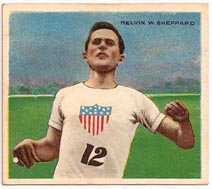
Mel Sheppard
Then in 1913 no foreigners were invited and it was an Englishman who was the big name – the ‘must have’ for sports promoters was Willie Applegarth the great sprinter and Olympic gold and silver medallist from the1912 Olympics. He was at Ibrox. The report read:
“In fine weather the Rangers FC held their annual amateur athletic sports at Ibrox on Saturday before an attendance estimated at 25,000. In previous years the club have brought competitors from the Continent and the United States but on this occasion only home talent was invited, and amongst the entrants was a very strong team from Polytechnic Harriers. WR Applegarth, the English champion, who has this season been showing some very fine form, was the most prominent competitor, winning the two invitation sprints, and creating a new Scottish record for the 100 yards. In the open 100 his time was returned as 9 4-5th seconds in the preliminary heat, while in the final he was beaten by only half a yard in a fifth less; but during the running of the race there was a fairly stiff breeze following or helping the competitors. When the invitation sprint was run, however, the wind had dropped and Applegarth ran the full distance in 9 4-5th seconds which beats by one fifth the record established by JM Cowie at the championship meeting in 1894. Applegarth’s time was equalled on a previous occasion by RE Walker, but as he was assisted by a strong wind, the record was not passed. Several officials of the SAAA were present at Ibrox on Saturday, and there is little doubt that the record will be accepted. …. “
There were 14 heats of the open 100 yards and Duncan McPhee of Clydesdale Harriers won the half-mile which his brother Alex had taken a year earlier. A year later McPhee would be racing in the West of Scotland colours.
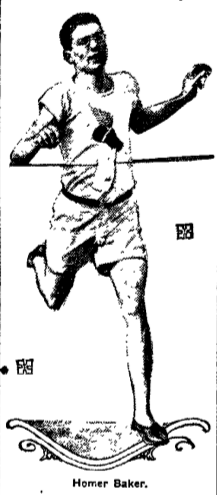
Applegarth was back on 1st August, 1914, and the international element was supplied by Homer Baker who was the American half-mile champion in 1913 and 1914 and took the AAA’s title from AV Hill in 1914 when touring Europe. The Saturday meeting was reported as follows. “Fully 15,000 persons attended the annual sports of the Rangers Football Club which were held at Ibrox Park, Glasgow, in beautiful weather. As on previous occasions the club were favoured with the entries of several prominent English and Irish athletes, and a feature of the meeting was the performance of TJ Carroll of the Royal Irish Constabulary who in the high jump handicap made a successful attempt on the Scottish all-comers record. TRhe previous best jump was that of SR Jones at Ayr in 1908, the height being 6′ 1.25”. Carroll on Saturday improved on these figures, clearing 6′ 2.5″ for which he was loudly cheered by the spectators.
In the sprints the outstanding figure was WR Applegarth, the English and International champion at 100 and 220 yards. Applegarth was beaten in the heat of the 100 yards special handicap by his clubmate WC Bluck, to whom he was conceding 6 yards, and in the final of the 220 yards special handicap he had to be content with second place, another Polytechnic man, J Rooney, being a yard in front at the tape. Rooney’s time, 21 2-5th sec, equals the Scottish all-comers record, established by Applegarth at a recent international meeting. The champion however, was seen at his best in the relay race, West of Scotland Harriers v Polytechnic Harriers. The Scottish team were allowed 10 sec start, and it may be said that Polytechnic’s victory was due to Applegarth’s brilliant running in one of the furlongs.
GW Hutson,the English four miles champion was at scratch in the four miles handicap, in which the limit was 400 yards. He ran strongly all the way, taking the lead fully a mile from the finish and with a fast last lap broke the tape 220 yards ahead of T McTurk , Garscube Harriers, who was in receipt of 330 yards. “
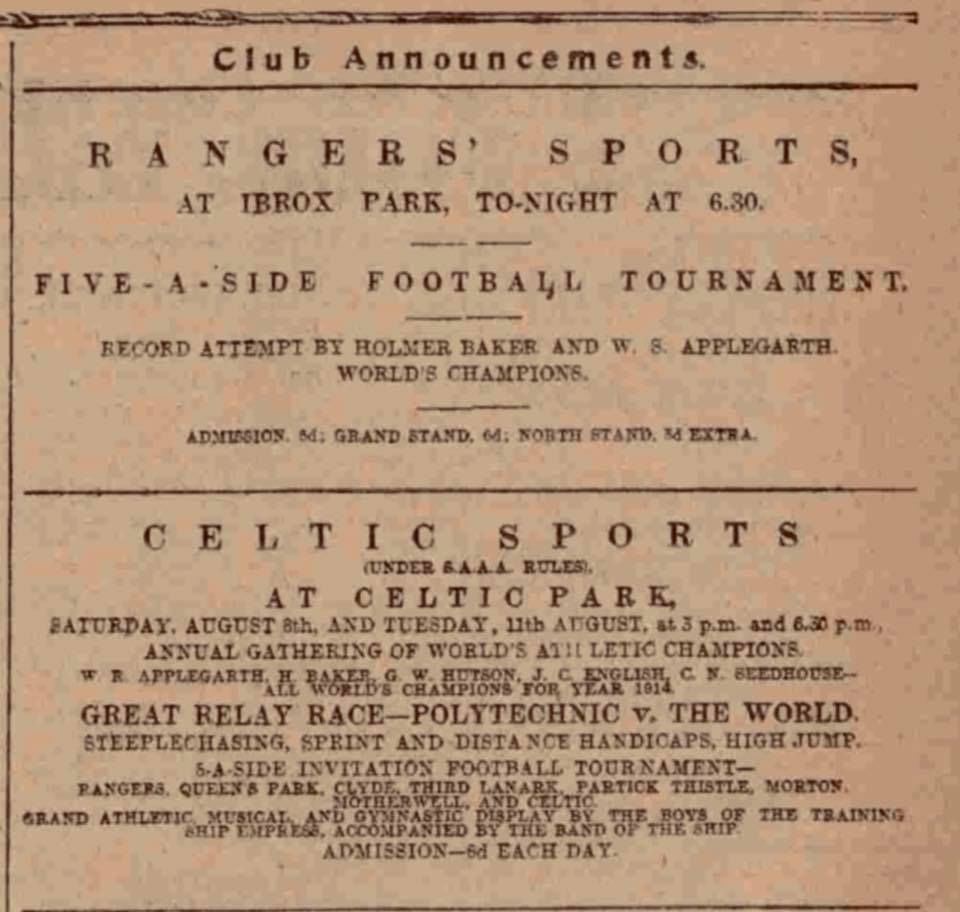
1914: Note the Polytechnic v The World Relay on a Saturday afternoon in Glasgow
Homer Baker of New York was unplaced in the half-mile which was won by Lindsay of Edinburgh off 51 yards. He put this right though on the very poorly attended supplementary meeting on Monday, 3rd..
“Last night the Rangers football club had the gratification of seeing another record added to the long list established at Ibrox Park. Unfortunately the second instalment of their annual sports meting was marred by unfavourable weather and the attendance hardly reached 200. All the prominent athletes who graced Saturday’s meeting were again present, and the sport was thoroughly enjoyable. An invitation handicap has long been a special item of the Rangers programme, and it was in this event that Homer Baker, New York Athletic Club, the English half-mile champion, lowered by a fifth of a second the previous best time which was made by HE Gissing at the Rangers Sports three years ago.”
Baker’s time (which had to be found by working through the list of results) was 2 min 16 2-5th sec for the 1000 yards distance. For all the weather was criticised, the standard of competition and the calibre of athlete on display were high. The 100 yards was won by J Cattanach of Edinburgh University (10 yards) who beat Applegarth in the first heat and won the final; the 220 yards was won by Applegarth (scr) from Rooney (4) and Bluck (11) in 22 4-5th sec; the One Mile Handicap was won by AV Hill (10 yards) from Duncan McPhee (20 yards) in 4: 25 3-5th; and the 1000 yards was won by Baker from Sam S Watt (Clydesdale Harriers – 39 yards) in 2 min16 2-5th sec. In the five-a-sides, Celtic (2 goals, 1 corner) beat Rangers (2 goals).
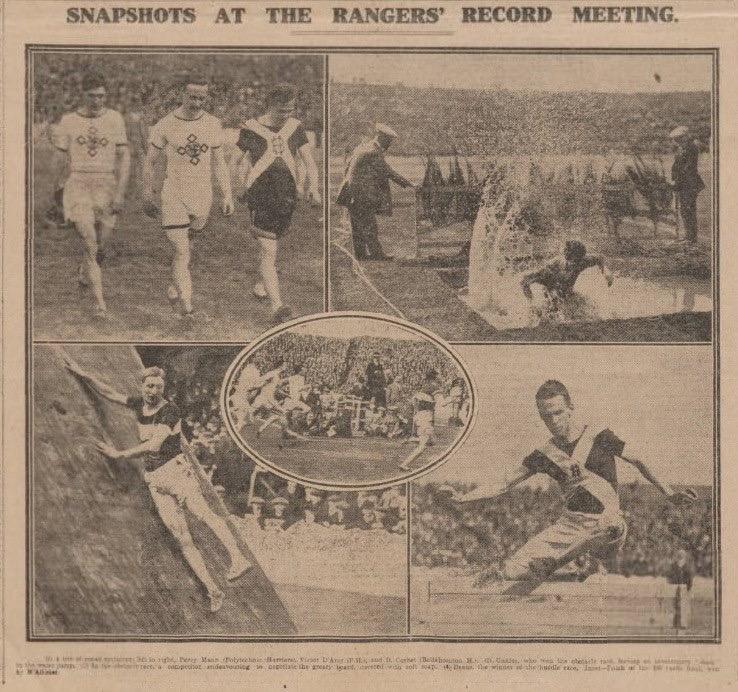
Saturday RFC Sports, 1914
Later in 1914 hostilities broke out and the first world war started but the sports went on. The 1915 sports were held on 7th August and the athletics (two races a 220 and a half-mile) was subordinated to the 5-a-sides (8 clubs) and a flat race for the military. There was also a ‘military ambulance competition’, each competitor to run 120 yards, pick up a comrade, carry him back 80 yards. There were three heats with Sgt Instructor Fyfe. The club handed £50 of the income from the sports to the Lord Provost’s Fund for the relief of soldier’s and sailor’s families. Rangers scored 2 goals, 3 points in the final of the football tournament against Celtic who scored nil. There was no Monday meeting, From the short report on the event “Favoured by the weather the annual sports meeting of the Rangers FC attracted an attendance of over 12,000 to Ibrox Park on Saturday. In former years flat events have formed the principal feature of the programme, many of the most prominent British anf foreign athletes being among the competitors, but this year the athletic element was subordinated to the five-a-side football, there being only two flat open races on the programme and one for military competitors.”
The 1916 meeting was on 5th August and there was five events, two of which were confined to the military and Applegarth ran in them. The actual report was brief in the extreme – “The Rangers FC held their annual sports at Ibrox Park on Saturday afternoon. Fine weather prevailed and there were about 15,000 spectators.” This was followed by the results. There was one really stand-out result when Applegarth won the military 200 yards handicap from scratch in 20 1-5th seconds. Other than that the meeting was a shadow of the normal Rangers Sports but their sports columnist had this to say. “The Rangers executive have set a standard in sports programmes which in present circumstances they could not hope to maintain. Yet the attendance at Ibrox on Saturday was 20,000. The prime cause of this was clearly the possibility of seeing some football. At no period of the proceedings was there such enthusiasm as during some of the most intense five-a-side ties. In fact feeling at times was rather strong, and it was difficult for a neutral observer to believe, except for a brilliantly warm sun, that it was not a day in January. Celtic were given in a variety of ways a very stiff journey to the final, and after playing Morton seemed disinclined for any more. Evidently the players wanted to settle matters by tossing, but the objurgations of the crowd made them continue on the field for two and a half minutes. During these Morton scored a fortuitous corner, and thus apparently won first prize – a result which we understand, the ordeal of the coin confirmed. In the athletic events, there was some good running. The best item of the day was a 200 yards military handicap which Applegarth won in 20 1-5th sec. We know of no recognised Scottish record for the distance, but once in a day Downer ran it in 19 4-5th sec in England, so Applegarth’s performance was distinctly creditable in view of the strong adverse wind for half the distance and the fact that he had to run the whole way on the outside. To our eye he seemed to have suffered little from Army training: there was still about him the suggestion of flexibility and muscular development which nine years ago set experts at loggerheads about massage in training. As often happens at Ibrox or Celtic Park, a double winner emerged from the sprints in the person of A Gordon who finished very strongly in the furlong. The mile fell to JH Motion of Eglinton Harriers who won with comparative ease in good time.”
*
If football was the big draw in 1916, it seemed to pall a bit the following year. The report from the ‘Glasgow Herald’ of 6th August read: “Without equivocation it is safe to describe Rangers latest sports venture as the most successful to this stage of a comparatively crowded season. The general setting was perfect, the weather conditions were ideal, and the crowd was numerous and enthusiastic. The programme was a discriminating blend of novel contest and serious competition, and not even the least important event on it failed to arouse interest. Such criticism as could be urged against it must be limited to the suggestion that football occupied more than a just proportion of time, and the rather lengthy tournament tended to lose attractiveness in its later stages, when the spectators appeared satiated with the endlessness of the ties. On the other hand, the flat events were sources of ever-recurring excitement, and from this it will at once become apparent that the fields were never attenuated and that the finishes were invariably thrilling. No doubt the prestige of the promoting club accounted for the first feature, and the handicapping of Mr Livingstone and the obvious keenness of the competitors were responsible for the second.
From the sprint to the Mile, every race was determined by a measurement calculated in inches and nothing finer has been seen than the dash by Weir which caught Ross in the half-mile, the subtle judgment which gave McFadden a victory in the furlong, and the magnificent effort which enabled Ross to register a double win and shake off Wilson’s challenge in the Mile. In the last mentioned event it is noteworthy that the placings corresponded exactly with the numbers of the competitors in the programme.
It is not possible to be so laudatory of the football players, and the plain fact is that the modern player is too stereotyped to adapt himself to the limited game. The ultimate triumph of The Military Five was particularly pleasing because they alone showed any true conception of the requirements of the changed conditions, and because all season they have been equally clever yet constantly unlucky.”
The teams in the football tournament were Rangers, Celtic, Partick Thistle, Clyde, St Mirren, Queen’s Park, Third Lanark and The Military Five, the last named won the competition (with a team of Breville, Waddell, Duncan, Walker and Fletcher), over Rangers (Blair, Bowie, Dunn, Brown and Lawson), the score being one goal to one corner.
On the same day, the National Projectile Factory held a sports at Celtic Park (before a crowd of 10,000) with the proceeds going to the Princess Louise Hospital for Limbless Sailors and Soldiers,the Ypres Projectile Factory held a sports at Moorroft Park, Renfrew in aid of Limbless Sailors and Soldiers Fund, and a meeting at Cappielow Park, Greenock before 5000 spectators in aid of the Red Cross Fund. Lots of choice for the athletes, entertainment for the spectators without too much travelling involved.
‘The Glasgow Herald’ August 5th, 1918: The loyalty of the Rangers following has frequently been the subject of comment and whatever direction the activities of the club may take support is assured. On Saturday a magnificent crowd of the faithful was present at Ibrox on the occasion of the annual sports meeting. The programme contained not a few novelties and if, on the purely athletic side, it did not and could not be expected to reach the pre-war standard it sufficed to attract and give pleasure to the large concourse. To those interested in the more scientific aspects of athletic competition, the handicapping was perhaps the chief feature, for Mr Livingston, in adapting the the appropriate champion as the basis for allocation, departed from the practice which Mr Copland has made familiar in the current season. In all mathematical problems – and handicapping is largely a matter of mathematics – consistency and uniformity can only be attained by reference to a fixed standard, and theoretically Mr Livingston’s method would appear to be the sounder. For most people, however, the result and not the means of reaching it is the prime test of efficiency, and it would not be unfair to say that Mr Copland’s calculations have generally culminated in keen sport and thrilling finishes.
Saturday’s meeting was rather lacking in intensity and distinction largely because of the obliteration of the back markers. The hundred and the furlong were the most interesting events and in the final of the latter Bollini ran with greater verve than on his recent appearances. Ross seemed likely to be placed in the half mile, but the task of wending his tortuous way through a large field deprived him of the dash necessary for a successful finish, and to the chagrin of the crowd was unable to obtrude himself into the prize list. Malcolm ran well in this item and also in the mile but succeeded in obtaining recognition only in the shorter race.
The spectators seem to be fascinated by football in any guise – at least such an inference may be safely drawn from the obvious enthusiasm at the poor exhibitions given in the five-a-side tournament. Celtic in one tie played in the proper fashion and for this alone deserved their ultimate victory.”
The 20,000 spectators saw only five events (plus heats) with the five-a-side being won by Celtic 2 – 0 over Rangers.
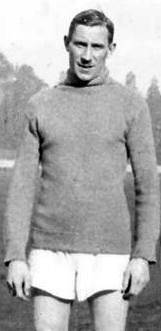
The Rangers Sports of 1919 were back in the business of top runners from outside Scotland being invited to compete and an extended programme being offered to the Glaswegian sporting public. 20,000 was the estimated attendance. The highest quality events were the middle distance races where AB Hill, the English 880 and Mile champion was opposed not only by the well handicapped Scots but also by New Zealand’s Sergeant Mason. Hill, giving Mason eight yards beat him from scratch in 1:57.8, while neither of the best Scots (G Dallas and S Small) made the final. Neither Hill nor Mason ran in the mile handicap which was won by WB Ross in 4:23.4 and the sprints were both won by Eglinton Harrier AH Graham.
The war was over, the sports were starting to build up again into the international event that they had been before 1914.
There were also supplementary meetings to the Rangers Sports which were held on the Monday following the main event on the Saturday. A review of the Monday night gatherings can be seen at Monday supplementaries
Eric Liddell at Stamford Bridge in a relay British Empire v USA 1924
The ‘Glasgow Herald’ report on the sports held on 7th August 1920 was exceedingly brief but did have all the results down to third place. It read:
“The annual sports of the Rangers Football Club were held at Ibrox Park, Glasgow on Saturday afternoon in fine weather and before nearly 40,000 spectators. All the events were well contested, and in the 1000 yards invitation handicap two records were created – the all-comers’ by AG Hill, Polytechnic Harriers, who reduced E Baker’s time by a second, and the native record by D McPhee who reduced the previous time by a similar margin.
The winners of the invitation events were: 100 yards: RJ Christie (West of Scotland) 5 yards 10 3-5th seconds; 220 yards: HFV Edwards (Polytechnic Harriers) scratch 22 3-5th seconds; 1000 yards: 1. D McPhee (West of Scotland) 14 yards 3. AG Hill (Polytechnic Harriers) The winner completed the full distance in 2 min 16 sec, a new Scottish native record (previous best 2 min 17 sec), while Hill’s time was 2 min 15 sec, a new Scottish all-comers’ record (Previous best 2 min 16 sec).
If that report was brief, the one for the 1921 meeting was even shorter: “The annual sports meeting of the Rangers Football club was held at Ibrox Park, Glasgow, on Saturday afternoon when there were about 16,000 spectators.” And that was it! Sport was not reported in great detail in any event at that point in newspaper history but equal space was given to the above meeting, Craigmillar Games, Corstorphine Sports, Inverkeithing Games, Strathallan Games, Highland Games at Glenluce, Powderhall half mile handicap and a AAA Committee Meeting. The quality at Ibrox was high. Results of the invitation events:
100 yards: 1. EH Liddell (Edinburgh University) 1 1/2 yards; 2. HJ Christie (West of Scotland) 8 1/2; 3. AH Goodwin (Maryhill Harriers) Won by inches. 10 sec
300 yards: 1. HJ Christie (West of Scotland) 10 yards; 2. R Colbery (Maryhill Harriers) 12 yards; 3. EH Liddell (Edinburgh University) 4 Won on the tape. 31 3-5th sec.
Half-Mile: 1. D McPhee (West of Scotland) scratch; 2. WB Mein (Edinburgh University) 20 yards; 3. JC Ponsford (Glasgow University) 8. Won by six yards. 1 min 59 4-5th sec.
Three quarter mile: 1. D McPhee (West of Scotland) 20 yards 2. GH Davidson (West of Scotland) 30 yards; 3. AG Hill (Polytechnic Harriers) scatch. Won by six yards. 3 min 9 sec.
Eric Liddell and AG Hill at the meeting plus Duncan McPhee and there was no single race report. Well, well, well.
Albert Hill won two Olympic gold medals: 1500m in 1920; 800 metres in 1924; Eric Liddell also won gold and bronze in 1924
One item above all others in the report on the Rangers Sports of 5th August 1922 caught my attention – the field in the Mile was ’embarrassingly large’ at 142! There was the usual amount of quality Scottish and English runners taking part and the report was a bit larger than in the two previous years although it had to share the available space under the headline ‘Cricket and Athletics.’ I can quote it almost in full.
“Everything favoured the Rangers Football Club on Saturday – the finest of weather, a 30,000 crowd, and keen competition. The surprise of the meeting was the double win of B McGrath of Manchester Athletic Club who carried off both sprints rather easily. If memory serves, this was his first appearance in Glasgow which may account to some extent for his remarkable performance. D McPhee’s fine running in the mile which he won comfortably in spite of an embarrasingly large field – the entries numbered 142 – was much appreciated, though interest in the race would have been intensified had ED Mountain started. McPhee absented himself from the open half-mile, in which he would probably have had to cover the distance twice, but he competed in the invitation event in which he was unplaced, finishing fifth, with Mountain immediately ahead. The defeat of HFV Edward in the first Heat of the furlong meant that the anticipated meeting between him and EH Liddell in the Final did not take place. The Edinburgh man ran a fine race winning in 22 sec from the 22 yard mark. This was his only reward during the afternoon, as he did not run in either of the open sprints. In the invitation quarter-mile, GT Stevenson showed a welcome return to form, getting home easily from LS Barden with Edward, who of course ran from scratch, third.
After three lots of extra time, Celtic beat Rangers in the final of the 5-a-side.
The meeting on 4th August 1923 came under the headline of “Cricket and Athletics: Quiet Day’s Cricket” and sub-headlines of “Keen Contests” and “Uddingston Still Lead”, the Sports were below a headline of “Notable Absentees”. So, well down the page and starting with telling the readers of the athletes who weren’t there, the excitement was mounting. The report itself was actually quite long compared with previous years and split into three sections headed as noted above, then “McPhee Gives Up” and finally “A Fatal Penalty” before going on to “Regattas On Loch Lomond”. It is fair to say that despite the crowds being attracted, the Rangers Sports were not the major occasions they would become in later years. The report reads:
“Although the unavoidable absence of A Mourion, L Duquesne and P Lewden, the French athletes, and the non-appearance of HFV Edward, the English ex-champion, created keen disappointment at Ibrox, the Rangers Sports suffered little in distinction. Without such strong challengers to oppose them, however, it was expected that E Liddell, D McPhee and CE Blewett would would accept the offer to further distinguish themselves, and it came as a surprise that the trio failed to run themselves into the prize list. The Edinburgh University man did not enter himself into his heat of the open 100 yards and in the invitation 120 yards he was beaten by a yard by J McAlpine to whom he was conceding 7 1-2 yards. He ran unplaced in the invitation 300 yards, although his time in that event was returned as 31 4-5th seconds, three fifths of a second outside the record time of the late Wyndham Halswell made at Hampden Part in June 1908. Liddell also failed to make his appearance in the open furlong which was won by H Seath, a Maryhill Harrier whose handicap will come under the axe before another Ibrox programme is arranged.
D McPhee’s running at no time made its usual appeal. In the one and a half mile invitation handicap, he decided to forego his start of 15 yards, and along with CE Blewitt got off from the scratch mark. Neither the West of Scotland man nor the Birchfield Harriers had a say in the finish. McPhee dropping out of the race with little more than a quarter to go. T Riddell of Glasgow High School almost provided a rich surprise here, but the reserve power behind the Maryhill man, WH Calderwood, was too much for this youthful runner. In the mile handicap, McPhee introduced much more spirit into his effort, but at no time did he look like challenging the placed men, although he was well ahead of Blewitt when G Wason passed the judges box.
By inches only, and after H Seath had suffered a yard penalty for a false start, did B McGrath, the Mancunian, win the open sprint for the second year in succession. That the penalty was a vital one for the Maryhill man was obvious from the start. Only from the favourable position of the judges box was it possible to give a verdict when McGrath, Weeks and Seath reached the line in a bunch. JS Ward, the Reid Bowl winner at Partick Thistle’s meeting last season, which trophy he lost last month by being defeated by a clubmate in R McLean, turned the tables on his Firhill conqueror in the invitation 120 yards. This was a brilliant race in which T Mathewman, the Huddersfield youth, maintained his fine reputation by securing second and beating even time. Although Ward had the advantage of six yards over Mathewman, he was only one yard ahead at the tape. As is usual at this meeting, the organisation was excellent and the programme was completed to scheduled time.”
An interesting report which marks the arrival of Tom Riddell at the meeting, the continued appeal that Rangers Sports held for Liddell and McPhee and the English contingent is also noted. In addition the absence of three Frenchmen is a note that they were invited and had agreed to compete despite having had to withdraw for unavoidable reasons. Was this the start of the continental involvement in the Sports which was a feature in the 30’s and 40’s?
Duncan McPhee won the SAAA Mile title six times in seven years between 1914 and 1921 and the 880 yards five times in six years between 14 and 1923 but never set a Scottish record at any time.
1924 was Olympic year and the plug for the Rangers Sports in the ‘Glasgow Herald’ read, “Scottish Records Broken At Ibrox. Rangers Football Club’s annual sports at Ibrox were very successful. The weather was fine, and excellent sport was provided by the best of Scottish talent reinforced by a number of American, French and South African Olympic competitors. New Scottish All-Comers records were created in the high jump and hurdles race. EH Liddell put up a fine performance in winning the invitation quarter-mile from scratch, and C Griffiths won the half-mile invitation match in style, while JW Scholz, the Olympic 200m Olympic champion placed the 120 yards invitation to his credit by a narrow margin from J McLean to whom he conceded four and a half yards.”
The actual report came a page later and was shorter than the reader might have been led to expect from the extract above. It said simply
“The annual sports of the Rangers Football cub were held on Saturday at Ibrox Park, Glasgow, in brilliant weather and before a great attendance which was estimated at not less than than 40,000. The meeting was noteworthy on account of the large number of champions drawn from the United States, France and South Africa who competed with the cream of home talent. During the afternoon, two Scottish all-comers’ records were broken. P Lewden, France, and HM Osborn, both beating A Baker’s previous record in the high jump of six feet two and a half inches, the French champion six feet four inches and the American six feet three inches. In the 120 yards hurdles, SJ Atkinson, the South African, covered the distance in 13 1-5th seconds, which was 3-5th faster than the previous best, but he was assisted by a following wind.”
Results of the invitation events:
120 yards: 1. JV Scholz (USA) scr 11 44-5th seconds; 2. R McLean (Glasgow High School); 3. FB Wardlaw (Heriots College.
120 yards hurdles: 1. JM Atkinson (South Africa) 13 1-5th seconds; 2. D Kinsey (USA): 3. EG Sutherland (SA)
440 yards: 1. EH Liddell (Edinburgh) scr 49 3-5th seconds; 2. CW Oldfield (South Africa); 3. JG McCall (West of Scotland)
Half-mile: 1. C Griffiths (Surrey AC) scr 1min 56 2-5th sec; 2. T Riddell (Glasgow High School) 30 yards; 3. R Dodge (USA) scr
Note Tom Riddell splitting the two American scratch runners in the half mile as well as Liddell’s 440 yards win.
The “Edinburgh News” had a n article on FB Wardlaw, third in the 120 yards and twice bronze medallist in the SAAA 220 yards, which read
IN THE PUBLIC EYE
TWO SCOTTISH ATHLETES AT DUBLIN
Among those who have gained the international honour this week for the first time, F.B. Wardlaw, the Heriot C.C.C. sprinter, occupies a place. Like several other runners of merit, for the last few seasons he has been compelled to take a back seat to Eric Liddell. But the champion’s departure has given Wardlaw the much-coveted opportunity of representing his country in the athletic arena. Incidentally, he is the first Herioter to achieve this distinction.
A wonderfully fine runner for his comparative lack of stature, Wardlaw seems to possess the happy knack of producing his best on a big occasion. The furlong is his strong suit, and two years running he has occupied third place to Liddell and McLean in the S.A.A.A. championship over that distance. He also gave Liddell a good run for it in the Eastern District Championship decided at Powderhall in June. Wardlaw was also member of the Edinburgh relay team which set up new Scottish figures at Hampden early in the season. Well known in the Meadows inter-club contests, Wardlaw has on three occasions carried off the double by winning the 100 and 220. This year, although defeated in the 100, he again lifted the 220. Representing Heriot’s against the Edinburgh Harriers last month, he further added to his list of successes by again achieving the double, and this was his portion at Galashiels this week also.
His handicap performances have been equally meritorious, a notable performance earlier in the season being the winning of the open sprint at Melrose sports for the third year in succession. Wardlaw has shown splendidly consistent running in these events, but probably his best handicap performance was in the Rangers’ invitation 120 yards last autumn, when, after winning his heat off 5 ½ yards in 11 4.5 sec., he was placed third to J.O. Scholz, the Olympic 200 meters champion, in the final.
Jackson Scholz as an American sprinter who won Olympic gold in 1920 in the 4 x 100 relay and in 1924 in the 200m with silver in the 100 behind Harold Abrahams.
The international flavour continued the following year when there was a team from Illinois competing and four records – two Scottish and two British – were set. The meeting was held on 1st August with the report sandwiched between the Uddingston v Drumpellier cricket match and a report on otter hunting by the Dumfries-shire hounds. The report read as follows:
“In past years the Rangers Club has contrived to give the Glasgow public something exceptional in the way of athletic entertainment. They can be said to have excelled themselves on Saturday for it is questionable if any of their previous meetings have reached the same all-round standard of merit. This was chiefly by reason of the display given by the members of the Illinois team, who during the course of the meeting displaced four records, two British and two Scottish, but the success was not wholly due to this. There was a keen-ness among the home element which always provided the stirring finishes which go so far to secure enjoyment for the man on the terracing. If RM Osborne disappointed last year he has made up for it on this visit. At Greenock a week ago he cleared six feet five and a half inches and thus established new British figures for the jump. On Saturday he did better, clearing six feet six and a half inches and just failing to top his own world record. It was a magnificent effort and worthy of the first place in the afternoon’s sport.
Next in merit to Osborne’s jumping, came the running of Ray Dodge in the 1000 yards. Dodge, who ran third to Cecil Griffiths at Stamford Bridge, refused the allowance of 4 yards which the handicapper and ran from scratch. The race was a repetition of that in the championship as the pair kept together until 100 yards from the tape, when Dodge went ahead with a fine burst of speed. This time the Welshman could not respond and was beaten by fully 10 yards. RG Clark (Clydesdale Harriers) the winner ran a very plucky race throughout and, although tiring fast, just managed to hold out. The winner’s time was 2 mins 13 3-5th sec. The previous best Scottish time was the 2 mins 15 sec of AG Hill, while the British figure of 2 min 14 4-5th sec stands to the credit of WT Lutyens. It was the best running Dodge has done in this country, and if there is some criticism of the manner in which he cut between Griffiths and McIntyre during the course of the race, there was nothing but admiration for his finishing burst of speed. Existing figures were also excelled in the hurdles and pole vault. IH Riley who clocked 15 3-5th sec in the first had however the benefit of the breeze; while Jones’s effort of 12 feet 5 inches in the pole vault was only an exhibition one, the AAA Champion having taken four tries one surmounting thirteen feet one and a half inches.
The success of runners attached to the Universities has been one of the features of the present season and they continued their triumphs at this meeting. JN Miller, a Glasgow student won the half mile in a fine time; AF Clark was placed first in the open sprint, with A Caponis occupying second place; while RA Robb not only captured the special 120 yards event but ran away with the 440 yards Western District Championship. Ronn who had two and a half yards from ‘Bud’ Evans, the double winner at Greenock last week, defeated the American in decisive fashion in his heat. His final 10 yards here was gameness personified and it was also his finish in the final which gained him his prize as 10 yards from the tape he looked out of it. In the quarter mile he led from start to finish and although the time seems slow he was easing up from practically 40 yards out. AF Clark won the open sprint off one and a half yards in what was unofficially stated to be half a yard better than evens and, like Robb, the old Allan Glen’s boy, is finishing the season in excellent style. He did not hurdle as well as expected but his strenuous exertions in the sprint had no doubt an effect. One of the most popular victories of the meeting was that of GT Stevenson in the open 300 yards. The manner in which he worked his way through the field was quite in his best style.”
A page further on we read that the meeting was held in brilliant weather and the crowd was estimated to be 30,000.
Six years after the war and the meeting featured Scots, English, Irish, Welsh and American competitors and there were four invitation events (120 yards, 120 yards hurdles, 1000 yards, and the 440 yards West District Championship), seven open events (100 yards, 300 yards, half-mile, mile, 100 yards youths, High Jump, Putting the Weight, and an obstacle race) and an exhibition pole vault. And Rangers beat St Mirren 3-0 in the 5-a-side. The first two sentences of the report were accurate.
The following year was less glamorous and the report was much shorter. 30,000 spectators though and a fairly full programme with the best of the Scots, some very good Englishmen who took lots of prizes south of the border and a Frenchman in the high jump. “Competition during the afternoon was of an interesting nature, and performances were generally good. The English representatives were generally successful and deservedly so. The provided most of the thrills and made all events in which they participated interesting. Outstanding because of his ‘double’ in winning both mile and half mile handicaps was W Rae, an 18 year old Scot attached to the Broughton Harriers, a very cool and judicious timing runner. W Rangely (Salford), P Gaby (Polytechnic) and C Ellis provided particularly good finishing. Gaby’s time may rank in certain eventualities as a Scottish all-comers’ record. Best of the home talent was the Gala contingent through securing first in the open 100, second in the 220 and third place in the mile invitation. TM Riddell failed in his attempt at record. Frenchman A Caerrier (Stade Francaise) made no special showing in the high jump and just equalled EG Sutherland, each did 5’10”, not sufficient to serve the visitors for prize placing. The winner was NF Bulloch (with a handicap of 7″) who had an actual jump of 5’6″ before retiring with a sprained ankle. Naturally the home club’s winning of the football tournament gave much satisfaction.”
Not a well written report – note the phrasing and lack of information about Riddell’s run for instance – and the following item referred to the Celtic FC Sports the following evening (Tuesday). Their Sports had normally been earlier in the year and there are several references in the reports to the performances of athletes at Ibrox over the years compared to the times/heights/distances achieved at the Celtic event.
DG Lowe won Olympic gold in the 800m in 1924 and in the 1500m in 1928. He set a world record for 600 yards in 1926 (1 min 10.6) and had personal bests of 48.8 for 440 yards in 1927; 1:51.2 for 800 metres in 1928; 3:57 for 1500m in 1924 and 4:21 for the Mile in 1925. He won the AAA championship at 440y and 880y in 1927 and 1928
If 1926 had been lacking in glamour, 1927 pretty well made up for it. An Achilles team containing such as Lord Burghley and DG Lowe (the reigning Olympic half-mile champion) were the big attraction. There was an estimated 35,000 spectators. The report in the ‘Glasgow Herald’ on 8th August was much longer than for any so far and took up a whole column of tightly squeezed print. Extracts are below.
“There was a large attendance at the sports of the Rangers Football Club at Ibrox Park, Glasgow, at which the competitors included several members of the Achilles Club and the Polytechnic Harriers. The meeting at Ibrox on Saturday brought to a close a memorable week for Scottish athletics and if the results of our contests with the distinguished visitors from the Achilles Club are scarcely flattering to our national pride, the association of our athletes with men the calibre of JWJ Renkel, Lord Burghley, DG Lowe, GC Weightman Smith and others cannot but have an educational effect which will bear fruit in the future. Progress can only come from the participation in the scratch event rather than in the much more common handicap and the two matches in mid week give point to this contention.
In both quarter-miles in which RB Hoole ran against DG Lowe, the Edinburgh student showed by his proximity to the Olympic champion at the tape that he had touched a standard hitherto missing from his public appearances. Similarly Ian Sutherland in his two bouts on level terms with JWJ Rinkel in Edinburgh, indicated a distinct advance on his running in the championships, and the fact that the Englishman in these two races over 100 yards and 220 yards returned 10 sec and 21 4-5th sec respectively showed that the bigger the occasion the better does the Borderer perform. Donald McLean, the only Scot to score a success in either match also displayed excellent running in the two miles race with VB Morgan the Oxonian and, what was much more satisfactory, a degree of judgment which was so sadly lacking in the race over the same distance which he ran at the Celtic meeting last month.
For once in a while the limelight was not monopolised by DG Lowe and Lord Burghley, this pair being thrown rather in the shade by the performances of GC Weightman Smith and JWJ Rinkel. The South African established a new record in the javelin with a throw of 182 feet 11 inches and broke the existing all-comers’ record in the 120 yards hurdles twice on successive evenings doing 15 seconds at Hampden and 14 4-5th seconds at Craiglockhart . This reveals consistent form which is distinctly promising for the next Olympiad. JWJ Rinkel took part during the week including the match against Ireland on Monday in no fewer than eight races, six of them scratch events, and won them all, a really wonderful feat and the improvement which the former AAA champions is showing in the shorter distances now that he has definitely abandoned running over the quarter-mile is very marked.
Probably we expect too much from DG Lowe and this may account for the slight feeling of disappointment which was occasioned by his failure at Ibrox. He was not seen in the half-mile, the distance associated with all his great exploits, but confined himself to the quarter-mile in both matches. We trust that this does not indicate that he has finished with mid distance running. Undoubtedly the brilliance of Weightman Smith made the hurdling of Lord Burghley appear common-place, but apart from this the form of the Cambridge president was below his best. He was hitting the timber too often – on Saturday his progress to the tape was marked by a trail of prostrate hurdles – and this not the sort of thing one expects from a really great hurdler.
The feature of Rangers meeting was the measure of success achieved by the men occupying the scratch mark. During the afternoon five handicaps were won by back-markers, two falling to JWJ Rinkel in the 120 yards and the 220 yards, the remaining three to C Ellis, the AAA mile champion, in the first class mile, to J Webster in the steeplechase and to JE London in the high jump. All five successes were to the liking of the crowd, and what is better, all, with the exception of the steeplechase where Webster had a runaway victory, were productive of keen competition. Rinkel’s running was distinguished by his strong finishing, it was this quality which brought him victory in the open furlong as, entering the straight, it looked long odds against him catching the leaders. He was returned as doing 21 4-5th sec in his heat, but this was obviously a mistake, as he was knocked clean out of his stride on the bend and must have run four yards or more over distance in consequence.
Ellis had only a limited number of competitors in what was really a first-class mile. The AAA champion is not a stylist, he has a shoulder action which gives him a distinct roll but he gets along, and at half distance he had over hauled our champion. From there he gradually wore down the others and, taking the lead 200 yards from the tape, ran home the winner in the excellent time of 4 min 18 4-5th sec. McLean, though beaten into third place by his team mate Calderwood ran out the full mile and was timed as doing 4 min 23 sec his best public performance over the distance so far. The Birchfield man was a lone figure in Saturday’s race where the limit man was in receipt of 240 yards yet he made so light of his task that he finished a good 70 yards ahead of VB Morgan, the nearest man.
FR Gaby is easily the most consistent of our hurdlers in that respect, on his two visits to Glasgow last season he clocked 15 1-5th sec, on Saturday he was returned as doing 15 secs, and this gave him a decisive victory over his conqueror in the international at Manchester. In passing it is permissible to note that Lord Burghley was awarded second place in this race, notwithstanding that he knocked over three hurdles. JE London was again the facile performer who impressed at the Edinburgh Universities meeting. He failed narrowly to reach the final of the 120 yards, but jumping under difficulties that were not of his own creation, he cleared five feet eleven and a half inches, this was sufficient to earn him winning brackets.
The contest between Lord Burghley and TC Livingstone Learmonth in the 440 yards hurdles was an exceedingly close one, the pair running neck and neck down the finishing straight and although the time (56 secs) was short of Burghley’s best, the keen-ness of the contest justified its inclusion in the programme. DG Lowe’s attempt to create a record in the 600 yards narrowly failed, the Olympic champion only finishing fourth nine yards behind the winner and his time was given as 1 min 13 1-5th sec. The handicap was so well framed that had he won he would have been successful in his object, as RB Hoole who broke the tape after a well-judged finish was clocked at 1 min 11 3-5th sec, one fifth inside Lieutenant Halswell’s figures. “
There are several references in the report to other meetings in which the visitors competed and it had indeed been a hectic week for them. On Wednesday the Achilles Club met the Atalanta Club at Hampden, on Thursday that had competed at Craiglockhart against a Scottish team selected by the SAAA and on Saturday, of course it was at Ibrox. The previous Saturday they had competed in an international against France at Stamford Bridge where Lowe had won the 800m in 1 min 54 1-5th, Rinkel the 400m in 50 sec and NC Nokes had won the Hammer and Discus. You can see why Lowe disappointed by not running anther 800m and why Burghley knocked over three hurdles.
The report interestingly enough points out the necessity of scratch competition but such did not become common in Scotland until the end of the 1930’s – note the fact that Lovelock, Nurmi and company were all running in handicap races at the Rangers Sports in the 1930’s.
The 1928 meeting was seriously affected by the fact that the Olympic Games were taking place at the same time and that there was an upcoming international between USA and GB in London. Nevertheless, the headline in the ‘Glasgow Herald’ of 6th August read “New British Records. Another Ibrox Success.” and wont on as follows.
“The Rangers Football Club added another to their long series of triumphs as sports promoters on Saturday afternoon at Ibrox Park, Glasgow, for not only was the athletics fare excellent but the organisation was so excellent that a long and varied programme was run through without a loss of time or interest. The weather conditions were perfect for fast performances, being warm without a breath of wind and the times were, on the whole, an advance on anything returned at other Scottish meetings this season.
The outstanding individual performances were accomplished by Ray Watson, the American mid-distance champion in the quarter-mile; by James Crawford the Scottish furlong champion who won both the open 100 yards and the invitation 120 yards; by WH Calderwood in the three-quarter mile and by AD Turner in the Youths race. From the spectacular point of view the three-quarter mile was the most exciting. Watson who was on the scratch mark and conceding starts up to 77 yards, ran so well in the early stages that he was on terms with the field in the final lap and was apparently under the impression that lying behind the leaders he need only make his effort entering the finishing straight to win easily. He however was unaware that WH Calderwood had been specialising in sprinting in the company of Cyril Ellis, the AAA champion, and although the American was out on his own heading for the tape, he was unable to resist the overwhelming challenge delivered by the Maryhill man in the last 80 yards and was beaten at the tape by a clear two yards.
Calderwood’s winning time was 3 min 4 2-5th sec from 22 yards and so well was he moving that it is just a pity that he did not run out to the full distance as D McPhee’s Scottish figures of 3 min 12 1-5th sec seemed well within his grasp. Although defeated, Watson had the satisfaction of returning the excellent time of 3 min 4 4-5th sec which is one second faster than the previous British record created by AG Hill the double Olympic winner, at Salford in 1921. Calderwood’s judgment in the race was perfect and it is questionable if he has ever run a better race in his career. It was refreshing after some of the performances he has given this season.
The sparkle which characterised the running of James Crawford in the Scottish championships was maintained at Ibrox and that extra bit of driving power which he has infused into his finishing enabled him to record his double success. Running from the two and a half yards mark in the open event, he clocked evens in his heat, semi-final and final which showed consistency, while in the heat and final of the special event he was returned as running 12 sec. Not since 1924 has the Queen’s Park player shown such good form and it will always be a matter of speculation as to how far he might have gone had he devoted himself solely to running and left football alone. J Barrientos, the Cuban, who ran at Amsterdam was on the scratch mark in the special handicap but neither in this nor in the open furlong did he survive in the heats and it is evident that the handicapper had over-estimated his abilities when framing his starts.
Of the other American visitors, HM Osborne the high jumper did best. He cleared 6 feet 4 inches to win the handicap, although failing his attempt at the record. Lee Barnes, the pole vault expert, was not at his best. His 12 feet was much too low to challenge JF Muir our own champion who cleared 10 feet 6 inches to win with his handicap of 3 feet. Onell Griffiths who ran in the half-mile was not moving with anything like his old freedom and it was evident that he had not fully recovered from the accident he met with at the AAA championships last month. Nor was Donald McLean at his best. In any case it is doubtful if either could have troubled the men in front as 1 min 56 4-5th and 4 min 17 sec were clocked by the winners of the half-mile and mile respectively. “
An almost entirely domestic field with a few Americans, some Englishmen and a Cuban put on a very show for the spectators. We see the same Scottish names appearing regularly – particularly at Ibrox WH Calderwood – who seem to be lost to the sport and have to wonder why such talented athletes are not better remembered. The photograph above is of Lord Burghley
Lord Burghley won gold in the Olympic 400m hurdles in 1928 and silver in the 4 x 400m relay in the Olympics of 1932. He also won three golds in the Empire Games of 1930 at 120 yards hurdles, 440 yards hurdles and 4 x 440 relay
After the build-up and development of the event, 1929 was a bit of a disappointment. The weather was unsettled but 20,000 spectators did turn out and the report was full of remarks like – “Saturday’s meeting at Ibrox will not rank as one of the best but it will be notable in respect of the almost total eclipse of athletes from South of the Border.” “Much was expected of the relay with Polytechnic Harriers, Birchfield Harriers and a Scottish select team all competing but the race proved almost a fiasco through London dropping the baton at the first handover. The exchanging generally was about the worst seen this season in Scotland, and there was not even the excuse of an overcrowded track.” “The bottom was knocked out of the hurdles events by Lord Burghley calling off due to a strain and by the non-appearance of Alister Clark who has apparently not recovered from his breakdown.” “Accident to JE Webster. The accident to JE Webster in the steeplechase was regrettable and it is fortunate that it is not as serious as at first thought. A broken leg would have meant the closing of one of the most brilliant careers in long distance running in post-war sport. It is questionable however if he would have won had he completed the course as both J Suttie the winner and M Stobbs the second man both proved adepts at the game and in addition carried plenty of reserves at the finish.”
There were some good races but the whole tone of the report was depressing and what had been the best meeting of the season and would become the best by far in the 30’s and 40’s was no better than the others in 1929. The following year would see Tom Riddell set a record and in 1931 the great Paavo Nurmi would turn out at the Rangers Sports.
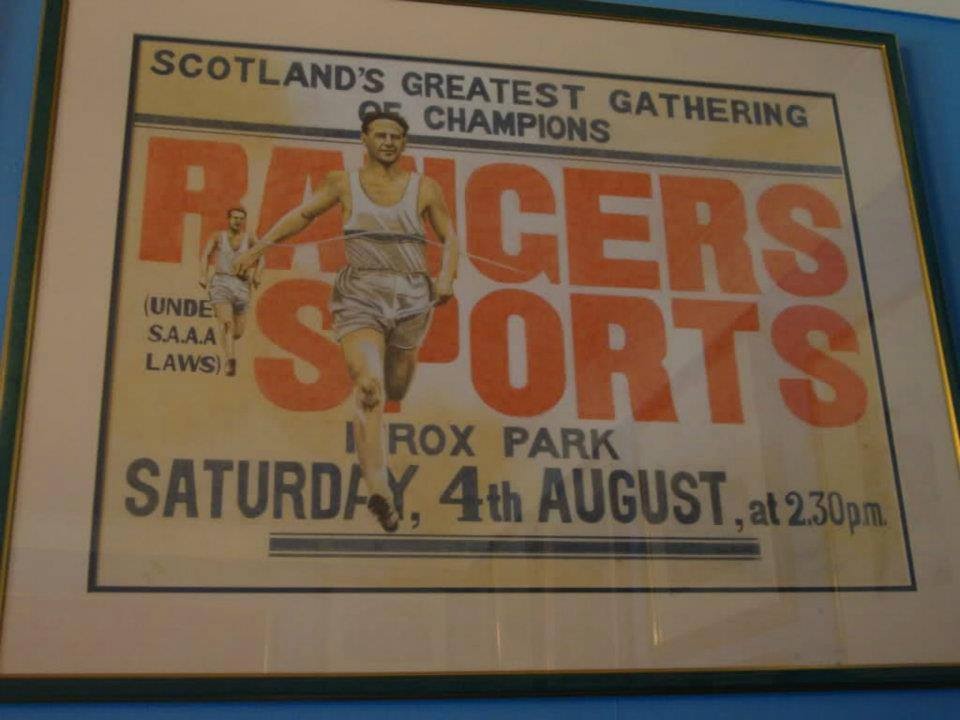
Poster for the 1934 Sports
The Rangers Sports as covered so far dealt almost entirely with the post-war period from 1945. They were going for many years before that and the Rangers connection with athletics went right back to their inception. For example, before Clydesdale Harriers was founded, Tom Vallance set a Scottish long jump record and he was one of the first to join the new club when it appeared on the scene in May 1885. Then there were Clydesdale Harriers Sports held at Ibrox for many, many years before Rangers set up the Rangers Sports. When you read that a meeting was the 46th or 47th Rangers Sports, the number includes all the Clydesdale Harriers sports run there in the 19th and early 20th century. This page will look at the event during the 1930’s starting with the meeting on 2nd August 1930.
The ‘Glasgow Herald’ the following Monday had a long report on the meeting which was held in winds and rain showers and yet the headline read
“BRILLIANT PERFORMANCES AT IBROX PARK.
TOM RIDDELL’S NEW RECORD.”
The large crowd ‘enjoyed the fare provided’ and the two heroes of the afternoon were JE London of the AAA’s (three times AAA’s 100 yards champion) who on his fourth visit to Ibrox at last showed his real form and only just lost the 120 yards handicap race where many thought he had won it on the line. The report continues:
“But if London did well, our own champion did better, for he succeeded in establishing a new Scottish native record for the mile. The race was run in heavy rain and a gusty wind, yet Riddell clocked 4:21 for the whole distance, or three-fifths of a second faster than the figures set up by J McGough at Celtic Park in 1906. His first quarter mile was covered in 59 seconds, the half mile in 2 minutes 6 2-5th seconds and three quarters mile in 3 minutes 13 seconds. Riddell ran from the 20 yards mark to win the handicap in time, which was announced as 4 minutes 19 2-5th seconds, obviously a mistake on the part of someone. There was, however, no doubt about his being within McGough’s time for of the six watches which times his full journey, four recorded 4:21 dead, one was a shade over while the sixth showed him a fifth faster.
It was a magnificent performance under poor conditions and the manner in which he made it hacks of a good class field stamps him as the best miler Scotland has produced for over 20 years. Only once has he run a better race, and that was when he finished a good third to Baraton, the Frenchman, in the AAA’s Championships at the Stamford Bridge several years ago. Baraton’s winning time on that, a much more favourable afternoon, was 4:17 and Riddell just under 4:20. It is something of a coincidence that it was last August when on a flying visit home that the Glasgow High School boy established fresh figures for the three quarters mile.”
Other than the two stars mentioned above, the feature of the event was apparently the excellent showing put up by the athletes from Edinburgh and the Borders – one of whom beat London in the close finish above. Both the mile and half mile were won in fast times – the half mile, by J McWilliam of St Peter’s, in 1:54 off 46 yards.
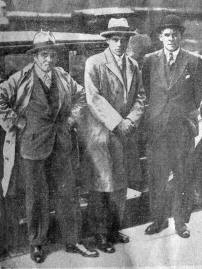
Nurmi (centre) and his manager being met at Ibrox by Bill Struth (right)
A year later, the headline read “Nurmi’s Success At Ibrox. Brilliant Running By Scotsmen. Riddell, Wood and Turner Excel” The story of Nurmi’s race has been written by Alex Wilson in Germany and you can read it here The ‘Glasgow Herald version was as follows:
“The meeting at Ibrox Park on Saturday will hold its place among the long series held under the auspices of the Rangers Football Club for two reasons. It was the medium by which Paavo Nurmi was introduced to the Scottish track for the first time, and during its course one new British and three new Scottish records were created. Even for a Rangers meeting this is exceptional, though the conditions were favourable to fast times and outstanding performances. The day was warm, without wind, and the track, one of the best in Britain, in excellent condition. It is not hard to suppose that our home standard would show a wonderful improvement if our climatic conditions were more stable and more kindly disposed towards athletics. The running of TM Riddell, JF Wood and AD Turner demonstrated this.
The famous Finn took part in two races over two miles and over four miles. In both cases the handicaps had been framed to ensure that if he won he would come within sight or in world record figures. But this procedure on the part of the handicapper, while it may have been of good intent, robbed the races of much of their interest to the casual follower of athletics on the terracing. There was a certain fascination in watching Nurmi with his long loping stride reel off the laps with machine-like precision, but he was a lone figure running with his watch and separated from his followers by a large gap. Only once during his two races did he come within touch of his field, and that was when he had a duel with W Reavers, the old AAA Champion in the finishing straight of the Two Miles. That 80 yards dash to the tape must have caused more pulse beats than all that had gone before.
Nurmi’s best appearance was in the longer distance race in which he succeeded in reducing Shrubb’s British record of 19 minutes 25 2-5th seconds by three seconds. He ran as he did in both races with amazing evenness. The first mile was covered in 4 minutes 45 4-5th seconds, the second in 4 minutes 55 1-5th seconds, the third in 4 minutes 55 seconds and the last in 4 minutes 44 2-5th seconds. There was the same evenness in the Two Miles, but here at the finish he was 24 seconds outside Shrubb’s 9 minutes 9 3-5th seconds, made on the same track in 1904.
JF Wood who was off 200 yards in the Four Miles, maintained the interest in the first two miles of the race by keeping his advantage from the back marker intact. Wood actually ran the first mile faster than Nurmi, his time at this point being 4 minutes 38 seconds. At the end of the second mile he clocked the same time, 9 minutes 41 seconds, as the Finn. Thereafter the Heriot’s man tapered off a bit, but a sprint in the twelfth lap enabled him to clip two-fifths of a second off J McGough’s native record of 14 minutes 44 1-5th seconds. Although Wood had a bad time during the succeeding laps, he completed the full distance in the excellent time of 20 minutes 50 2-5th seconds.
The other two records were established during the course of the one mile invitation race, and the magnificent running here of Cyril Ellis and TM Riddell raised the enthusiasm of the 45,000 crowd to fever pitch. Ellis who was making his first appearance of the season here was at his best. Conceding Riddell 20 yards, he was that much behind in the back straight of the final lap. But he made a tremendous amount of running in the final 300 yards and was only beaten by the Scottish champion six yards at the tape. The Englishman’s time was 4 minutes 16 1-5th seconds, 3-5ths of a second faster than AG Hill’s record made at Celtic Park in 1919. Any suggestion that Riddell is not the Riddell of a year ago, was completely destroyed by his running on Saturday. Not only did he win the handicap in 4 minutes 15 1-5th seconds, but he ran the full distance in 4 minutes 18 seconds, and chopped no fewer than three seconds off the native record which he made at this meeting a year ago. Only once before had the Shettleston Harrier given promise of a performance such as this and that was in the championships at Stamford Bridge in 1928, when he was timed as doing 4 minutes 19 seconds when running third to Baraton the Frenchman. But for the fact that for two seasons he was stationed where opportunities for running were few, it would have come before this.”
The report ran to 13 paragraphs and ten of them are repeated above. The rest of the meeting was covered in three short paragraphs where the other distance events were also reported to have been quite fast – 880 yards inside 1:54 the mile having the first two men finishing together and a little attention being paid to the 120 yards sprint and the high jump. It must have been quite a meeting – no mention of five-a-sides and a crowd of 45,000!
Paavo Nurmi is a distance running legend. He won nine Olympic gold medals (3 in 1920, 5 in 1924 and 1 in 1928), three Olympic silver medals (1 in 1920, 2 in 1928) over a variety of distances – 1500m, 5000m, 10000m, 3000m steeplechase and cross-country. He also set 22 IAAF ratified world records from 1500m to the one hour run and 21 unofficial world records. A really remarkable athlete. For the full impact of his talent, look him up on Wikipedia
In 1932, the Rangers Sports meeting was held on 6th August and the opening report tells it all: “The twenty three odd thousand spectators who journeyed to Ibrox Park on Saturday afternoon in search of sensations must have been sadly disappointed, for not a single record was created during the course of the meeting. When account is taken of the unfavourable conditions, a high and blustering wind which impeded the runners, the heavy rain which fell during most of the afternoon, the sodden track, the performances on the whole the performances at this, the 46th meeting of the Rangers club, touched quite a good standard.”
The performances were of a good standard with the running of Robin Murdoch in the 120 yards special event getting most of the notice although WH Calderwood in the 1000 yards and the jumping of JF Michie were also noted. The reports on the 1000 yards, the three miles and the finish of the 17 mile road race are noted here. “It is questionable whether WH Calderwood has ever shown better track sense than he did in the 1000 yards. He was given the mark of 15 yards, a surprisingly large concession in view of his running over the same distance early last month, but even without it he would have proved the winner, for his finish , excellently timed, was so powerful that he left the others standing. His tome of 2 minutes 15 2-5th seconds was, under the conditions, splendid and it would have been interesting if he had run the full distance. The two scratch men in the race, Tom Riddell and Cyril Ellis disappointed. Ellis never at any time during the race appeared to be happy and the Scottish champion, although at the elbow of the leader at the bell, did not display much judgment. He covered the first quarter in 55 2-5th seconds, the half mile in 1:58 and seemed like getting there but weakened visibly a furlong from home and faded out.
Not at any time did Walter Beavers appear likely to disturb Alfred Shrubb’s figures for three miles but although he was just beaten out of third place after a thrilling duel with Sam Tombe of Plebeian Harriers, he nevertheless ran quite a good race. His last half mile, although not timed, must have been very fast judging by the ground he made up, and one old ped, a world champion, was visibly impressed. The AAA champion’s time for the full distance was 14 minutes 43 4-5th seconds, and he covered the first mile in 4 minutes 51 3-5th seconds, and the second in 9 minutes 52 4-5th seconds.
The AAA’s marathon champion, Donald Robertson, treated the crowd to a wonderful sprint at the close of his 17 miles road race. He and Ernest Harper, the old AAA’s champion, entered the ground together and ran neck-and-neck for the remainder of the distance until 100 yards from home, when Robertson shot out to win by 20 yards. The Maryhill man’s time was 4 minutes 24 2-5th seconds slower than when he won the Maryhill Harriers race over the same course in May, but when account is made of the fact that the first half of the race was run into the teeth of a gale, it represents sound running.”
The names of the English regulars, London in the sprints, Ellis and Beavers in the distances, are becoming well known and it is a tribute to the organisers that they were able to entice AAA’s champions north of the border. They didn’t stop there – as the appearance of Nurmi shows, and in 1933 there was a team of Frenchmen competing. They were represented as a team in the medley relay and Calderwood ran the half mile stretch in race which Maryhill won. Calderwood was held by his opposite number but since one of the sprinters was absent, the visitors had to substitute a miler on the first of the 220 yard stages and that was their undoing. The same runner, R Lecuron, ran in the open mile handicap and, running wide all the way finished sixth, not far behind the winner. Another successful meeting despite the weather with many good performances and English and French athletes to spice up the competition for the spectators.
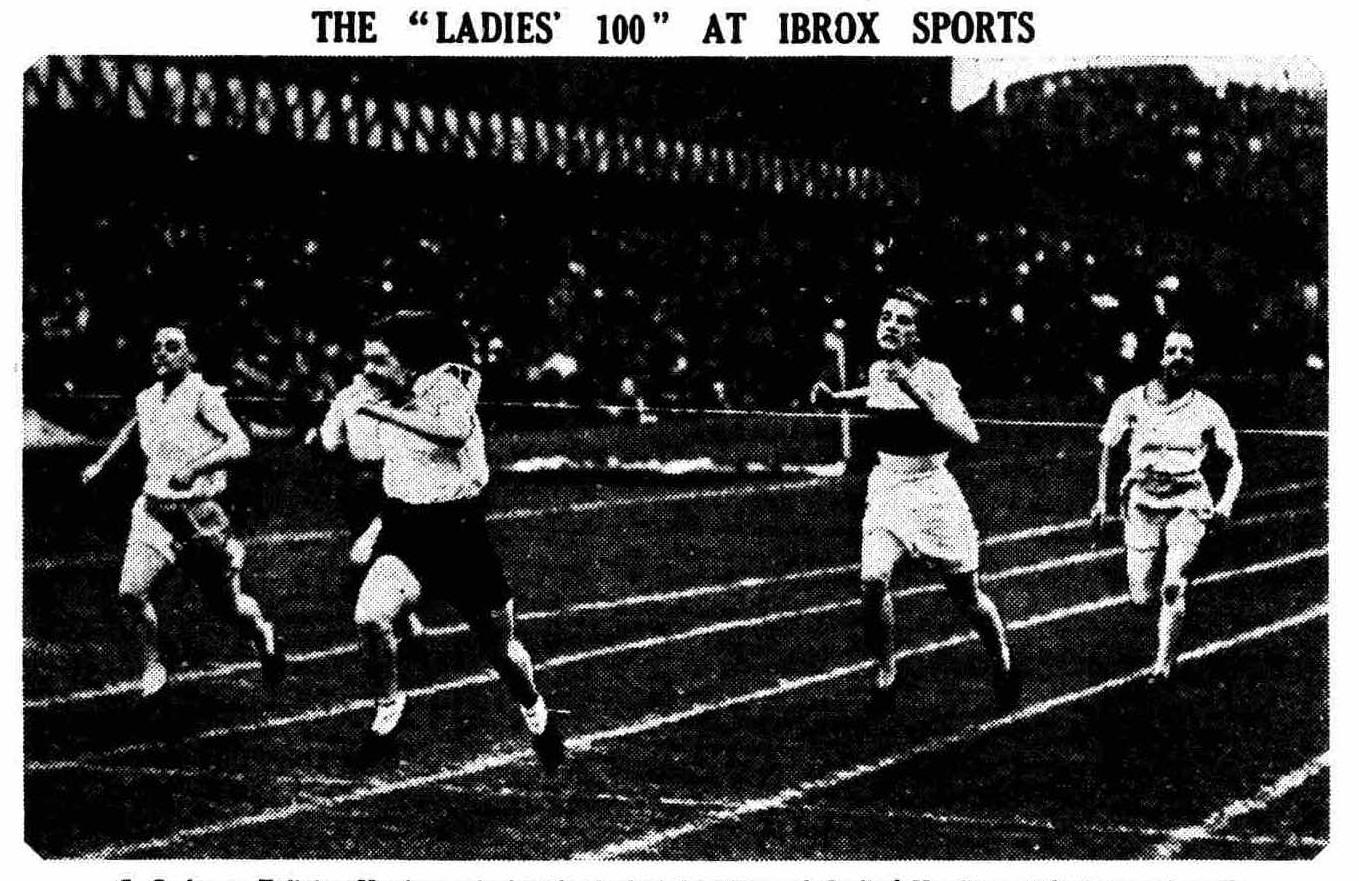
Ladies Athletics in Scotland really started about 1930 and The Rangers Sports were not slow to include any event that would create interest and possibly increase the gate money. The photograph above was sent by Gordon Bell and is of the Ladies 100 yards in 1932.
The other Flying Finn: 1934 Rangers Sports. In the Olympics in Los Angeles in 1932, Lehtinen was the winner of a controversial win in the Olympic 5000 in Los Angeles. In the final Lehtinen and Virtanen led the race early on and they shook off all the other competitors except the American Ralph Hill. The race turned into a battle between Lehtinen and Hill with Lehtinen zig-zagging from one lane to another to another to keep the Ameican behnind. Despite an American protest, Lehtinen was the Olympic champion. Lehtinen was second in the Olympic 5000m in 1936.
On 5th August, 1933, another Olympian graced the Rangers Sports – Jack Lovelock came to town! The headlines read
RECORD BREAKING ACHIEVEMENTS
FASTEST MILE EVER RUN IN SCOTLAND
JE LOVELOCK A GREAT RUNNER.
And, as with Nurmi, the weather played its part. The opening paragraph commented on it while the second noted the highlights of the meeting as being TH Scrimshaw breaking the record in the half mile heat and equalling it in the final, Lovelock, Thomas and Riddell all inside the Scottish record, while GT Saunders, the AAA champion equalled the record in the 120 yards hurdles. It even said “Rangers have always prided themselves upon the introduction of athletics ‘stars’ . Few of their constellations have scintillated with such brilliance or consistency as did those of Saturday.”
The actual report on the events started with what it called ‘an historic mile race’. “The mile race will go down in history, not only because of its record breaking incidents, but also because of the fact that four runners – Lovelock, Thomas, Riddell and Cyril Ellis – all started from the scratch mark. This was a unique occurrence at a Scottish meeting. It was also a sop to our national pride to find a Scottish champion moving in such fine company and by no means disgracing himself. Hugh Welsh has always been regarded as the finest miler that Scotland has produced, but after Riddell’s performance on Saturday the old Glasgow High School champion will have a sound claim to the honour. After ten years of track work, Riddell is undoubtedly running as well as ever and his rumoured retirement has now been indefinitely postponed.
Lovelock is a real champion, and what is more, won this particular race without being fully extended. He moves with delightful freedom, and one can well believe after seeing him in action that sooner or later he will cover the mile in 4 minutes 5 seconds or even less. In Saturday’s race Thomas cut out the pace for the backmarkers for the first quarter, and then gave way to Riddell who led from the half mile until the finishing straight was reached. Then Thomas took command, but Lovelock, when he opened out, easily caught the champion, and passing him halfway down the straight ran out an easy winner by five yards in 4 minutes 13 3-5th seconds, the fastest mile ever seen in Scotland, being 3 2-5th seconds faster than the figures set up by Cyril Ellis in 1931. Thomas was timed as doing 4 minutes 14 1-5th seconds, and Riddell, three yards behind the Welshman, at 4 minutes 15 seconds, and with Lovelock out of the day, both would have been record smashers. As it is Riddell has made a new Scottish record, his time being three seconds faster than that set by himself two years ago. It is significant that in three attempts on the same track in the past four years, the Scottish champion has created new figures – first 4 minutes 21 seconds, then 4 minutes 18 seconds, and now 4 minutes 15 seconds, and this latest addition to the Scottish record book should prove a rare incentive to future runners.
The Scottish records are slowly but surely coming into line with those of other countries, an indication that we are moving with the times. The lap times in Saturday’s race were: – 61 seconds, 62 4-5th seconds, 66 4-5th seconds and 63 seconds. Had Lovelock been pushed to win, we might have seen a new British record as well. He impressed as having a lot in reserve.
Riddell leads with Lovelock in fourth, 1933
Possibly because it was less expected than that of Lovelock, the running of TH Scrimshaw in the half mile pleased the fans equally well. In a manner it was even more meritorious, as it was accomplished in an open handicap and not in a small select field. In the rough and tumble of an open handicap there are none of the nicer courtesies of the limited field. The scratch man has to hoe his own row without any sentiment being shown, and when he does win a handicap such as that at Rangers Sports it is a sterling performance. So much so that we have to go back to 1912, when G Gissing, the American, was successful to find a scratch man winning an Ibrox open half-mile. Scrimshaw proved himself a real workman. He set about his task without any flourish, and he landed the prize by his tactics as much as by his own good running. In his heat he covered his first lap in 53 2-5th seconds, was with his men at the bell, and went into the lead 300 yards from home, winning easily in 1 minute 54 2-5th seconds, a full second inside DL Mason’s record set at the Celtic meeting in 1919. He pursued the same tactics in the final, and with the same success. His first lap was a fifth slower than in his heat but the final time was the same. This is the best running he has shown so far. It also afforded him some satisfaction for his defeat by Clifford Whitehead in the AAA’s championship as the Achilles man was soundly beaten by him in this race. Whitehead qualified by winning his heat in 1 minute 55 3-5th seconds, only 1-5th outside Mason’s record, but he could not live with Scrimshaw in the final, and dropped out in the finishing straight. In running two such fine races within the hour, the winner displayed remarkable consistency.”
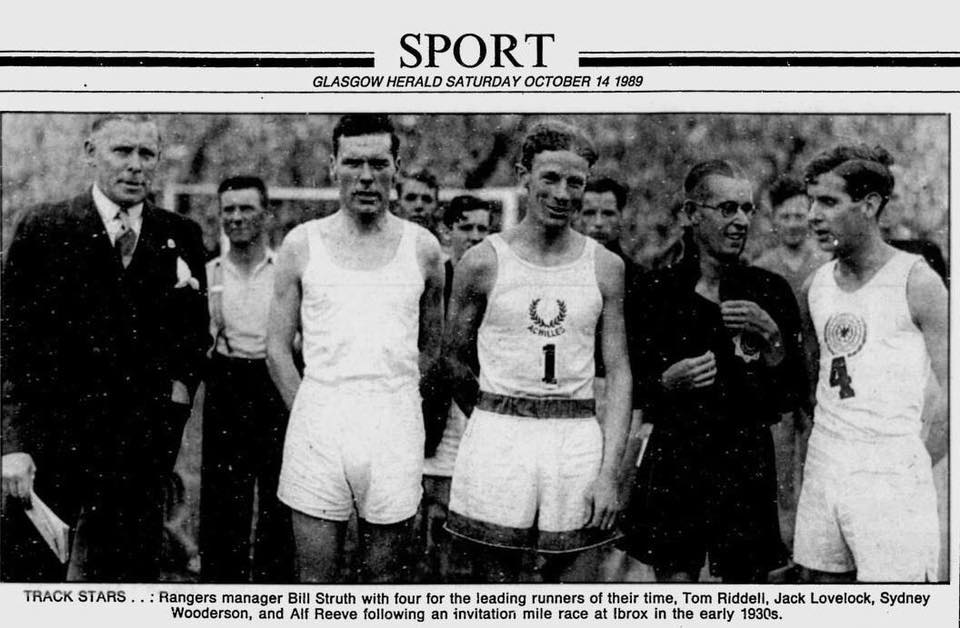
These were by no means the only top men on display that afternoon – GT Saunders won the 120 yards special race and Ernest Harper won the road race from Dunky Wright and JF ‘Ginger’ Wood. It was Wood’s first run further than 10 miles and a notable performance. Donald Robertson also ran but, unusually for him, dropped out after 12 miles – not so surprising however when you realise it was his fourth big race in six weeks. Don Findlay, the British International hurdler, won the hurdles from Glasgow University student in a fast time. Fast times were a characteristic of the meeting in 1933 in all events from the sprints right through the card. The 100 was won in 9 3-5th seconds, the 220 in 21 4-5th seconds, the and the two mile races in 4 minutes 16 seconds and 4 minutes 12 4-5th seconds. In the steeplechase J Suttie of Edinburgh defeated T Evenson, the International cross-country winner from England.
Jack Lovelock was a New Zealander who attended Oxford University from 1931 to 1934. He won gold at the 1934 London Empire Games in 1934 and then went even better when he won gold at the 1936 Olympics. He set world records for the 1500m (on 6th August 1936) and the Mile (15 July 1933).
Another year, another international event at the Rangers Sports. On 4th August, Lavri Lehtinen from Finland was the top-line act when, despite ‘an unfortunate breakdown in the weather’, 25,000 spectators turned out. But there were many other attractions that year – a special quarter mile with Strandvall from Finland. Hucker from the USA and Boisset from France plus a whole host of Americans across the events. Lehtinen however was the man who took the head lines (Excellent Sport at Ibrox. New Scottish record by Finn. Lehtinen only beaten by Handicap.)
“The first visit of Lavri Lehtinen, the famous long-distance runner from Finland, to Scotland had been eagerly looked forward to. Running over his favourite distance of three miles, Lehtinen created a new Scottish all-comers record his time of 14 minutes 15 2-5th seconds being 11 4-5th seconds inside the figures set up by Alfred Shrubb on the same track 30 years ago. It is three years since Lehtinen’s great predecessor, Paavo Nurmi, visited Ibrox and there is a coincidence in that the experiences of the pair have been similar, each having broken a record, yet each being beaten on the handicap by a home runner. In Nurmi’s race it was JL Wood who put up a fine performance to win, and on Saturday another Edinburgh winner, W Hinde, ran a very plucky race to defeat the visitor.
Lehtinen, a much more inspiring runner to watch than Nurmi, covered his first mile in 4 minutes 38 4-5th seconds, and after that point began to overhaul his field. At two miles where his time was returned as 9 minutes 27 4-5th seconds, only three runners were in front of him – W Hinde, A Dow and DB Brooke. When two and a half miles had been covered, only Hinde remained to fight the issue with the Finn. At this point Hinde held a lead of 30 yards, and it was the manner in which the Edinburgh man hung gamely to his advantage that made the last three laps extremely interesting. Even after Lehtinen spurted entering the final straight when 15 yards behind, Hinde still had something in reserve and stalling off the challenge, won by five yards. It was easily the best run the old novice champion has run.”
I remember when I started running in the 1950’s, and at the Commonwealth Games in 1970, Davie Brooke was a well known timekeeper and official. We all knew he had been a runner but didn’t realise how well he had run in such as the Edinburgh to Glasgow relay or that he had raced on the same track as Lehtinen. It is a lesson, if one were needed, that many of the officials at meetings were once better runners we were! I hadn’t heard the comment before either that Lehtinen was a more inspiring athlete to watch than Nurmi.
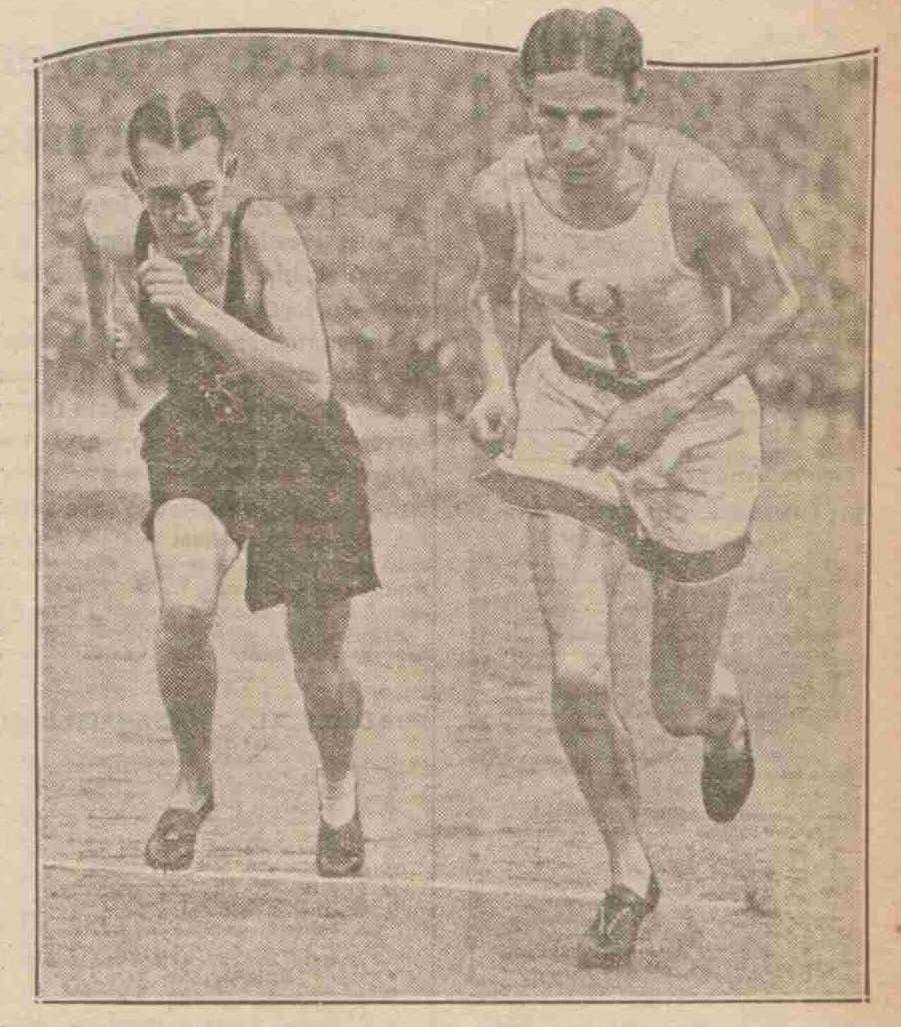
WOODERSON AGAIN BEATS LOVELOCK
MILE RACE DUEL AT IBROX
NEW ALL-COMERS RECORD SET UP
RANGERS SPORTS FEATURES
We are used to three headlines for the Rangers Sports but on 5th August 1935 there were four! And no wonder when you see that both Wooderson and Lovelock were racing each other. This plus good weather produced a 50,000 crowd for the occasion. The effect of the crowd in motivating athletes was commented on – “The atmosphere created by a crowd of this size has an inspiring effect on the runners, and one famous athlete competing at this event for the first time, stated that the only parallel in his experience was the Olympiad itself.”
There was also a 5-a-side football match in which the Rangers team of Meiklejohn, Brown, Venters, Smith and Gillick defeated the Celtic quintet of McDonald, McGonagle, Morrison, Buchan and Delaney 2 – 1. This may also have added to the size of the ‘gate’.
Back to the star studded mile race.
“Quite a large proportion of the crowd were no doubt attracted to Ibrox by the presence of Jack Lovelock, who more than any other runner at the moment, has completely captured the public fancy, a state of affairs due as much to his mastery of the Americans as to anything else. The mile race in which he took part dominated the meeting for another reason. He was meeting again on level terms SE Wooderson who defeated him in the AAA Championships last month, and a number of enthusiasts travelled up from the South for the purpose of witnessing the return duel. Wooderson defeated Lovelock again – and much more easily than at the White City – after a short sharp duel that lasted less than 100 yards.
The pair ran together, with Lovelock leading, until the last 200 yards, when Wooderson came with a sprint and went in front. Entering the straight the Blackheath man led by about three yards, and although Lovelock got on terms, he was unable to hold the effort and eased up in face of Wooderson’s strong finish. Wooderson crossed the line in 4 minutes 12 7-10th seconds, 7-10th seconds faster than the Scottish all-comers record created by Lovelock two years ago. The New Zealander ran his first lap in 61 7-10th , the half mile in 2 minutes 7 1-10th and the three quarters in 3 minutes 11 8-10th seconds, his full time being 4 minutes 15 3-5th seconds.
The Lovelock we saw on Saturday was not the Lovelock who created the Scottish record two years ago. He looked drawn and it appears that the tremendous mental strain of the big race in America has robbed him of his sparkle. He is not, however, going into retirement for the rest of the season for he intends to run in Budapest at the Universities championships. The struggle between Wooderson and Lovelock detracted somewhat from the really fine race run by AL Reeve from the 25 yard mark. The Polytechnic man finished 15 yards ahead of Wooderson in 4 minutes 10 5-10th seconds, which makes him out as running well within 4 minutes 14 seconds for the full distance. In view of this it is unfortunate that he did not run from the scratch mark also. His running was all the more remarkable because of the fact that he has been concentrating over the three mile distance since he defeated Iso-Hollo Tom Riddell who was second to Reeve was timed as doing about 4 minutes 18 for the full distance.”
Although the races were of good quality with the usual quota of English champions such as Don Finlay in the hurdles, there was really no space after the coverage of the mile to do them justice at all.
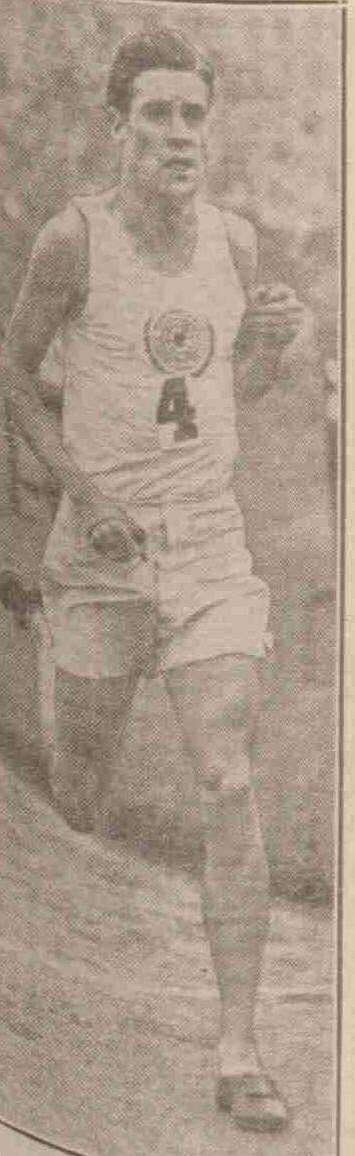
A Reeve (Polytechnic Harriers)
On 1st August 1936, athletics coverage was dominated by the opening of the Olympic Games which was probably the main reason for the lack of stars on show at the Rangers Sports. The Strathallan Meeting was always on the same day as the Ibrox meeting and it also had its usual full column but the coverage was not good. There were 20,000 spectators at the meeting where, as one of the headlines informed us, Rangers won the 5-a-side competition in which teams from Celtic, Hearts, Third Lanark, Clyde, Partick Thistle and Clyde took part. The Invitation Three Quarter Mile was won by the Alex Haire of the Royal Ulster Constabulary and Harry Haughie of Springburn won the Obstacle Race.
But it was back to the usual standard in 1937 with some of the former crowd-pleasers in action again.
WIND THWARTS WOODERSON OF FIRST WORLD RECORD
IBROX CROWD THRILLED BY CHAMPION’S AMAZING RUNNING
ROBIN MURDOCH’S TRIUMPH
Overcoming the formidable handicap of boisterous conditions in a way that evoked general astonishment, Sydney Wooderson, the AAA’s one mile champion, established new British and Scottish all-comers three-quarter-mile records, and came within an ace of securing his first world record, before 40,000 people at Ibrox Park, Glasgow, on Saturday. Wooderson, who is 23 years old, is only 5 feet 6 1/2 inches in height and weighs less than 9 stone, but he made light of the handicap set him and beat RH Thomas by 36 yards in 3 minutes 9-10th seconds, which is only 3-10th slower than Jules Ladoumegue’s 1931 world record and surpassed the existing British record of 3 minutes 2 2-10th seconds set up in 1932 by JE Lovelock (New Zealand), the Olympic 1500 metre champion and record holder. Wooderson’s performance also eliminated the nine-year-old all-comers record made on the same track by R Watson the Olympic athlete whose time was 3 minutes 3 3-10th seconds.
Authorities compute Wooderson’s performance as equal to a 4 minutes 5 seconds mile – a feat which has never been accomplished, and only in the light of recent progress has come to be considered possible. The story of the race, in which JC Stothard, who preferred to travel with the British team to Antwerp, was the only absentee, proved Wooderson to be under-handicapped. Quite apart from the wind which blew into the runners’ faces in the finishing straight, had there been someone in front of him to pull Wooderson out in the last lap, he assuredly would have whittled down those absurd ‘three-tenths’ that separated him from the world record.
The Story of the Race: Staggering Pace. Wooderson, followed closely by R Graham, the Scottish record-holder, returned 58 2-10th sec for the first lap, but drew away from Graham and gradually opened out to take the lead at the end of the second circuit which he completed in 1 min 59 sec. Round the last lap Wooderson revealed a pace which staggered the most thrill-hardened onlooker, increasing his lead over such distinguished company with consummate ease. Passing his mentor and ex-Olympic champion Albert Hill who was stationed 250 yards from the tape, Wooderson was inside the schedule that had been set for him beating Ladoumegue’s time. Officials waved him on frantically, but the elements were merciless, and although he sprinted spiritedly, the Blackheath runner just failed in his major ambition. The cheer which greeted him, and increased in volume as he approached the tape, was renewed with greater vigour when his time was announced.”
Jules Ladoumegue was second in the 1928 Olympic 1500m final after a hard race and went on to set world records at the Mile in October 1931 and 2000m in July 1931.
Other records were set that day in Glasgow – Margaret McDowell from Ardeer set a new record in the 100 yards in a time faster than that which won the WAAA championship held on the same day at White City, Robin Murdoch won the special 120 yards from AAA Champion AW Sweeney were the others. JW Alford, the Welsh champion won the invitation half-mile, the steeplechase was contested by the Scottish champion, RR Sutherland, and the English champion WC Wylie with Wylie the winner. Celtic won the 5-a-sides with Rangers suffering ‘the unusual fate of being beaten by Queen’s Park in the first round of the ‘fives’ at their own sports.’
Other news on the same day was that JC Stothard won the 800m in the international in Paris – it might have made a difference had he been available for Wooderson’s race.
If you want to see how successful the 1938 Sports were, you really need to read the reports, such as the one in the ‘Glasgow Herald’ of August 8th. The crowd was 70,000 (seventy thousand spectators!) – described by the Herald as probably a record for an athletics meeting in Britain. The weather was very good for record breaking and there were top-class athletes across the board and the marathon from Gourock to Ibrox was the full 26 miles 385 yards and won by a South African from a Scotsman with Englishmen third and fourth and a Welshman fifth. Four Scottish all-comers records were broken – in the quarter mile, half mile, hurdles and pole vault. Indeed the pole vault record of 14′ 3″, set by American Cornelius Warmerdam was a British record as well. There was a big American contingent which gave what was termed an exhibition and reached distances in the shot and discus which would have been records had they been achieved in ‘proper competitive conditions’.
Wooderson was attempting to break Lovelock’s 1500m record. “The crowd saw SC Wooderson, the world’s one mile record holder, fail by only 1.2 seconds in a gallant attempt to to lower the world’s figures for the 1500 metres set up by JE Lovelock in winning the Olympic title in Berlin two years ago. Incidentally it was the third fastest 1500 metres race that has been run. Run to sustained cheering, the race finished in a tumult of applause after Wooderson, last at the bell, overhauled all but one of a select field to finish 15 yards behind DB Pell, with AV Reeve, the only other Englishman, a close third. Pell’s time was 3 minutes 46.9 seconds and Wooderson was timed at 3 minutes 49 seconds – 1.2 seconds outside Lovelock’s record. Thus, although Wooderson had run relatively half a second faster than his world’s mile record, he failed in his attempt on what is, candidly, the most outstanding record in athletics history.
The track was a little loose, yet the reason for Wooderson’s failure cannot be ascribed to that factor. Nor were conditions bad, for the day was windless. Wooderson made a mistake in running too fast over the first lap, a mistake which has never been discounted in the past by any of the world’s leading milers. At 320 yards, Wooderson’s time was 47.2 seconds, two seconds faster than Lovelock’s time at the corresponding stage of the Berlin race, but over the next quarter mile that pace was reflected in a slowing of the Blackheath man’s time which was nearly 67 seconds. At 800 metres however, Wooderson was still inside Lovelock’s corresponding time and. although he had not passed any of his opponents, to whom he was conceding liberal handicaps, at the bell he was running at that stage only slightly outside Lovelock’s equivalent time. Over the last lap Wooderson finished at a terrific speed overtaking all but Pell in an electric finish. That Wooderson, considered by many to be the equal of Lovelock, and by many to be his superior, was so much slower in the finish – although his pace was tremendous as the crowd testified by their cheering – seems remarkable. The first lap explains something of Wooderson’s failure, but in plain fact, the Blackheath runner was bordering on impertinence by hoping to beat Lovelock’s 1500 metres record when his main objective this season is a world’s half-mile record, and his training has been done with that in view. Lovelock at Berlin was probably unbeatable and his time was the result of years of preparation and rigorous training.”
The quarter mile was contested in the main by W Fritz who had been second in the Empire Games event and his conqueror W Roberts of Salford but this time Fritz won in a time of 48 seconds – an all-comers’ record. The hurdles had Glasgow born Don Finlay beating the American A Tolmich in the 120 yards special hurdles event in another all-comers’ record taking one tenth from the 11 year old record. AJ Collyer, the AAA champion took eight tenths from JC Stothart’s half mile time with 1 minute 52.8 seconds. Warmerdam’s pole vaulting was outstanding and his 14′ 3″ added one inch to the existing British record. TF Lalande, the South African who had joined Herne Hill Harriers, was almost lost in a maze of mile runners when he entered the stadium but after weaving his way through them, he won by almost a mile from T Strachan of Glasgow YMCA in 2:46:38.
Cornelius Warmerdam was the first pole vaulter to clear 15 feet in the event which he did 43 times in his career. He always vaulted with the bamboo pole and his record only went when the metal pole began to be used. His record of 15′ 7 3-4th set in 1942 lasted until 1957. He was never able to compete in the Olympics because there were none in 1940 or 1944 because of the war and by 1948 he was professional coach and so unable to take part in the amateur event.
It had been another wonderful meeting with a vast and enthusiastic crowd.
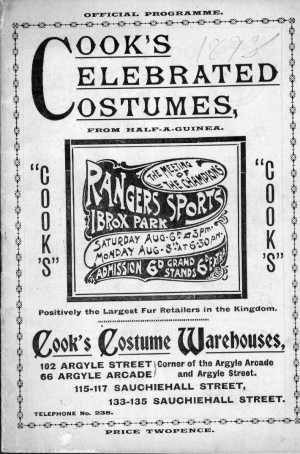
In 1939, the report was that the athletics held the crowd enthralled for over four hours; the print on the online ‘Glasgow Herald’ report is a bit smudged and it is not clear whether the crowd was 80,000 or merely 60,000! Properly presented athletics has a great attraction for Glasgow people and were a meeting such as the Rangers Sports, or the Glasgow Police Sports to be presented in 2014, the crowds would be there. The evidence? The yet to take place, 2014 Commonwealth Games! However, 1939 was another really good Rangers Sports meeting. Held on 5th August, the headlines were:
BRILLIANT GATHERING OF ATHLETES
THRILLING CLIMAX TO IBROX MEET
TWO RECORDS BROKEN
The names of those attending were easy to recognise – TF Lalande the South African in the road race, Iso-Hollo the Finn in the steeplechase, Charles Beetham the American 880 yards record holder, Taisto Maki the European 5000m champion, Les Steers the American high jumper, Clyde Jeffrey the US 100 yards champion and of course all the top Scots and most of the best Englishmen. This cast list plus good weather and past experience of the athletics on display at Ibrox, brought out the crowds. You will note that by now it was more common to give times in decimal points rather than in tenths or fifths of a second. The two records broken were in the 1000 yards and the three miles. We could look at the three miles race first where Tasto Maki set out with a specific task, which was not to win the race where he finished second, but
“Maki, who set out to run three 4:40 miles, recorded 4:37 in the first mile, 4:48.8 in the second and 4:37.2 in the third to set up new figures of 14 min 3.4 sec – 4.6 seconds inside CAJ Emery’s month old British record and 12 seconds faster than the all-comers’ record set by his countryman LA Lehtinen, then world’s record holder, at Ibrox in 1934. Emery actually ran the last half mile faster than Maki yet was 4.6 seconds slower over the full distance. The big handicap field was of little assistance to the Finn. Schwartkopf, the American distance runner, dropped out in the seventh lap. At two miles Maki was 200 yards behind and at the bell he was almost 100 yards in the rear of the leader, M Bingham of Finchley Harriers (290 yards). Opening out over the last lap, Maki passed all but the Englishman who ran on strongly to finish 50 yards in front in 13:56.4.
Although the three scratch runners in the 1000 yards, CJ Beetham (USA), B Rideout (USA) and AJ Collyer (England), were running together for 600 yards, the easy, graceful style of Beetham marked him out from the beginning as the possible winner. Collyer set off in the lead and passed the quarter mile post in 57.4. Both Americans passed the ex-AAA 880 yards champion in the next lap however. With 350 yards to go Beetham drew away from Rideout who did not appear to have any enthusiasm for his task. At half-a-mile where Beetham was a fraction inside 1:57, he was 15 yards behind EA Sears, Essex Beagles (15), and eight yards behind J Gifford, Bellahouston ( 20). The Scot was passed entering the finishing straight, and then Beetham quickened into a superb finish, quite the most thrilling of the season closing the gap with every stride. It seemed impossible that the American could do it with 30 yards left to run, but the distance between the runners closed rapidly, and it was by scarcely half a yard that Sears won in 2 min 10.9 sec. Beetham, 1-10th slower, eclipsed Cyril Ellis’s 10 year old British figures by 2-10th second, and JC Stothard’s three year old all-comers’ record by 2 3-10th seconds. AJ Collyer who recovered to pass the slowing Rideout finished fifth in 2 min 13.1 which was also 2-10th inside Stothard’s time. Of the 10 American visitors, Beetham was, indeed, the only one who lived up to his reputation.”
Wherever one looked on the field, there were excellent performances with the class athletes from abroad pulling the Scots behind them to some top class performances. The jumping of Steers and his countryman Batiste was the best in the high jump by far (6′ 4″ and 6′ 2″) although the pole vaulter George Varoff could only clear 12’6” when his usual performance was over 13″. The shot putter W Watson gave an exhibition in which he achieved 51’7 1/2″ – the best seen in Scotland that year. The biggest cheer of the meeting was for Donald Robertson who won the marathon from Gourock Pier in 2:40:02, beating the previous year’s winner and taking over 6 minutes from his time.
Volmari Iso-Hollo was a Finnish steeplechaser who won two Olympic golds in the event. He won the 1932 Olympic steeplechase but was denied the record because the officials miscounted the laps, and then he won the 1936 event in a new world record of 9:03.8. He also won silver in the 10000m in Los Angeles, and then bronze in the 10000m in Berlin in 1936 to complete the ‘set’ of Olympic medals.
The meeting was held in August and war broke out in September, 1939.
There was a successful meeting held in 1940 where Wooderson broke the Scottish all-comer’s record for the mile but it was to be the last until the war was over. It was nevertheless a good meeting with the headlines saying
WOODERSON’S RECORD MILE AT IBROX
World Champion Knocks 1 Second Off Scottish All-Comers’ Record
The field that was forward for the race included GM Carstairs and Andy Coogan of Maryhill Harriers (second off 120 yards) as well as a whole squad of Englishmen brought up for the occasion. Bearing in mind that they could not be expected to bring athletes from abroad as had been their practice, the Rangers Sports organisers did well to put on any meeting at all at this point in the course of the war. Coogan of course was to become a prisoner of the Japanese during the war and his story is told brilliantly in his biography ‘Tomorrow You Die’. A must-read for all Scottish athletics supporters.)
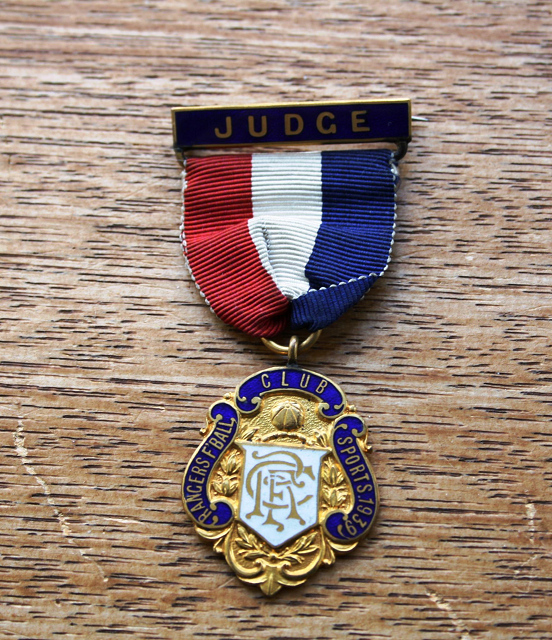
There is of course a bias on this website in favour of endurance events while Rangers Sports embraced all events equally. The reports however dwelt on the longer races because the stars who were brought in almost every year included Olympians, European and Empire champions and record breakers were predominantly distance runners. Nor were the officials forgotten: their importance was indicated in many ways – note the officials badge above from the sports of 1939 which was worn by Alan McDonald’s uncle George Carmichael. The badges below were posted on the Rangers Memorabilia website by Gordon Bell. Attractive and permanent mementoes of a celebrated meeting, they were in sharp contrast to the cardboard and safety pin usually supplied. We have no record of any of similar quality for any similar meeting. It was an excellent meeting produced throughout the thirties and reintroduced in the forties and fifties.