

The excellent results from Summit are coming so frequently that they are not easily assimilated: in addition the sheer number is missed. This page is an attempt to include the results as they happen from here on in so that the work Jim and Carol are doing is seen and recognised. First, a summary of the 2015 cross-country season.
| ASH CREEK – SEPTEMBER 12, 2015 | |||||||
| 3,000 Meters Novice | |||||||
| Official Team Scores – Girls | 5,000 Meters – Boys | ||||||
| 1 | Summit | 29 | 1 | Summit | 33 | ||
| 2 | Camas | 30 | 2 | Camas | 75 | ||
| 3 | Lakeridge | 104 | 3 | Marist | 98 | ||
| 4 | Sheldon | 106 | 4 | Sheldon | 111 | ||
| 5 | Corbett | 136 | 5 | Reynolds | 175 | ||
| 6 | Silverton | 170 | 6 | Valley Catholic | 185 | ||
| 7 | Lakeridge | 216 | |||||
| Official Team Scores – Boys | 8 | Silverton | 261 | ||||
| 1 | Summit | 31 | 9 | Glencoe | 264 | ||
| 2 | Camas | 41 | 10 | Ridgefield | 273 | ||
| 3 | Glencoe | 63 | 11 | Mountain View | 322 | ||
| 4 | Sheldon | 105 | 12 | Sandy | 348 | ||
| 5 | Ridgefield | 162 | 13 | Elmira | 377 | ||
| 6 | Central | 165 | 14 | Central | 398 | ||
| 7 | Valley Catholic | 210 | 15 | North Bend | 421 | ||
| 8 | Sandy | 218 | 16 | Horizon Christian | 445 | ||
| 9 | Silverton | 236 | 17 | Lebanon | 452 | ||
| 10 | Springfield | 260 | 18 | Hazen | 464 | ||
| 19 | La Center | 489 | |||||
| 5,000 Meters – Girls | 20 | Siuslaw | 508 | ||||
| 1 | Summit | 54 | 21 | St Mary’s | 558 | ||
| 2 | Camas | 58 | 22 | Woodland | 614 | ||
| 3 | Sheldon | 95 | 23 | Corbett | 652 | ||
| 4 | Lakeridge | 166 | 24 | Oak Hill | 706 | ||
| 5 | St Mary’s | 188 | |||||
| 6 | Mountain View | 231 | |||||
| 7 | La Center | 277 | |||||
| 8 | Siuslaw | 279 | |||||
| 9 | Glencoe | 293 | |||||
| 10 | Reynolds | 294 | |||||
| 11 | Lebanon | 298 | |||||
| 12 | Marist | 307 | |||||
| 13 | North Bend | 310 | |||||
| 14 | Ridgefield | 324 | |||||
| 15 | Central | 327 | |||||
| 16 | Silverton | 349 | |||||
| 17 | Putnam | 428 | |||||
| 18 | Valley Catholic | 439 | |||||
| 19 | Elmira | 533 | |||||
| 20 | Oak Hill | 570 | |||||
| Oregon City XC Invite Sept 19, 2015 | |||||||
| 5,000 Meters JV – Boys | 5,000 Meters varsity -Boys | ||||||
| Official Team Scores | Official Team Scores | ||||||
| 1 | Summit | 15 | 1 | Summit | 15 | ||
| 2 | Glencoe | 70 | 2 | Southridge | 91 | ||
| 3 | Southridge | 81 | 3 | Tillamook | 98 | ||
| 4 | Wilsonville | 112 | 4 | Glencoe | 112 | ||
| 5 | The Dalles | 120 | 5 | Oregon City | 175 | ||
| 6 | Clackamas | 177 | 6 | La Salle | 184 | ||
| 7 | Oregon City | 192 | 7 | Wilsonville | 190 | ||
| 8 | La Salle | 226 | 8 | Battle Ground | 191 | ||
| 9 | Battle Ground | 302 | 9 | The Dalles | 216 | ||
| 10 | Tillamook | 309 | 10 | Clackamas | 275 | ||
| 11 | Hillsboro | 325 | 11 | Milwaukie | 328 | ||
| 12 | Corbett | 365 | 12 | Kalama | 363 | ||
| 5,000 Meters JV – Girls | 13 | Hillsboro | 363 | ||||
| Official Team Scores – Girls | 14 | Corbett | 385 | ||||
| 1 | Summit | 27 | Nike Portland XC (formerly Nike Pre) | ||||
| 2 | Glencoe | 62 | 5,000 Meters Danner Championships | ||||
| 3 | Oregon City | 94 | Official Team Scores | ||||
| 4 | Wilsonville | 114 | 1 | West Torrance | 147 | ||
| 5 | Clackamas | 117 | 2 | Mountain View (ID) | 151 | ||
| 6 | La Salle | 134 | 3 | Summit | 153 | ||
| 7 | Southridge | 186 | 4 | Madera South | 204 | ||
| 8 | The Dalles | 238 | 5 | Jesuit | 216 | ||
| 9 | Tillamook | 262 | 6 | Rocky Mountain | 250 | ||
| 10 | Corbett | 264 | 7 | Lincoln | 257 | ||
| 11 | Battle Ground | 321 | 8 | Agoura | 257 | ||
| 9 | Monte Vista | 261 | |||||
| 5,000 Meters varsity – Girls | 10 | Sehome | 277 | ||||
| Official Team Scores | 11 | Interlake | 291 | ||||
| 1 | Summit | 28 | 12 | Homestead | 334 | ||
| 2 | Oregon City | 87 | 13 | Inglemoor | 337 | ||
| 3 | Southridge | 88 | 14 | Sunset | 344 | ||
| 4 | Clackamas | 108 | 15 | Marist | 374 | ||
| 5 | The Dalles | 161 | 16 | Gig Harbor | 395 | ||
| 6 | Glencoe | 164 | 17 | Central Kitsap | 403 | ||
| 7 | Wilsonville | 173 | 18 | Wilson | 410 | ||
| 8 | La Salle | 185 | 19 | Skyview | 434 | ||
| 9 | Battle Ground | 223 | 20 | Juanita | 444 | ||
| 10 | Tillamook | 290 | 21 | Cherry Creek | 445 | ||
| 11 | Putnam | 316 | 22 | Lindbergh | 450 | ||
| 12 | Hillsboro | 372 | 23 | Camas | 465 | ||
| 13 | Kalama | 374 | 24 | Tesoro | 543 | ||
| 14 | Milwaukie | 400 | |||||
| Oxford Classic – October 2, 2015 | Oxford Classic – October 2, 2015 | ||||||
| 5,000 Meters Junior Varsity – Girls | 5,000 Meters Varsity – Girls | ||||||
| Official Team Scores | Official Team Scores | ||||||
| 1 | Summit | 24 | 1 | Sheldon | 51 | ||
| 2 | Mountain View (OR) | 43 | 2 | Summit | 66 | ||
| 3 | Bend | 84 | 3 | Mountain View (OR) | 108 | ||
| 4 | Crook County | 99 | 4 | Centennial | 147 | ||
| 5 | Redmond | 141 | 5 | Bishop Kelly | 157 | ||
| 6 | Cottage Grove | 159 | 6 | Capital | 163 | ||
| 7 | Ridgeview | 186 | 7 | Borah | 197 | ||
| 8 | Bend | 277 | |||||
| 5,000 Meters Junior Varsity – Boys | 9 | Middleton | 279 | ||||
| Official Team Scores | 10 | Sisters | 280 | ||||
| 1 | Summit | 16 | 11 | Redmond | 285 | ||
| 2 | Mountain View (OR) | 63 | 12 | Caldwell | 294 | ||
| 3 | Bend | 67 | 13 | McMinnville | 334 | ||
| 4 | Crook County | 111 | 14 | Henley | 340 | ||
| 5 | Redmond | 167 | 15 | The Dalles | 386 | ||
| 6 | Madras | 183 | 16 | Phoenix | 392 | ||
| 7 | Ridgeview | 189 | 17 | Klamath Union | 408 | ||
| 8 | Paisley | 230 | 18 | Ridgeview | 474 | ||
| 19 | Valley Catholic | 506 | |||||
| 20 | Cottage Grove | 608 | |||||
| 5,000 Meters Varsity – Boys | |||||||
| Official Team Scores | |||||||
| 1 | Summit | 44 | |||||
| 2 | Capital | 113 | |||||
| 3 | Sheldon | 118 | |||||
| 4 | Borah | 159 | |||||
| 5 | Valley Catholic | 165 | |||||
| 6 | Bishop Kelly | 168 | |||||
| 7 | Bend | 215 | |||||
| 8 | Phoenix | 216 | |||||
| 9 | McMinnville | 260 | |||||
| 10 | Caldwell | 285 | |||||
| 11 | Centennial | 342 | |||||
| 12 | Redmond | 353 | |||||
| 13 | Mountain View (OR) | 354 | |||||
| 14 | The Dalles | 373 | |||||
| 15 | Middleton | 377 | |||||
| 16 | Ridgeview | 412 | |||||
| 17 | Sisters | 412 | |||||
| 18 | Crook County | 420 | |||||
| 19 | Henley | 543 | |||||
| 20 | Madras | 597 | |||||
| 21 | Lakeview | 637 | |||||
| George Fox XC Classic October 10, 2015 | |||||||
| 5,000 Meters JV Gold – Girls | 5,000 Meters Varsity Gold – Boys | ||||||
| Official Team Scores | Official Team Scores | ||||||
| 1 | Summit | 33 | 1 | Summit | 41 | ||
| 2 | Camas | 36 | 2 | Camas | 118 | ||
| 3 | Sheldon | 69 | 3 | Sheldon | 124 | ||
| 4 | Mountain View (OR) | 117 | 4 | Hood River Valley | 124 | ||
| 5 | Crook County | 134 | 5 | Seaside | 138 | ||
| 6 | Forest Grove | 166 | 6 | Forest Grove | 167 | ||
| 7 | Roseburg | 180 | 7 | Phoenix | 214 | ||
| 8 | North Bend | 199 | 8 | Ashland | 234 | ||
| 9 | Oregon City | 250 | 9 | Lathrop | 242 | ||
| 10 | Cleveland (OR) | 272 | 10 | Roseburg | 273 | ||
| 11 | Phoenix | 334 | 11 | Mountain View (OR) | 302 | ||
| 5,000 Meters JV Gold – Boys | 12 | Catlin Gabel | 333 | ||||
| Official Team Scores | 13 | Crook County | 347 | ||||
| 1 | Summit | 23 | 14 | David Douglas | 349 | ||
| 2 | Camas | 52 | 15 | Oregon City | 358 | ||
| 3 | Forest Grove | 72 | 16 | Lebanon | 359 | ||
| 4 | Mountain View (OR) | 126 | 17 | North Bend | 390 | ||
| 5 | Roseburg | 185 | 5,000 Meters Varsity Gold – Girls | ||||
| 6 | Ashland | 205 | Official Team Scores | ||||
| 7 | Sheldon | 212 | 1 | Camas | 46 | ||
| 8 | Cleveland (OR) | 218 | 2 | Summit | 77 | ||
| 9 | Oregon City | 238 | 3 | Sheldon | 92 | ||
| 10 | North Bend | 270 | 4 | Mountain View (OR) | 120 | ||
| 11 | Phoenix | 290 | 5 | Oregon City | 178 | ||
| 12 | Crook County | 299 | 6 | Siuslaw | 184 | ||
| 13 | Catlin Gabel | 362 | 7 | St Mary’s | 212 | ||
| 14 | Lebanon | 383 | 8 | Forest Grove | 220 | ||
| 15 | Sisters | 440 | 9 | Hood River Valley | 220 | ||
| 10 | South Salem | 249 | |||||
| 11 | David Douglas | 252 | |||||
| 12 | Sisters | 285 | |||||
| 13 | North Bend | 290 | |||||
| 14 | Roseburg | 335 | |||||
| 5A-4 Intermountain | State Championships | ||||||
| Conference Championships Oct. 23,2015 | Oregon 5A – Oct. 30, 2015 | ||||||
| Official Team Scores _ Girls 5,000 Meters | |||||||
| Official Team Scores | Official Team Scores – Girls | ||||||
| 1 | Summit | 17 | 1 | Summit | 23 | ||
| 2 | Mountain View (OR) | 49 | 2 | Mountain View (OR) | 49 | ||
| 3 | Bend | 76 | 3 | Crater | 122 | ||
| 4 | Redmond | 110 | 4 | Ashland | 166 | ||
| 5 | Ridgeview | 121 | 5 | Lebanon | 172 | ||
| 6 | Corvallis | 173 | |||||
| Official Team Scores _ Girls 5,000 Meters | 7 | Crescent Valley | 178 | ||||
| Official Team Scores | 8 | The Dalles | 194 | ||||
| 1 | Summit | 20 | 9 | Sandy | 210 | ||
| 2 | Bend | 61 | 10 | Wilsonville | 228 | ||
| 3 | Mountain View (OR) | 82 | 11 | Hood River Valley | 241 | ||
| 4 | Ridgeview | 95 | 12 | St Helens | 263 | ||
| 5 | Redmond | 102 | |||||
| Official Team Scores – Boys | |||||||
| 5,000 Meters Junior Varsity – Girls | 1 | Summit | 32 | ||||
| Official Team Scores | 2 | Crater | 36 | ||||
| 1 | Summit | 15 | 3 | Marist | 79 | ||
| 2 | Mountain View (OR) | 64 | 4 | Hood River Valley | 126 | ||
| 3 | Bend | 68 | 5 | Hermiston | 142 | ||
| 4 | Redmond | 100 | 6 | Corvallis | 179 | ||
| 5,000 Meters Junior Varsity – Boys | 7 | Bend | 205 | ||||
| Official Team Scores | 8 | Silverton | 220 | ||||
| 1 | Summit | 16 | 9 | Crescent Valley | 247 | ||
| 2 | Mountain View (OR) | 61 | 10 | Liberty | 264 | ||
| 3 | Bend | 61 | 11 | Sandy | 267 | ||
| 4 | Redmond | 127 | 12 | Wilsonville | 275 | ||
| 5 | Ridgeview | 138 | |||||
The first track results from 2016 are from the Oregon Relays where the teams won from a total of 60 entries, 19 points clear of the second placed team, Grant. The rules are simple. Jim explains:
each school is allowed a total entries of 35 which includes boys and girls. Relays count as 1 entry – if you enter 2 individuals in 800 that counts as 2 entries. So you have to place your kids where you think where they will score.
| Oregon Relays – Eugene | |||||||||||||
| Summit won team race with 95 poins | points | poins | |||||||||||
| 1500 Meters Varsity – Finals x | 62 entries | High Jump Varsity – Finals x | |||||||||||
| 1 | 11 | Olivia Brooks | 4:41.73a | Summit | 10 | 1 | 11 | Sydney Denham | 5-04.25 | Lincoln | |||
| 2 | 11 | Danielle Jantzer | 4:43.63a | Phoenix | 2 | 8 | Eniko Sara | 5-04.25 | Lord Tweedsmuir | ||||
| 3 | 10 | Maya Rayle | 4:44.16a | Catlin Gabel | 3 | 12 | Hannah Cochran | 5-03.00 | Summit | 6 | |||
| 4 | 10 | Melissa Berry | 4:44.25a | Sheldon | Long Jump Varsity – Finals x | ||||||||
| 5 | 11 | Christina Sevsek | 4:45.68a | Clayton Heights | 1 | 11 | Jelani Heath | 19-01.50 | Rogers (Puyallup) | ||||
| 6 | 12 | Annie Richards | 4:46.22a | South Eugene | 2 | 10 | Judith Baxter Game | 17-03.50 | Grant | ||||
| 7 | 10 | Rhian Paterson | 4:46.42a | Sentinel | 3 | 10 | Tori Sloan | 17-02.75 | Mountain View (ID) | ||||
| 8 | 10 | Caramia Mestler | 4:46.66a | Sheldon | 4 | 10 | Emma Nelson | 17-02.00 | Chugiak | ||||
| 5 | 9 | Nina Richardson | 16-11.50 | North Eugene | |||||||||
| 4×400 Relay Varsity – Finals x 27 teams | 6 | 11 | Camille Weaver | 16-10.75 | Summit | 3 | |||||||
| 1 | Olivia Brooks | 3:57.77a | Summit | 10 | |||||||||
| Sarah Reeves | Triple Jump Varsity – Finals x | ||||||||||||
| Piper Flannery | 1 | 10 | Judith Baxter Game | 37-11.50 | Grant | ||||||||
| Hannah Cochran | 2 | 11 | Camille Weaver | 36-09.75 | Summit | 8 | |||||||
| 2 | Zoe M. Shaw | 3:59.32a | Grant | Javelin – 600g Varsity – Finals x | |||||||||
| Cassin Wright | 1 | 11 | Kaelyn Shipley | 147-10 | Kalama | ||||||||
| Rennie Kendrick | 2 | 12 | Payge Cuthbertson | 146-09 | Sherwood | ||||||||
| Ella Donaghu | 3 | 11 | Cerah Moren | 144-07 | Pitman | ||||||||
| 3 | Bianca Lopez | 4:01.51a | Valor Christian | 4 | 11 | Megan Cornett | 133-05 | Summit | 5 | ||||
| Lizzie Waters | |||||||||||||
| Megan Maccagnan | |||||||||||||
| Gianna Tesone | 300m Hurdles – 30″ Varsity – Finals x | ||||||||||||
| 4×800 Relay Varsity – Finals x 23 team | 1 | 12 | Megan Champoux | 45.04a | Langley Mustangs Tra… | ||||||||
| 1 | Makenna Schumacher | 9:26.35a | Jesuit | 2 | 11 | Deshae Wise | 45.11a | Grants Pass | |||||
| Hallie DeVore | 3 | 12 | Michal Jones | 45.49a | Henry Jackson | ||||||||
| Greta Anderson | 4 | 11 | Kierra King | 45.67a | Wilson (Long Beach) | ||||||||
| Chloe Jensen | 5 | 12 | Maddy Kennedy | 45.95a | Eastlake | ||||||||
| 2 | Kelsey Washenberger | 9:28.08a | Summit | 8 | 6 | 12 | Nehalem Kunkle-Read | 46.88a | Lake Oswego | ||||
| Hannah Tobiason | 7 | 10 | Quin Fraley | 46.92a | Summit | 2 | |||||||
| Sarah Reeves | 8 | 11 | Molly House | 46.93a | Auburn Mountainvie | ||||||||
| Taylor Vandenborn | 100m Hurdles – 33″ Varsity – Prelims x | ||||||||||||
| 3 | Brittany Whitt | 9:40.39a | Coronado | 1 | 11 | Deshae Wise | 15.10a | Grants Pass | |||||
| Caitlin Shannon | 2 | 12 | Maddy Kennedy | 15.23a | Eastlake | ||||||||
| Linnea Saltz | 3 | 11 | Caila Tongco | 15.36a | Kent Meridian | ||||||||
| Caitlin Shannon | 4 | 11 | Camille Weaver | 15.40a | Summit | 5 | |||||||
| Linnea Saltz | 400 Meters Varsity – Finals x | ||||||||||||
| DMR 1200-400-800-1600m Varsity – Finals x – 34 teams | 1 | 10 | Lauren Paven | 56.72a | Tigard | ||||||||
| 1 | Rennie Kendrick | 12:00.42a | Grant | 2 | 10 | Piper Flannery | 57.00a | Summit | 8 | ||||
| Cassin Wright | 4×100 Relay Varsity – Finals x | ||||||||||||
| Zelia Naefen | 1 | Perri (Koko) White | 48.39a | Central Catholic | |||||||||
| Ella Donaghu | Zharia Hale | ||||||||||||
| 2 | Hannah Tobiason | 12:09.21a | Summit | 8 | Malika Washington | ||||||||
| Taylor Vandenborn | Olivia Gabriel | ||||||||||||
| Sarah Reeves | 2 | Piper Flannery | 48.98a | Summit | 8 | ||||||||
| Olivia Brooks | Quin Fraley | ||||||||||||
| 3 | Kearan Nelson | 12:13.32a | Central Valley | Emma Normand | |||||||||
| Katie Hawkins | Hannah Cochran | ||||||||||||
| Erica Pecha | 4×200 Relay Varsity – Finals x | ||||||||||||
| Briegan Bester | 1 | Piper Flannery | 1:43.31a | Summit | 10 | ||||||||
| 4×100 Relay Varsity – Finals x | Emma Normand | ||||||||||||
| 1 | Relay Team | 42.41a | Westview | Quin Fraley | |||||||||
| 2 | Brian Schireman | 42.95a | North Medford | Hannah Cochran | |||||||||
| Javel Stewart | 2 | Tess Boade | 1:43.53a | Valor Christian | |||||||||
| Cody Matthews | Megan Maccagnan | ||||||||||||
| Tyren Wolfe | Bianca Lopez | ||||||||||||
| 3 | Christian Barber | 43.57a | Valor Christian | Gianna Tesone | |||||||||
| Christian Elliss | 3 | Zharia Hale | 1:43.84a | Central Catholic | |||||||||
| Dylan McCaffrey | Anna Laber | ||||||||||||
| Ben Waters | Olivia Gabriel | ||||||||||||
| 4 | Deante Grinner | 43.60a | Sheldon | Malika Washington | |||||||||
| Elias Brown | |||||||||||||
| Jordan Beasley | |||||||||||||
| Isaiah Brooks | |||||||||||||
| 5 | Kyle Cornett | 43.60a | Summit | 4 | |||||||||
| Brayden Durfee | |||||||||||||
| Ryan Tennant | |||||||||||||
| Ian Lybarger | |||||||||||||
| 6 | Damian Williams | 43.75a | Sheldon | ||||||||||
| Cade O’Connor | |||||||||||||
| Matthew Burgess | |||||||||||||
| Dimitri Williams | |||||||||||||
| total | 40 | total | 55 | ||||||||||
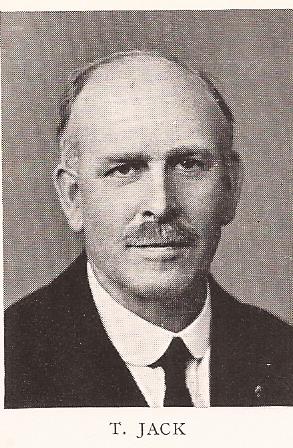
“To the present generation the following details – given by way of introduction – may prove interesting. Traces of the origin of the Inter-Scholastic Games are to be found in the early reports given of the “Edinburgh University-School Games”. In a descriptive account given of one such meeting, one reads: “The scene was particularly pleasing, large marquees being erected on the sports ground, each flying the colours of the schools whose representatives were striving to maintain their athletic traditions on the grassy area nearby.”
These “athletic traditions”, be it noted, date back many years before the founding of the SAAA. Indeed it is probable that the founders of the Association gained inspiration from this sports meeting held uder University auspices hard by Corstorphine in the ‘seventies of last century, and in which the competitors still preserved the associations of their schools, such as Merchiston, Loretto, Fettes, Blair Lodge, etc.
Later with changing conditions, the Schools featured no longer in the Varsity Sports. As a separate promotion the Inter-Scholastic Games had a chequered existence, and after languishing for a few years in an atmosphere of apathy they disappeared from the sports calendar in 1885. An attempt to revive their former glory was made five years later (1890) but met with little success.
It was not until 1890 that Mr EJ Comrie Thomson, then President of the SAAA, stimulated by the enthusiasm of Mr DS Duncan, the Hon Secretary, succeeded in inaugurating the present series of the Games. No break has occurred since that year, although endeavours have been made from time to time to discontinue the Games on two grounds: (1) That they did not fulfil their object of introducing schoolboy competitors to senior athletics; and (2) That the yearly deficit incurred by the Games was too heavy to be borne by the Association’s finances.
When one recalls such names as LJ Dunn, J Crawford, T Riddell JG McColl, RD Allison, AM Murray, AF Clark, JB Bell, in connection with Inter-Scholastic honours, the first contention of the above arguments seems disproved, while the financial burden incurred must be regarded as a necessary expenditure in the best interests of amateur athletics.
On the suggestion of JG Ker, LLD, an ex-president of the Association, the Schools Championship feature was omitted from the scheme of competition in 1906. Later, in 1912, Mr C Symington, Stewart’s College, was successful in his proposal to raise the third grade of the competition from 13 years to 14 years, at which it still remains.
The practice of athletics is an item in the scholar’s curriculum which has developed to an extraordinary degree during the last ten years, and the standard of merit attained by many of the schoolboys in the highest grade at times approaches that obtaining in senior athletics, as a glance at the returns given on the following pages will show.”
[ Inter Scholastic Champions ]
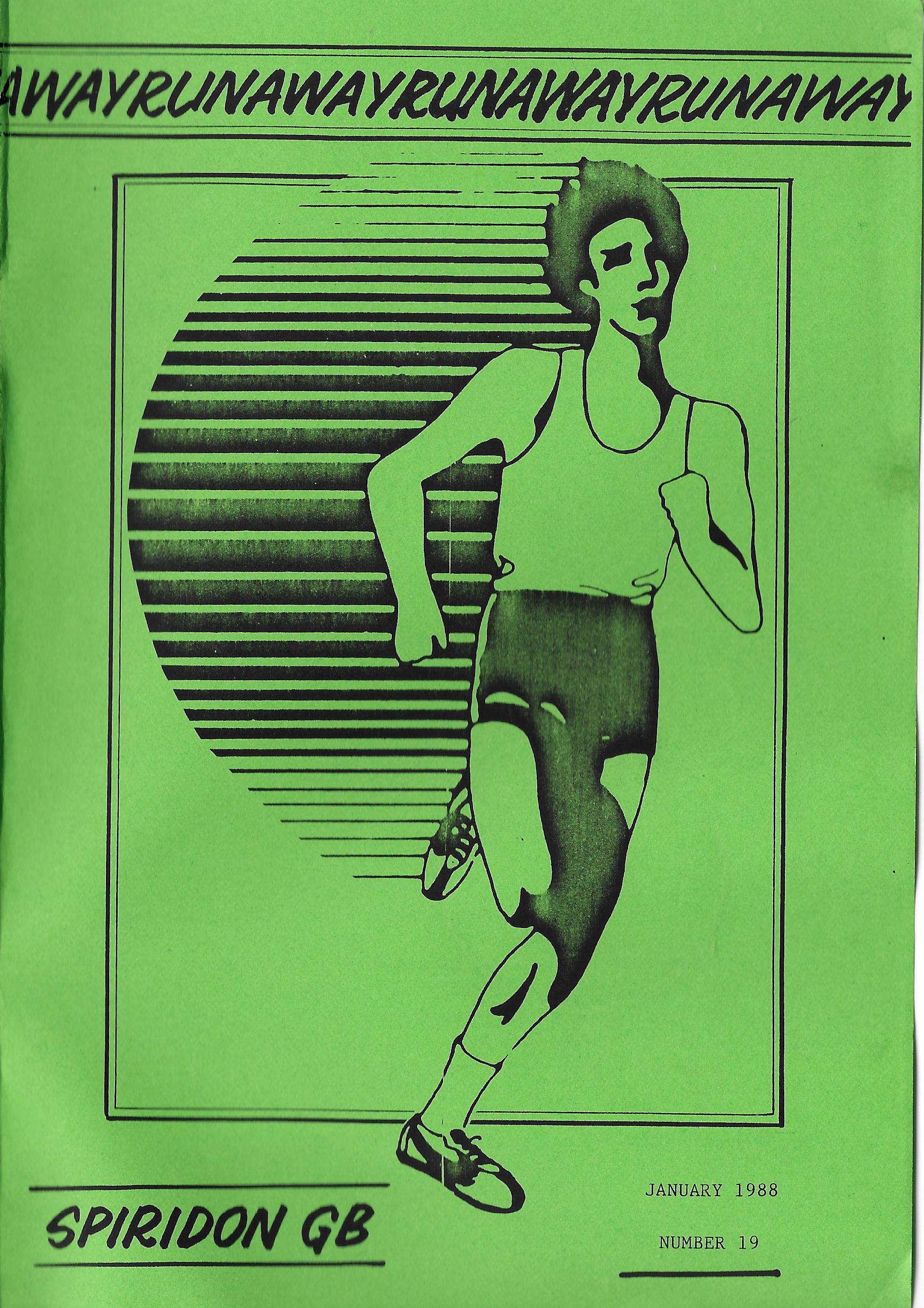
‘Runaway’ was the quarterly magazine of the Spiridon Club of Great Britain – a group of distance runners who included many races on mainland Europe in their schedule. There were many marathon and ultra races covered but it was mainly hill running that was targeted by it.
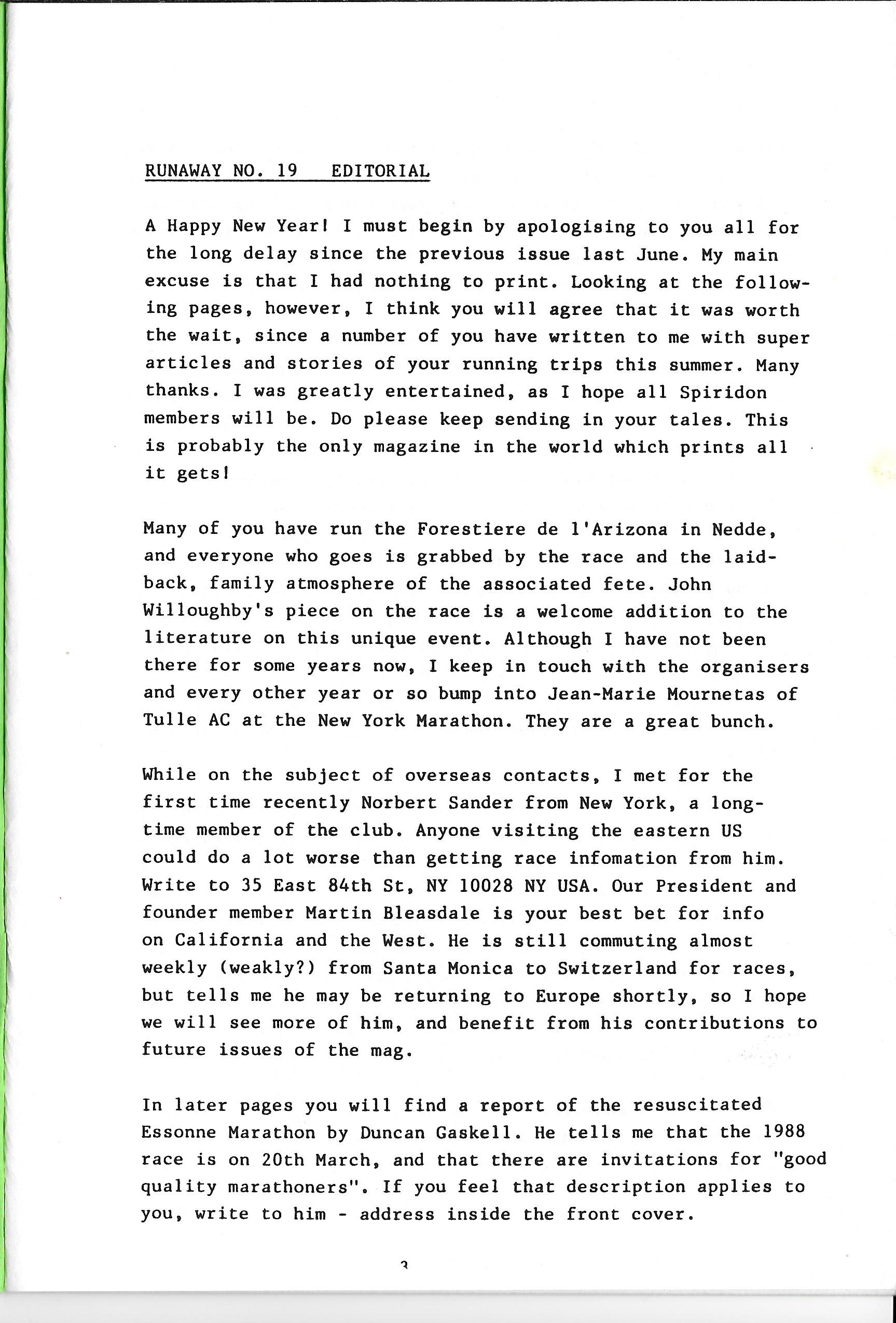
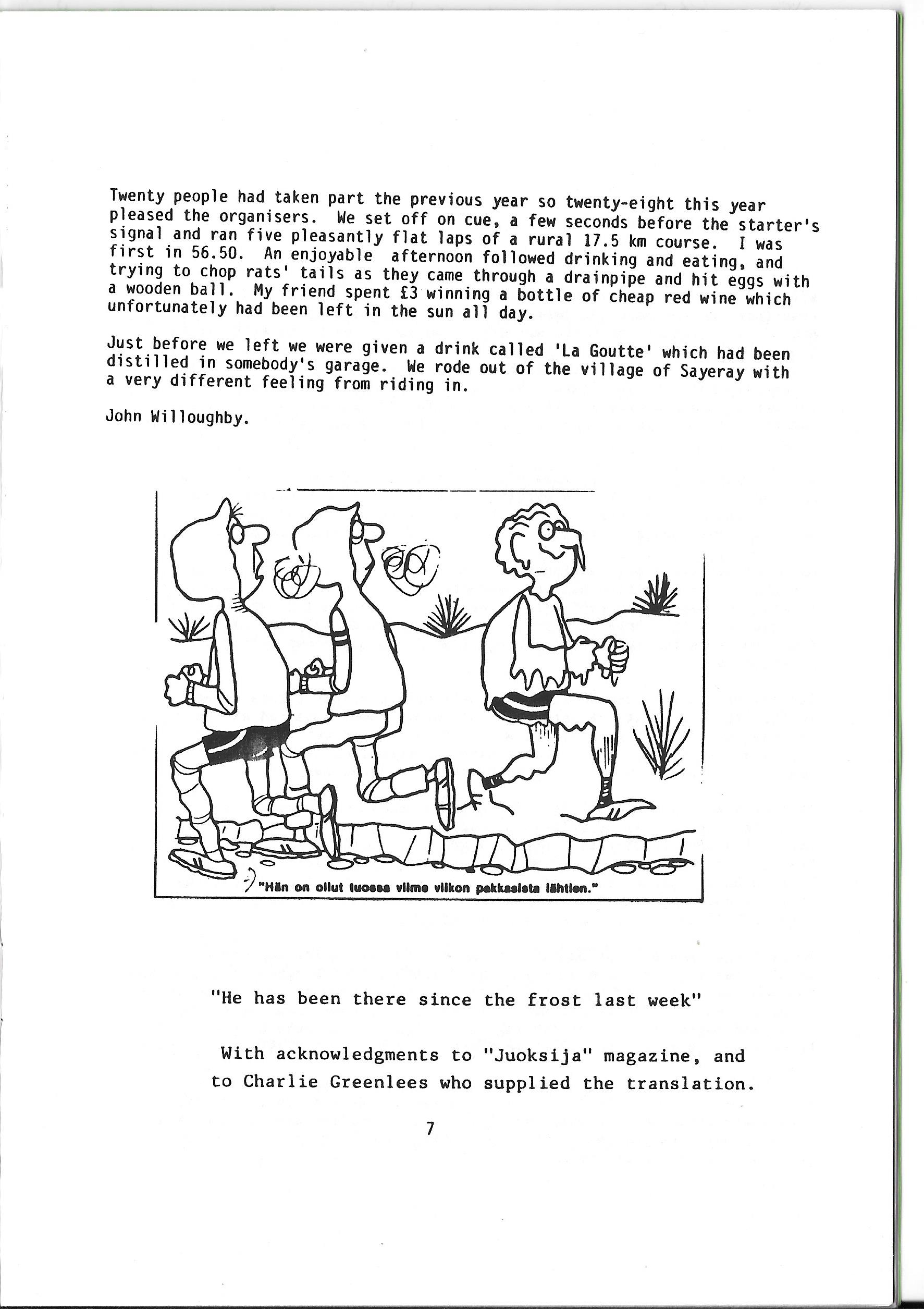
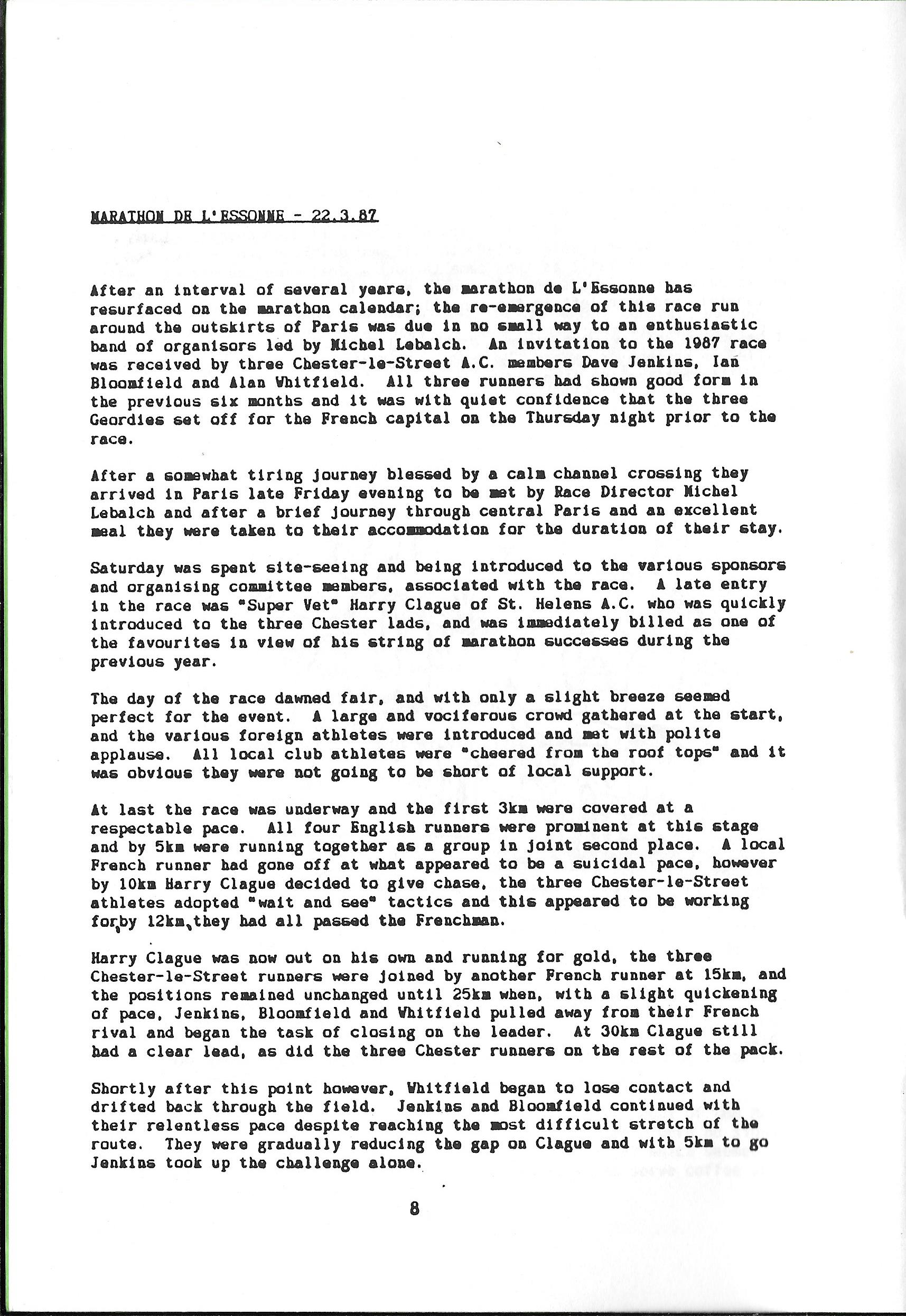
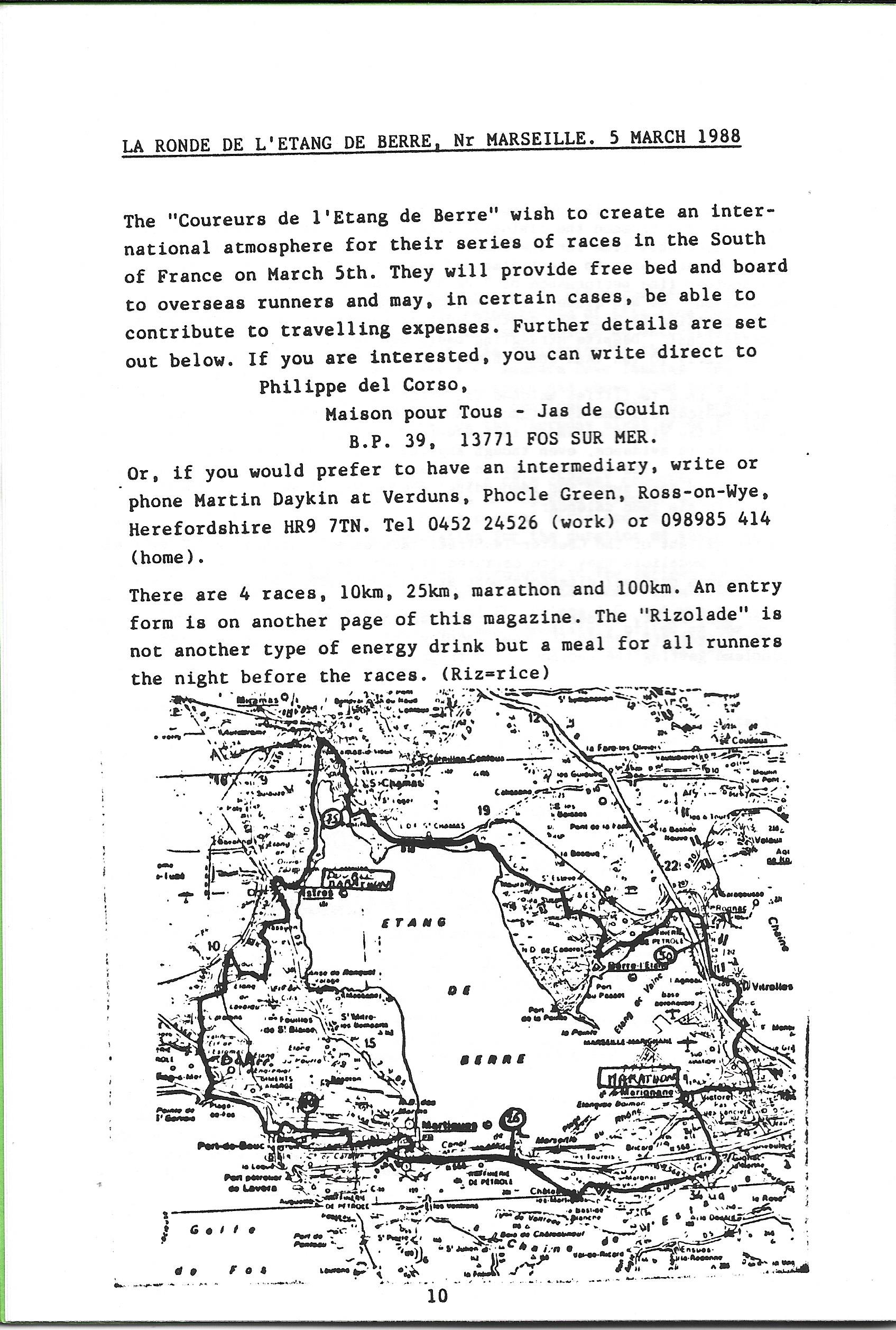
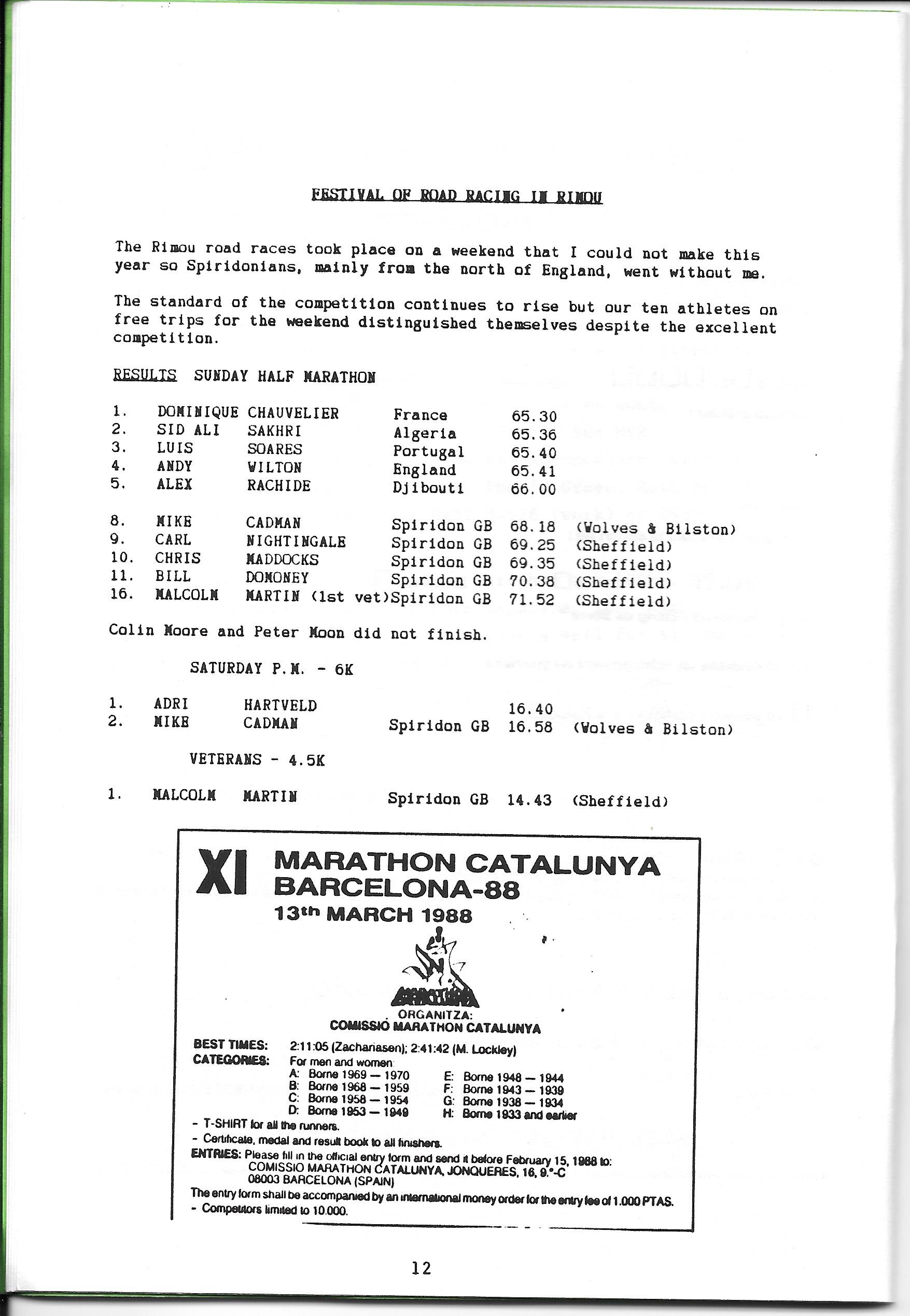
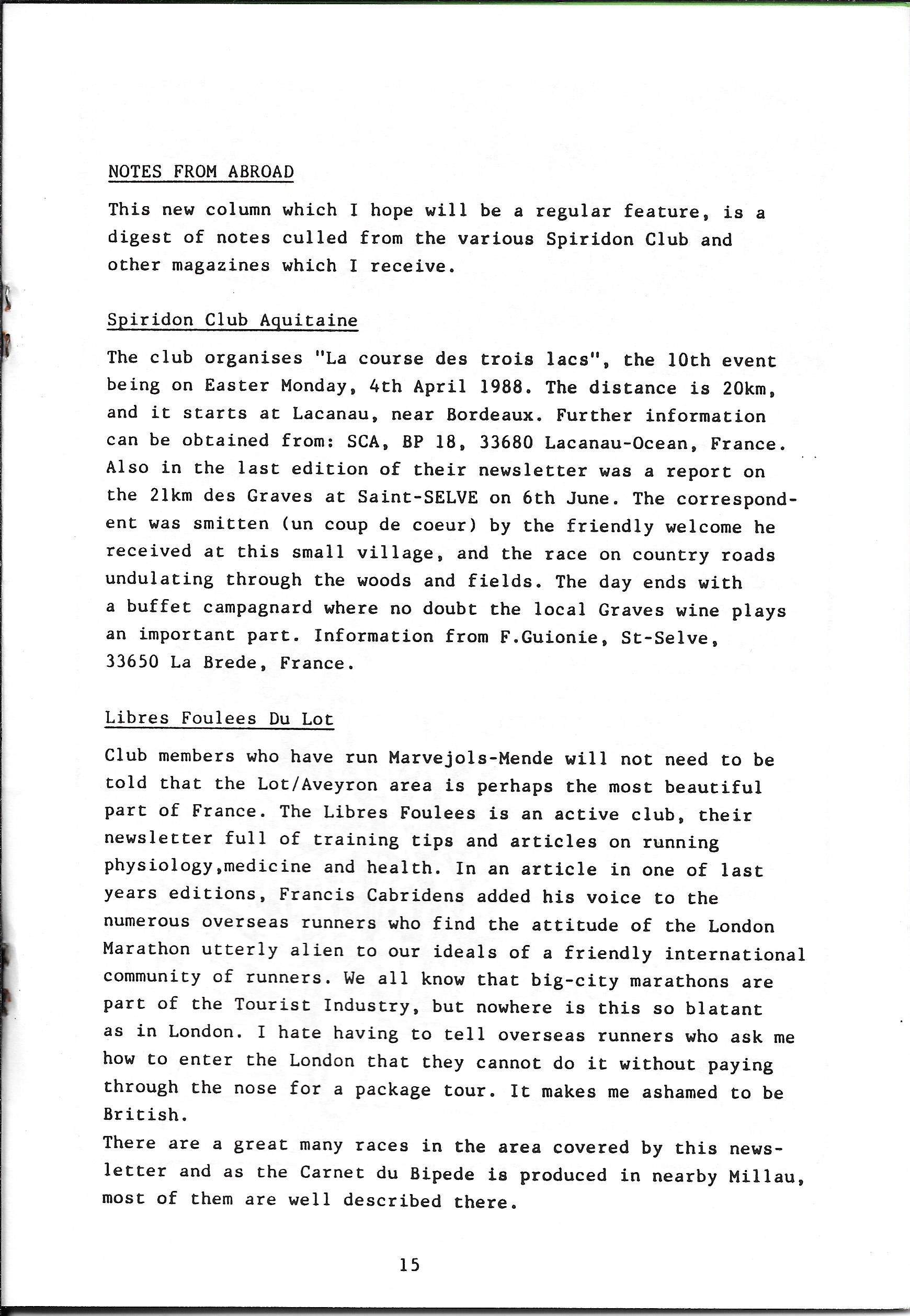
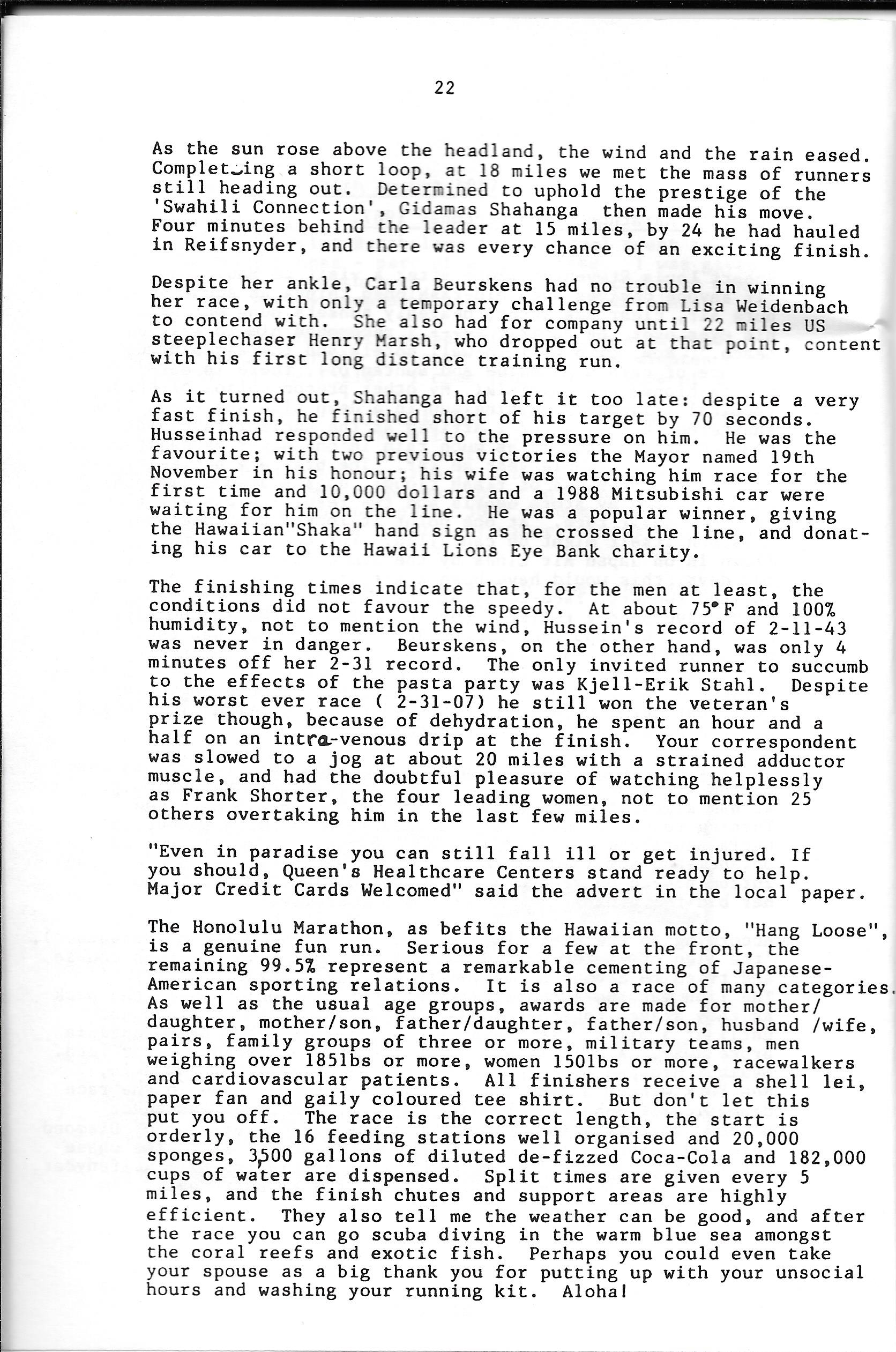
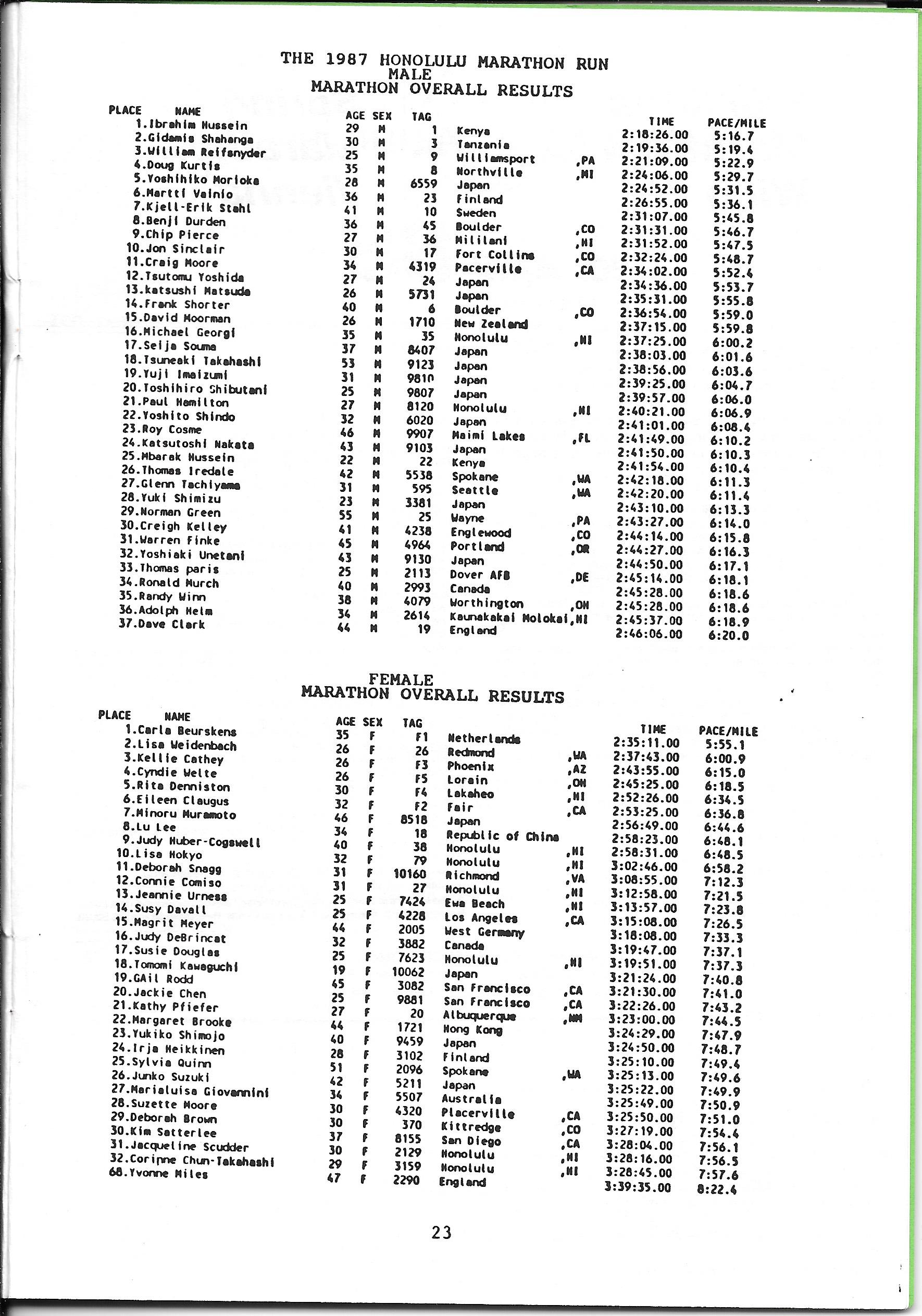
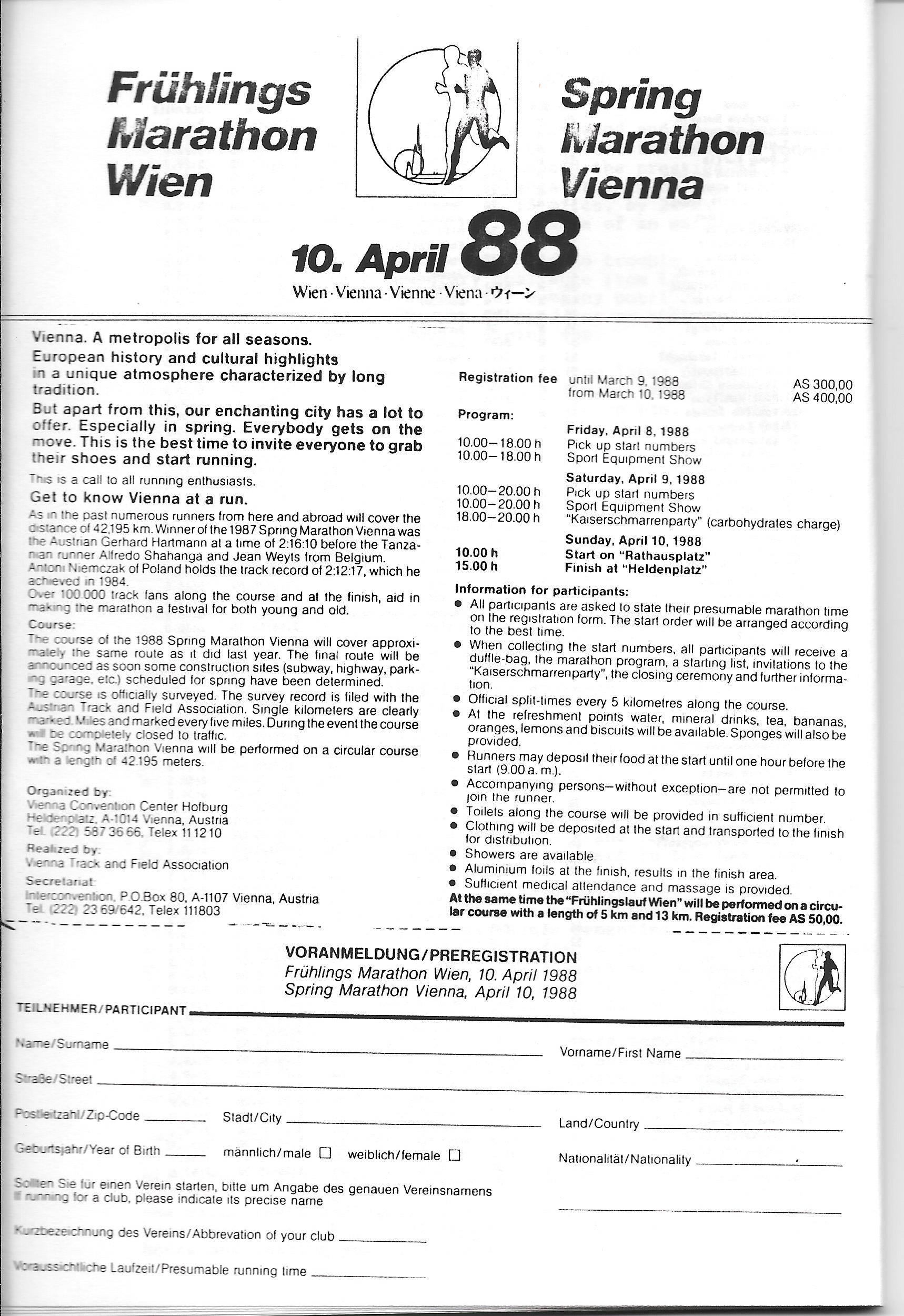
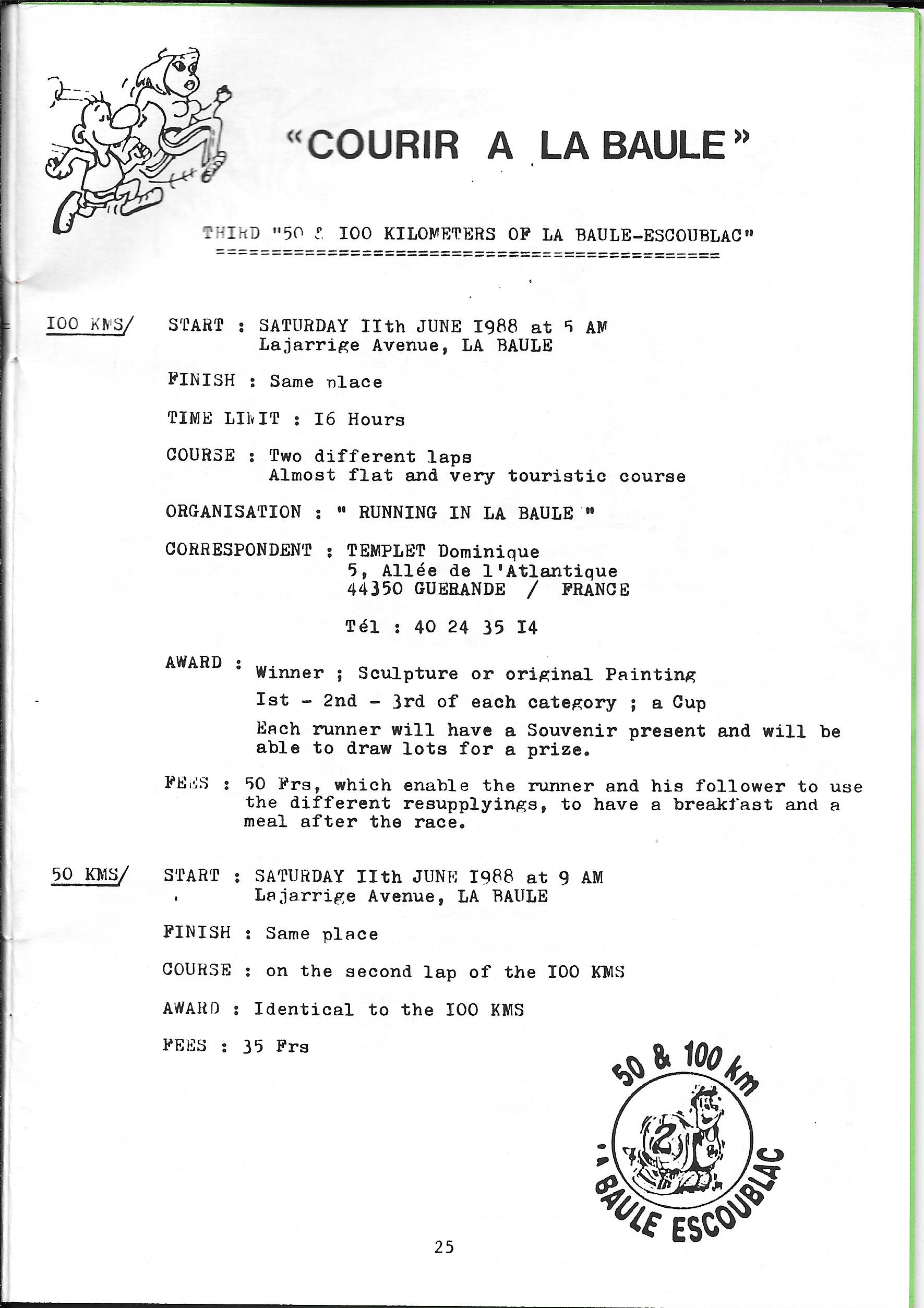
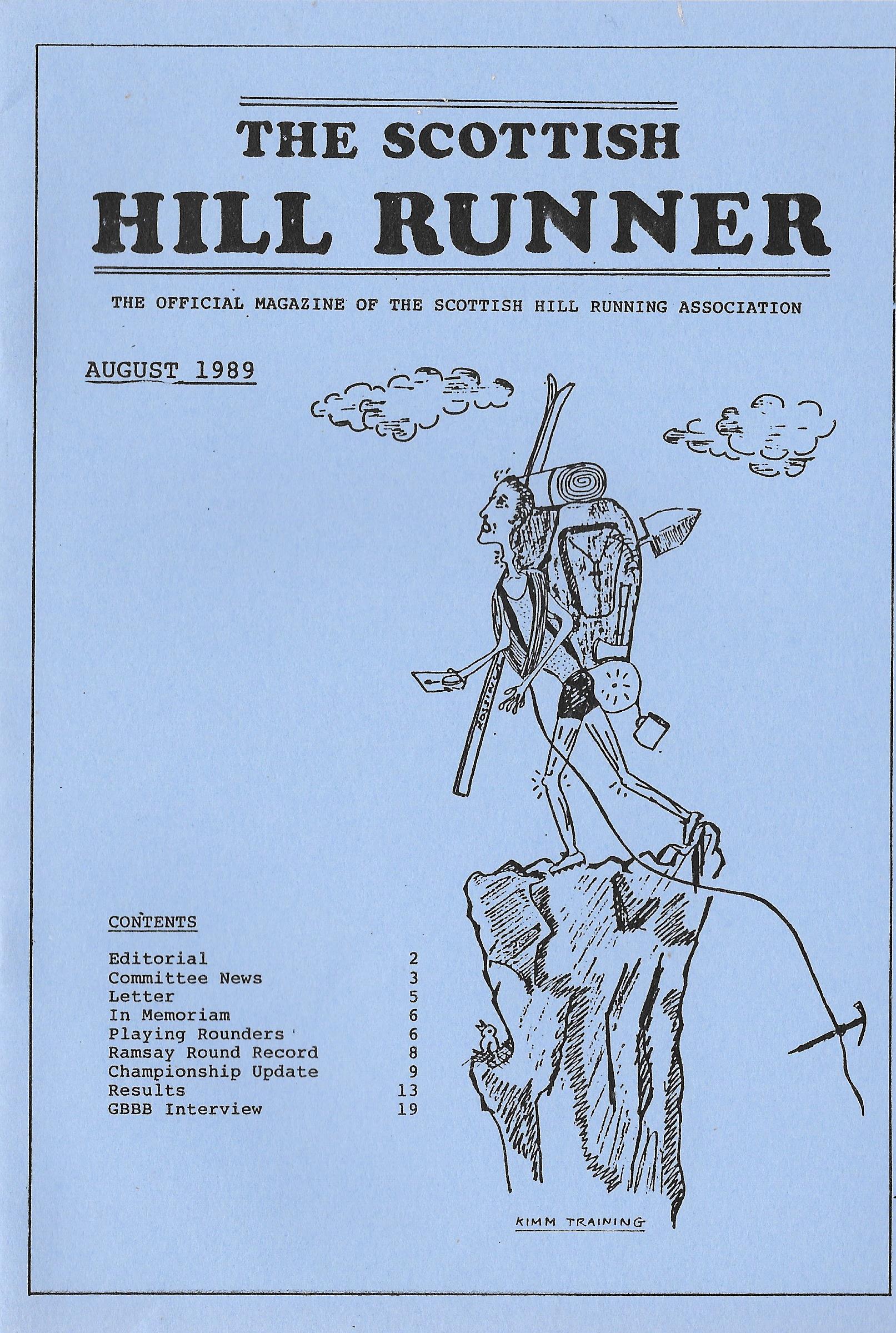
Mel Edwards was kind enough to donate copies of some hill running magazines that we were delighted to receive and which we publish here in their entirety. They were all for the period 1988/1989 and provide a brilliant in depth picture of Scottish hill running of the period.
First of all, the ‘Scottish Hill Runner Magazine, followed by ‘Runaway’:
[ January 1988 ] [ June 1988 ] [ October 1988 ] [ February 1989 ] [ May 1989 ] [ August 1989 ] [ December 1989 ] [ Runaway, January 1988 ]
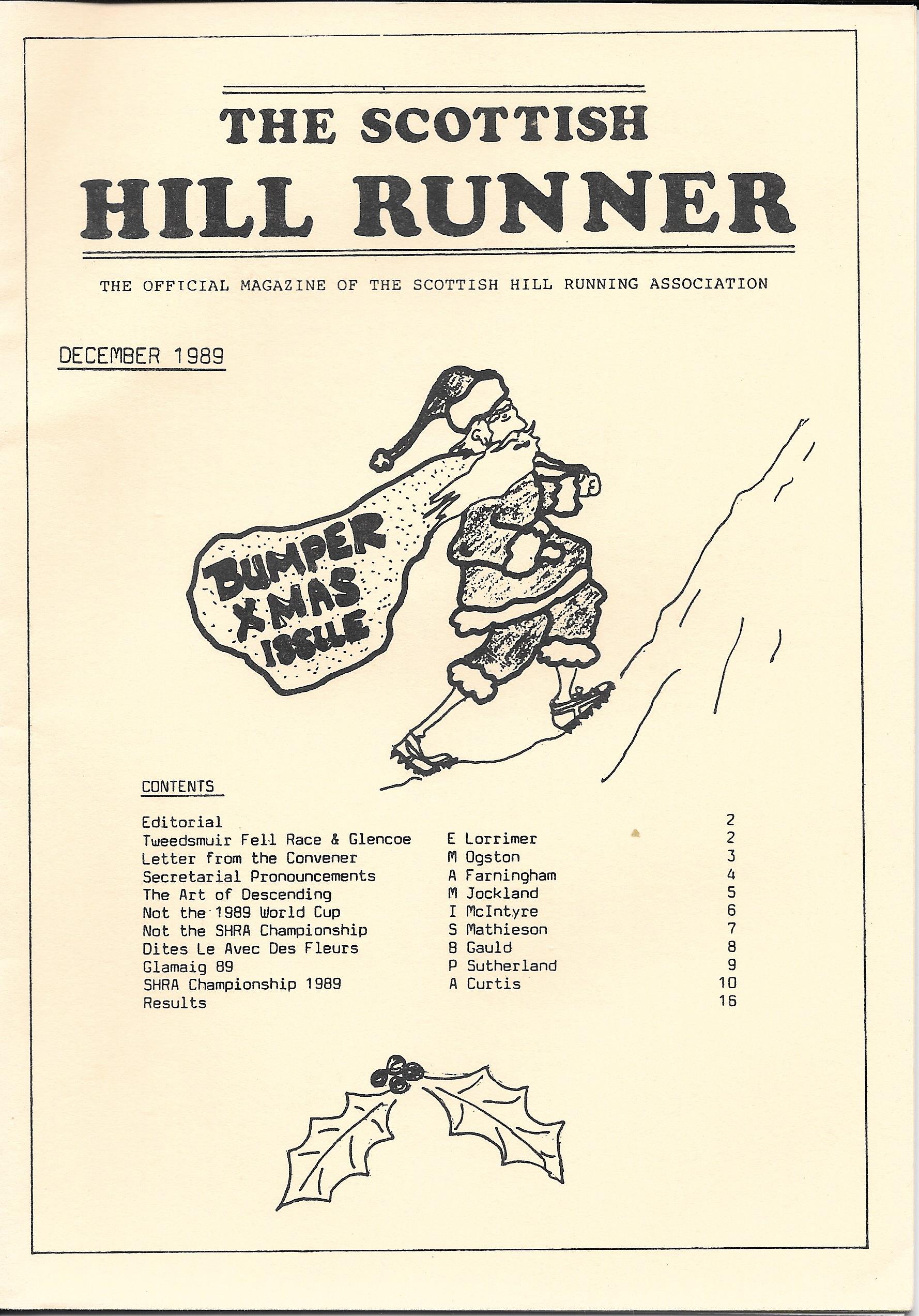
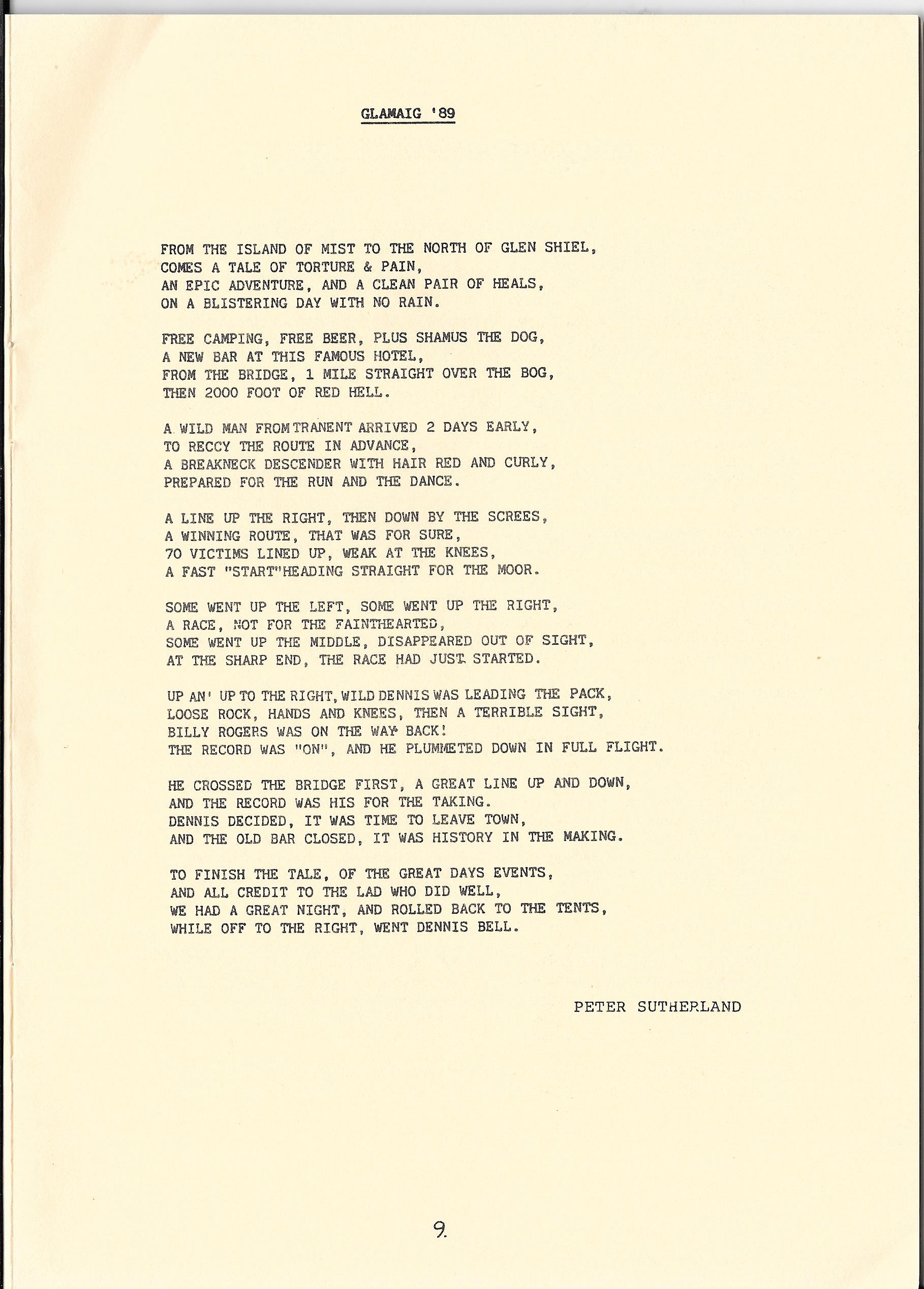
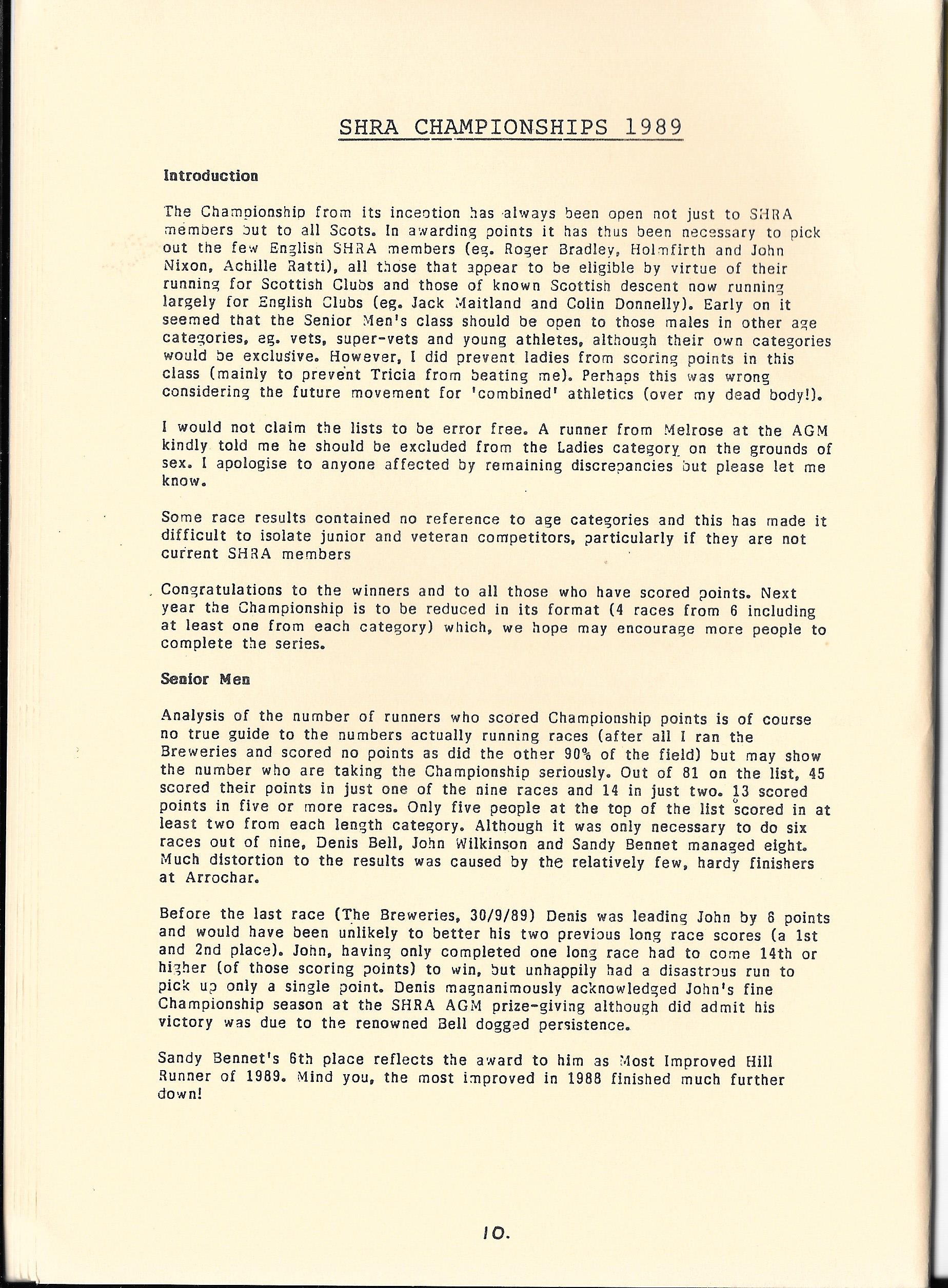
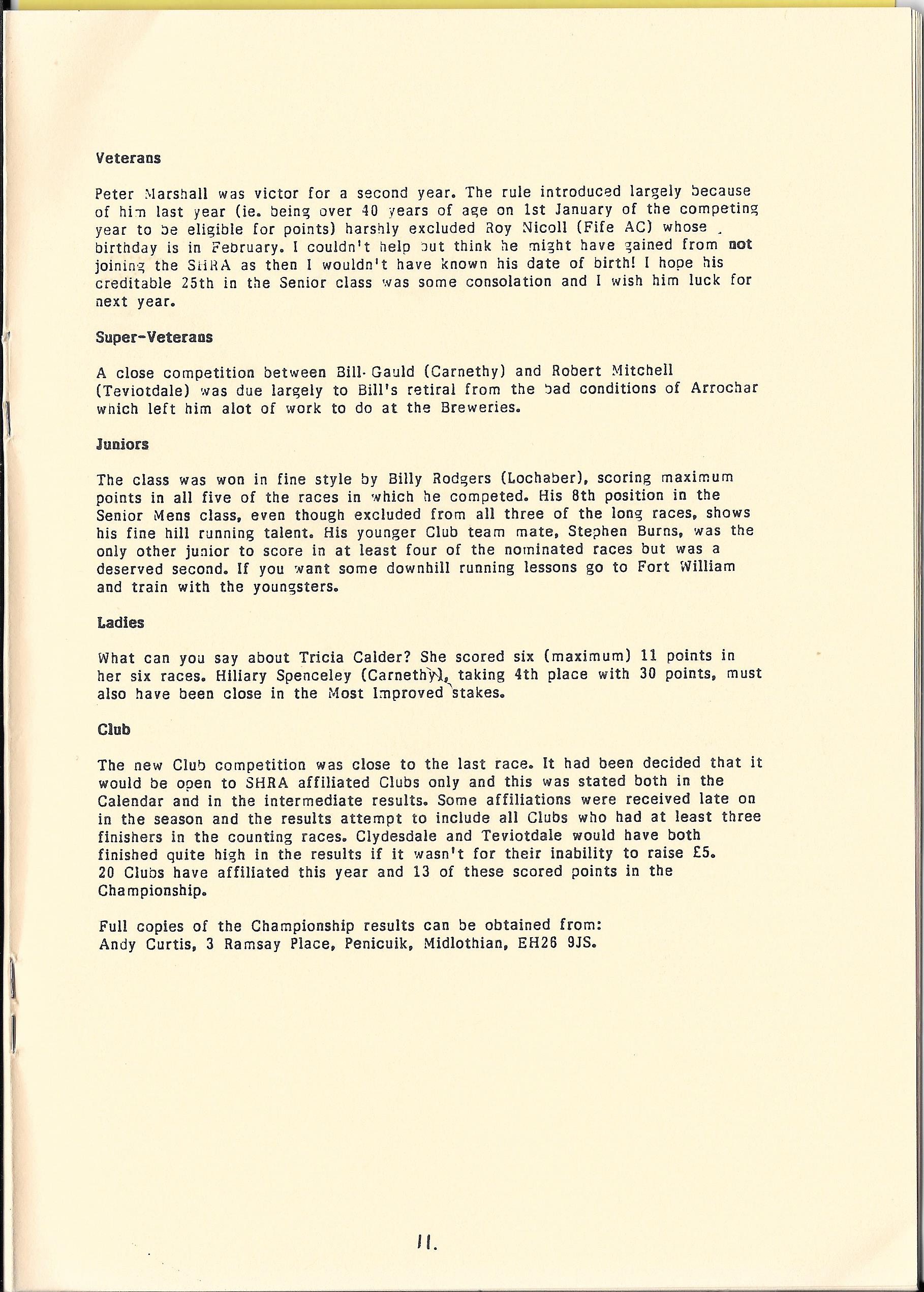
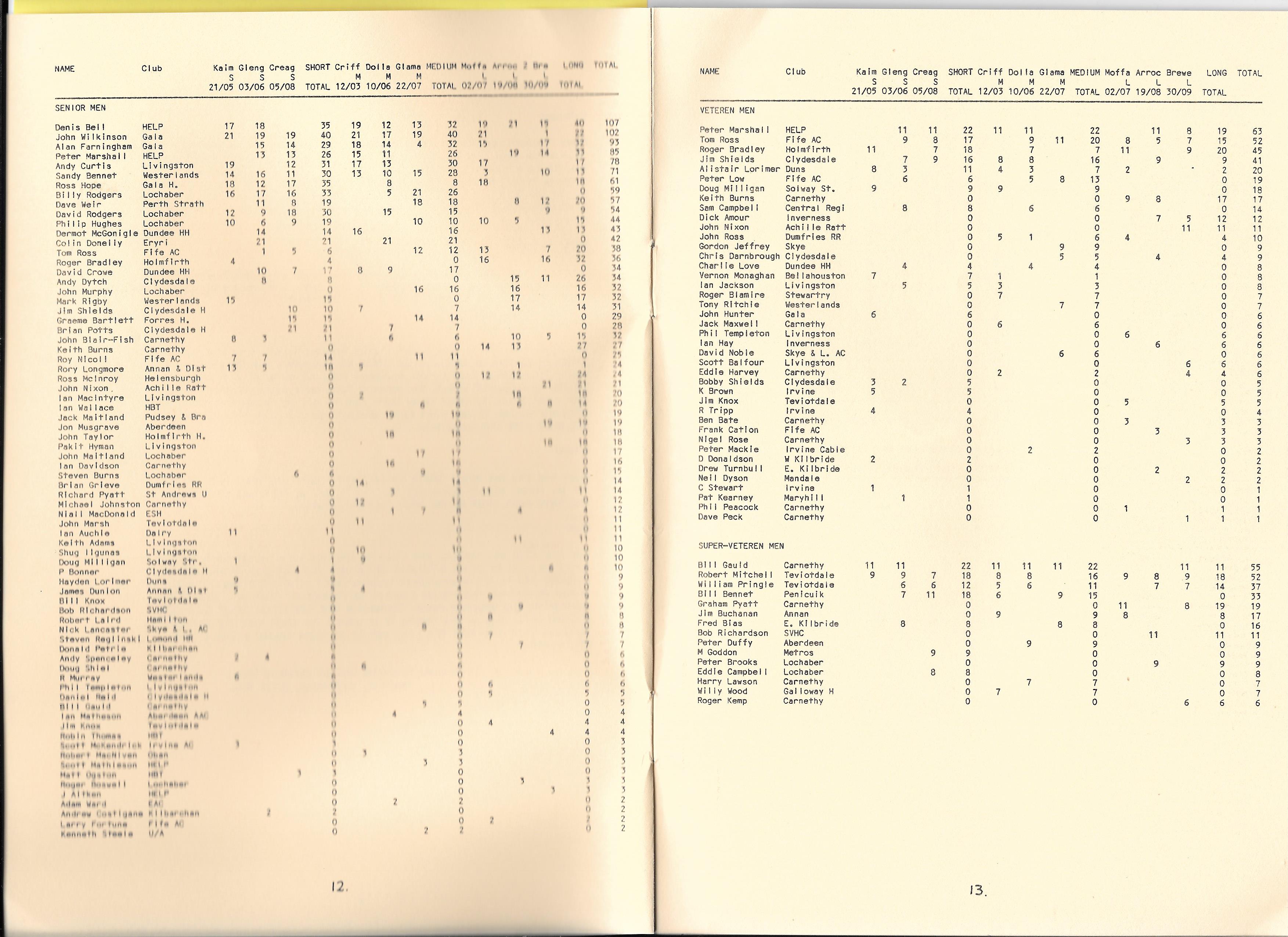
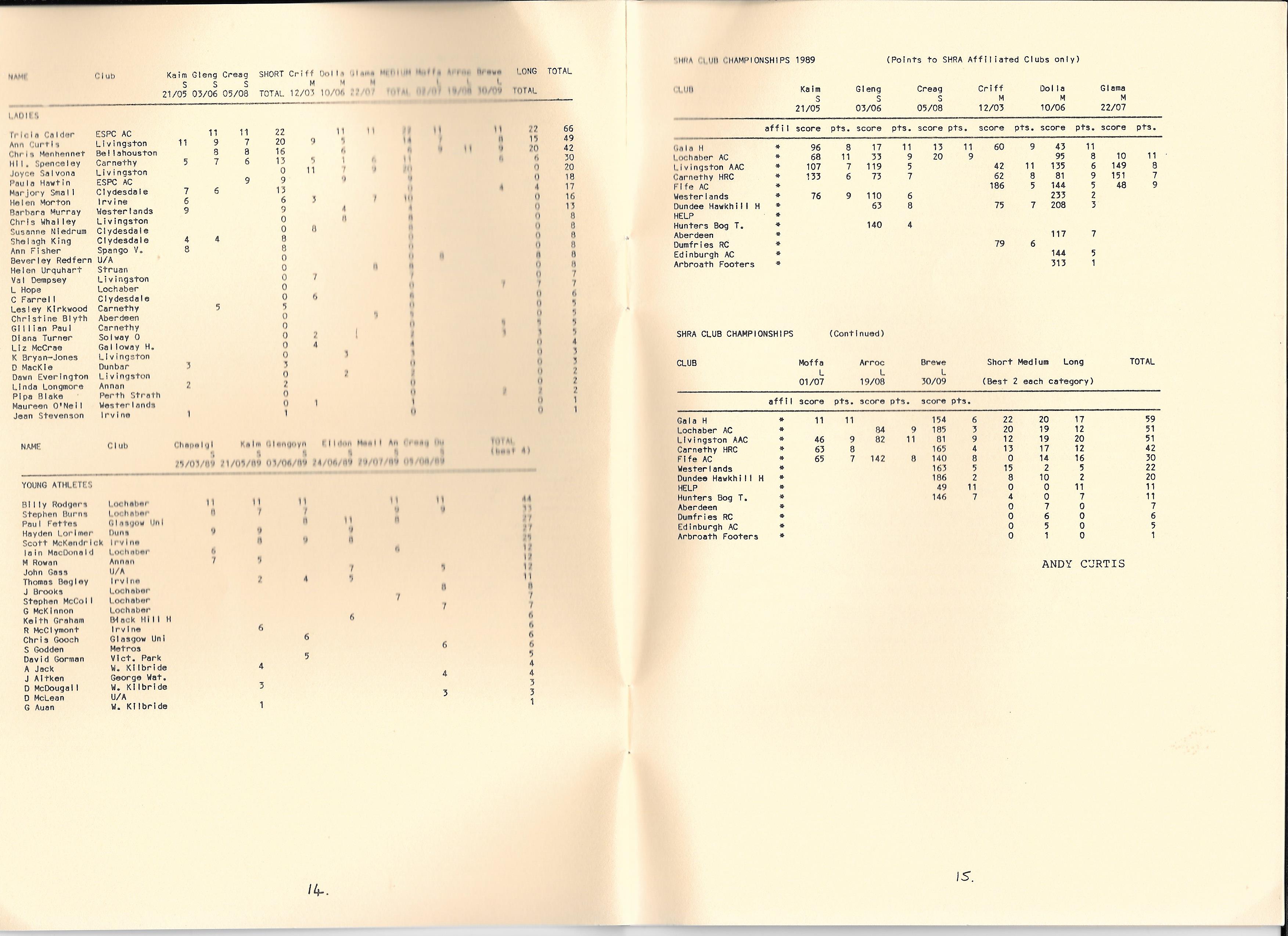
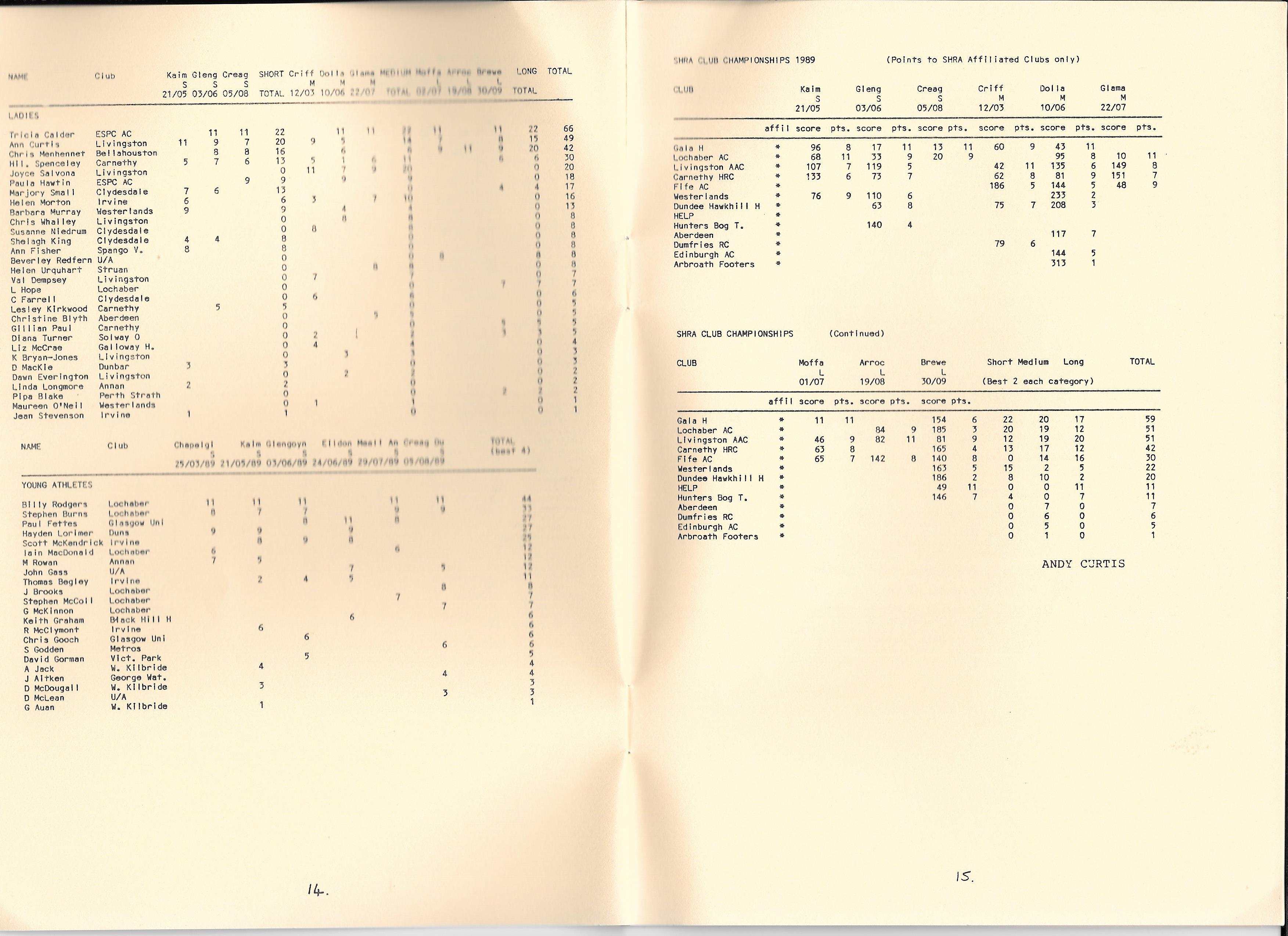
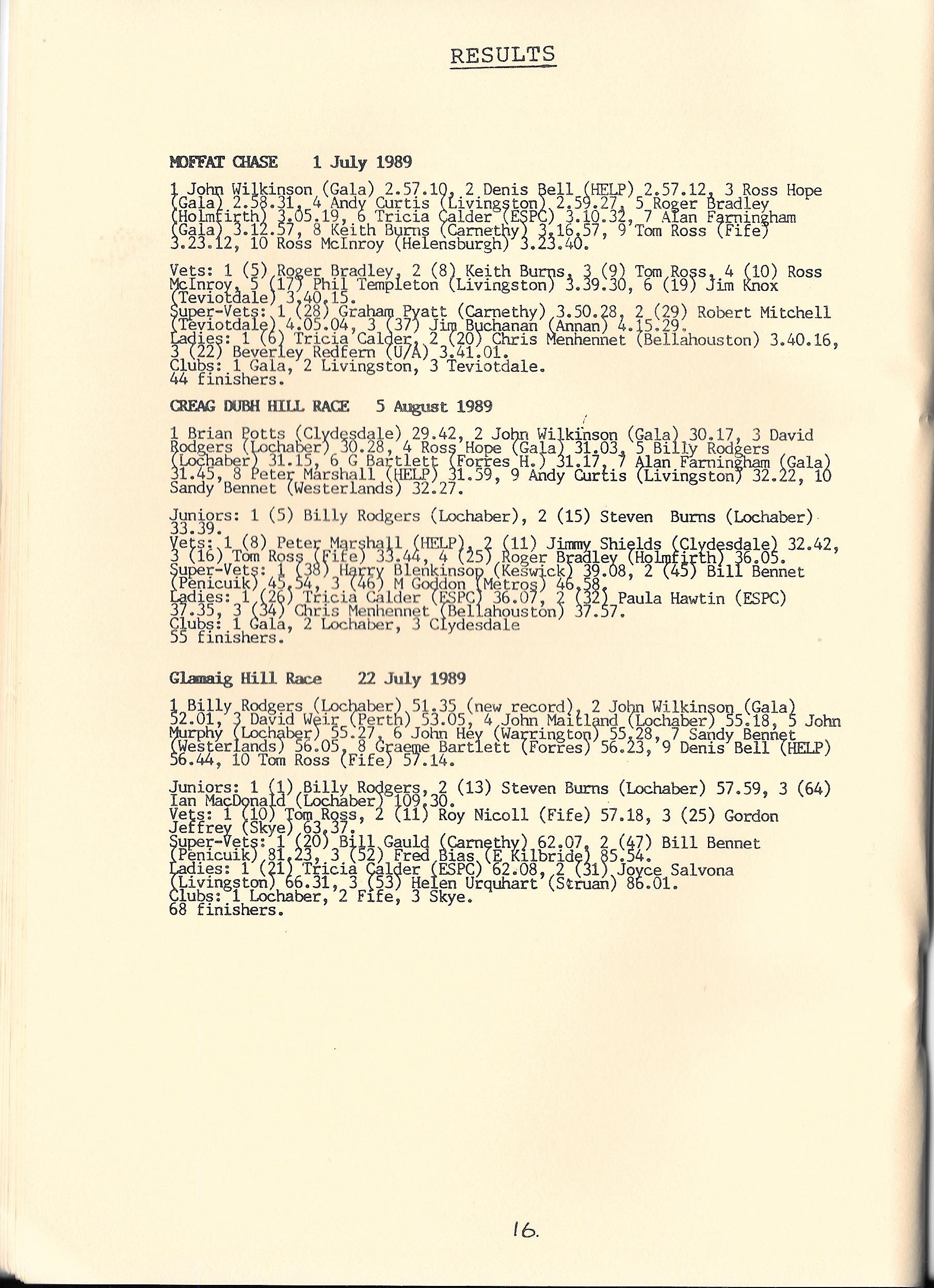
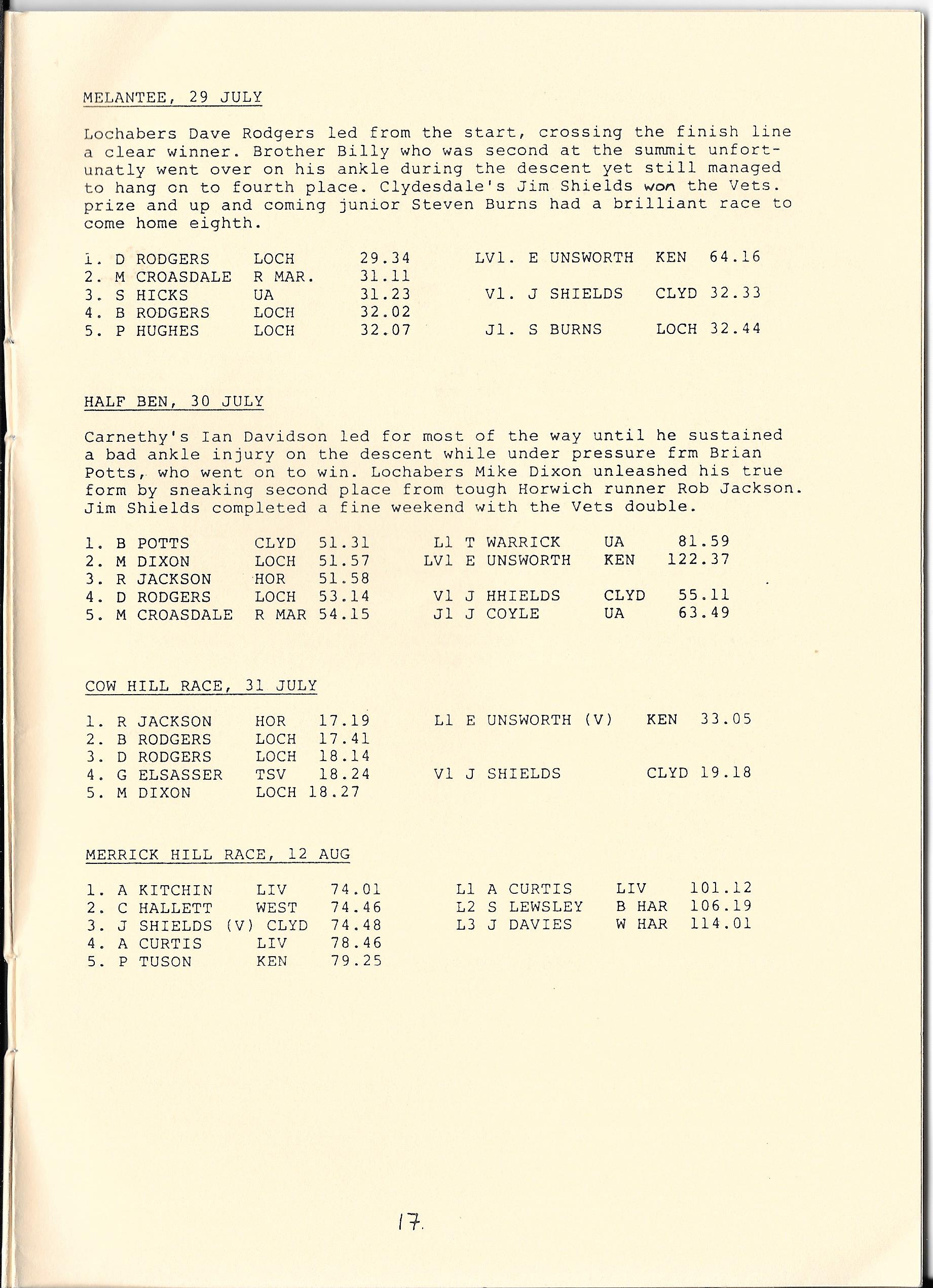
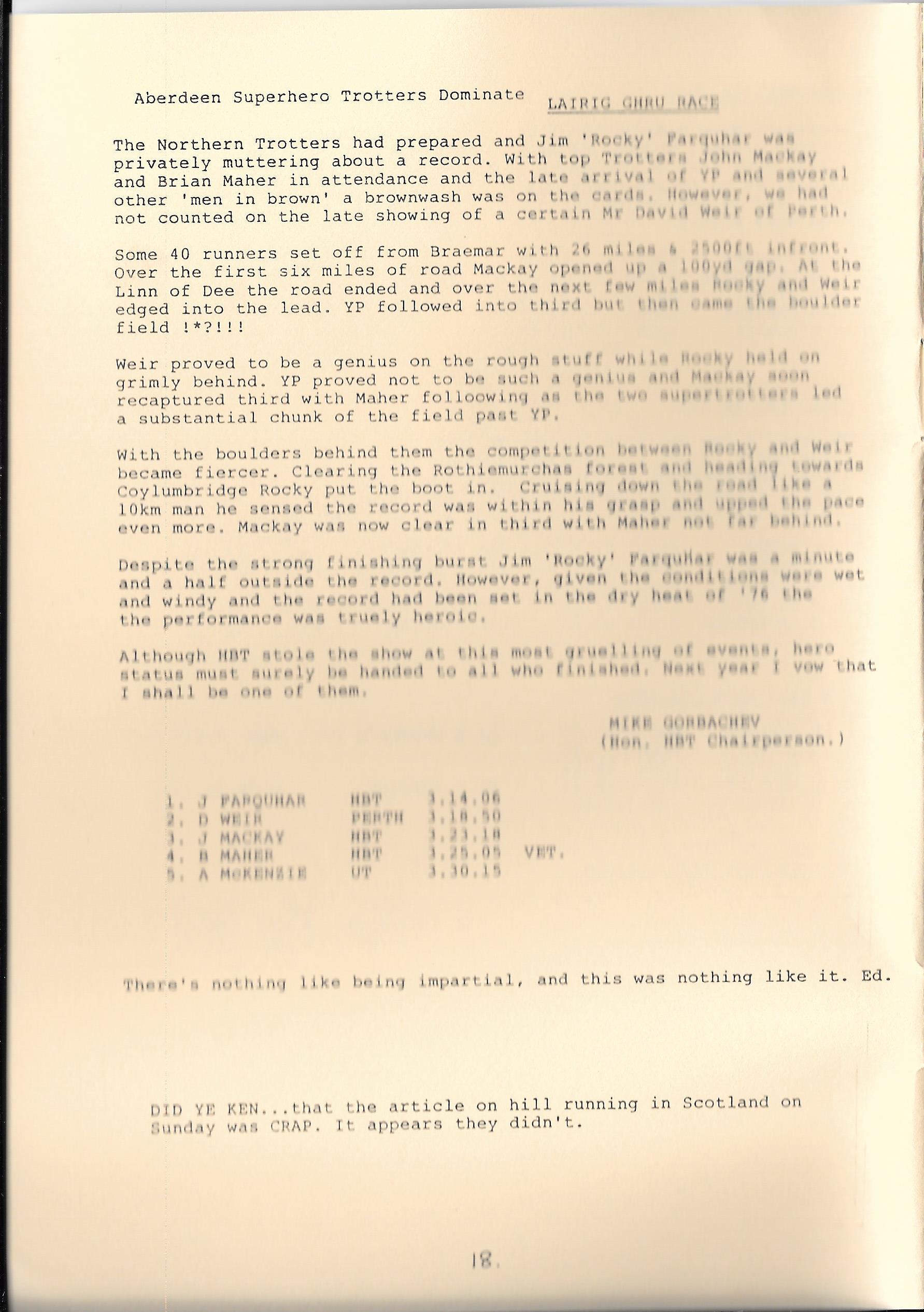
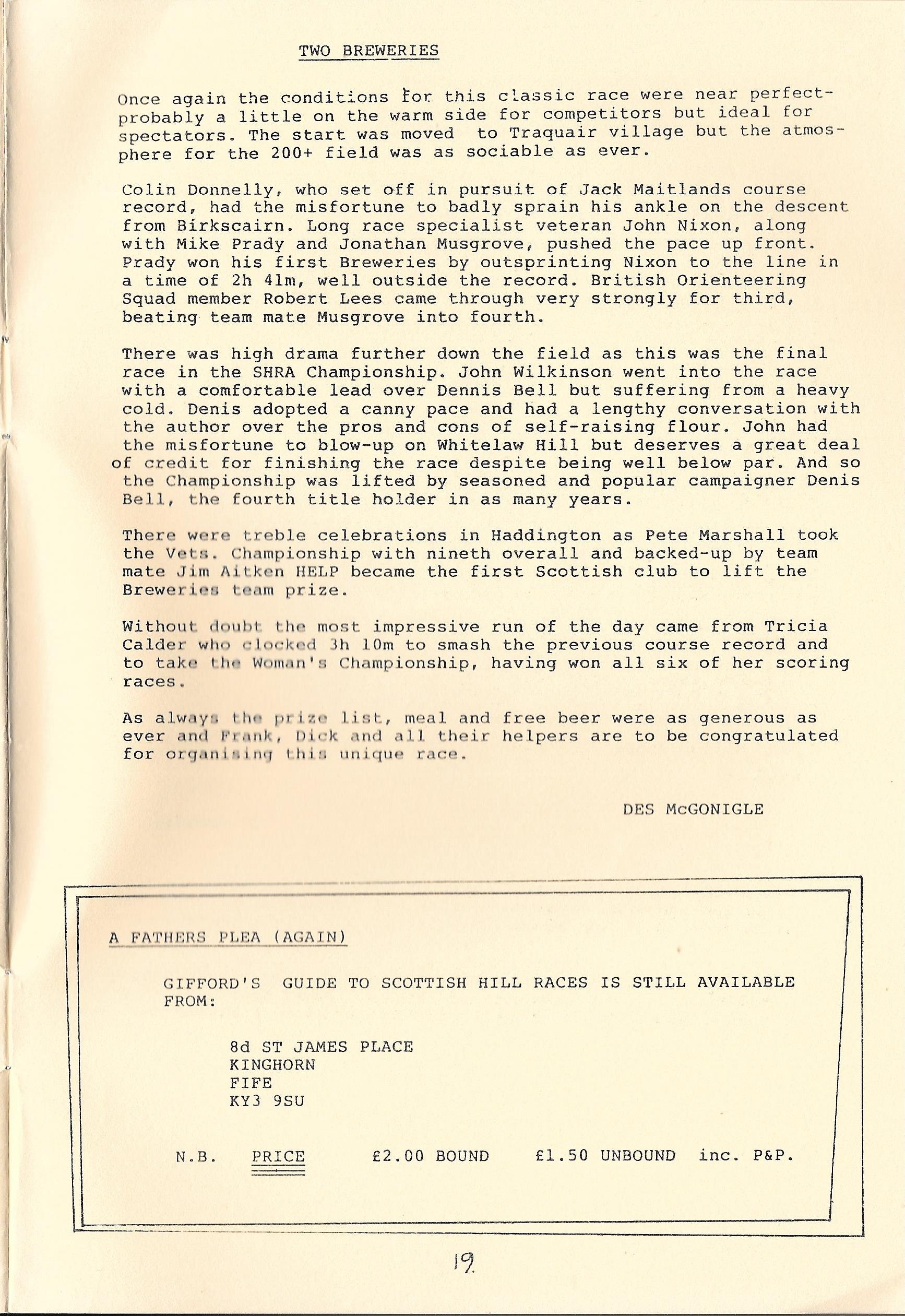
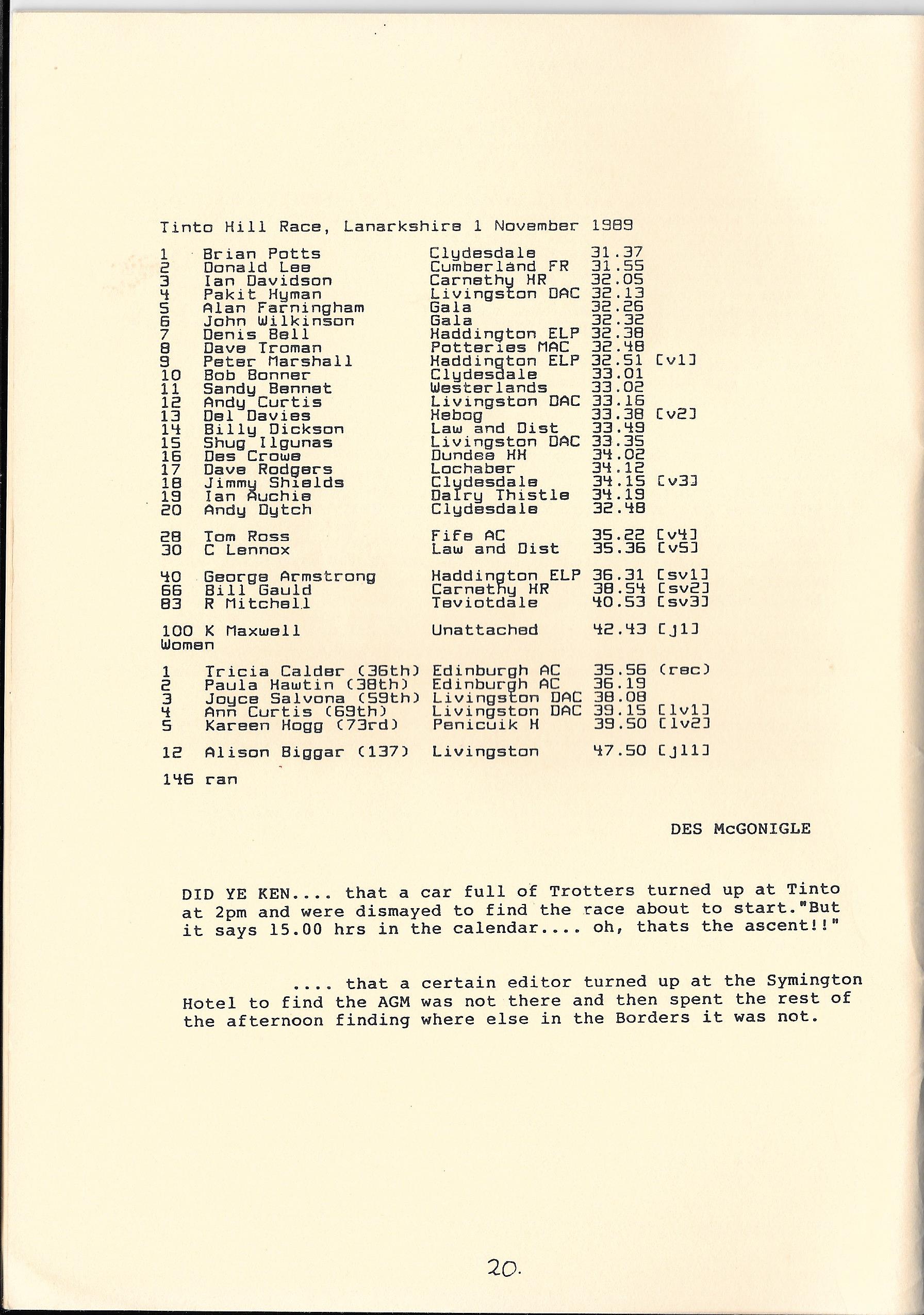
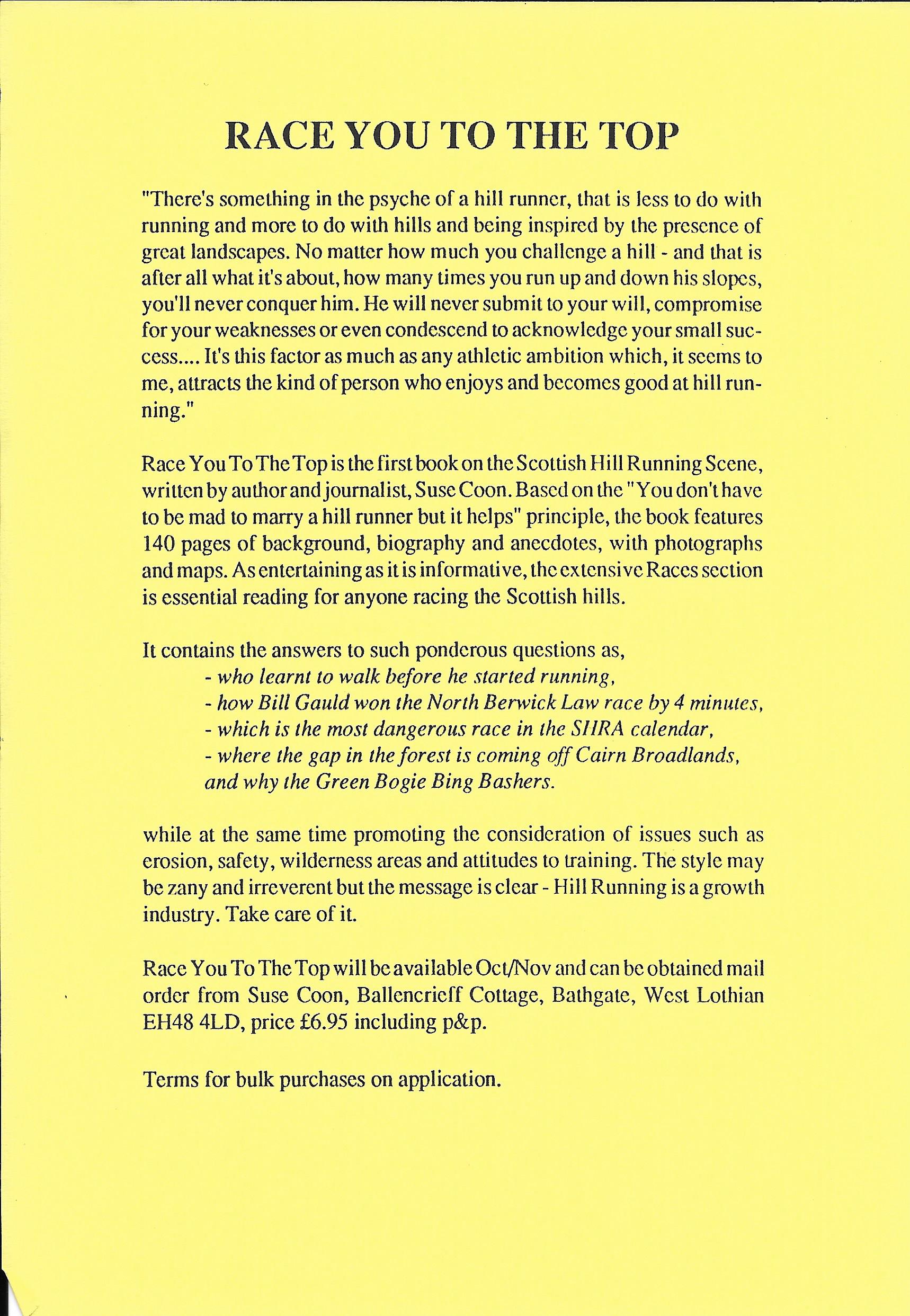
There were also a couple of enclosures with the magazine in December –
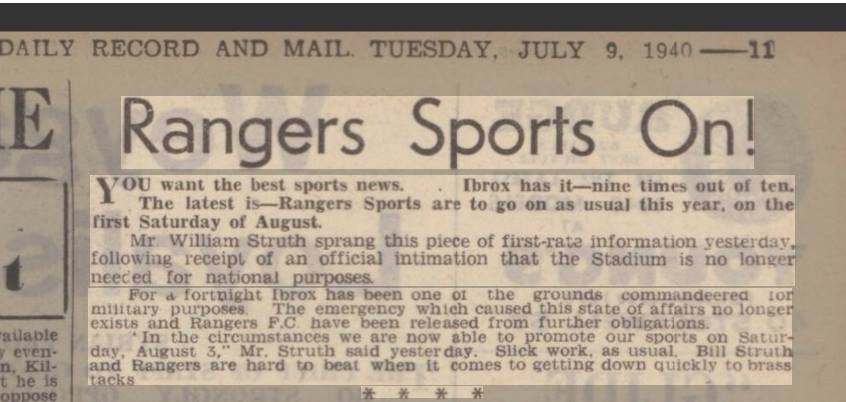
Rangers Sports had always been on the first Saturday in August and for many years there was also a supplementary meeting on the following Monday. When the second world war started many things were closed down ‘for the duration’ including sports meetings and even league football was suspended. The news above came as a real boost to public morale just as the war was starting for real. The meeting when it came on 3rd August was well worth waiting for. I will simply reproduce the Glasgow Herald report in full.
WOODERSON KNOCKS 1 SEC OFF SCOTTISH
ALL-COMERS RECORD
SC Wooderson, the famous runner, realised expectations at Ibrox Stadium at Ibrox on Saturday, when, before a large crowd, he broke the Scottish all-comers record for the mile by 1 sec. His time was 4 min 11 sec. The occasion was the Rangers FC Annual Sports Meeting.
Wooderson , who holds the world’s record of 4 min 5 4-10th sec for the distance, showed that he had lost little of the pace which gave him the honour over a year ago. Over the first two laps he was paced by F Cross (Surrey), R Graham (whose record he was out to beat), GM Carstairs (Edinburgh University) and M Bingham (Finchley). His time for the half-mile was 2 min 5 sec, and by then he was comfortably placed with A Coogan (Maryhill) and L Stoker (Edinburgh University) still forging well ahead from the 130 yards and 115 yard marks respectively.
Covering three-quarters of the distance in 3 min 10 sec, Wooderson had to do the remainder in 61 sec to get under the 4 min 12 sec. So well did he progress over the final lap that when he entered the home straight he had the field beaten.
The other performance of note in a really fine programme of athletics was was the sprint victory of JAM Robertson (Glasgow University) in the 120 yards short limit handicap. From the three yards mark he won well despite the determined challenge by RM Smith (Dundee Hawkhill), and HT Mumme the powerful Uddingston youth. Robertson’s time of 11.5 sec was very creditable from this mark.
Rangers won their own five-a-side tournament but t was the virile Queens Park side that caught the eye in the early stages. Craft and not speed beat the amateurs at the finish.”
There were eight track events plus three cycle races and the five-a-side included all the Glasgow teams – Rangers, Celtic, Clyde, Third Lanark, Queens Park, Partick Thistle plus Hearts and St Mirren.
It would have been a good meeting at any time but to have it when the war was already being fought made it special.
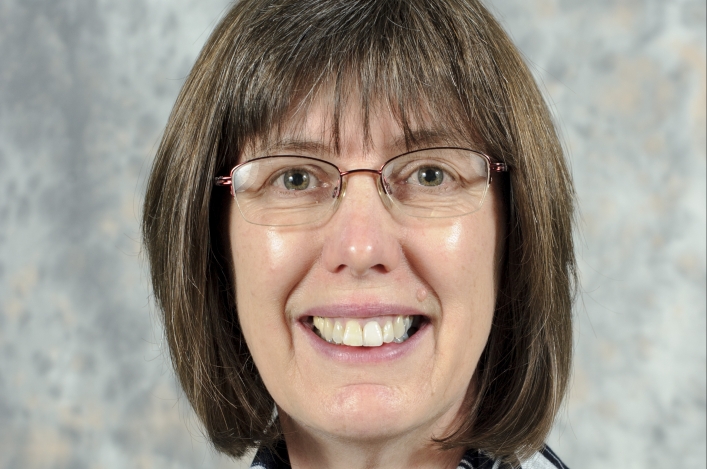
Leslie Roy is one of the best known and hardest working officials in Scottish – maybe in British – athletics. She’s always the same, always smiling and always doing her best for the athletes. Leslie however started out in athletics as a very promising young runner, winning team and individual medals and trophies with her original club, Victoria Park AAC in the west end of Glasgow. She went to Scotstoun one Thursday and the following Saturday she was in a team competing in Balloch Park where she finished sixth. The following December she ran in the West District Championships at Bellahouston Park where she finished second in the Under 13 Girls race and then in the National cross-country championships she finished sixth.
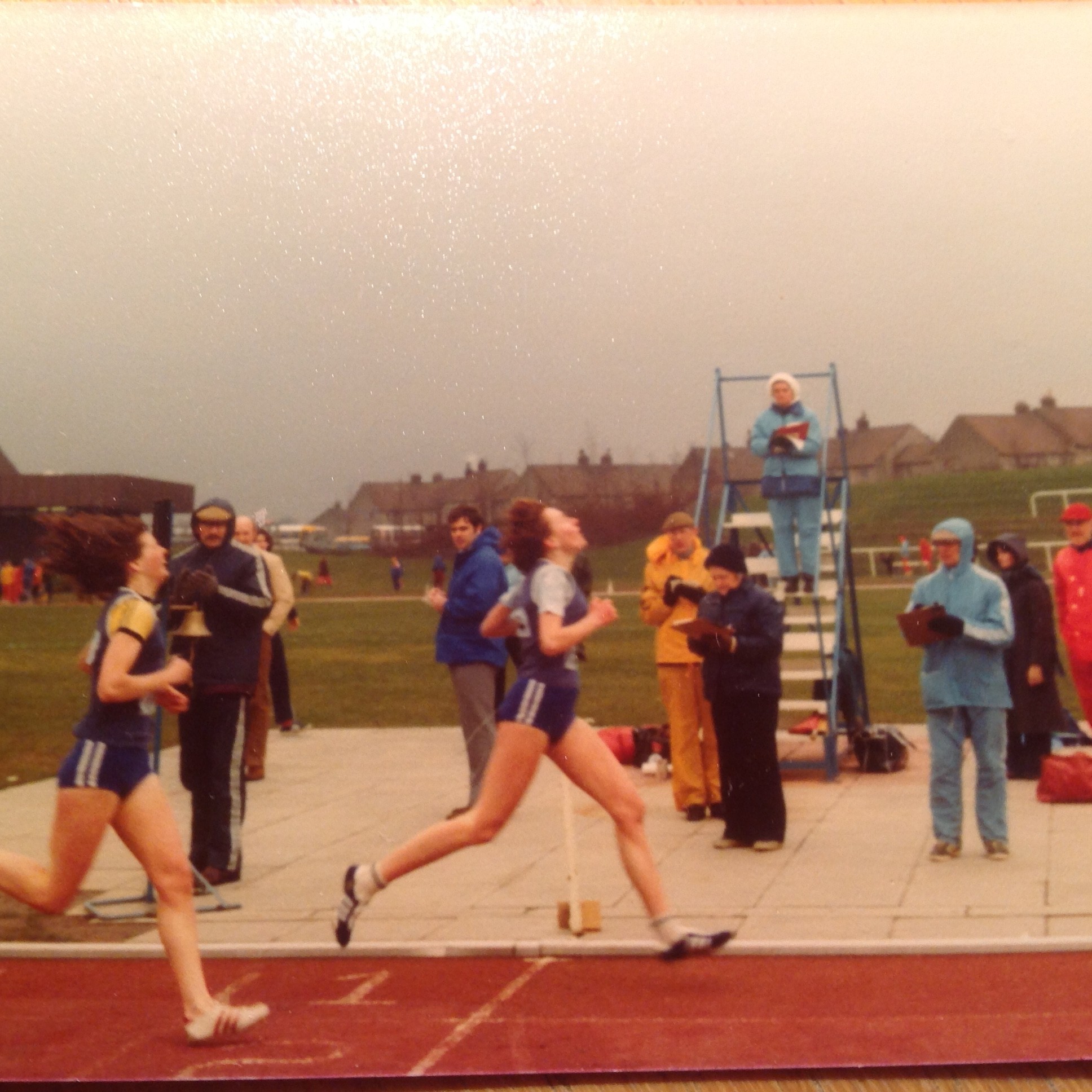
Leslie finishing behind Judith Shepherd at Coatbridge, 1978
Clearly a promising young runner she specialised in the 800m on the track where she progressed from 2:21 in summer 1974 to a best of 2:12.6.
If we start in 1974, Leslie was second in the West District Championships and shortly afterwards she was fourth in the East v West match at Meadowbank on 26th May in that pb of 2:21. Leslie followed this up on 1st June, 1974, in the SWAAA championships for girls, juniors and intermediates at Grangemouth where she was fourth in a 1500m 5:09.1. In between times she won a 100m at the Glasgow Championships in 13.8 seconds.
Her best 800m in 1975 was 2:20.0 which ranked her number 20 in Scotland.
Early in the 1976 season, on 28th April, in a match between Glasgow AC, Glasgow University and Shettleston Harriers Ladies she won the 800m in 2:24.5. Then in the Glasgow Highland Games on 15th May, Leslie finished third in the 800m which was won by Evelyn McMeekin. That was followed by a third in the West District Championships at Grangemouth in the 800m with 2:26.4. At the national championships in June she was third in the Intermediate age group championship in 2:21.9. These performances were such that she was selected for and competed in the first Celtic Games, held at Balgownie, Aberdeen, on 14th August 1976 for the 800m. Scotland with 110 points defeated Wales (94), Republic of Ireland (84) and Northern Ireland (51). Her best performance that year was 2:15.8 which ranked her fourteenth in the country.
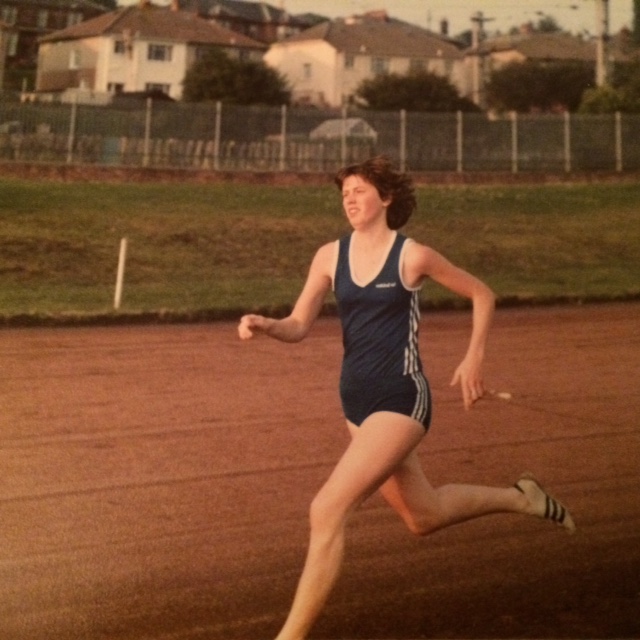
Leslie running at Scotstoun in 1980
A good club member she competed in several events in inter-club fixtures all over the country and was ranked every year from 1974 to 1983, usually in two events with best performances of 2:12.6 for 800m, 3:01.3 for 1000m, 4:43.3 for 1500m, 10:58.3 for 3000m and 68.07 for the 400m hurdles.
In 1977 in the SWAAA Championships Leslie ran 2:17.6. In 1978 she ran even better: In the East v West competition she finished second in 2:14 and then on 3rd June the result for her was a 2:12.6 timing in the SWAAA Championships at Meadowbank. This last was in a Commonwealth Games year and the standard was very high but the time ranked her eleventh among Scottish women that year: one place in front of Rosemary Wright (best of 2:14.1 with another future OIympian – young Lynne McDougall – further back again with 2:15 for the season.)
As a young senior she finished second to Christine McMeekin in the West District 1500m championship on 3rd May 1980. Now, in the twenty first century, there are many leagues providing competition as well as demands from team managers for athletes to turn out as often as possible but there were few leagues in the 1970’s and athletes ran in sports meetings and highland gatherings all over the country. Leslie was no exception and raced at such as Shotts, Carluke, Strathallan, Glasgow and Gourock. Leslie won various events on the circuit e.g. she won the 400m from scratch in the Gourock Highland Games in 67 seconds in May 1981; on 5th June 1982, Leslie won the 800m at the East Kilbride Games off a mark of 28 metres. Still running well in 1982 Leslie won the 800m in the East Kilbride Games in 2:24 and finished the year with a 68.07 for 400m Hurdles placing her eighteenth in the rankings and in 1982 she ran 3000m in 10:58.0 and 400m H in 69.5 seconds.
Clearly a good athlete, Leslie said in response to direct questions on that part of her career in the sport that her training partner in the 1970’s was Alice Linton who was second in the SWAAA 800m twice and had a personal best of 2:06. From about 1980 on she was coached by Iain Robertson and trained with Sandra Whittaker, Angela Bridgman and Yvonne Anderson. Iain was in my estimation the best Scottish coach that I had the pleasure of knowing and working with and the athletes mentioned were all really top class runners with Sandra being a fairly successful Olympian.
Her best race, in her own opinion, was the 1978 SWAAA 800m at Meadowbank where in a top class field of Ann Clarkson, Evelyn and Christine McMeekin and Alice Linton among others, the field was bunched at the bell with Leslie right in there. Then the athlete that she was tracking dropped out and she lost concentration. Easily done – tactics are often keyed to another runner and when that athlete disappears from the track when you are travelling at speed there is always a temporary lapse.
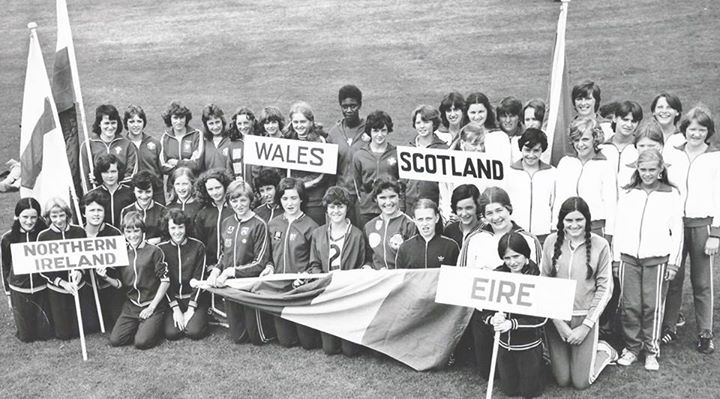
Celtic Games, 1976: Leslie is in the back row, to the right of the flag.
Leslie’s athletic career came to an end because of injury problems and, having been club captain in the early 80’s, she became club secretary in October 1985. This was a post that she held in Glasgow AC and then City of Glasgow AC until October 1999. She had already become involved in activities outside the club and from 1982 she had been officiating in admin roles such as presentations, helping with the preparations for meetings, getting to know the officials and generally learning the ropes. In 1984 Leslie got her qualification as a field events official: unfortunately it was just too late for her to officiate at the 1986 Meadowbank Commonwealth Games but she volunteered and got a job as a fire steward in the main stand which, she says, was a great position from which to watch all the athletics. From that date she has officiated at meetings of all standards: open graded, league meetings, championships at all levels and at UKA TV meetings.
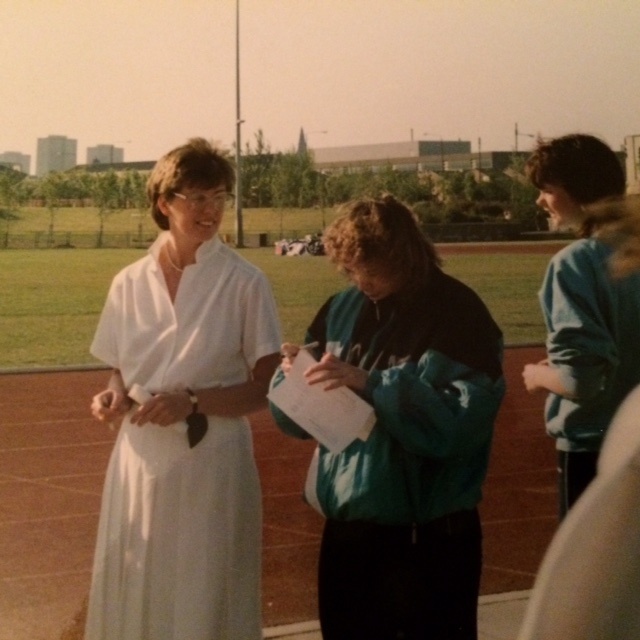
Leslie as presentations official in 1984
Like all good committee members she became a club representative. In Leslie’s case she quickly became Division 1 secretary of the Scottish Women’s Athletic League (SWAL) 28th November 1989 until November 1992 when she was elected to the position of SWAL secretary. Leslie held that post until 2008 – 16 years in all. In addition to the club and league duties, Leslie had become the West District Representative on the SWAAA Executive Committee in 1990 and stayed there until the formation of the Scottish Athletics Federation in 1992.
Halfway through this period Leslie’s abilities and willingness to work were recognised and more roles were put in her way:
You will note the number of roles running parallel at this point with responsibilities encompassing Scottish athletics activities at club, district, national and (via team management and selection) international levels. All this in the short period since she had stopped running and racing. This was the point when Scottish athletics was being reorganised; when the SAAA, SWAAA, SCCU, SWCCU and Hill Runners all came under the one umbrella of the Scottish Athletics Federation. There were problems but it was generally a period of great excitement in the sport despite the inevitable teething troubles. In addition to the changes in Scotland, there were changes in the other governing bodies in the British Isles and in the relationship with UK Athletics.
With her prodigious appetite for hard work, her administrative experience gained since she had retired from running and her can-do attitude Leslie was a natural component of the new order. Her appointment on the Track & Field selection committee has already been mentioned and in 1999 she became chair of the Track and Field Commission and a member of the UKA Track & Field Advisory Group. In 2000 she became a Scottish athletics representative on the UK Athletics fixtures meetings. At the 2003 World Indoor Championships in Birmingham, Leslie was a technical official working in the technical information centre. New responsibilities came her way in 2011:
A considerable range of posts with a range of skills required do any of them properly.
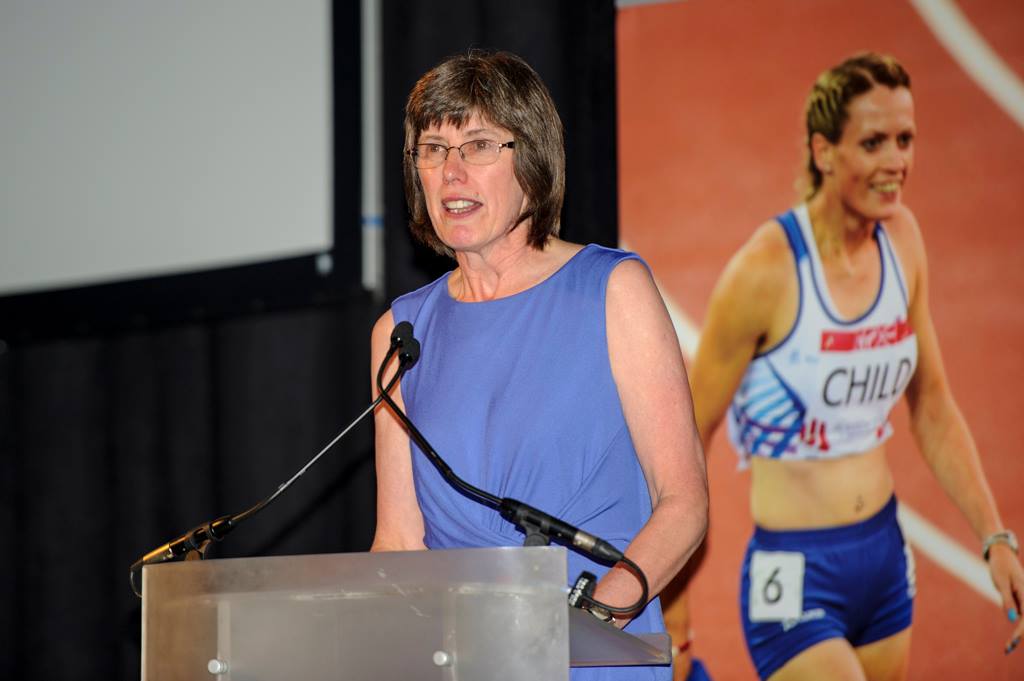
Leslie at the scottishathletics awards presentation in 2015
Just as with the athletes, officials and administrators regard being involved in any major Games as a highlight of their career. Leslie has been involved with these since 2000. They can be easily listed:
Ten major events: none of these is a straightforward task: the problems of organising transport for 17 sports over several weeks in Delhi, for instance, must have been many and varied. To be involved at that level over a 15 year period represents a considerable dedication to the job. Many would be incapable of doing these jobs at all, some would be able to do several of the jobs, and others while competent would be unable. Leslie has always, as far as I am aware, had a good relationship with the athletes that she is working with. Indeed one young athlete that I spoke to after his first Commonwealth Games compared Scottish officials most favourably with the English ones and mentioned Leslie in particular as being helpful. The Gold Coast appointment is her fifth consecutive Commonwealth Games and must surely be some kind of record.
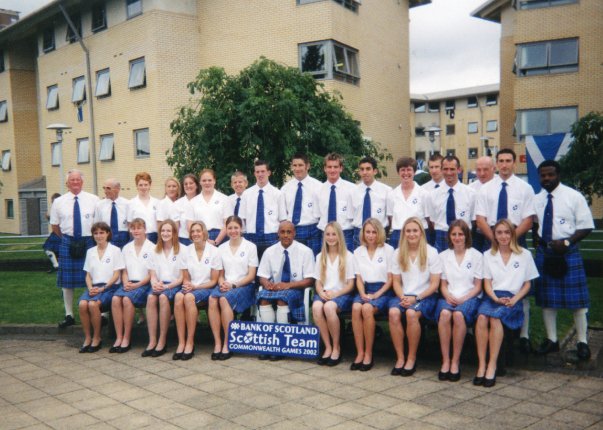
Athletics team at the Commonwealth Games, 2002
Undoubtedly Leslie has many outstanding qualities but in the beginning, and maybe for several years along the way, she would have had examples of how to do the work and when asked she said that there were three main influences.
“Isobel Dunkeld: was club Vice President and then President in the 70’s and 80’s and I learned a lot about club athletics from her.
George Duncan was my mentor. He encouraged me and helped me to recognise my own abilities. He and I ran the SWAL together for many years and were instrumental in making changes to the league. We recognised that clubs were struggling to field full teams so instead of small clubs turning out with a handful of athletes we encouraged clubs to get together and form a composite team thus reducing the league down to one division which created better competition for the athletes.
In fact George and I introduced this long before it ever happened at UK level. We would say that UKA got the idea from us.
Organisation of meetings was probably Margaret Brown. I picked up a lot of tips when she was West District Secretary and I got to know all the officials, constantly asking “Who’s that?”
She has over the course of her career so far collected several honours and awards but three that mean a lot to her are the life-membership of her club City of Glasgow AC which was awarded on 25th October 2000, life membership of scottishathletics in 2008 and the Tom Stillie sword which was presented in 2002 after the Commonwealth Games in Manchester.
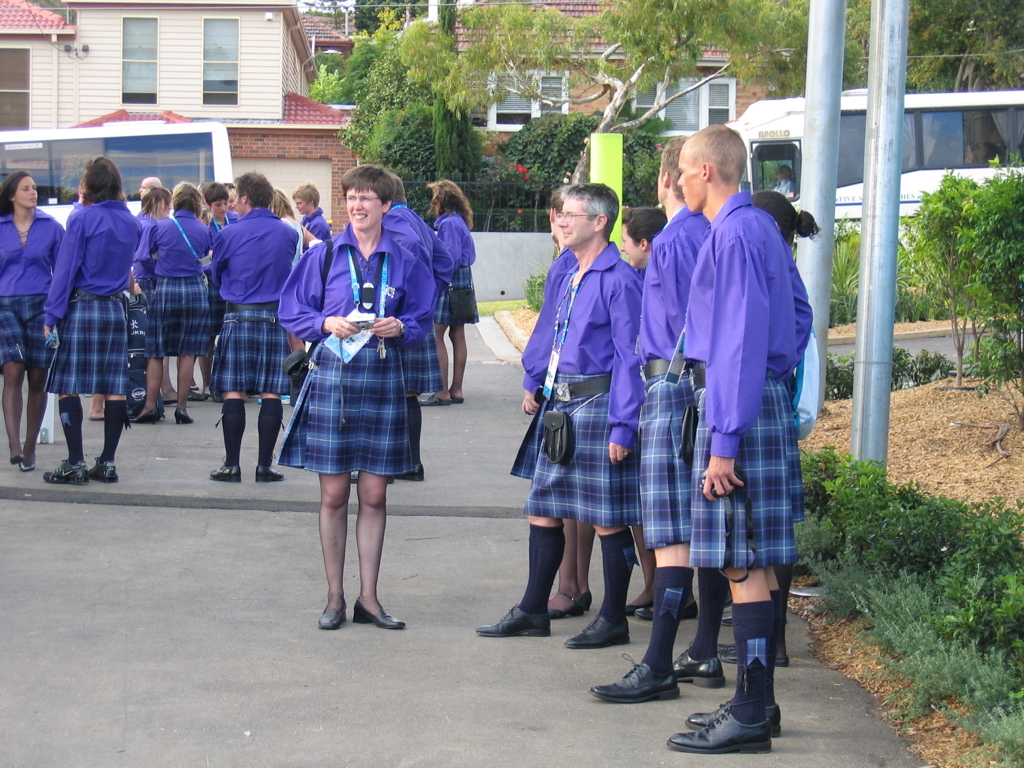
Leslie (centre) at the Commonwealth Games 2006
Leslie started out in athletics in the mid-70’s and started her officiating career in the 80’s – which are 30 and 40 years ago respectively, but she doesn’t seem to have lost either interest or momentum. In fact she is probably doing more and gaining momentum with every passing year.
Rodger Harkins, Director of Coaching at Scottish athletics, said: “I have known Leslie for a number of years. We first worked together on the Scottish Athletics Junior Commission in the early 90’s, as team managers for Scottish U15/U17 teams mainly Celtic Games, U20 teams at that time with the likes of Darren Ritchie, Sinead Dudgeon, Alison Curbishley, Lee McConnell, Ross Baillie, Andy Young, Ian Mackie and many others, U23’s and Senior teams.
I have always had the utmost respect for Leslie and her ability to ensure that the right thing is done. She is a very meticulous person in every detail and always manages to see things from various angles. Leslie is a very passionate lover of athletics and that is probably why she has been, and still is, involved with so many aspects of our sport.”
Hugh Murray, National Coach Mentor for Throws, has also worked fairly extensively with her and says this.
“I had worked with Leslie on Team trips prior to 1999. But it was round about then that circumstances brought our athletics involvement much closer together.
Leslie had been deputy to George Duncan who I believe saw her as his successor, and his untimely death resulted in Leslie being appointed as the Convenor of the Track and Field Commission which back then was a very important role. This coincided with an invitation to myself to take on the role of Director of Performance and Excellence (sounds more important than it was), with Scottish Athletics, as a replacement for John Anderson who was moving down South. So we sat on the Board of Management together. Meg Stone was still National Coach at the time.
It was a time of change at Scottish Athletics as they were in the process of becoming a professional National Governing Body and were changing from being a Federation to a Limited company which carried its responsibilities.
After a pretty lacklustre performance in Kuala Lumpur, we had a challenge. First of all we had to put together a fair and reasonable Selection Policy and process for Manchester 2002. We had to look at what progression over the next three years looked like for our athletes. The Bank of Scotland squads had not been going long but they were starting to produce some promising prospects, Chris Baillie, Richard MacDonald, Mhari Walters, Susan Scott to mention just a few. We also had to ensure that our promising athletes had the correct level of competition in their programme to prepare them for the big occasions. Leslie was key to all these decisions and to the work that went into it. Her organisational and logistical skills never failed to surprise me.
Our first trip to Gothenburg to the European Athletics Calendar Conference resulted in what was to become an Annual event for our Juniors of a match with Cyprus. Israel and Greece. We also achieved small team opportunities through to many European countries including Russia, Hungary, Belgium, France, Estonia, Lithuania and Croatia. Leslie ‘Team-Managed’ many of these trips and I ‘Team-Coached’.
Her organisational and management ability on these trips were second to none. I remember on one trip we had to do a transfer from one terminal to another at Heathrow airport. One young athlete on her first trip was somewhat confused, and said to me, “Hugh how do you know your way from one terminal to another?” As we stepped on an escalator I said to her, “I don’t – but don’t worry dear, when we think we are lost just look in front of you and you will find Leslie pointing you in the right direction.” We stepped off the escalator at the top and to her surprise, not mine, there was the smiling Leslie pointing in the right direction.
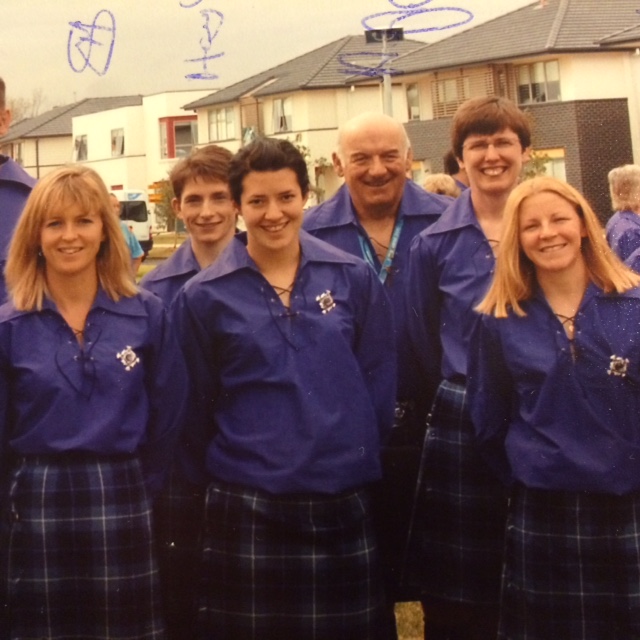
Leslie with Hugh and team members in 2006
Whenever we did trips together Leslie was always the tour rep. In our down time, and that could be substantial after competitions abroad Leslie could always be guaranteed to fix up a sight seeing trip to places of interest be it Red Square in Moscow, the old own of Tallin in Estonia or Reykjavik in Iceland and she was so well informed she could give you a guided tour without a tourist booklet.
Her dedication to Team Manager responsibilities is also an example to others. In 2002 after 2 gruelling days of competition in Manchester at the test event 2 weeks prior to the Commonwealth Games it was 7 pm and I had just escaped the Manchester traffic and was about to hit the M6 for the long drive home. I had on board Leslie and the Team Physio when her mobile phone rang. The call was from one of our more experienced Senior athletes who had been pulled for a drugs test after the last competition of the day. “Do you want a chaperone” says Leslie. I was already turning the car around by the time she told me we were going back. At 10 pm that evening the athlete finally peed. We were all grateful. She went on to team manage her first Commonwealth Games team two weeks later.
Our next big adventure together came with her appointment as Team Manager and mine as Head Coach to the Commonwealth Games Team for Melbourne in 2006. Her Team preparation from 2 years out was meticulous. Melbourne unlike Manchester was an early Spring Games on the other side of the World. Preparing the Team was the biggest challenge either of us had ever faced. We had had a practice with the Commonwealth Youth Games in 2004 in Australia and we drew upon that experience but this was something else. Together with Mary Anderson at Scottish Athletics Leslie spent hundreds of hours in advance looking after all the details such a trip requires. She worked closely with Commonwealth Games Scotland, Sports Scotland the Scottish Institute of Sport, our kit sponsors to mention just a few.
We had athletes leaving Scotland at different times to prepare for the Games in several different locations including Melbourne, Brisbane, and Johannesburg. I went out with the advance party but she made all the arrangements, and “Kept me right” until her arrival with the main party.
In 2010 I was not working for Scottish Athletics and so made my own way to Delhi for the Games as I had athletes taking part. Quite a challenge. Imagine my surprise when clearing Customs at the airport to look up and see Who? That’s right – Leslie Roy, the first person I saw on my arrival in a country with a population of 1.4 Billion. She gave me a hearty welcome and then guided me to the area where my driver was waiting. It turned out she was at the airport as part of her role as Transport Manager for Commonwealth Games Scotland. For anyone who has ever visited the capital city of India you will be aware of the nightmare of travelling across the city. Who better then to have in charge than Leslie Roy. No sacred cow is going to stand in her way as she moves athletes from the Village to the Competition venues.
I could give you so many more instances when Leslie has gone beyond the call of duty in the interests of our sport. The last one will be the cabaret act she put on for us at the Glasgow Games. At Major Championships like the Commonwealth Games there are often time when there is lot of waiting around especially at opening and closing ceremonies, and Glasgow was no different. About one and a half hours for each. To alleviate the boredom Leslie decided to single handedly entertain the troops. and what a great job she made of it. It included, singing, dancing and climbing high structures much to the delight of the Boxers and Rugby Sevens whose chant of ” Go Leslie” echoed in all our ears.
I have known Leslie for almost 30 years I have accompanied her on numerous trips including Team Duties, Warm Weather Training and Official Meetings. Her contribution to athletics is immeasurable she has served the sport as Administrator, Manager with Scottish and GB Athletics as well as Commonwealth Games Scotland, as well as Official and Athlete. She is currently President of Scottish Athletics. But I think if you were to ask her which part of these duties is closest to her heart it would be the Celtic Games. Leslie competed as an athlete in the very first Celtic Games when it used to be an all female event. I don’t think she has missed one since.
As the youngsters would say today – ” Leslie Roy” athletics legend.”
That’s where Hugh’s comments end but I should add that he knows whereof he speaks: his wife is a constant worrier when he travels without her to look after him. He is quite forgetful and she knows better than anyone. When she knows he is going on an athletics trip she asks who is going with him. When he says it’s Leslie, she breathes a sigh of relief and says, “You’ll be OK then.” They’ve never met but they have spoken many times on the phone. That, for me, sums up Leslie’s reliability and reputation.
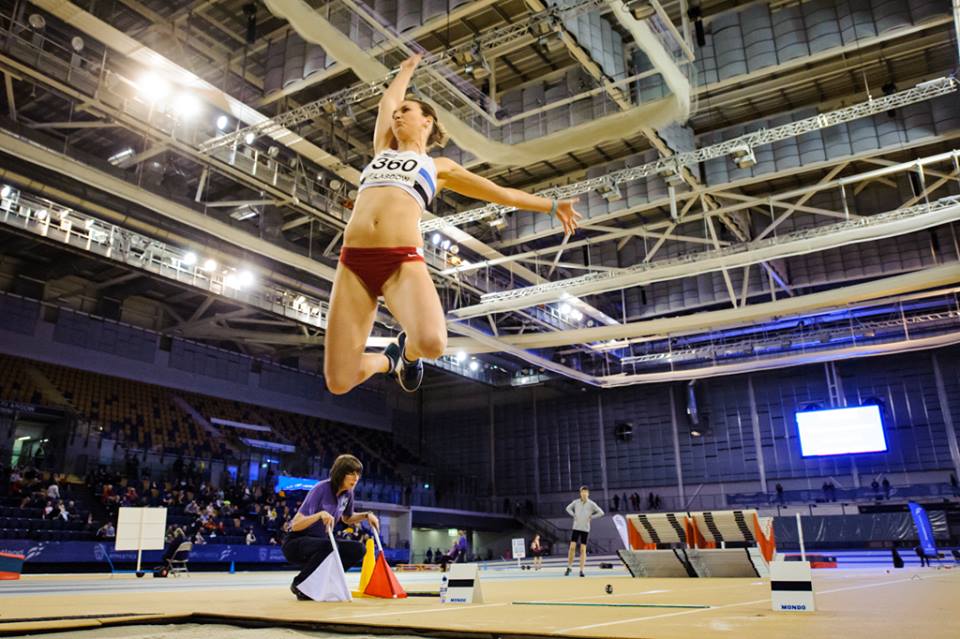
Leslie officiating at the scottishathletics Indoor Open, 2015
Several contractors say on their business cards and advertisements “No job too big, no job too small” and despite all the committees, despite all the Games, despite all the honours Leslie could in all honesty say the same. I have known coaches and officials say that they had outgrown working with young athletes, or with athletes who were not of international class: that could never be said of any really good official or coach and it certainly is not true of Leslie. Two examples, the picture above shows her working in an open meeting in Glasgow in 2015 and until it ceased publication, Leslie could be seen walking round arenas selling copies of the Scottish Athletics Yearbook.
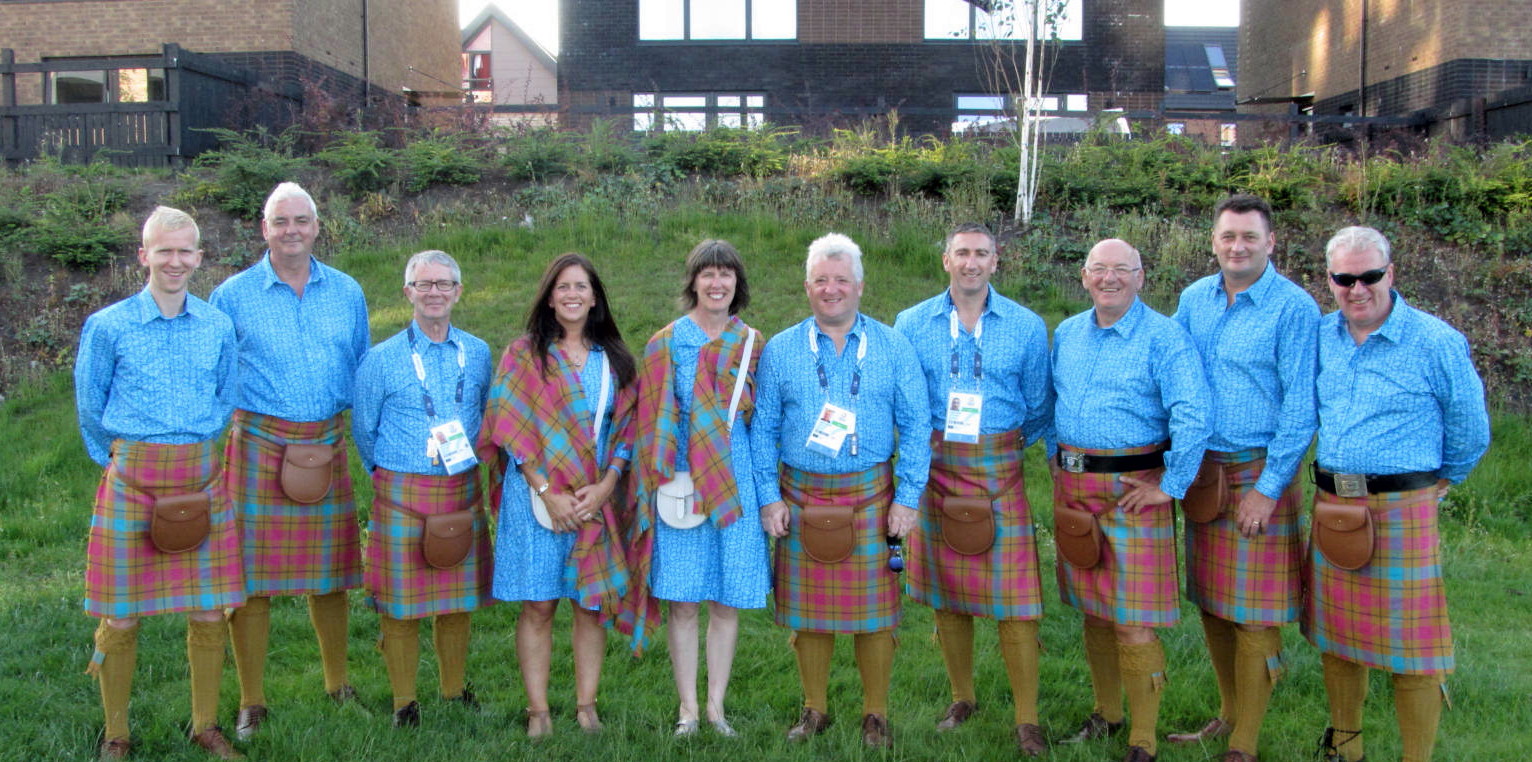
Leslie with athletics team staff, Glasgow 2014
Looking over this amazing career in the sport Leslie replied when asked what her biggest challenge so far had been:
“In some respects taking over from George Duncan as chair of the Track & Field Commission. George was very respected within the sport and was extremely knowledgeable, not just from a Scottish perspective but on any athletic subject UK wide. Due to ill health George was standing down so it was pretty daunting to take over from him.”
“The Commonwealth Games – every Games has been different with different challenges. From purchasing and arranging for 24 fridges to be delivered through security into the Glasgow 2014 village, making arrangements for 300 team Scotland members to get from the closing ceremony to the team party and not leave anyone behind in India and Glasgow and managing the athletics team on the other side of the world in Melbourne at the 2006 Games.”
What was her most rewarding experience as an administrator?
“Probably two things.
The Celtic Games have always been close to my heart, probably because I competed in the very first back in 1976! However it is always great to see the enthusiasm of youngsters starting out on their international journey.
The Commonwealth Games – there have been many great memories, many challenges, lots of hard work and friendships made from the Games I have been involved in but overall it is one of the most rewarding experiences I have ever had.
It has been a wonderful career in the sport – so far. Who knows what the future will bring for Leslie Roy?
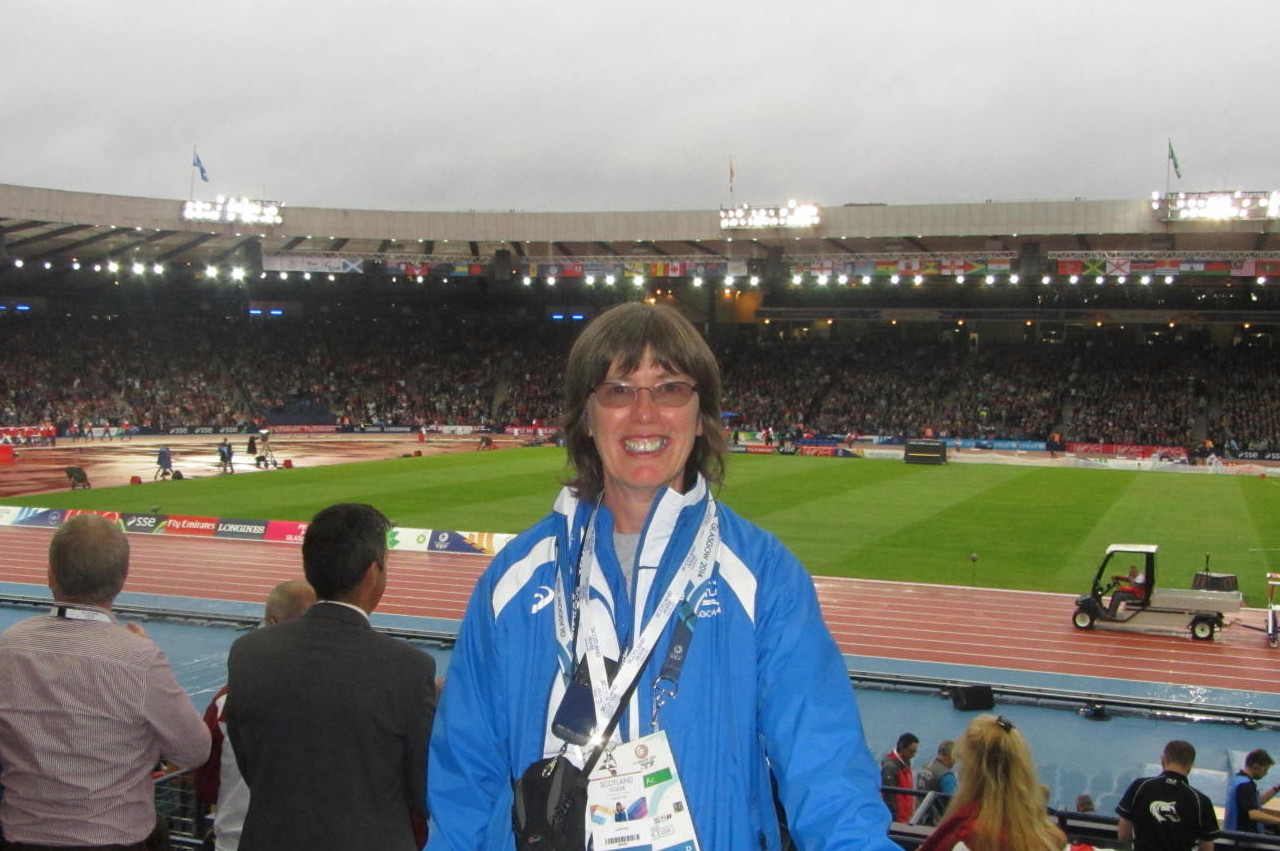
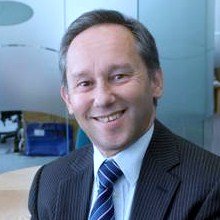
Arnold Black is probably unique in Scottish athletics. Most of us start off as competitors and then move on to other aspects of the sport; many also come into the sport because they are parents of young athletes before they graduate to officialdom and many come in as competitors because their friends bring them along. Arnold is in none of these categories and yet is one of the busiest and best respected: he is a statistician and administrator who came into the sport as such because that is where his interests lay.
He is also probably unique in that there is no obvious successor as custodian of the website and the provision of statistics to the sport’s officials, athletes, selectors and supporters.
When you think of athletics stats two names come to mind immediately: Arnold Black and Colin Shields. He and his colleague Colin Shields are without doubt the best known statisticians in Scotland and also respected throughout Britain for their abilities. Scottish athletics has been well served by the men – almost always men – who collect the figures, make up the ranking lists, keep records up to date and record everything to do with the sport. Arnold and Colin are among the very best of them
They were the mainstays of the Scottish Athletics Yearbooks for two decades and collaborated on the magnificent ‘The Past Is A Foreign Country’ book. They are well suited with Colin being really well known for his work on cross-country and road running (his centenary history of the Scottish Cross-Country Union “Whatever The Weather” being published to great acclaim in 1990), Arnold is more involved in the track and field side of the sport. Their collaborations have generally been of the highest order. The SATS performance tables on the Scotstats website are much appreciated: clubs have started them in scoring their championships, they are used to decide the Scottish club championship and Arnold has been working with Scottish athletics to fit them into a new Thistle Awards scheme.
Although colleagues they are very different people with different backgrounds: while Colin was involved in the sport as a runner and official from the 1950’s, Arnold took a different route into the sport, never joined a club but has become a well known, respected and invaluable member of Scottish athletics.
Coming from the South Side of Glasgow Arnold Black was born in April 1955 and educated at the prestigious Hutchesons’ Boys Grammar School and later at Strathclyde University where he graduated with a degree in accountancy. Thereafter he worked for a number of companies, becoming officially involved in athletics in April 2001 as a non-executive finance director and board director for Scottish Athletics Ltd for almost six and a half years until August 2007 while continuing to advance through his career as an accountant with Alexander Sloan, Chartered Accountants. Currently self-employed he acts as consultant, accountant and adviser to individuals, and charities. He has worked for over 30 years in this field for both business and in the not for profit sector. He has been a mentor for Project Scotland mentoring volunteers with working placement in the charity sector. Arnold is also a charity trustee with Positive Action in Housing and with the MS Weir Trust (which also sponsors some athletes).
Arnold has several awards: in 2005 he received the Tom Stillie Award and he also has the honour of being a life member of Scottish Athletics. He was nominated for this latter honour by the widely-known and highly regarded Leslie Roy and the citation read out on the night of the award at Glasgow’s Marriott Hotel read:
“Arnold is the scottishathletics statistician keeping all records up to date and producing all the documentation required for selection meetings. He has a website where athlete performances can be found as soon after they happen as possible keeping the athletics community up to date.
The Scottish Association of Track Statisticians has documented athletics performances in Scotland for 50 years through the publication of the Scottish Athletics Yearbook. 2009 was the last time the yearbook was published as SATS went online from 1/1/2010. The website produces weekly performances, rankings, athlete profiles, records and documents the history of the sport in Scotland and all this work is produced by Arnold.
All coaches and athletes use the website as results can often be found on it prior to them appearing on powerof10. The website also identifies if a performance breaks a record or if it ranks highly in the years performances.
Arnold is always willing to provide data to the Performance Team and he is and Adviser on the T&F selection committee and a member of T&F commission. He also attends T&F meetings where he can usually be found seeding events.”
Clearly a man of many talents, he is still not as well known in the wider world of Scottish and British athletics as he should be. With this in mind we asked Arnold about his career in athletics and he was good enough to complete a questionnaire on his involvement in the sport as a statistician.
How did you get involved in the sport? Were you a competitor at school? Was there someone who encouraged you? “There was no background in sport – I wasn’t talented although I played football (for enjoyment) and table tennis. I came to the sport through the statistics side (as I learned later did Peter Matthews). I always had a great affinity with numbers and was attracted to all sports – my parents I think were worried that I was going to become a professional gambler, as horse racing attracted my attention for a while, but I settled on athletics and my interest was boosted around the time of the 1970 Games.”
Your Twitter account indicates that you are a Rangers fan: – were you never tempted to be a football statistician? “I keep football stats as well but I’m more attracted to the game than to the stats. I found when I turned to athletics that there weren’t many people doing it.”
Can you give me some dates – when you joined SATS, when you became involved with Scottish Athletics (or was it the SAAA then?) “I used to go to athletic meetings and take a note of the results and keep my own ranking lists. I think I probably eased off when I was studying but picked it up again in the early 1980’s. When Scotland’s Runner came out for the first time in 1986, you’ll find a letter from me in issue 2 bemoaning the poor coverage of results. When they started including ranking lists (1988) it was for women (by Ian Steedman) and junior men (Jeff Carter). When I asked about senior men, they asked if I would do it for them, and my first lists were published at the end of that year.
By that time (I’m a bit hazy on dates and sequences) Colin Shields had sought me out and I had joined the SAAA selection committee, under the chairmanship of the wonderful George Duncan. In 1989, the SAAA formed a Records and Statistics Sub-Committee, convened by Colin, to update the SAAA records and Colin and Myself have been on that Committee to this day, currently with Graham McDonald. Shortly after, I think I was appointed by the SAAA as their official statistician.
The SATS Yearbook had not been published since the 1983 edition and in 1992 I was part of a group who had expressed interest in reforming the SATS. The membership of SATS at that time (as in the 1993 Yearbook) included Colin Shields, Dudley Brotchie, Ritchie Bunker, Robert Carrie, Fraser Clyne, Norrie Griffiths, Derek McGinley, Margaret McInally, David Morrison and George Young and we put ranking lists together to restart the Yearbook in 1993.
At the turn of the century, I attended a Scottish athletics AGM by request from Colin to ask questions on a rather dodgy set of accounts. By that time (since 1993) I was a partner in the long-established Glasgow Chartered Accountancy practice of Alexander Sloan. Following the meeting, the finance director resigned and I was asked by David Joy if I would replace him. I acted in that (voluntary) role for a few years and stayed on the board for a year or so after. I resigned in 2007 after I fell out with the board over new selection procedures they were intent on bringing in.
Since then, I was on the track and field commission for a few years but came off that and reduced my work as an official (seeding). I retain my roles as adviser to the selection committee and on the records committee.”
How much time do you spend on statistics? “Varies – depends on what I’m researching. I tend to get a bit obsessive when I’m doing it. I guess it’s about 10 to 20 hours a week.”
Do you have a particular area of interest as a statistician? “My main aim is accuracy so it doesn’t matter what the event is. I also like researching the historical stuff – for the book and for the website. If you were to pin me down to favourite events, then it has to be the 800/1500m.”
How did you get involved in the website? Do you have a collaborator or army of collaborators to help? “The sales of the yearbook were falling and the last yearbook (2009) sold only 200 copies. The advent of the internet and the Power of 10 had taken away from the attraction of the yearbook and I really didn’t want to publish it when we were having such difficulty selling it. But I didn’t want to give up what I was doing and so decided to do the website. Alan Scobie helped set it up in 2010 and I’ve been doing it ever since. Everything on it (apart from the occasional submitted articles) is by me. No collaborators, although if someone was interested that would be great. In 2015 the website got 33, 664 visitors, visiting 2.47 pages on average. If this current January figures carry on, then 2014 will get over 40,000 visits.”
Why did you start the forum? “Initially I didn’t want a forum as I feel they can be dominated by a few individuals. I’d hoped people would be willing to submit articles but that never really took off. When the Unofficial SAL forum announced last year that it was winding up, I thought that it was important that a vehicle like it be continued as a voice to question issues in the sport. I had a look around the internet to see what was involved, found out that it was quite easy, and so offered to continue the forum on the scotstats site. It would be nice if we got more people joining and more contributing, but I’m quite happy with the way it has gone.”
How did you and Colin get together? How often do you meet up these days? It would have been mid-80s when he approached me for the SAAA selection committee, I think. We live less than a mile apart so it was easy to meet. We worked closely on the book after which we both probably needed a break from each other. I see him mainly for our quarterly records committee meetings but speak to him at other times.
Any more books in the pipeline? I’m hoping Colin and I can collaborate again later this year to put the book up on the website and continue to maintain and update it. But nothing else planned.
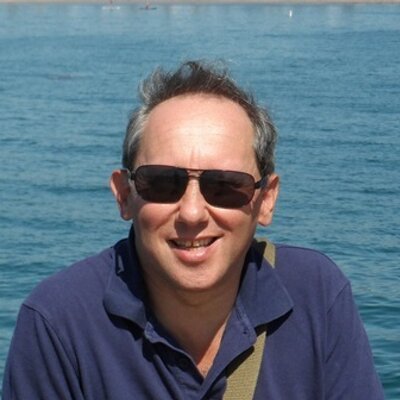
Nobody has a higher regard for Arnold than Colin Shields who said that their friendship goes back to the days of ‘Scotland’s Runner’: when the magazine folded they got in touch about SATS and the reintroduction of the annual yearbook. Arnold took over the administration side being responsible for the production and printing of the yearbook (collecting stats, typing the whole thing out, getting the disk to the printers) while Colin did the summaries and did the advertisers since he knew most of the road race organisers. They worked together on the content with Colin doing the summary of each event that appeared at the head of the statistics. We speak of the ‘Scottish Athletics Yearbook’ but we also need to look at just what the two colleagues did.
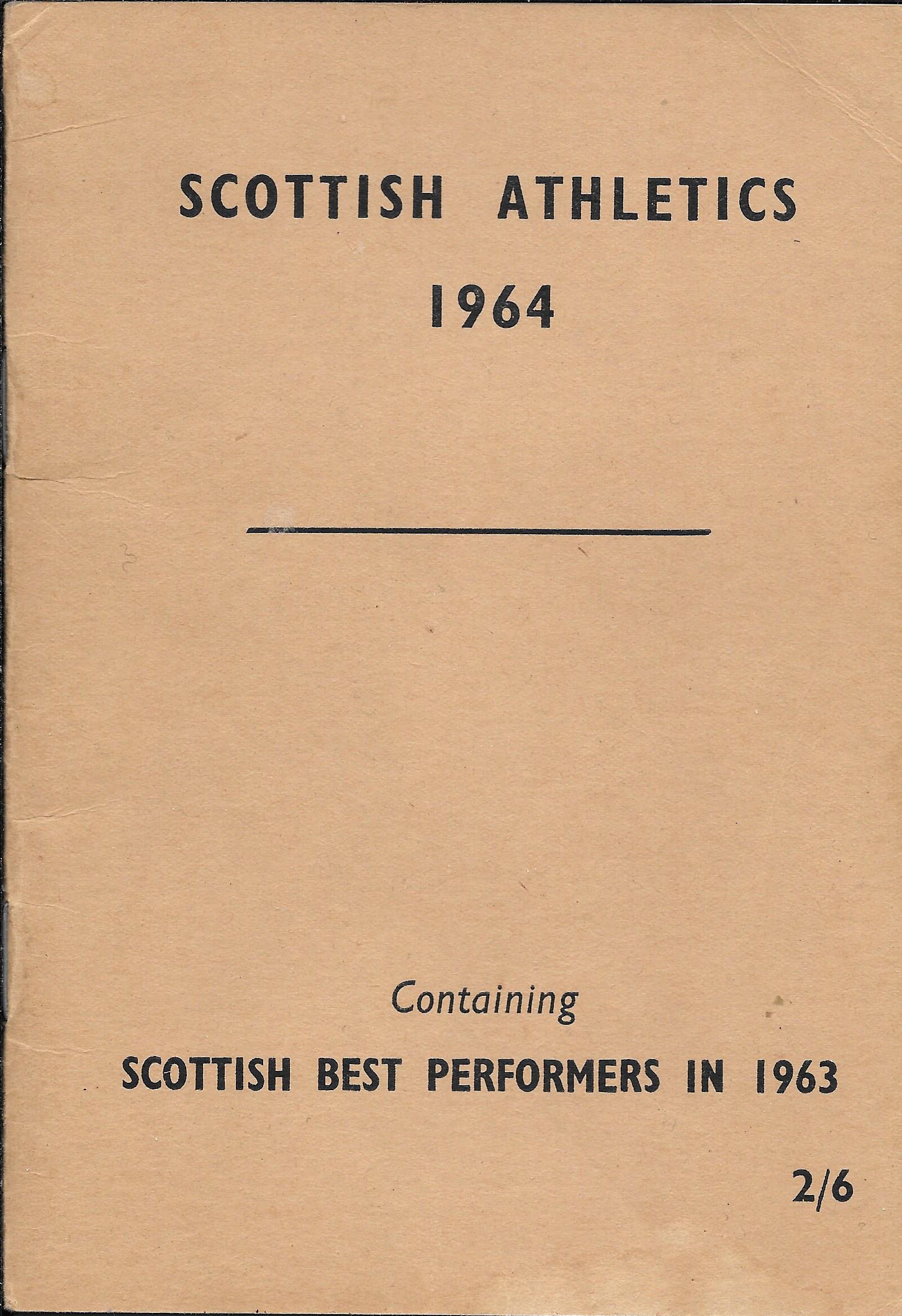
The first statistical booklet that I bought was ‘Scottish Athletics 1964’ and it cost 2/6d (12 1/2 p). It was smaller than A5 in size and ran to 22 pages plus the cover. It had been produced by Simon Pearson and was the fifth consecutive booklet that he had compiled. It covered only the top senior men and women and the depth in each event varied – for instance there were 33 in the 880 yards and 12 in the steeplechase. It was a valuable booklet in that it listed the top domestic performers and also had the marks of Scots living abroad. By 1967 he had enlarged it to 40 pages with a picture of Jim Alder on the cover. It covered Senior Men, Juniors and Youths (U17), Senior Women, Intermediates and Junior Ladies and Scots living abroad. The lists had one entry per athlete and the typical event section had (a) comments on the event; (b) results of championships; then for each athlete there was name, club, time/height or distance, position in the competition and date the mark was achieved. But Simon was emigrating later that year and he appealed for someone to continue the project.
It appeared the following year (Scottish Athletics 1968) thanks to the efforts of Dave Keddie, Ian Steedman and Ian Cameron. The information for each athlete was as outlined above. It was more of a book and ran to 83 page and was liberally illustrated with a host of advertisements. Edited by Duncan McKechnie who noted that this was the 24th edition of the yearbook and thanked Ian Steedman, Jeff Carter and John Softley for compiling the lists and various others who had taken care of the production, advertising and photographs. The content had expanded to include all-time lists. records and best performances, commonwealth games results, international matches results, league tables, championship results and of course best performances for 1982. It really was a good production but there were no more after 1983 until Arnold and Colin set about producing the book again in 1993 following the demise of the ‘Scotland’s Runner’ magazine which had been assiduously printing ranking lists, etc, since 1986.
The first joint production was called ‘Scottish Athletics Yearbook 1993 – statistical review of 1992’. It ran to 104 pages, by far the biggest ever, and included a lot of new material. There were Scottish national, native and all-comers records (mark, athlete venue and date) for all age groups, rankings (men, Juniors, Youths and Senior Boys; women Intermediates, Juniors, Girls and Minor Girls). For each event there was a comment on the event during the year and the standards within the event plus results of all district, schools and national championships, and then the individual rankings. This was another area where Black and Shields took a lot of trouble. There were separate columns for performance, name, club, date of birth, place in the competition, venue and date. Seven details for each mark. But they also began each list with the top 20 performances by Scots which meant that every good performance by any athlete could be seen, event dominance could be seen by the number of times a particular athlete appeared in the top twenty – eg in the 800m, Tom McKean had 12 times listed indicating a clear dominance. The book was a real pleasure to read and contained so much information. They went on in 1994 to turn out a book with a square spine that ran to almost 200 pages – almost double the size of the year before. SATS that year consisted of those listed by Arnold in his reply above but his introduction contained the interesting phrase “we have compiled these lists by pestering meeting organisers in our attempt to obtain 100% accuracy”, giving a clear indication that their role was more than a passive pen and ink task in the comfort of their front room. By now the yearbook included Commonwealth Games results, records, all-time best performances, 1993 Scottish champions, 1993 ranking lists, Veterans, Road and Cross-Country, 1993 international results, 1993 club competitions, indoor records and 1992/93 indoor ranking lists. There were many photographs and a number of advertisements.
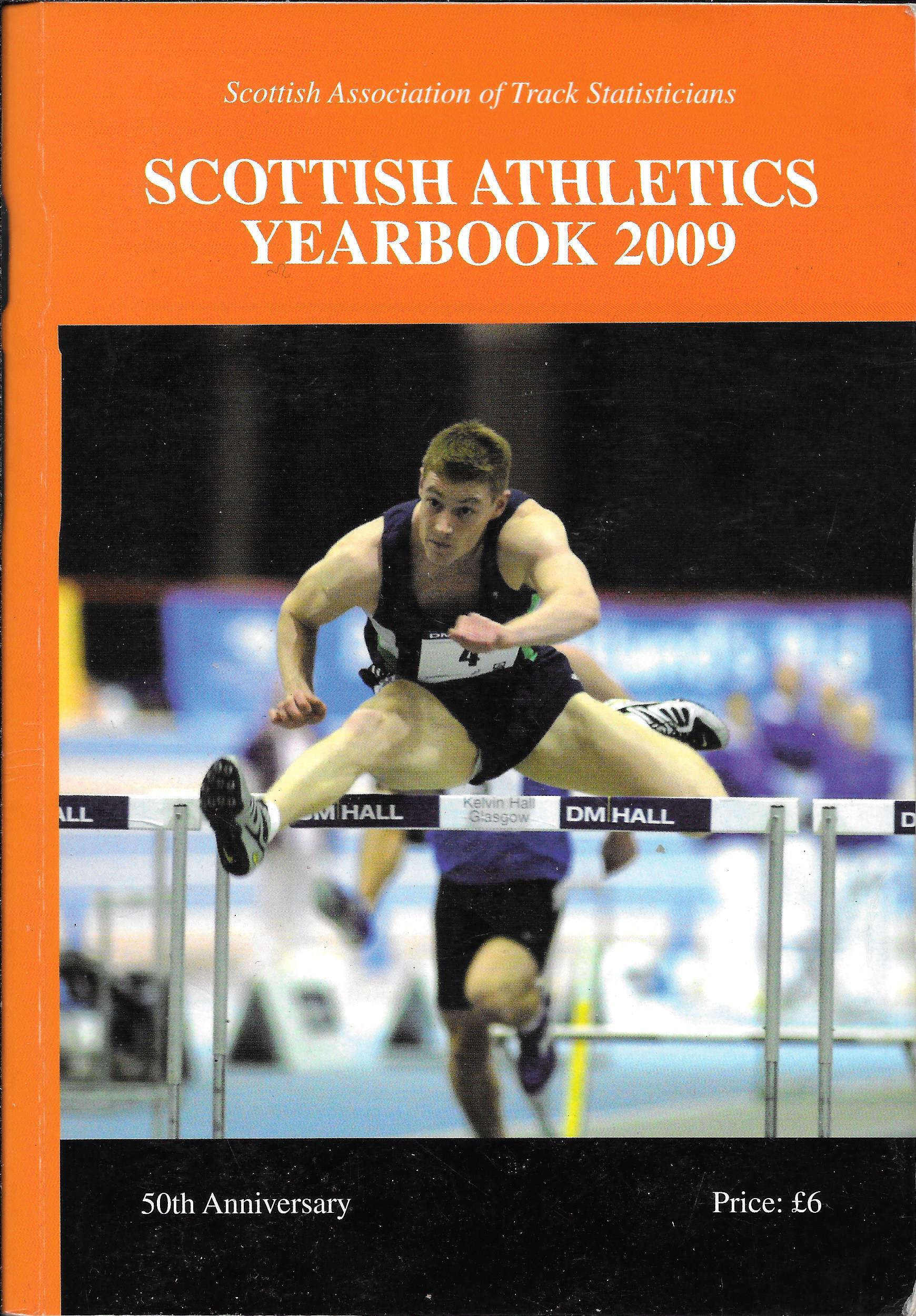
The yearbook continued to grow – demand was high and it was eagerly looked forward to from about February. I used to buy three copies – one because athletes always wanted to refer and would sit around before or after training scrutinising it – on warm weather training breaks it was always at any time of day being picked over by idle athletes – officials at sports meetings often wanted to look at it to check what the record for a particular event was, the second was to use myself, and the third was to sit on the shelf in case of emergency. By 2009 it was 322 pages long with a glossy cover, it cost £6 (compared to £2 in 1993), contained colour photographs and many advertisements as well as the information sought after. Contents by now included athletes of the year, club of the year, My Most Memorable Race (Lawrie Spence), The Vicissitudes of Olympic Year (Ron Morrison), Performance Trends 2002-2003, Scottish records, All time best performances, Scottish Champions 1989-2008, 50 years of Scottish Rankings, Guide to 2008 rankings, Senior and Junior Men’s Ranking Lists, Photograph Section, Senior and Junior Women’s lists, Scotland’s Jumping Wiomen, The Lessons of History (Doug Gillon), In Memory – John Innes, Masters Athletics, Road and Cross-Country, International Results 2008, Club Competitions 2008, Indoor Athletics, Index to Advertisers, Commonwealth Games 2010. So much in there – note that from three advertisers back in the 60’s there were now so many that a special index had to be included! The articles on the sport were always welcome but the guts of the book was always the performances by the athletes and this yearbook was the authoritative focal point for all of these. It really was a wonderful production and real shame when it stopped. A very good reference book had become in the hands of SATS, under the Black and Shields leadership an essential tool for anyone interested in athletics.
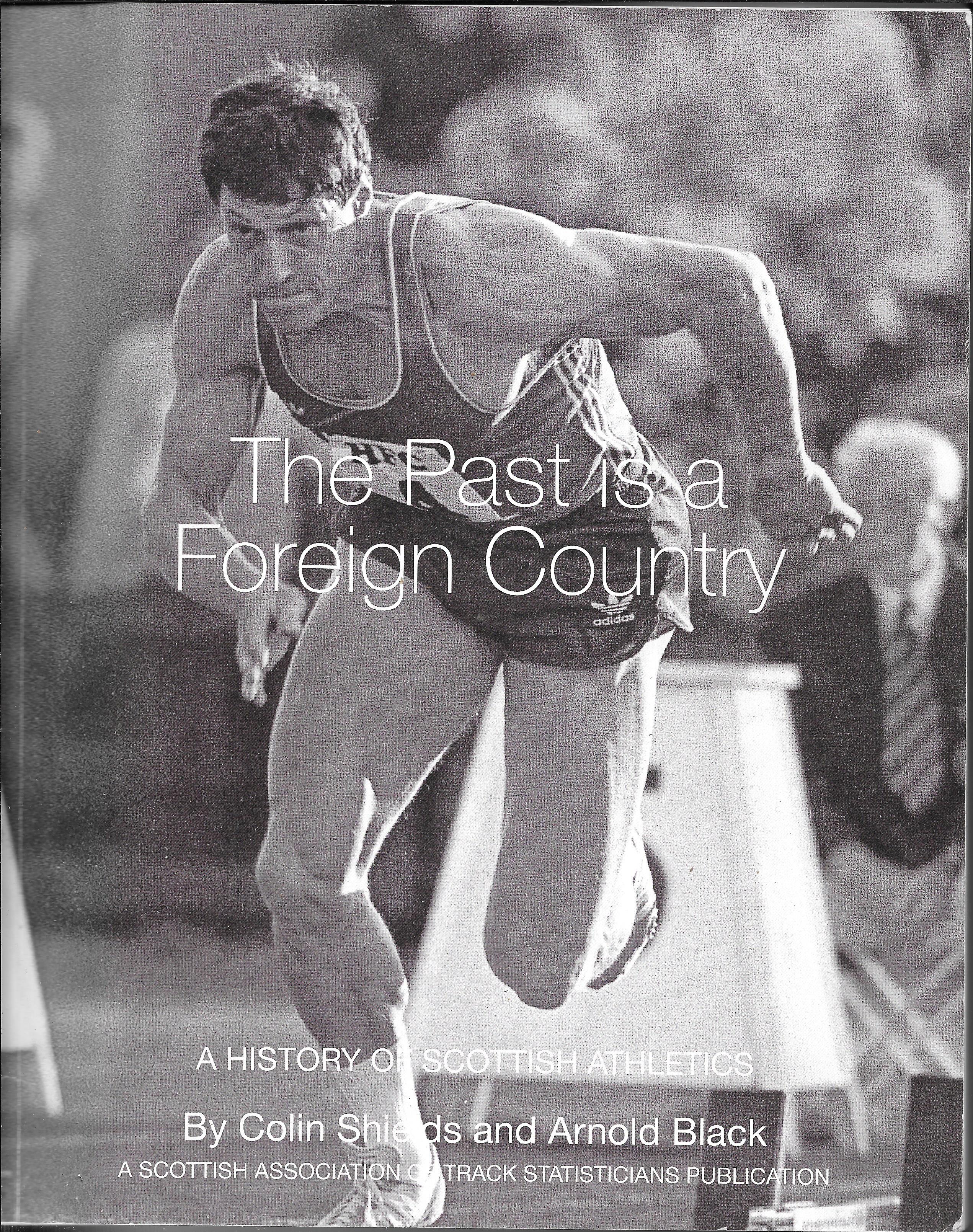
As far as “The Past Is a Foreign Country” is concerned, both men wanted to put together a track and field book that would rival and complement the work done on ‘Whatever the Weather’. When they sat down to draw up the list of 100 names for part three, they agreed that every track and field event should have at least one representative. They each – separately – listed their own top 100: 86 names appeared on each list – a degree of agreement that it would take a statistician to calculate! But we’re not finished – after looking at each other’s remaining 14, they then listed their own candidates and found that they had agreed, sight unseen, on ten. Quite amazing. Not surprisingly Colin, like others I have spoken to, finds Arnold very easy to work with.
An interesting fact about the yearbook is that every member of the Scottish team for the Commonwealth Games in Glasgow in 2014was given a copy when the team assembled at their Kilmarnock HQ, courtesy of Scottish athletics: they saw what they had to live up to!
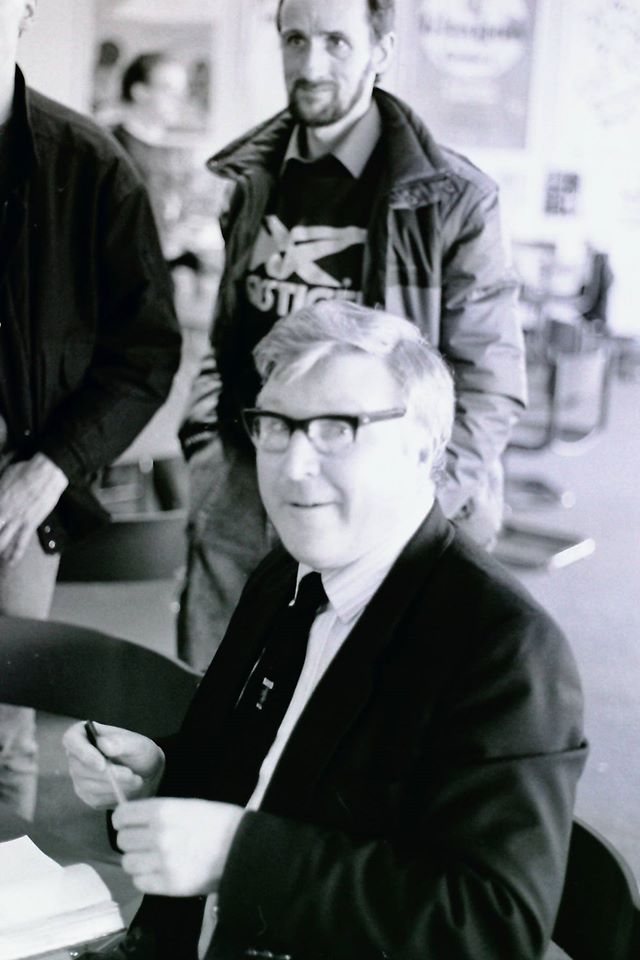
Colin Shields (foreground)
So far we have only been looking at Arnold’s activities in Scotland but a statistician as good as he is will always being demand. Arnold is a member of NUTS – SATS older brother – and supplies statistics to a number of other bodies including Trackstats. In this context he has been presented with the prestigious Richard Szretzer Award an international award for statisticians. This was hosted by the NUTS at a Dinner in London and Arnold was invited down and the presentation was made there. I asked his colleague, the highly-regarded international statistician Bob Phillips who stayed with Arnold at the time of the Commonwealth Games, said “Of course, I’d known about the excellent work that Arnold and Colin Shields had been doing regarding the history and statistics of Scottish athletics, now supplemented by the invaluable Scottish distance running website, but I had never met Arnold. In recent years, having moved to South West France to live, my contacts with domestic athletics in Britain had vastly decreased, but I still regularly attended major international meetings in various countries and I was determined to get to at least a couple of days of the 2014 Commonwealth Games, having first attended that gathering as a very youthful enthusiast in Cardiff in 1958.
Arnold generously provided me with accommodation at his apartment in an appealing residential area of Glasgow. Not only that, but he and Colin arranged a sociable evening at a nearby restaurant for visiting members of the NUTS. That same year the wittily entitled “The Past Is A Foreign Country” was published to add immeasurably to our knowledge of the sport in Scotland.”
Of course there’s more to Arnold than athletics as you will see when you visit his Twitter account: oh, yes, he’s well into the twenty first century. It’s not just the website for scotstats – there is also a facebook page. His twitter address is https://twitter.com/ArnoldBlack1 where he says he describes himself as “Rangers fan, athletics historian, chartered accountant. My tweets will mainly be about Rangers and Scottish athletics, not so much about accountancy.” He didn’t realise that he’d have fellow Rangers fans following him and tweeting about the club’s finances! Go and have a look and check out the scotstats facebook page at https://www.facebook.com/pages/SATS/179337328763234 – it is well worth a visit and has not just more information on the sport but different information with lots of photographs.
Arnold has other interests out side the sport of course – indeed athletics was a form of relaxation when he took it up while working as an accountant full time, and when he was younger he played table tennis: a sport in which his father was a good standard player who represented Glasgow. Although he still does work professionally with selected clients, he reads a lot, mainly using his Kindle, and likes to travel. Indeed he has a property in Spain where he spends some time every year.
Arnold will be a difficult act for anyone to follow.