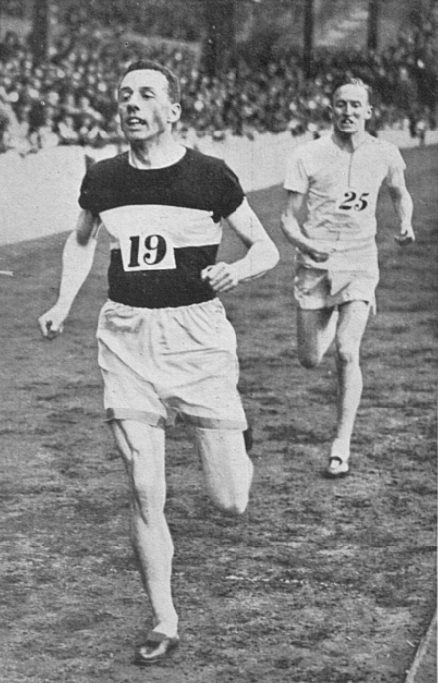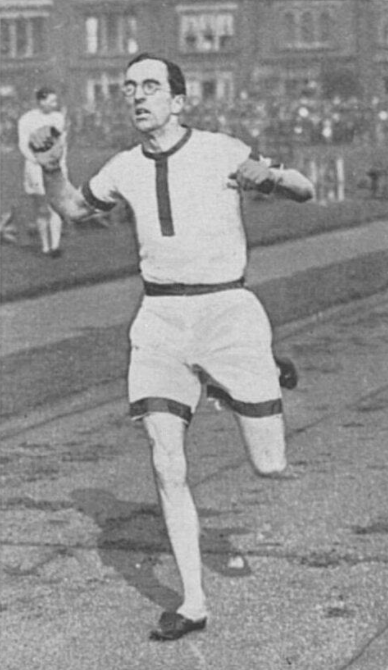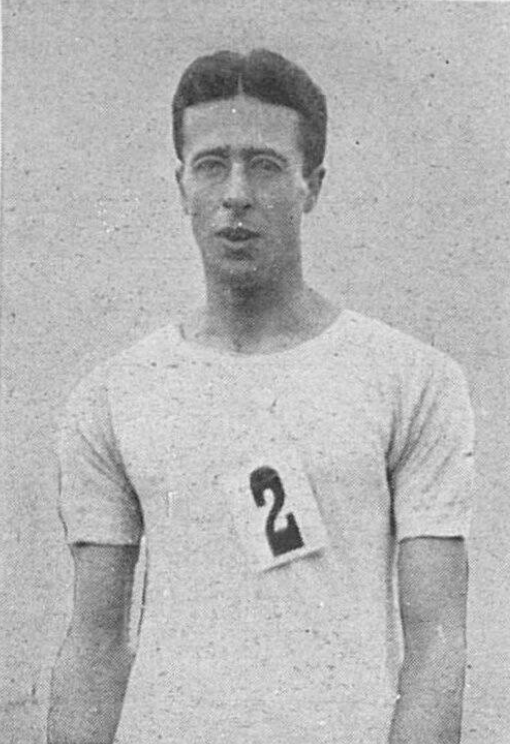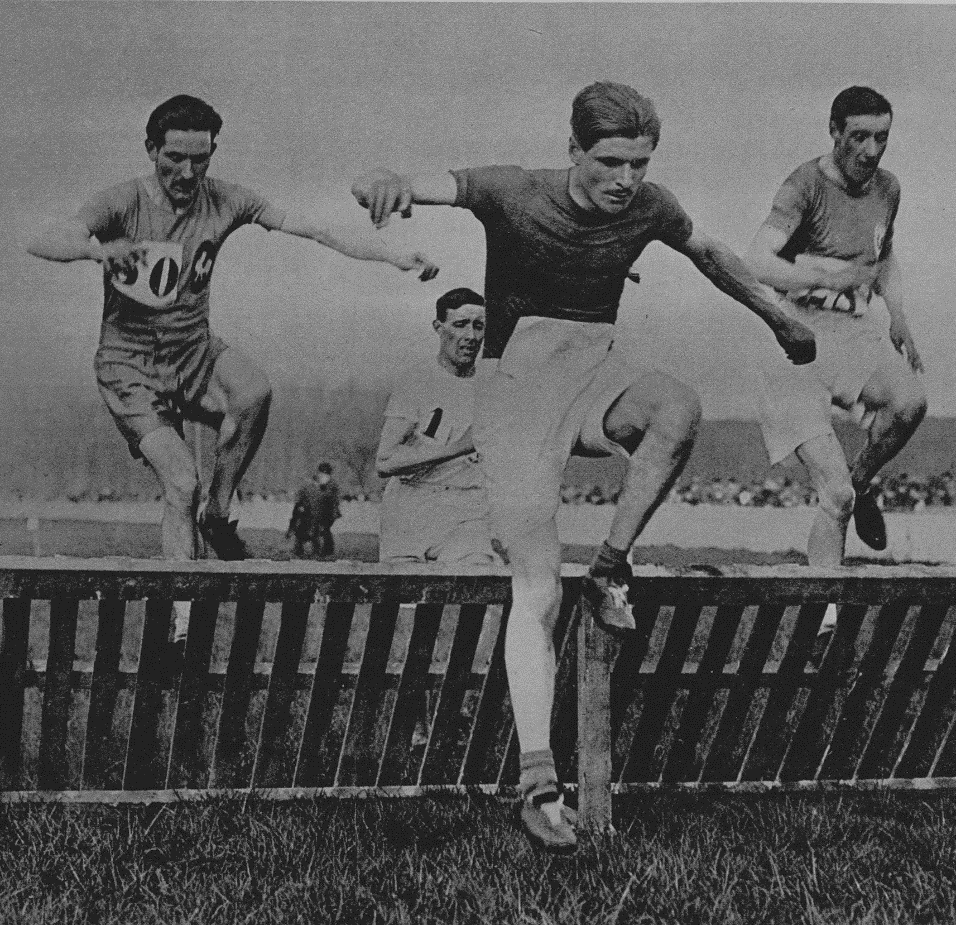
Scoto-Irish International: 1895, 1896

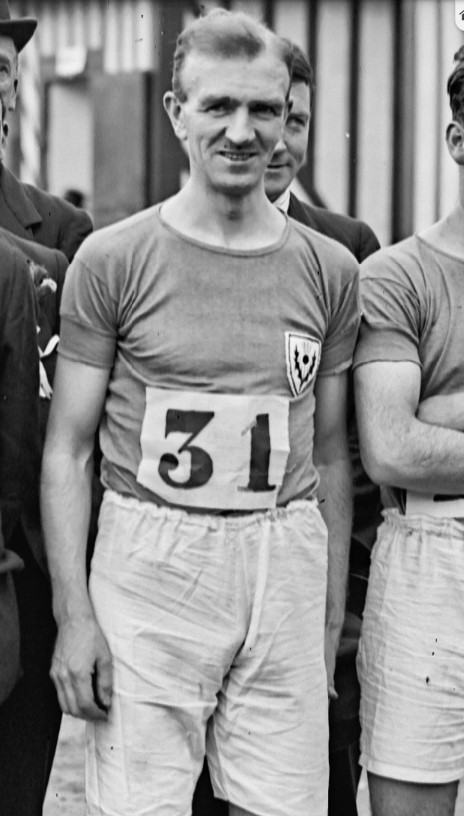
AR Downer

Athletes always want to test themselves against the best opposition that they can find.   The Scottish Amateur Athletic Association was founded in 1883 and it was natural that after testing themselves against the best in the country, the top athletes would want to go further afield in search of competition.   So it was that in 1891 the international with Ireland was born.   The full story is told in “Fifty Years of Athletics” at  http://www.anentscottishrunning.com/scotland-v-ireland-a-retrospect/   by DA Jamieson. 

“In July 1891 a special meeting of the General Committee of the Scottish AAA was convened to consider a proposal which had been received from the Irish AAA inviting a team of representative Scottish athletes to take part in a series of races against selected representatives of the Irish Association.   The distances suggested for competition were 100 yards, 440 yards and One Mile, and it was further suggested that this series of races should form the crowning feature of the Irish All-Round Championship Meeting which was to be held at Balls Bridge, Dublin, on 15th August of that year.   The proposed conditions of the contest were that the Irish Association should provide the prizes, whilst the Scottish body were to defray their own expenses.

In spite of its allurement, however, this invitation was declined by the Scottish AAA; but the potentialities of such a contest were perceived by the Scottish executive, and accordingly the Honorary Secretary was instructed top open negotiations for the institution of an international contest on a broader basis than the original suggestion – namely, to embrace all championship events.   The question of guarantees was also raised, and it was suggested that these should be given by each country in turn.   In this manner, then, was laid the foundations of an International athletic contest with Ireland, which was to continue without interruption for nearly twenty years.   But although the foundations were truly laid in 1891 through force of circumstances the edifice itself was not erected until four years later.

It was not until December of 1894 that overtures were again made by the IAAA to the SAAA with regard to instituting an annual athletic contest between the countries on the lines of the Oxford  v   Cambridge match, in which the odd event in eleven items was to decide the winner.

This  proposal was cordially accepted by the SAAA executive with the following suggestions:   (1) That the first contest be held in Scotland;   (2) That a guarantee be given to the visiting team to cover expenses;   (3) That the programme of events to be decided should be the Scottish championship events – the Ten Miles excepted; each country to have two representatives in each event, with three in the Four Miles race;  and (4) that in Scotland the Hammer to be thrown in the Scottish style and in Ireland under Irish rules.

In the main, agreement was reached on all these points.”   

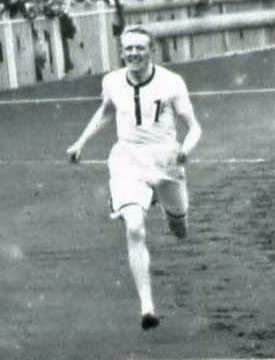
The first international was contested on 20th July, 1895 in Glasgow and from the Scottish point of view, the star of the meeting was Alf Downer of the Scottish Pelicans AC.   Downer won the 100, 220 and 440 yards and in a contest where the winning team was decided by the number of events won, all three counted for the SAAA team.   The report in the “Glasgow Herald” read as follows.

“As a display of athleticism the contest between Scotland and Ireland is the richest of the season; indeed in some respects it will stand out as the most brilliant example of running and physical effort that has even been witnessed in Scotland.   For proof of this one only has to analyze carefully the results of the different competitions, and he will find four performances which surpass all amateur efforts in this country, and another two which tie with all-comers records.   The only regret with regard to these performances is that three were accomplished by Irishmen, the other one being the work of AR Downer who has done so much this season to raise Scottish athletics in the eyes of other nations.   The Scottish Pelican’s triple performance on Saturday is perhaps the first ever accomplished by an amateur athlete.   He won the 100 yards in 10 seconds, which ties with the Scottish record; in the 220 he reduced his own record – 22 2-5th seconds – which he made a week ago today at the Edinburgh University Sports by a fifth of a second; and in the quarter he equalled JM Cowie’s record – 51 1-5th seconds.   These performances speak for themselves; they are unique in the sense that they have never been equalled or even approached at one competition by any amateur in Britain.   TF Kiely, the all-round champion of Ireland, took part in three events – (1) the hurdles in which he ran third; (2) the hammer in which he was second with 100′ 6″; (3) the long jump in which he lowered the Scottish record by doing 22′ 2 1-2″, the previous best being 21′ 11” by T Vallance which stood since 1881.   As an individual effort, these three performances rank next to Downer’s for general excellence.

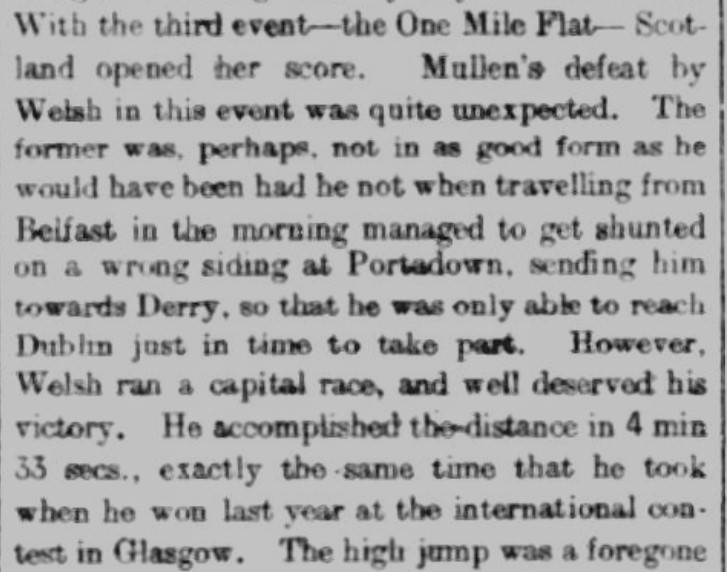
JJ Mullen of the Elysian Harriers comes next with a first in the four mile and a second in the mile.   H Welsh created a surprise by defeating Mullen in the mile; but as the Irishman was recovering from a sharp illness, it is evident that this, like the majority of events, would have fallen to our rivals.   We cut a poor appearance in the half mile; indeed but for Downer, we would have been very badly beaten in the track events.   It was he who saved Scotland from a very humiliating defeat.   Even in regard to second positions, Ireland showed to much better advantage than Scotland, in fact we may regard ourselves as exceedingly fortunate in only losing by 6 events to 5 as all round the Irish team disclosed greater ability than the Scots.   

The meeting we have only to add marks a new and interesting departure in International athletics, and from the impression which the whole display created on Saturday, we venture to predict a brilliant future to our match with Ireland.   The event on Saturday was shorn of much of its brilliance on account of the athletic rupture which deprived Scotland of several of our best men, but by next year it is to be hoped we will be living under happier conditions, and that with a thoroughly representative team we will be able to reverse Saturday’s result.   The SAAA scored an athletics success on Saturday at Parkhead, and although the financial returns were disappointing, it is well known that the holidays and political excitement kept many away who would otherwise have been present.”

The “Courier” had a slightly different slant on the day’s procedings:

The results on the day were:

100 yards: 1. AR Downer (S)  10.0 seconds; 2. P McNamara (I)  220 yards:  1. AR Downer (S) 22.25 sec; 2. JT Magee (I)

440 yards: 1. AR Downer (S)  51.2 seconds;  2, JT Magee (I);   880 yards      1. J Archer (I)  2:04.2; 2. J Stirton (S)

Mile: 1. H Welsh (S) 4:33;  2. JJ Mullen (I);   Four Miles: 1. JJ Mullen (I); P McMorrow (S)

120 y hurdles:  1. JAE Mulligan (I) 16.8 seconds;  2.  AL Graham (S)

High Jump:  1. JM Ryan (I) 6′ 1″;  2.  C Fenwick (S);   Broad Jump:  1. TF Kiely (I) 22′ 2 1/2″;  2. P McNamara (I)

Putting the Weight:  1. D Horgan (I) 44′ 7′;  2. JD McIntosh (S);  Throwing the Hammer:  1. D Ross (S)  101′;  2. TF Keily (I)

Hugh Welsh

The split referred to above was about a dispute within Scottish Athletics when there were two rival bodies – the SAAA and the SAAU – in existence in 1895 and 1896 with only SAAA athletes eligible to compete in this fixture.     The 1896 meeting between the two countries was held at Balls Bridge, Dublin on 18th July and the Scottish team was weaker in that Downer was not available.   With a year’s more running behind him, Welsh was running better but the final score was Ireland 7 Scotland 4 events.

The Irish papers previewed the event for the entire week leading up to it and it was an event that both countries were looking forward to.   The Cork Examiner not only had a short report on the meeting on Monday 20th but a short detailed account of every single event with every athlete’s times and performances noted.   The report read:

“INTERNATIONAL ATHLETICS

Ireland Beats Scotland

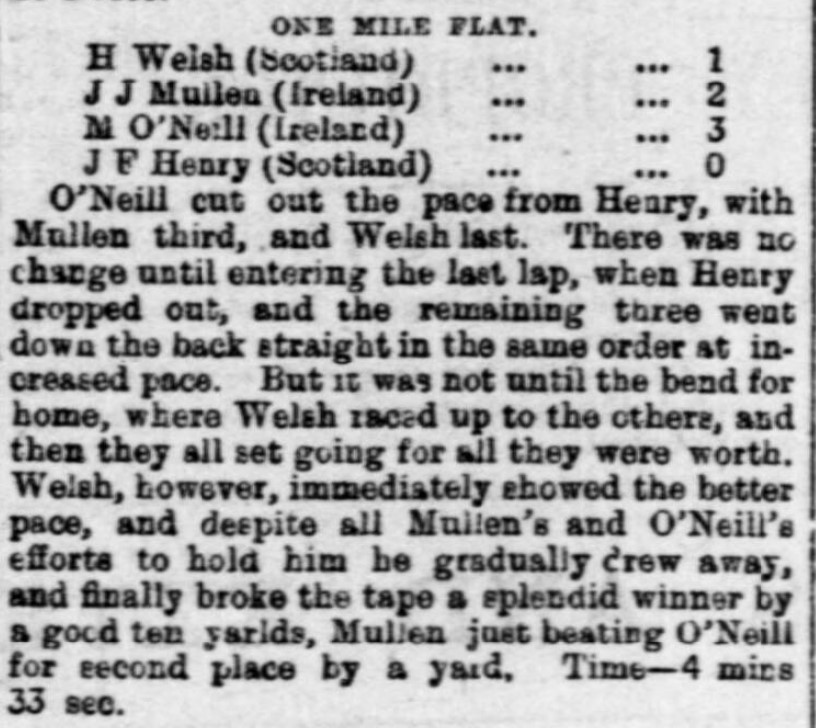
Yesterday the great Inter National contest between Ireland and Scotland was decided at Balls Bridge.   Last year at Glasgow when the countries met for the first time Ireland won by six events to five, and yesterday the victory was repeated when the Irishmen secured seven to the Scotchmen’s four.   The day was very favourable to the affair which was patronised by an excellent crowd.   It was almost a foregone conclusion that the Ireland would win, but still the contest was exciting to the very end.   The event which roused most excitement was the 1 mile at which the Scotchman Welsh beat Mullen last year and yesterday he repeated the performance in gallant style, proving himself a really wonderful runner, of which he gave another proof later on when he won the half-mile in rare fashion.   Mullen, it should be said, was not in good form, and consequently did not turn out in the four miles which saw the closest finish of the day.   O’Neill, the County Limerick man, ran a very plucky race, and it was only after a desperate set to that the Scotchman Hay beat him by about a yard; but it must be said that with a little more experience, O’Neill might have reversed the result.    Horgan, of Banteer, of course, won the shot, and Ryan, of Tipperary, gave a grand exhibition in the high jump.   It was his first appearance of the year, and in fact it is said to be his first time to wear a shoe.   For all he was almost at his very best, as evidenced by the fact that he cleared 6′ 2″, and it may be said that he actually cleared 6′ 3″, but the wind blew down the bar.   It was a great disappointment that Flanagan did not turn up for the Hammer, for so far he has never competed in Dublin.   In the quarter mile Meredith tied with the Irish record, which he also tied with on Whit Monday last.   The other events are dealt with in the details.”

As an example of the details of the events Welsh’s win in the Mile is reproduced below:

Every event was covered in the same fashion.   Mullen? The Irish Daily Express explained what had happened to Mullen in the Mile when it reported 

The Glasgow Herald however described the race as a very bad one from an Irish point of view with O’Neill repeatedly getting in front of Mullen and not letting him past.  It also described Mullen as ‘palpably unfit’ which maybe got nearer the truth of the matter.   Results :

100 yards: 1. ND Morgan (I) 10.6 seconds; 2. H Barr (S) ;   220 yards:  1. ND Morgan  (I) 23.4 seconds;  2.  H Barr  (S) 

440 yards:  1. JC Meredith (I) 51.0 sec; 2. GC Thomson (S);  880 yards:  1. H Welsh (S) 2:01.4; 2. JE Finnegan (I)

Mile:  1.  H Welsh (S) 4:33.0;  2. JJ Mullen (I);  Four Miles:  1. RA Hay (S)  22:19;  2. M O’Neill (I)

120 yards hurdles:   1. D Carey (I) 16.6 seconds;  2.  AB Timms (S) .

High Jump:  1.  J Ryan  (I) 6′ 2″;  2. W Grieve (S);  Broad Jump:  1. H Barr (S) 22′ 5″;  2. WJ Newburn (I)

Putting the Weight: 1.  D Horgan (I) 44′ 7″; 2. JD McIntosh (S);  Throwing the Hammer:  1. JS Reynolds (I) 128′ 1″; 2. D Horgan (I)

Scotland again put out a weakened team.   eg Hugh Barr was a very good long jumper (Scottish record holder and several times champion) and a good sprinter but not recognised as of the top flight.   He did well getting two seconds as well as the win in the broad jump.   

Two matches, two Irish victories.

University Track & Field: 1934

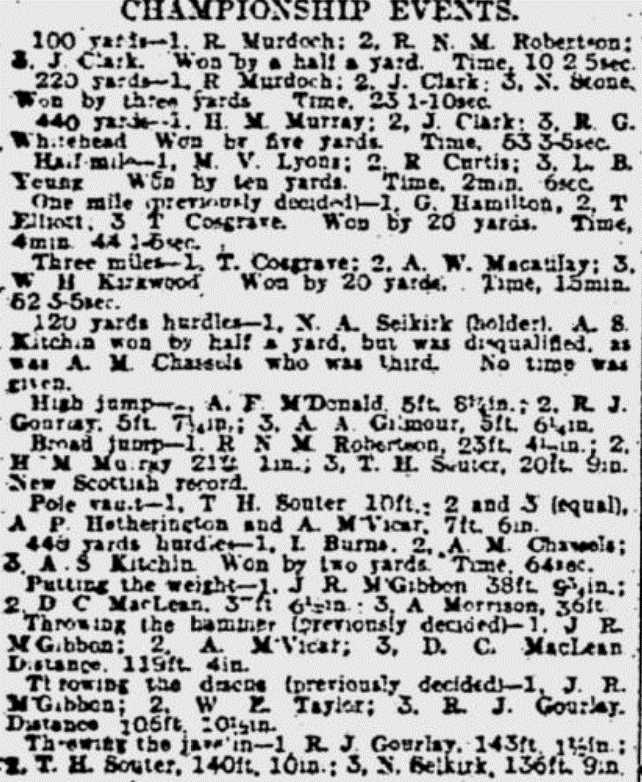
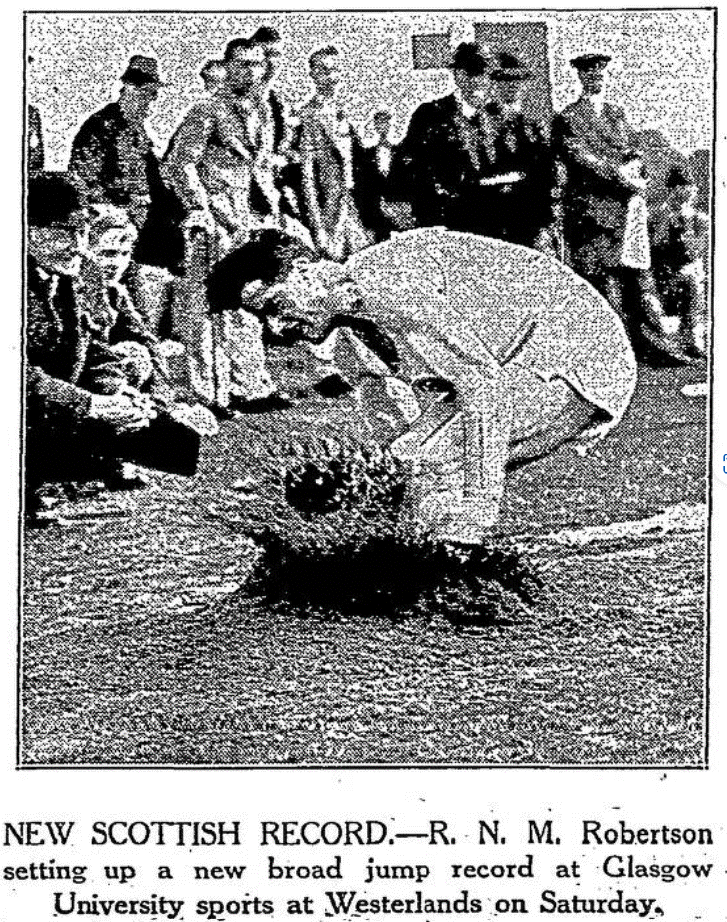
Glasgow University Sports were held on 12th May and although the standard was not quite as high as that of 1933, it was a very good meeting.   Absent were AN Lapsley, Donald Morrison, Daniel Ratcliffe, PBB Ogilvie and NM Glen.   RNM Robertson set a new Scottish record in the Broad Jump, clearing 23′ 4″ which was two inches more than the existing record which had lasted for 20 years.   Murdoch won both sprints and competition in middle distance races was very keen.   Results

As in 1933, Glasgow sent a team to the British Universities on 18th and 19th May.   The team consisted of R Murdoch, RNM Robertson, JR McGibbon, AF McDonald, RJ Gourley, HM Murray and A McVicar.   The Friday session was mainly heats and qualifying rounds but nevertheless the Scots won gold when RNM Robertson won the long jump with 22′ 7 1/2″.   JR McGibbon was second in the Hammer throw with 120′ 7 1/4″.   

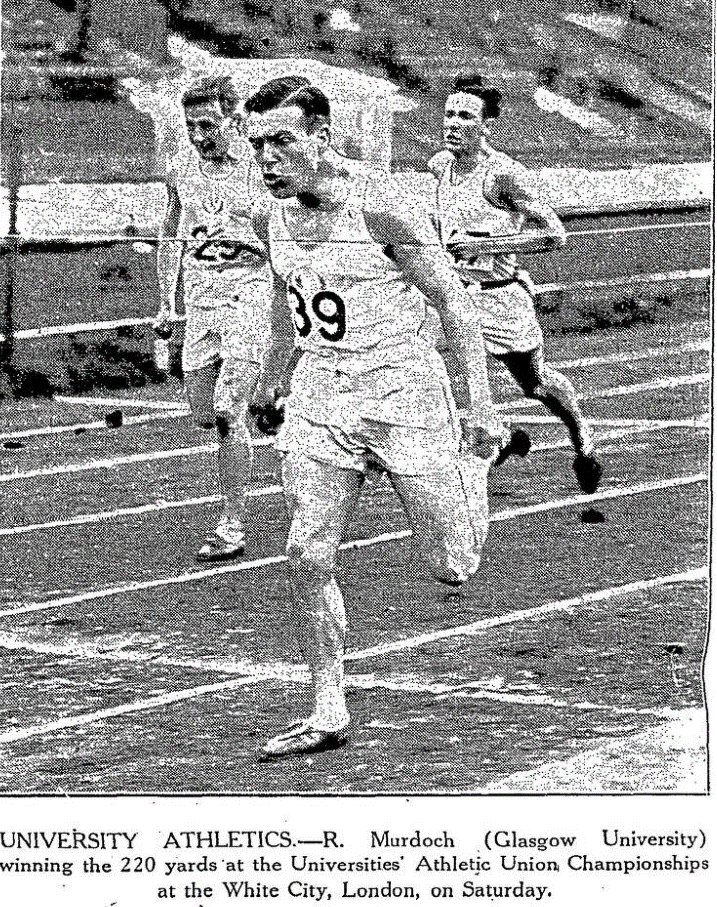
On to the Saturday session, Robin Murdoch won both 100 yards (10.2) and 220 yards (22.8) with fellow Glaswegian J Clark second.   In the field events, Gourley was second in the High Jump.   In the team competition, London was first, Oxford Centipedes second and Glasgow, one better than in 1933, was third of the 14 University teams competing.  St Andrews was the only other Scottish University represented and it was 13th=.

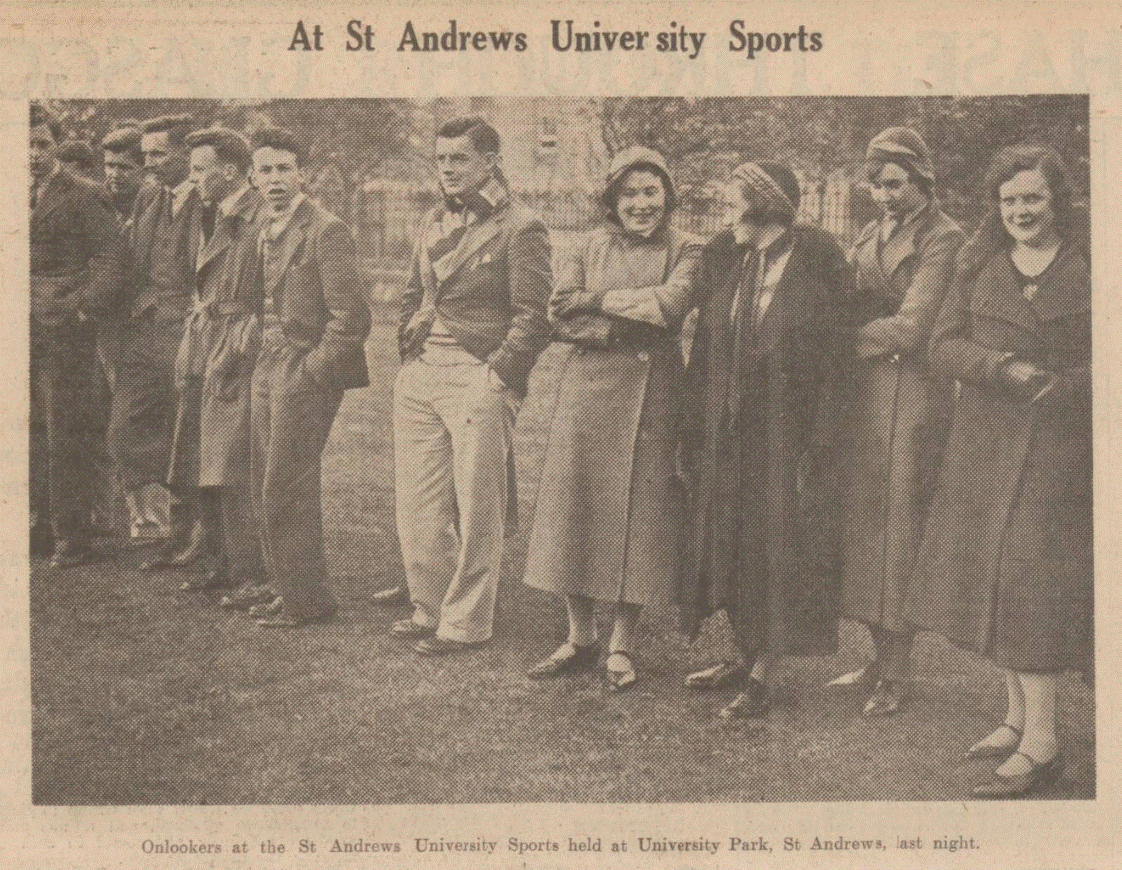
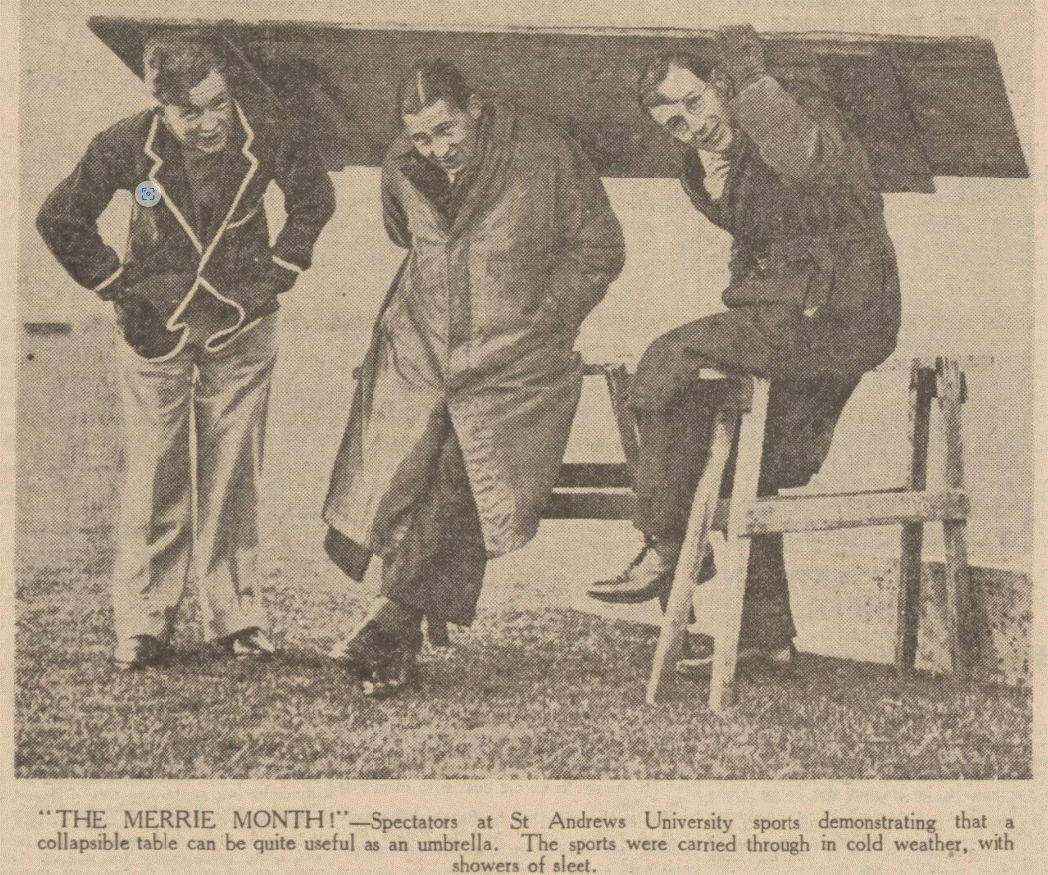
St Andrews championships were held over two days again with the first being on Tuesday 15th May and it was an evening of heavy rain.   EDO Campbell was the star man.  He won two events, the 120 yards hurdles in 16.6 seconds and the 440 yards with a time of 55.6 seconds.   Other winners were G Thiele in the discus (96′ 9″), Long Jump was won by JA Smith (20′ 5″) and the Three Miles by A Dryden (NTG).   The only women’s event was the Long Jump which was won by Miss Paterson (16′ 1″).

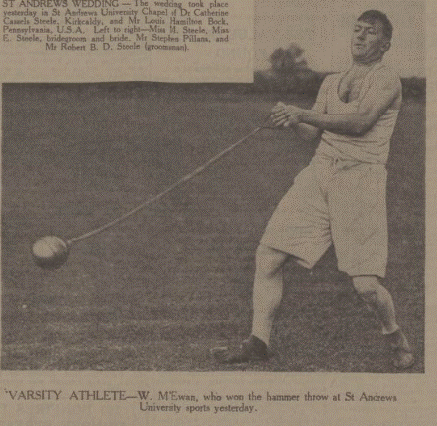
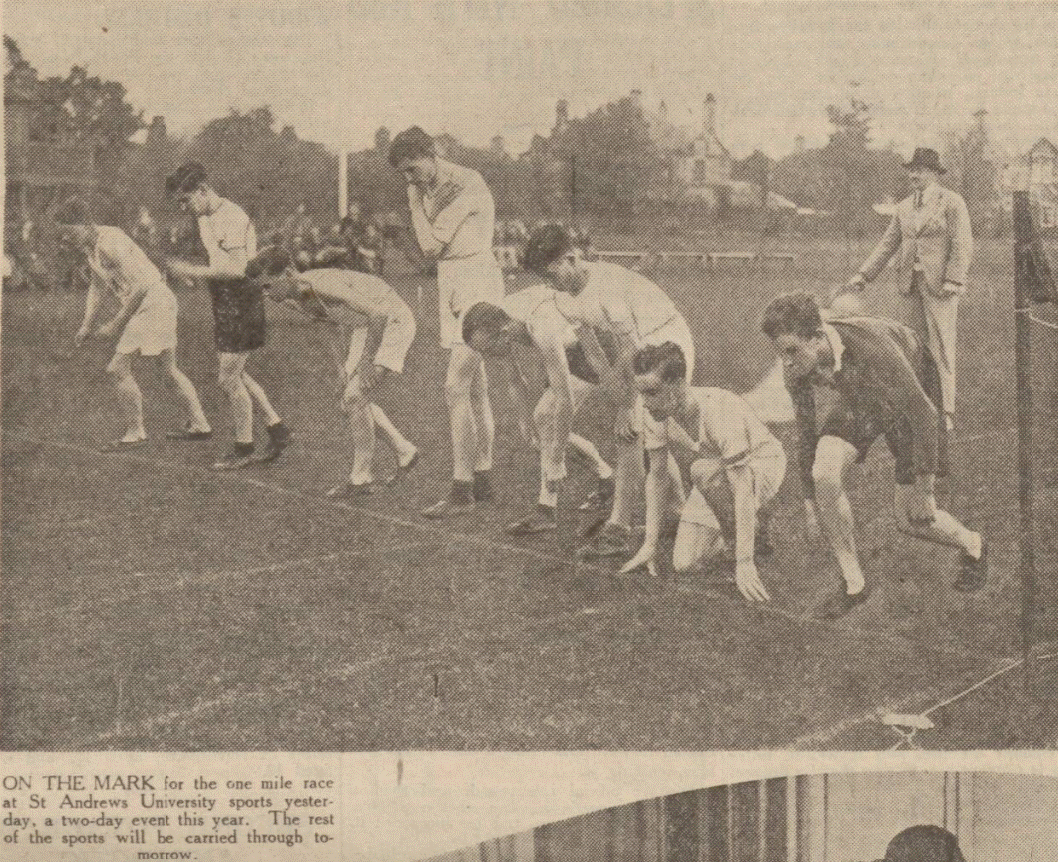
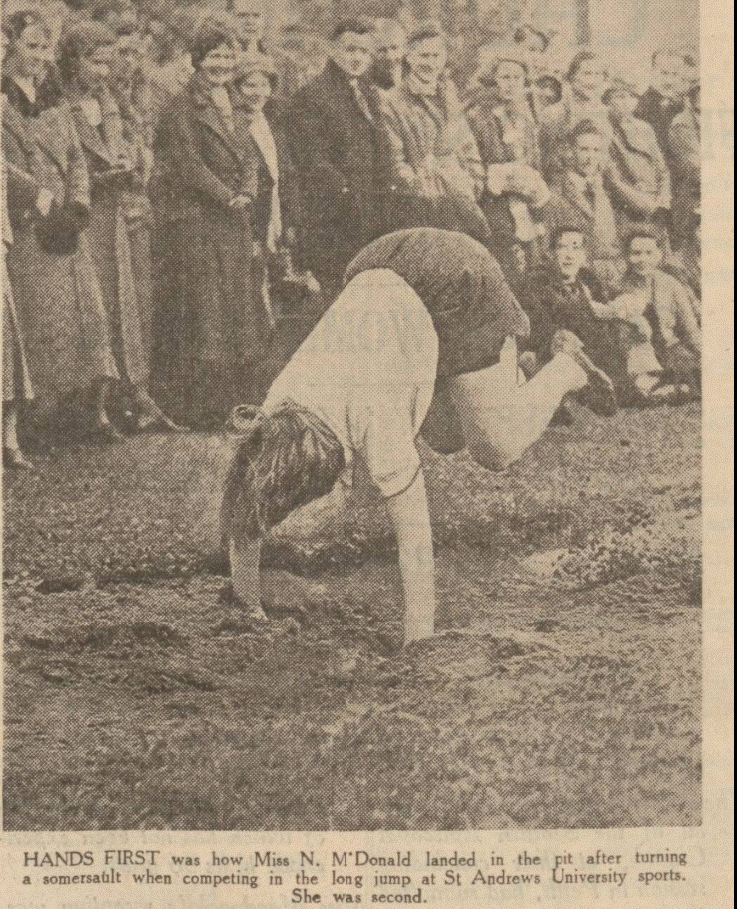
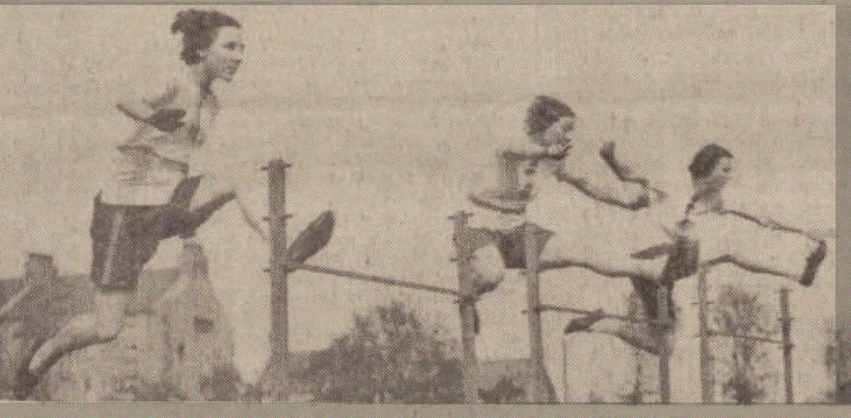
Despite having the date and the Courier with the photograph below, it has been impossible to find a copy of the results at the second St Andrews meeting but the search for them will continue.


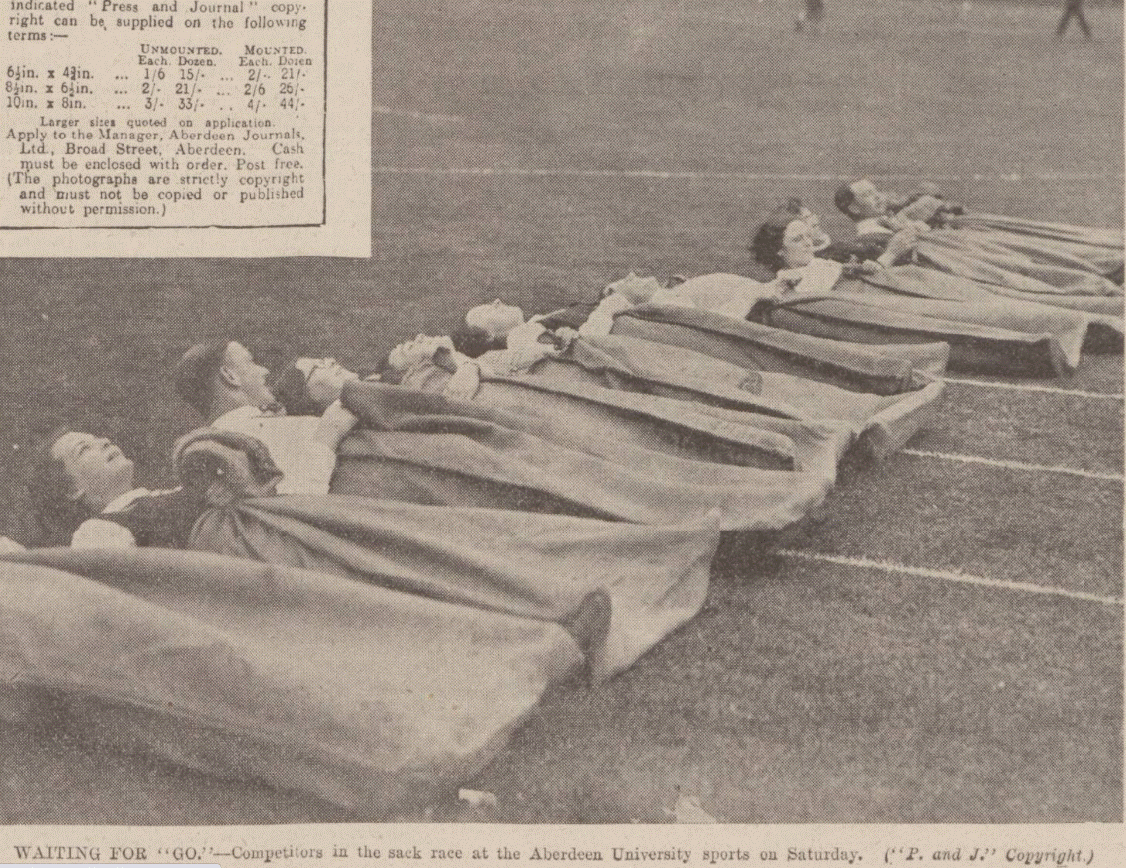
Aberdeen University Sports were on 19th May with 16 championship events to be decided.   At least that was the plan but unfortunately there had been heavy rain with many pitches flooded and the championships were put off until the next Saturday which would leave them with only two weeks until the Inter Universities.   

The weather second time round was described as ‘dull but dry’ and that was good enough for the sports to go ahead.   The star of the show as far as the local press was concerned was a first year Australian student, A Watson, whose time for the 440 yards was 53,4 seconds, a record for the King’s College grounds, the previous record being 53.6 seconds by JT Soutter in 1911 and equalled by GB Esslemont in 1926.    The winners were:

100 yards: J Clark   10.6 seconds; 220 yards:  1= HR Hewitt & LJ Clark 25 seconds; 440 yards: A Watson  53.4

880 yards: WJ White  2:07.8;   Mile: DN Annand  4:48.4;   Three Miles:  DN Annand 16:36.5

High Jump:  JN Robbie 5′ 5 1/2″;   Broad Jump: AI Dickie  1′ 5 1/2″; 

Throwing the Hammer:  D Nicol 94′ 11 1/2″;  Javelin: AJ Lockhart  132′;  Putting the Weight:  D Nicol  35′ 9″

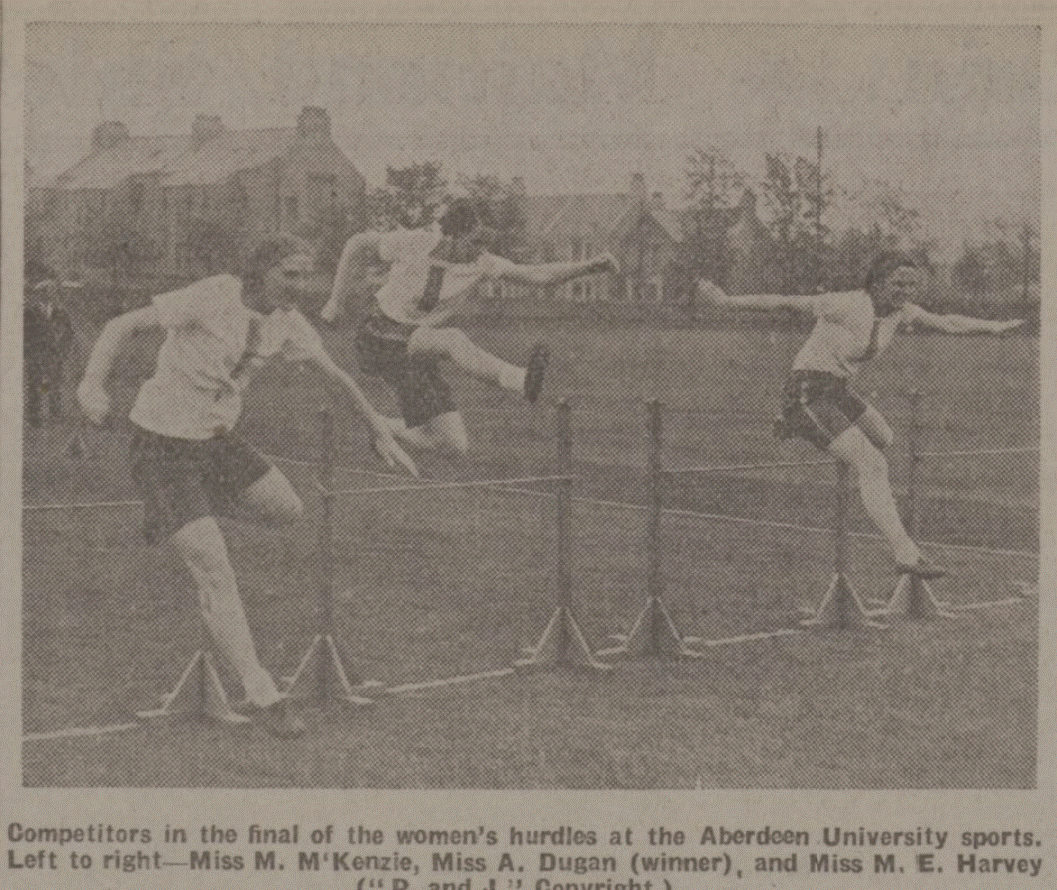
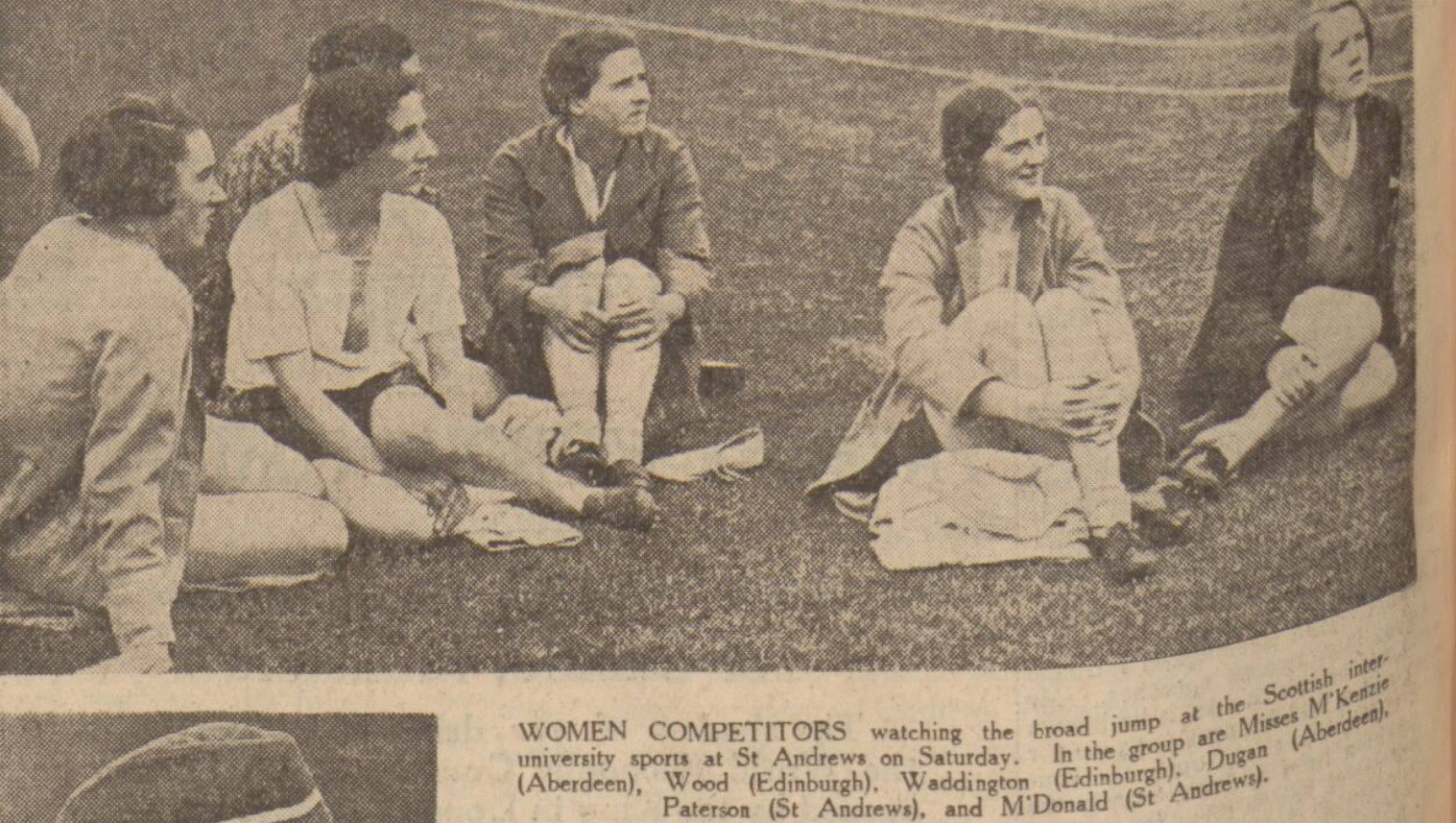
Women’s Events: 100 yards: RM McKenzie 12.4 seconds; 220 yards: RM McKenzie 25 sec; High Jump:  M Souter 4′ 4″; Broad Jump:  AH Dugan 15′ 2″; 80 yards hurdles:  AH Dugan 13.6 sec.


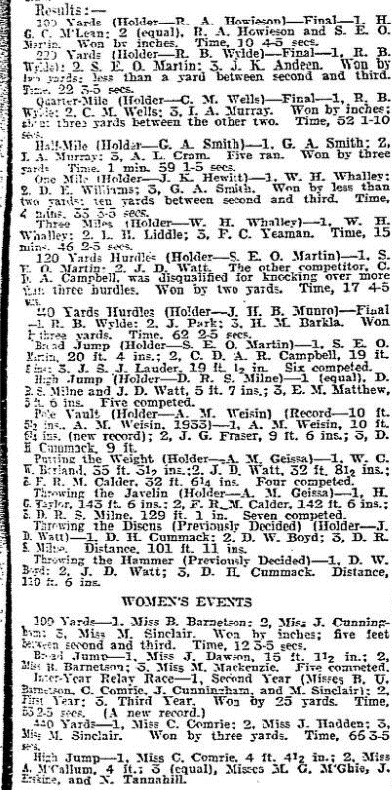
Edinburgh University Sports were held at Craiglockhart on 26th May, 1934.   The new winner of the Rosebery Cup was a 21 year old South African, RB Wylde who won three events: 220 yards, 440 yards and 440 yards hurdles.   Whalley (Mile in 4:33.6 and Three Miles in 15:46.4) and SEO Williams (120 yards hurdles in 17.8 and Broad Jump with 19′ 0 1/2″).   Williams also finished second in 100 and 220 yards.   In the women’s events, C Comrie won the 440 yards (63.6) and the high jump (4′ 4 1/2″).   Results:

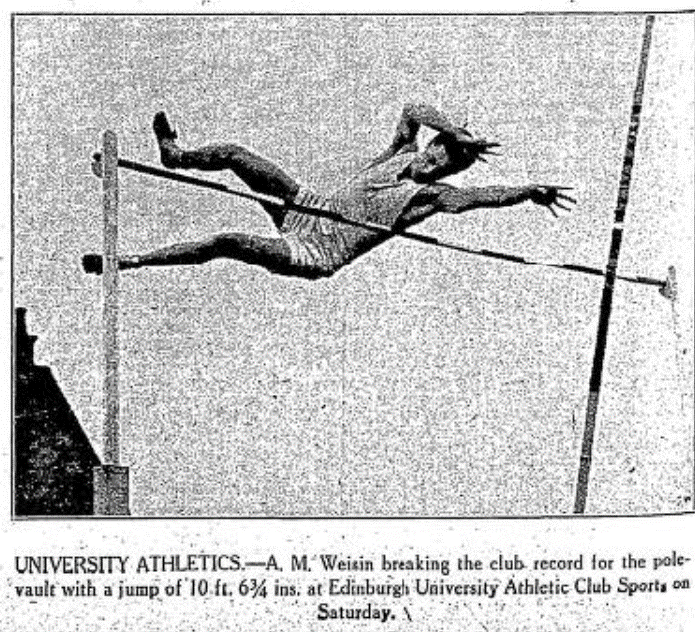
Martin retained the Australasian Cup for points gained in sprints, hurdles and jumps.   The Donovan Cup for the outstanding performance of the sports went to GA Smith for his victory in the half mile but there were many who thought that Weisen should have got it for his victory in the pole vault which was a new record.   

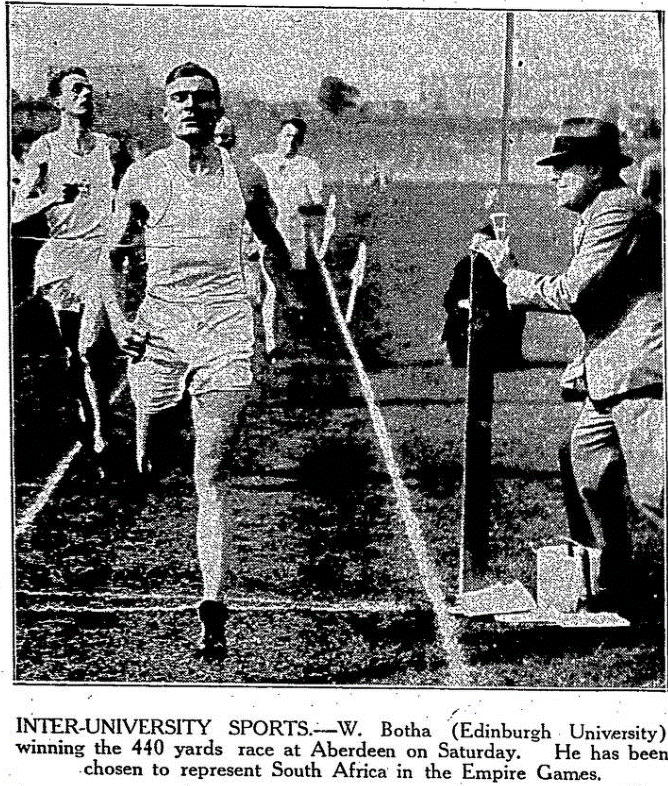
The Inter Varsity Sports were held on 9th June in Aberdeen and there were many good athletes forward for their events. Pictured below is the South African Botha who, as the caption points out, was bound for the Empire Games.   

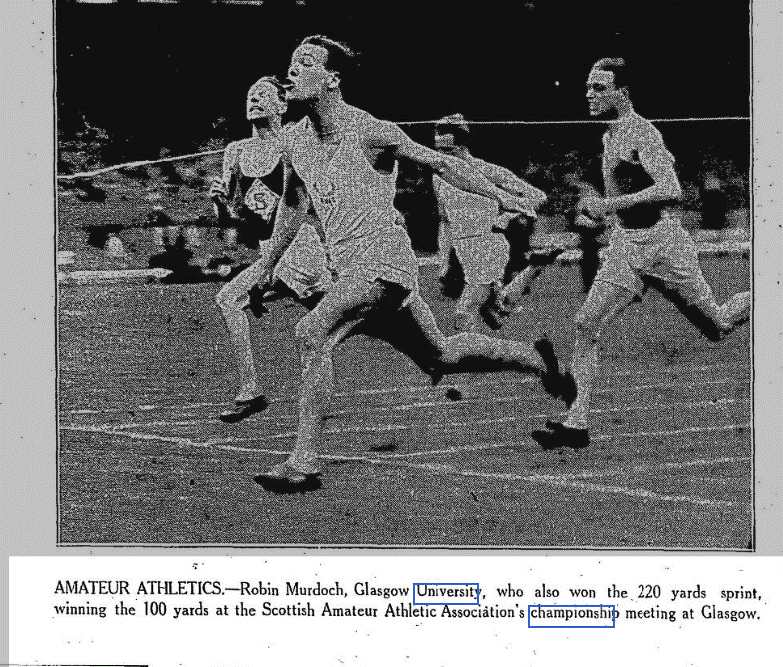
The team event was won, after a series of Glasgow victories, by Edinburgh with 51 points to Glasgow’s 47, Aberdeen’s 8 and St Andrews 5.  Glasgow won the women’s competition with 16 points from Aberdeen (9), Edinburgh 7) and St Andrews (3).  There was only one record broken and that was by RNM Robertson in the long jump where he set a new record of 22′ 9″ to beat his own record by two and a half inches.   Robin Murdoch won the 100 yards in ‘evens’ (10 seconds exactly) to equal the time set by Dr FP Reid in 1931.   He was chased home by RNM Robertson.   Murdoch also won the 220 in 22.4 – 0.8 seconds outside Eric Liddell’s record of 1923.   Thereafter it was all Edinburgh in the track events when they won 440, 880, Mile and Three Miles and both hurdles races.   W Botha, a powerfully built South African, won the quarter mile comfortably for Edinburgh and two Edinburgh runners fought out a tough half mile with the closest finish of the meeting when GA Smith defeated IM Murray by a foot in 2:04.8.   It was another Edinburgh win in the mile with DE Williams beating team mate GA Smith in a time of 4:37.8.   In the longest race on the programme – the Three Miles – WH Whalley of Edinburgh won in 15:29.6.   SEO Martin had no difficulties in winning the 120 yards hurdles in 16.2 seconds, and the 440 yards hurdles went to RB Wylde of Edinburgh who won in 59.6 seconds.   The mile relay race saw Edinburgh cross the finishing line first but they were disqualified for changing the baton outside the zone, and victory went to Glasgow with Aberdeen second; winning time was 3 min 41 sec.

A Robbie (Aberdeen) and AF McDonald (Glasgow) were equal first in the High Jump with 5′ 8 1/4″, RNM Robertson won the Long Jump and AM Wiesen (Edinburgh) took the pole vault with a best of 10′ 6″.   JR McGibbon of Glasgow won the Shot Putt (38′ 10″) and Discus (108′ 5″), AM Geissa won the Javelin for Edinburgh (142′ 11″) and DW Boyd, Edinburgh, won the hammer throw (131′ 4″).

In the women’s events, the 100 yards was won by M Baird of Glasgow (12 sec) as was the Broad Jump (17′ 4″).   MR McKenzie of Aberdeen won the 220 yards in 27.2, C Comrie of Edinburgh won the high jump and Glasgow defeated Edinburgh and Aberdeen in the 400 yards relay in 53.2 seconds. 

With the official universities season at an end there was no need for Murdoch – or any other university athlete – to stop racing.  Indeed, given the form that several of them were in, it would have been folly for them to end their season.   The next big meeting was the SAAA Championships in Glasgow.   Murdoch won both sprints, Murray of Edinburgh was third in the half-mile with GA Smith also in the final, Edinburgh University was second in the relay and two of the first three in the 120 yards hurdles were university men who finished in the order of SEO Martin first and EDO Campbell third with GD Parsons of the Atalanta Club who qualified as fastest loser for the final finished second.

In the field events, RNM Robertson won the long jump from fellow GUAC member TH Souter, AF McDonald of Glasgow won the High Jump and the first three in the Pole Vault were PBB Ogilvie and B Babington Smith (both Atalanta) with AM Wiesen of Edinburgh third.

And for the remainder of the season, there were university men taking part in local and invitation meetings until August when the Empire Games took place at White City in London.   The Universities were well represented in the Scottish team with Murdoch, RB Wylde, FAR Hunter, IC Young and others took part.

University Track and Field: 1933

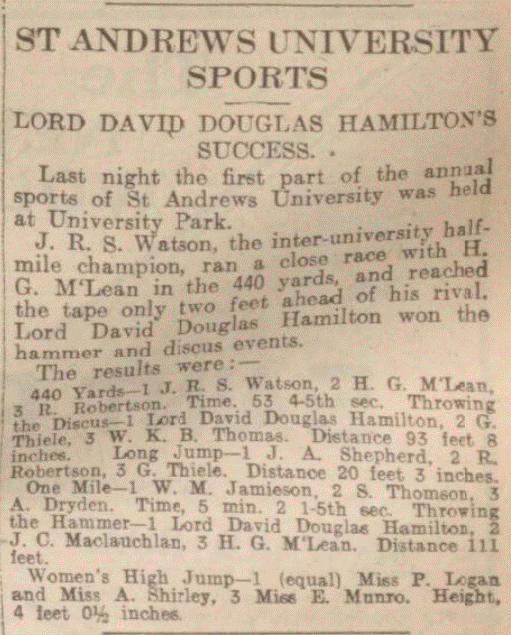
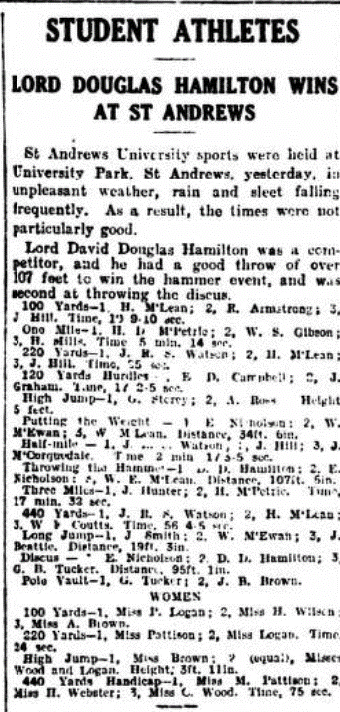
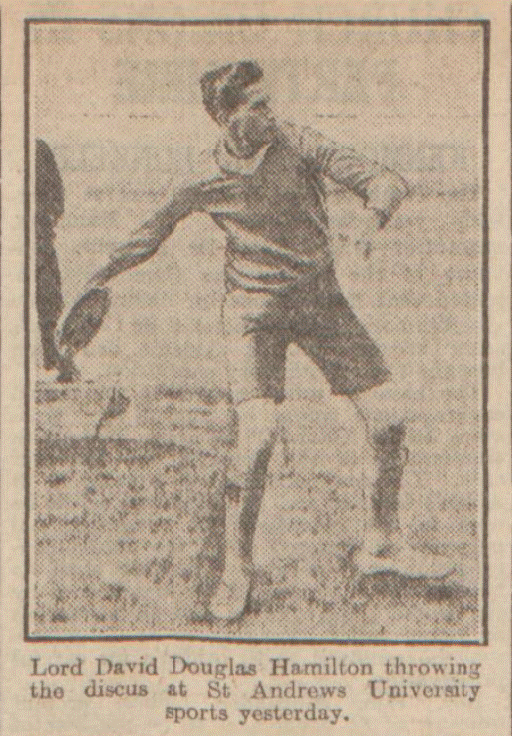
St Andrews University Sports in 1933 were held in two parts.   The first was on the evening of Tuesday, 2nd May and the second on Thursday 4th May.   On the Tuesday it was the 440 yards, 440 yards hurdles, Mile, long jump, throwing the hammer and the discus.   Everything else was to be on the Thursday.   The Tuesday results from The Courier:

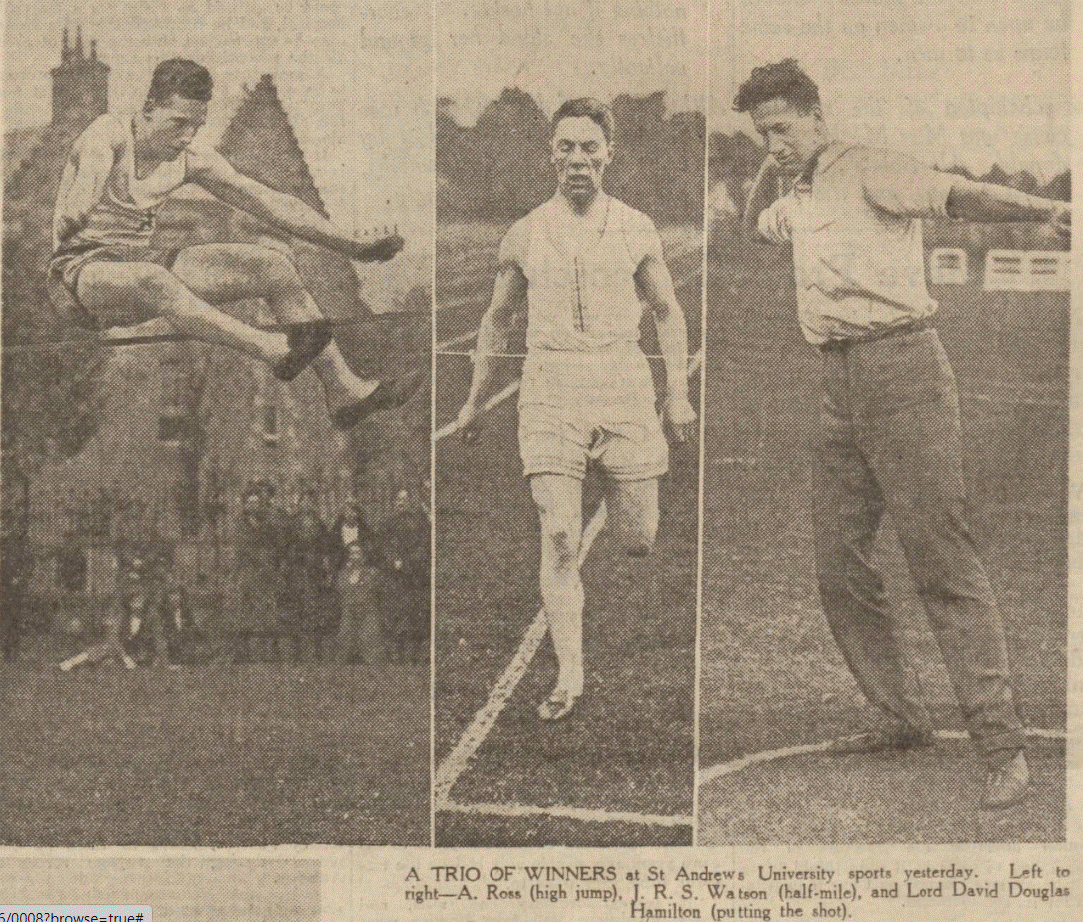
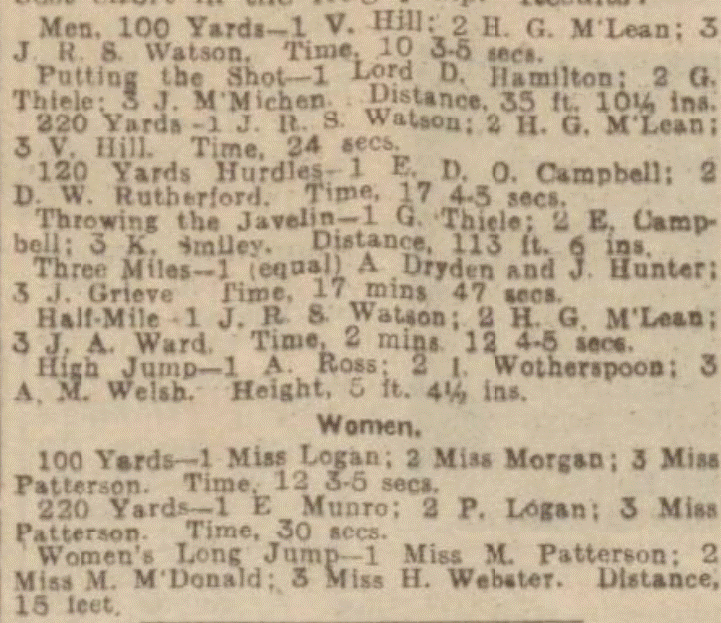
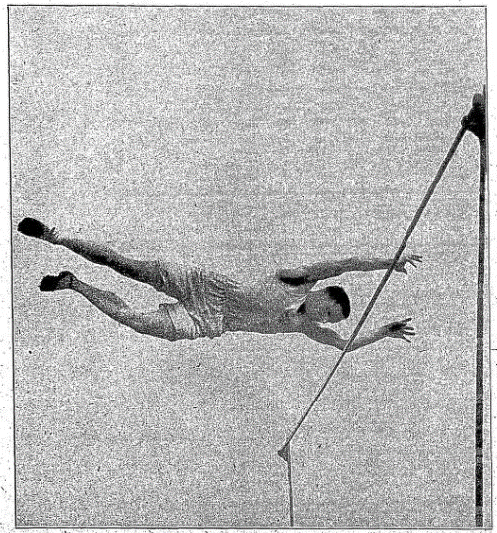
And on the Thursday, Lord James won the shot putt to complete his throws events successes, JRS Watson ‘the inter-varsity half miler’ won the half mile and also took first place in the 220 yards. (Photograph above)  Results:

In the Glasgow Herald of 8th May, there was no report on anything but there was a comparison of the Edinburgh and Glasgow teams for the coming season with an eye on the inter-varsity championships in June.  Almost all the names are there but Borland and Morison, despite having matriculated, would not be competing in the June championship as they did not want to rob younger members of their chance to win a ‘blue’.   The Glasgow University championships took place the following week on May 13th in fine weather with the track reported to be in good condition.   The performances were as good as the previous year and “it is a question whether athletics at Gilmorehill were ever in such a healthy state as they are at present.”   

Winners were:  

100 yards:   R Murdoch  10.4 sec;   220 yards:  R Murdoch: 23 seconds:  440 yards: NM Glen 53 seconds

880 yards: NM Glen  2:05;   Three Miles: GB Esslemont 15 min 43 sec (new record)

120 yards Hurdles:  NA Selkirk  17 seconds;  440 yards hurdles: TH Souter 60 seconds (new record)

High Jump:  AN Lapsley  5′ 10″;  Pole Vault: PRR Ogilvie 11′ 8″; Broad Jump: EM Robertson  21′ 5 1/2″

Putting the Weight: TR Ratciffe 40′ 10″ (new ground record); Javelin:  AN Lapsley 162′ 3″

Womens 100 yards: M Baird  12.6; Womens Broad Jump: 15′ 2 1/2″; 440 yards relay:  1  GUAC; 2, EUAC  54.4 seconds.

The preliminary meeting of heats with a few finals had been held the previous Wednesday where the winners of the two finals were:

Mile:  DM Brander 4:42.4;  Discus:  AN Lapsley 101′ 8″ (new University and ground record).

On May 20th, a group of Glasgow University students took part in the British Universities Championships.   Robin Murdoch won both sprints in times of 10.2 and 22.4 seconds with another Glasgow man, ER Robertson, fourth in the final of the 100 yards.   Donald Morrison won the hammer with a best of 194′ 3″ and was second in the javelin.   PBB Ogilvie was third in the pole vault where the winner was an American student who cleared 12′ 6″.   Lapsley took part but ‘failed to touch his form in any of his events.’   It had been a good weekend for the University – in the points contes they were fourth placed team.

WR Garvie, winner of the javelin event at Aberdeen University Championships, 1933

While the Glasgow squad was performing so well in England, Aberdeen University held their club championships at Kings College Grounds.   Top performer was West Indian whose 107′ 10 1/2″ added 11 feet to the existing discus record.   WR Garvie broke his own javelin record with a best of 141′ 10″ and in the women’s Lilias SF MacKenzie swept the boards with her best being a new record for the high jump of 4′ 5″.   Winners:

100 yards: PS Cowan 10.4 seconds; 220 yards NS Cowan 22.6;  440 yards R McKenzie 56.4

880 yards: C Ludwig 2:09.2; Mile: AB Black and R McKenzie (dead heat) 4:44.2; Three Miles: R McKenzie 16:o2

Hurdles: NS Cowan 17.4

Javelin: W Garvie; Discus: EL Prendergast 107′ 10 1/2″; Putting Weight W Garvie 38′ 11; “Throwing Hammer: C Cockburn 98′ 8

Pole Jump: AF Murray 9′ 3″; Broad Jump: A Robbie and L Smith  19′ 6 1/2″

Women’s 100 yards: LSF Mackenzie 12.2 seconds; High Jump ISF Mackenzie 4′ 6″ (new record); Broad Jump: ISF Mackenzie 17′ 1″; Hurdles ISF Mackenzie 12.4 seconds.

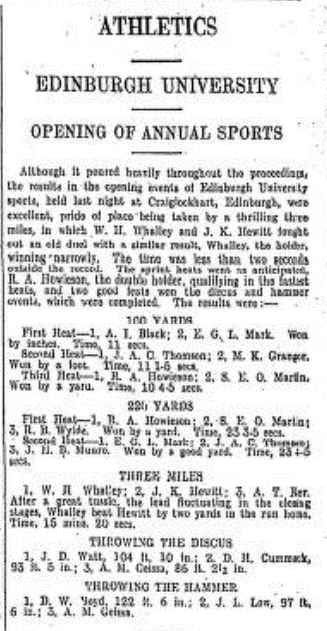
The Edinburgh Championships were held over two meetings.   The first was on Wednesday 24th May at Craiglockhart and the short report in the Scotsman the following morning read: 

The second meeting of the championships was on 27th May with the meeting honours going to a new student: SEO Martin from Cornwall College, Jamaica, was the student in question and he won the hurdles and broad jump (creating a record in the latter), was second in the high jump and third in the furlong.   For the afternoon’s work he won the Rosebery Cup for the all-round championship with 11 points, the Australasia Cup for the sprints, hurdles and broad jump with 14 points and the newly presented Donovan Cup for the outstanding performance of the championship for his record in the broad jump.   CM Wells won the 440 yards which was run in lanes for the first time but lost his half-mile championship title.   Winners were:

100 yards: RA Howieson 10.6 seconds;  220 yards:  RB Wylde 23 seconds: 440 yards: CM Wells 52.4;

880 yards:  GA Smith  2:02.8; Mile: JK Hewitt  4:33.6;  Three Miles:   see above;

120 yards hurdles: SEO Martin  16.8;  440 yards hurdles: JHB Munro 62 sec;

Broad Jump: SEO Martin 22′ 4 1/2″; High Jump: DRS Milne 5′ 7 1/2″; Pole Vault: AM Welsh 10′ 4 1/2″;

Putting the Weight:  AM Geiss 35′ 6 1/2″; Throwing the Discus: JD Watt 104′ 10″;  Hammer: DW Boyd 122′ 6″; Javelin: AM Geiss 140′ 0 1/2″

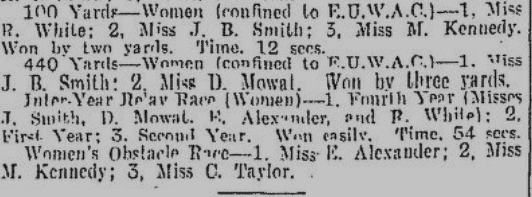
Women’s 100 yards: R White  12 seconds; Women’s 440 yards: C Comrie  66.8 seconds; Womens Broad Jump: D Waddington 15′ 2 1/2″   Women’s High Jump: C Comrie 4′ 6 1/2″

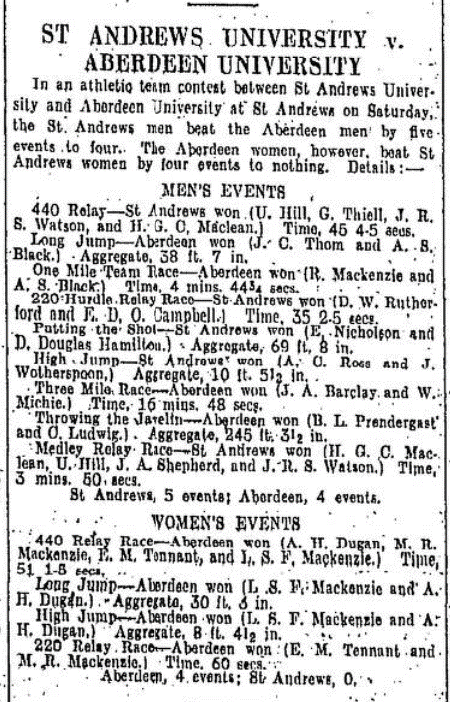
While the Edinburgh Championships were going ahead, St Andrews University beat Aberdeen by 5 events to 4 at University Park, St Andrews in a match in which two athletes contested each event with the aggregate scores to count.   Results:

The Inter-University Sports took place on 10th June at St Andrews with the arrangements being made, the Courier tells us, by Lieut. A Stark, “the St Andrews instructor.”   There were 16 events on the programme with points awarded for 1st, 2nd and 3rd being 4,2 and 1.    For the first time a women’s championship was held.   Glasgow won the men’s competition with 56 1/2 points from Edinburgh (39), Aberdeen 10 1/2 and St Andrews 7.   In the women’s competition Edinburgh won 5 events (15 points), Glasgow 13, Aberdeen 5 and St Andrews 2.   Four records were set, three by Glasgow students and Murdoch won both sprints.   He was inside 10 seconds for the 100 yards for the first time but given the slight following wind and the slight downward slope of the track it was reported to be doubtful whether the time could be recognised by the Inter-University committee as a record.   Results:

100 yards:  1. R Murdoch G; 2. RNM Morrison G; 3. NS Cowan A   Time: 9.9 seconds

220 yards:  1. R Murdoch G;  2. RH Wylde E;  3. NS Cowan S   Time: 21.8 seconds

440 yards:  1.  NM Glen G; 2. EGL Mark E; 3. HM Murray G   Time not given

880 yards:  1. GA Smith E; 2. JRS Watson  St A; 3. AL Cram E   Time  1 min 59 sec

Mile:  1. GA Smith E;  2.  DM Brander G; 3. TA Murray E    Time 4:36.8  Won by 3 yards

Three Miles:  1. WH Whalley E; 2. JJ Brennan G; 3. AT Kerr E  15:22.8  Won by less than a yard

One Mile Relay race:  1.  Edinburgh;  2.  St Andrews;  3.  Aberdeen   3:45.6

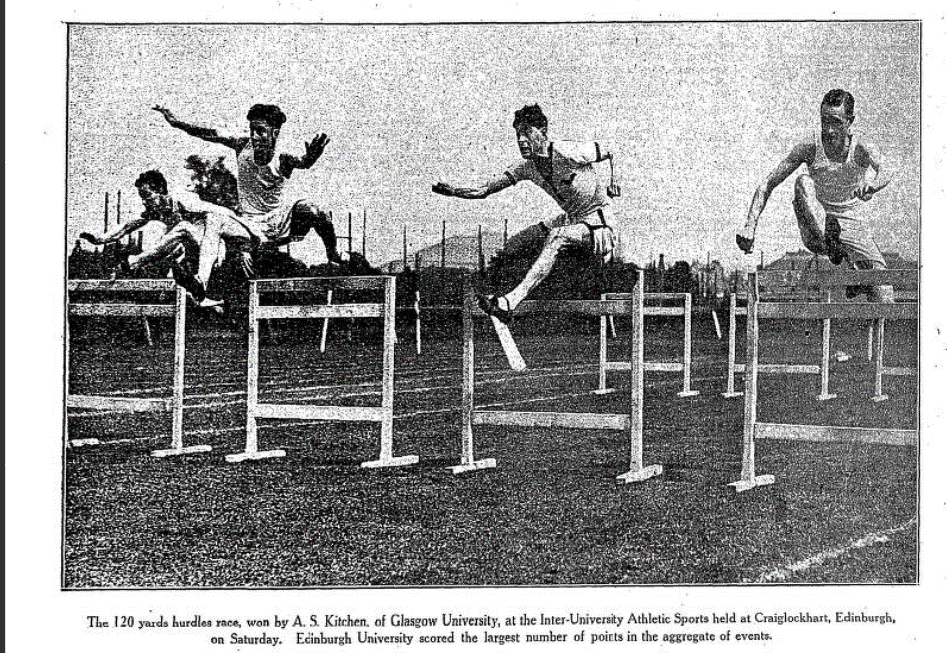
120 yards hurdles:  1.  SEO Martin E;  2.  EDO Campbell St A;  3. AS Kitchin G   Time 16.4 seconds

440 yards hurdles:  1. RB Wylde E;  2. JHR Munro E;  3. JM Burns G    Time 58.6 seconds

Broad Jump:  1.  RM Robertson G; 2. PRB Ogilvie G;  3.  JA Shepherd  St A    22′ 6 1/2″

High Jump:  1=. AN Lapsley G  &  DRS Milne E; 3.  JA Robbie  A;  5′ 7 1/2″

Pole Vault:  1.  PBB Ogilvie  G;  2. AM Wiesin E;  3=.  AF Murray A & TH Souter G   9’6″  Ogilvie stopped as soon as he had won.

Putting the Weight:  1.  R Radcliffe  G; 2. JR McGibbon G;  3.  DW Garvie A   41′  1″

Throwing the Discue:  1.  AN Lapsley  G;  2.  BL Prendergast  A;  3.  D Morrison  G    105′  4″

Throwing the Hammer: 1. AN Lapsley  G;  2.  D Morrison  G;  3.  DB Morten  A    135′  1 1/2″      New record.

Throwing the Javelin: 1.  D Morrison  G;  2.  D Garvie  A;  3.  AN Lapsley  G.   148′  6″ 

Women’s Events:  

100 yards:  1.  R White E;  2.  M Baird  G;  3.  LSF Mackenzie  A     Time 11.9 seconds

220 yards:  1.  B Barnetson  E;  2. E Munro  St A;  3.  E Cowan  G    Time  27.6 seconds

Broad Jump:  1.  M Baird  G;  2.  LSF Mackenzie   A;   3.  D Waddington  E    17′ 5″  A new Scottish and Universities record

High Jump:  1.  C Comrie  E;  2.  E McGill  G;  3.  LSF Mackenzie  A   4′ 7 1/2″   A new meeting record

440 yards relay:  1.  Glasgow;  2.  Edinburgh;  3.  Aberdeen    53.8 seconds.


Two weeks later in the SAAA Championships, Murdoch was third in the 100 yards but won the 220 in 21.6 with FP Reid representing the Atalanta Club winning the short sprint in 9.6 seconds.   Others to feature in the championship were CM Wells, Edinburgh University, who was third in the 440 having won it the previous year and Kitchin was second in the hurdles.   In the jumping events, Lapsley was second in the high jump, in the broad jump RM Robertson won with SEO Martin third and Ogilvie won the pole vault.   In the throws, Radcliffe was second in the shot and Lapsley was second in the javelin and third in the discus.

With that the season for the Universities was really at an end although many of the athletes continued to enter open events over the next two or three months.


University Track and Field: 1932

The Glasgow Herald on 2nd May, 1932, announced that the Universities club, Atalanta, had arranged several fixtures.   Earlier in the week they had competed against Keil School and the next was to take place at Westerlands the following Tuesday against Edinburgh University and the Former Pupils Athletic Union.   This tells us that the university athletes were already in training for the following summer.   Another report in the same edition was on the George Watson’s College athletic championships where the 100-, 220-, 440- and 880-yards races were all won by AM Carstairs who would go on to have a sparkling career in the sport until it was disrupted by the war in 1939.   In the match between Atalanta and the combined Edinburgh clubs, the former won by 8 events to 2, and their team included such as Murdoch, Lapsley, Borland, Esslemont, Lapsley and Glen.   

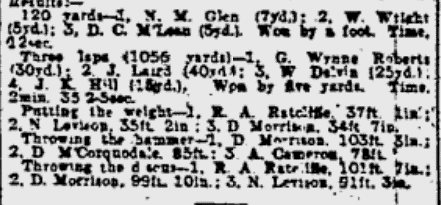
The Edinburgh Evening News of Friday 6th May, 1932, had this report on St Andrews Sports:

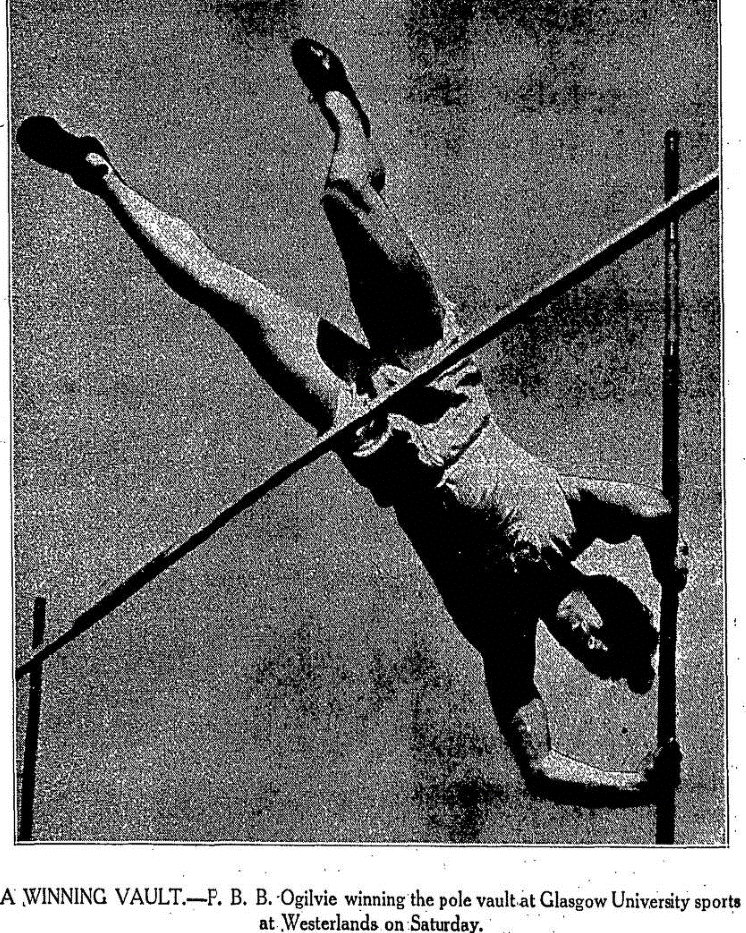
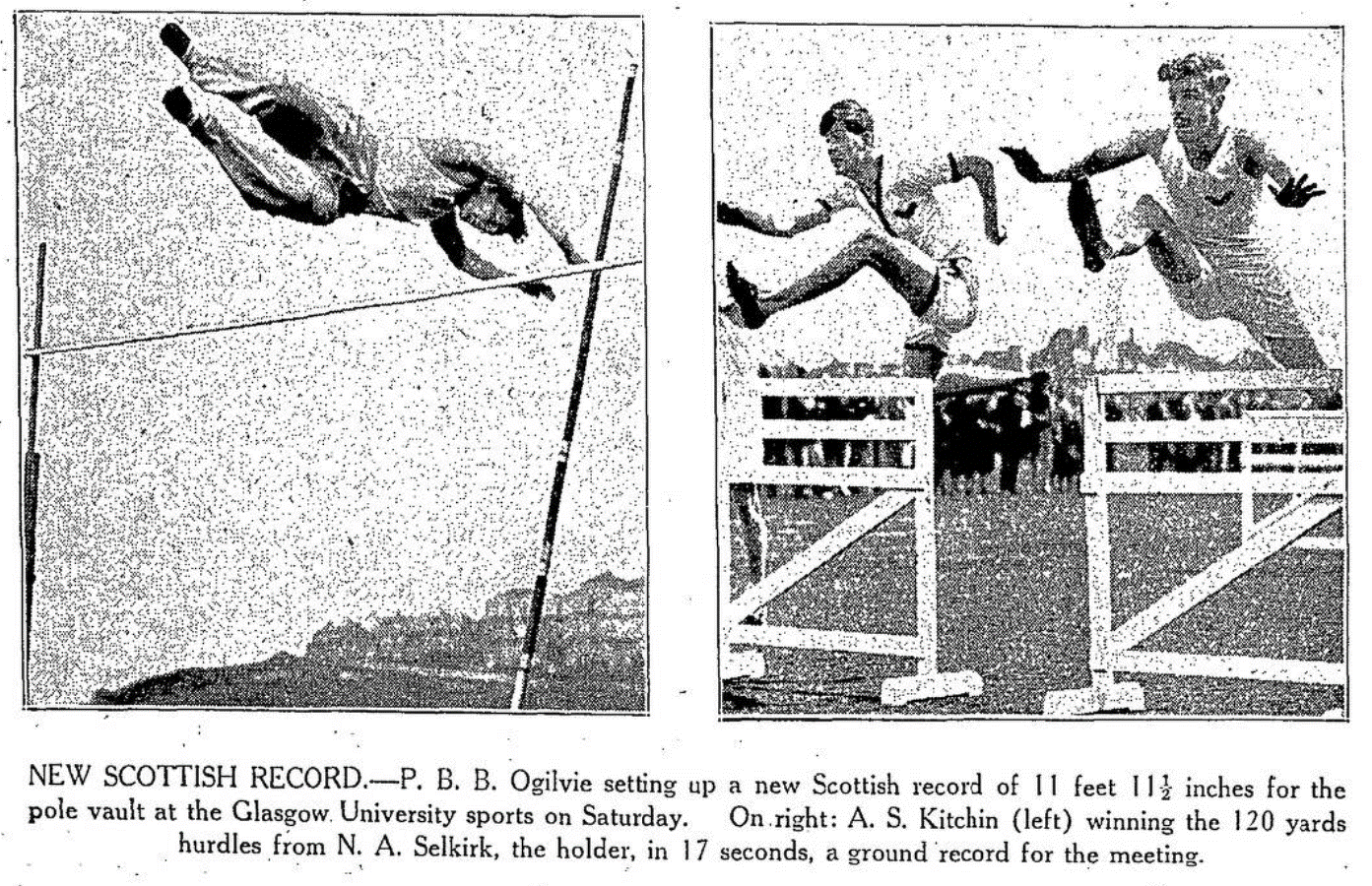
The following week Glasgow spread their events over the Wednesday and Saturday.   On the Wednesday Lapsley set a new record for the hammer throw of 138′ 1″ and Morrison set one for the Mile of 4 min 37.5.   This was Morrison’s fifth successive victory in the event.   On the Saturday four records were broken – PBB Ogilvie in the Broad Jump cleared 21′  6 1/2″, and also soared over 11′ 11 1/2″ in the Pole Vault which was also a Scottish native record.   Robin Murdoch was the reigning AAA 220 yards champion but was carrying an injury and only just won the 100 yards from IH Borland before finishing second in the 220 yards.    He should have been competing for the Atalanta club that day but was not fit enough to do so.   Borland won the 440 yards and Morrison won the half mile.   Lapsley won the javelin with a spectacular series of throws including a new record, and Kitchin won the hurdles in a new record time.   

St Andrews had a match that same day against Scottish Wayfarers at University Park, St Andrews and the Wayfarers won by 3 events to 2.  


RM Mackay setting a new record at the Edinburgh University Championships

The Edinburgh University Championships were held on 28th May at Craiglockhart.   The Glasgow Herald report on the meeting read as follows: “Even under the most depressing conditions of heavy track and continuous rain, the results at Edinburgh University Sports were sufficiently good to warrant reasonably high hopes in this season’s Inter-University meeting.   One new record was made, by Mr RM Mackay in the pole vault in clearing 10′ 4 1/2″, his second of the sports as he had previously set up new hammer figures and for his feat he won the new cup presented this season by TM Donovan for the outstanding feat at the sports.   Mackay in addition retained the Rosebery Cup for the all-round championships with 15 points from firsts in the hammer, discus and pole vault, second in the weight putt and third in the high Jump.   RA Howieson secured the Australasian Cup which goes for points in the sprints, the hurdles and the jumps, his 10 point aggregate being two ahead of DRB Milne.   Other double winners were WH Whalley and AM Geissa.   Nine holders retained their titles, only two events providing surprises – a minor one in the defeat of CM Wells in the quarter by a clever Watsonian, KGL Mark; and a major one in the high jumping from J Kennedy from heavy grass to clear 5′ 8 1/2″ and beat DRS Milne.”

Before that though, The Scotsman of 23rd May reported on a relay meeting between Edinburgh University and the Former Pupils club.   The meeting had the following events: Quarter Mile 110 yards shuttle relay; half mile relay race (4 x 220); three quarter mile relay race (3 x 440); one and a half miles relay race ( 3 x 880); One Mile team race; Three Miles team race   plus field events where the aggregate of two competitors best throws was the deciding factor.   These events were Broad Jump, High Jump, Putting the weight, discus, hammer, javelin.   The format was very similar to that of the St Peters AC club championship meeting held in Glasgow in the 1920’s and 30’s but no matter – it gave all the Edinburgh University competitors a good hard meeting before the university season peaked in June.   

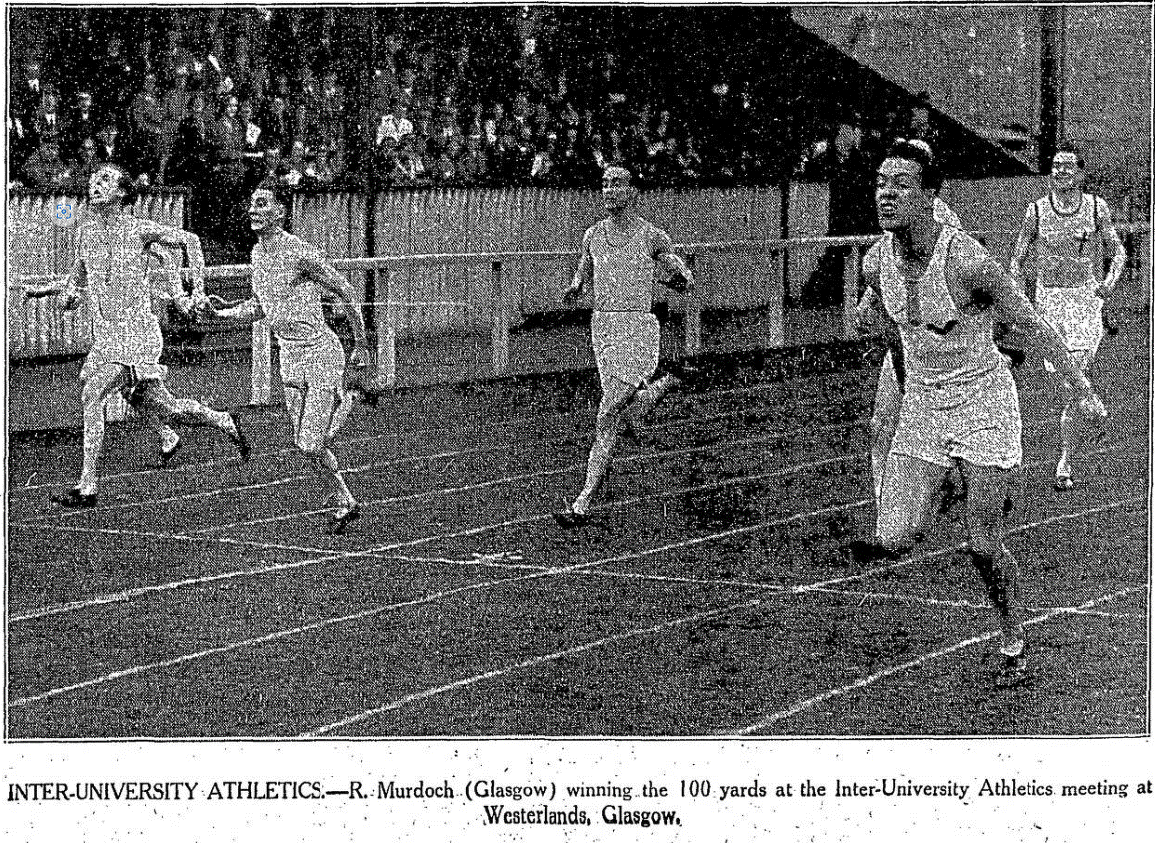
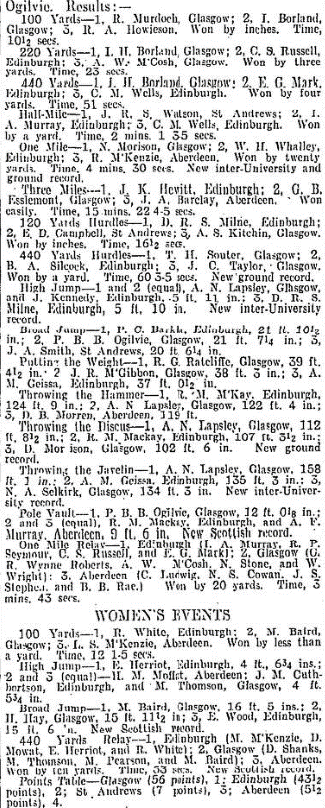
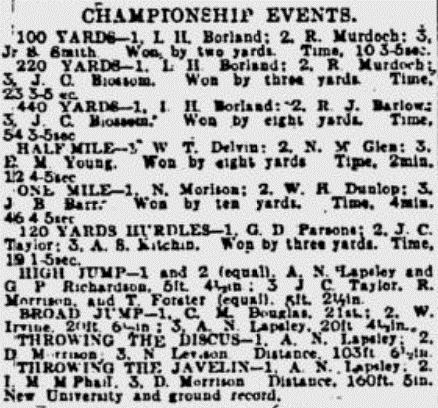
The Inter universities were held on 11th June at Westerlands in Glasgow and, after a good afternoon’s sport, Glasgow University won the competition with 56 points, Edinburgh was second with 43 1/2, St Andrews had 7 and Aberdeen in fourth place had 5 points.   During the afternoon, Scottish records were set by PBB Ogilvie in the pole vault and by the Edinburgh women in the Ladies Broad Jump and Relay.   New Inter-varsity records were set by AN Lapsley in the javelin and discus while he shared a new record with J Kennedy in the high jump, and by J Soutter in the 440 yards hurdles.   Ian Borland had a good afternoon – finishing second to Murdoch in the 100, he won both 220 yards and 440 yards.   The half mile was one of the best races of the afternoon with the first four being covered by three yards.   JRS Watson, St Andrews won in the fast time of 2:01.6 and Neil Morison defeated WH Whalley in the Mile in 4 minutes 30 seconds, a new record.   The hurdles races were close and the field events of a high standard.   Results:

The international that year was held on 16th July at Powderhall and the only varsity men to win were Murdoch in the 100 yards which he won in 10.0 seconds, and Wells who won the 440 yards in 53 seconds.   Murdoch was also second in the 220 yards.   Murdoch was not the only University man to continue competing through the summer but was probably the most successful in 1932 carrying on as far as the Rangers Sports in August where he won the invitation 120 yards from  M Rousseau (Racing Club de France) and J Bell (Cliftonville Harriers).

University Track and Field: 1931

Glasgow University’s meeting at Westerlands on 25th April, 1931 was spoiled by heavy rain and “an executive meeting at the club prevented several of the well-known runners from appearing.”   Four handicap events did take place – a 75 yards race which was won by NA Selkirk off 3 1/2 yards in 8 seconds, a 600 yards race won by W Wright off 40 yards in 1 min 14 sec, a javelin contest won by G Morrison with 139′ 7″ and a high jump won by AN Lapsley with 5′ 5″.   The following Saturday the second of the GUAC meetings was held in ‘ ideal conditions’ and general performances suggested that record breaking at the University Championships in a fortnight were a distinct possibility.    Lapsley could not compete because of strained tendons following his javelin throwing the previous Wednesday.   Results of this match are below.

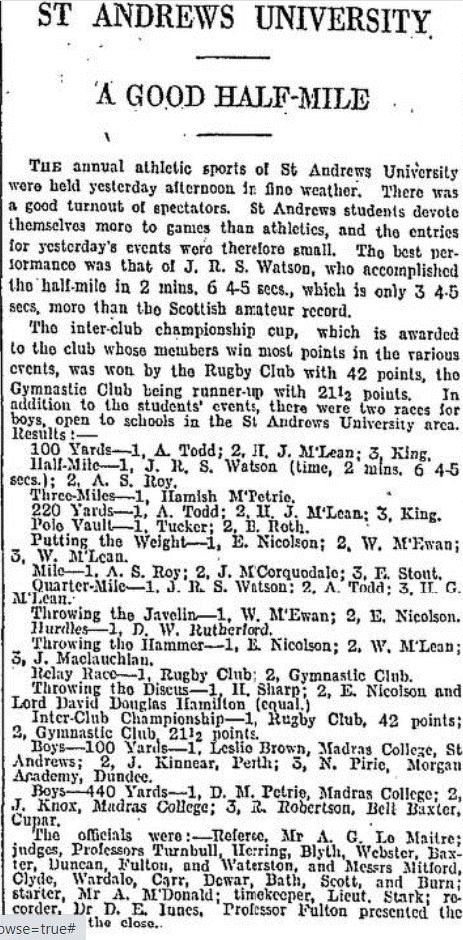
Meanwhile on the East Coast, St Andrews University had its own sports as reported in The Scotsman of 8th May.

On the same day there was a match between the Atalanta club and Edinburgh University and the FP Athletic Union.   Held at Craiglockhart, Atalanta won by seven events to two. 

The Glasgow University Championships were held on 16th May.   AN Lapsley was undoubtedly the athlete of the meeting with six victories – he won the high jump, broad jump, hammer, discus, javelin and pole vault.   He created new records in three of them – hammer discus and high jump – and that was enough for the Glasgow Herald to nominate him as the best all-round athlete ever associated with the university.   The high jump in particular was a magnificent 5′ 11″, done using the new “Western Roll” technique.   Ian Borland did not compete and Robin Murdoch won both 100 and straight 200 yards events and was second to NM Glen in the quarter mile.   

Photograph from The Courier  

The Aberdeen University Sports were held at King’s College Grounds on 23rd May and the Press & Journal headline was given over to “Miss Greig Supreme”    and    “Dean’s Medal won by JC Thom”.   The standard was high and three records were broken – Miss LMH Greig won the 100 yards, the hurdles, the Broad Jump and shared first place in the high jump, and was awarded the Trail Cup for most points won.   Thom won the 100 yards, the 220 yards, the 440 yards and the Pole Jump.   Rod McKenzie won both Mile and Three Miles, was second in the 440 and third in the 220 yards.      In the P&J photograph below, LMG Greig is farthest from the camera.

Edinburgh University held a meeting on 30th May and the outstanding athlete was FP Reid who won 100-, 220- and 440-yards races in 10.2, 22.6 and 50.2 seconds.   He bettered Eric Liddell’s 100 yards time and took 1.2 second from his university record in the quarter.   He was a South African and, proof that the 100 time at least was no fluke, he had run ‘evens’ in a match against Queen’s, Belfast, a few weeks earlier.   

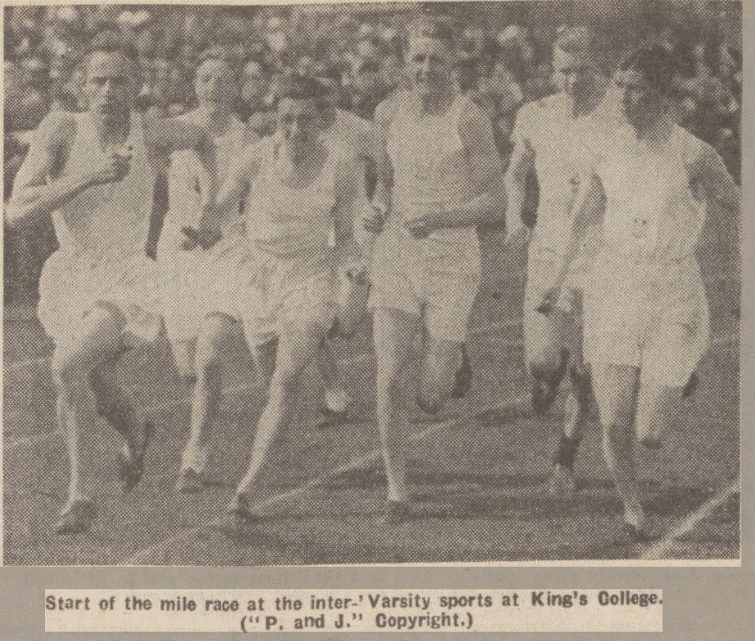
The Inter-Universities Championships were held on 13th June in Edinburgh and the result was a comfortable win for Edinburgh from Glasgow with Aberdeen third and St Andrews fourth. The pictures above and below are from the Scotsman.  Reid won the 100 yards in 10.0 seconds taking 0.2 from Liddell’s Universities Championship best time.   Miss Greig won the women’s 100 yards in 11.8 seconds.   Principal results were: 

100 yards:  1.   FP Reid  (E);  2.  R Murdoch (G);  3.  I Borland (G) 

220 yards:  1. FP Reid; 2. R Murdoch [dead heat]; 3. I Borland.  22.8

440 yards:  1. FP Reid; 2. I Borland; 3. CM Wells(E).  51.2

880 yards: 1. CM Wells (E);  2. NM Glen (G);  3. JH Gray (A). 2:02.8

Mile:  1. N Morrison (G); 2. DM Brander (G);  3. JA Murray (E). 4:34

Three Miles: 1. JG Jackson (G); 2. WH Whalley (E); 3. GB Esslemont (A).  16:08.8

120 yards H:  1. AS Kitchin (G); 2. CD Campbell (E).  17 sec

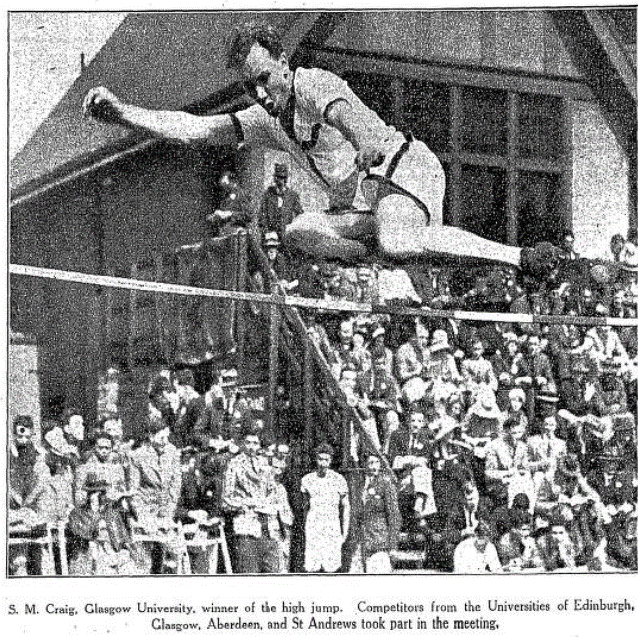
High Jump:  1. SM Craig (G);  2. HC Mereweather (E);  3. JA Robbie (A), GP Richardson (G), G Durran (E).  5′ 4″

Broad Jump:  1. PC Barkin (E);  2. H Watson (E);  3. WA Irvine (G)  21′ 11″

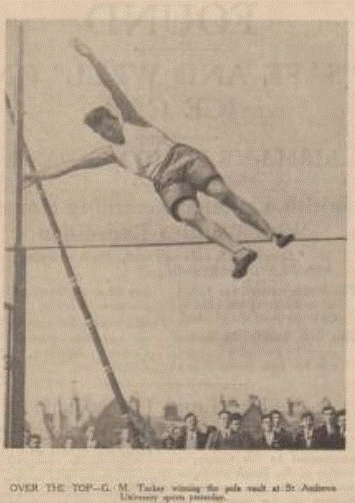
Pole Vault:  1. JM Mackay (E);  2. JH Edwards (E) and GM Tucker (St A) equal.  9′ 8″

Hammer:  1. RM Mackay (E);  2. DB Morren (A);  3.  D Morrison (G)   124′  8″

Shot Putt:  1. RG Radcliffe (G);  2. AM Geissa (E);  3. D Garvie (A).  38′ 2″

Discus:  1. RM Mackay (E) ; C Cockburn (A);  3. RG Radcliffe (G)  98′  1″

Javelin:  1. AM Geissa (E);  2. D Morrison (G);  3. NA Selkirk (G)   140′  9″

One Mile Relay:  1.  Glasgow;  2.  Edinburgh;  3.  Aberdeen.

100 yards ladies:  1. Miss LMH Greig (A);  2. Miss W Neilson (A);  3. Miss M Baird (G).   11.8 seconds

High Jump ladies:  1. Miss E McGill (G);  2. Miss M Baird (G);  3. Misses D Nimmo (A), W Neilson (A) and LMH Greig (A)  equal    4′  7″

Ladies Relay:  1. Aberdeen;  2. Glasgow;  3.  Edinburgh    54 seconds.

A week later in the Scotland  v  Ireland meeting, several of the winners from the inter-varsities took part.   Robin Murdoch won the 100 and 220 yards races in 10.2 and 22.6 seconds, and his fellow Glasgow University sprinter Ian Borland was second in the 440.   Wells of Edinburgh was second in the 880 yards behind Tom Riddell to provide a Scottish 1-2.

There were other meetings where the athletes represented their own local clubs or the Atalanta club, but the domestic University season was over.


University Track and Field: 1930

George Carstairs

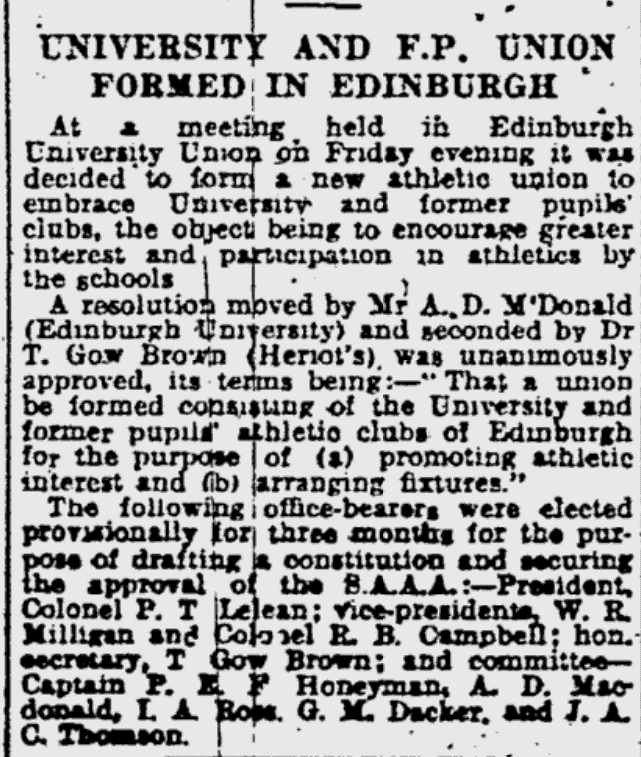
The university athletics season began on 19th April. 1930 at Westerlands with the first of a series of ‘training meetings’ held by Glasgow University on what was reported to be a very windy day with the javelin event cancelled because of it.   There were four events scheduled – 75 yards, half mile, long jump and javelin; they were were all handicapped.   The second in the series was on the Wednesday afternoon and 200 yards, 2 miles, hammer and broad jump were on the programme.   There was another such meeting on the Saturday with events being 120 yards, one mile, shot putt and high jump, all handicapped.   here was a mid week meeting on Wednesday 30th April when Robin Murdoch was the star of the show, as he had been on the Saturday, and the events were 80 yards, half mile, discus and broad jump.    Then on 3rd May the events were 80 yards, 440 yards, javelin and high jump.   The fields for the various events were reported to be much bigger and again Murdoch was the real star – he won the short sprint and only failed to win the 440 yards because of the impossibility of breaking through the big field.   By now others were starting to get organised for the summer – obviously the schools were gearing up with George Watson’s and Dollar Academy having their sports and Maryhill and Shettleston Harriers holding their annual field days.   The final GUAC training meeting was held on 10th May and the events were 80 yards, one lap (350 yards), discus and pole vault.   The actual championships were to be held the following week and enthusiasm was running high.   RAN Lapsley had acquitted himself well in the sprints and field events, Robin Murdoch was top-dog among the sprinters so far and NM Glen had run well among the distance runners.   The other universities had been following similar preparations for the summer’s sport and Saturday, 10th May saw not only Glasgow but also  Aberdeen had athletics championships.   On Friday 9th May there had been a special meeting held in Edinburgh.   Edinburgh University was arguably the strongest athletically of the four universities and this would have been a move to make the section even stronger.   The Glasgow Herald report read

On Saturday 17th May, 1930, the headline in the ‘Glasgow Herald’ read   “Lapsley and Borland Shine at Westerlands”   with a sub-head of “New Field Events Records”.   The meeting in question was the Glasgow University Championships and the report read:

“The wretched weather conditions which prevailed at Westerlands on Saturdaywere all against good performances, yet, on the whole, the Glasgow University students can view the results with a great deal of hope for their chances of success in the inter-University contest at Aberdeen in June.   Not only do these disclose that in AN Lapsley they possess a worthy and versatile champion of distinct promise, but also that Ian Borland has lost none of the form that brought him his championship just last season, while among the novices, on the flat at least, there is much good material that needs but development to ensure the future.   It was in the field that Edinburgh earned their victory last season at St Andrews, and it is here that the Glasgow men have made a distinct advance.   

During the meeting two new University records were made, both in the field events, and both by Lapsley.   On Wednesday evening he threw the Hammer 186′  4″,   three inches further than the previous Glasgow record, and 1′ 4″ further than the Inter-Universities record of RD Macpherson, while on Saturday, in the javelin, he had a cast of 180′ 5″, 5″ better than the previous best at a Glasgow meeting.   Lapsley also won the Discus with 103′ 6 1/2″, but when it is stated that he also tied for the High Jump with 5′ 4″ and secured third in the Broad Jump, it will be recognised that the old Hillhead boy is as good an all-round athlete as Gilmorehill has produced for a long time.   It is unusual to find a heavy weight expert, among amateurs at any rate, who can also take his place where agility is required.”

The report ran on but the main thing was the standard of the athletics and the standard thereof can be seen from the results below. 

The Aberdeen University event was held on the same day at King’s College Grounds but the Herald stated that there were no outstanding performances.   There were 13 events for the men and 4 for the women plus two relay races.   Among the ‘no outstanding performances’ were a Mile that was won in a time 6 seconds faster than Glasgow ( DF Murrel) and a half-mile won in 2:03.9 (DF Murrel) and a Three Miles won by DF Murrel in 15:54.2.

A week later the Atalanta Club took on the Achilles Club in Birmingham.   The Scottish team was minus Borland, Macpherson and Maingay and was well beaten despite some good performances, mainly by RS Howland in the Shot Putt and Mereweather and Lapsley who were first and second in the High Jump.   

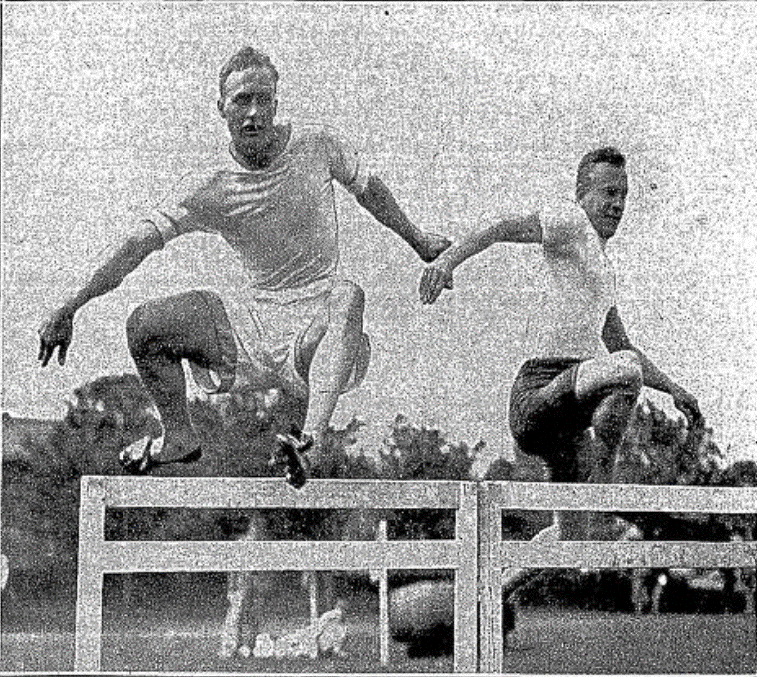
GM Dacker winning the EU 120 Hurdles from HC Hingst

The Edinburgh University Championships took place on 30th May at Craiglockhart.   The ‘Scotsman’ reported as follows: “In practically every case, the results at the Edinburgh University Sports meeting at Craiglockhart showed improvement on those of the athletes of Glasgow and Aberdeen Universities, who are to be met at Aberdeen on Saturday.   One record was broken and one equalled.   The weather was fine, though an easterly wind may have been troublesome for all but the 100 yards men.   It was not directly behind the short distance sprinters, and it is doubtful whether FP Reid, who equalled the record of 10 1/5th seconds, got much help from it.   He rose perfectly and was winning all the way.   He won the furlong and the 440 yards races later, and both in good times.   The record which was broken was in the Hammer Throw which was decided in the forenoon.   AH Ewen, a son of the Rev. JS Ewen, Liberton, had a fine effort of 128′  1/2″ which was a few inches better than the previous best.   He followed that up with victories in the Discus and Weight Putting contest, and his putt, just on 39 feet, was with the exception of RS Howland’s record last year, better than all the performances done at the meeting since the War.”

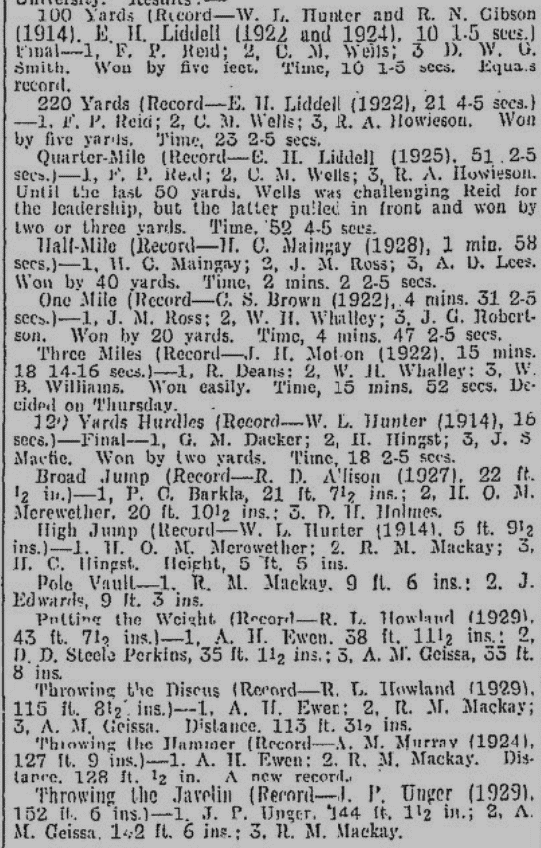
The report went on but the results were as follows: 


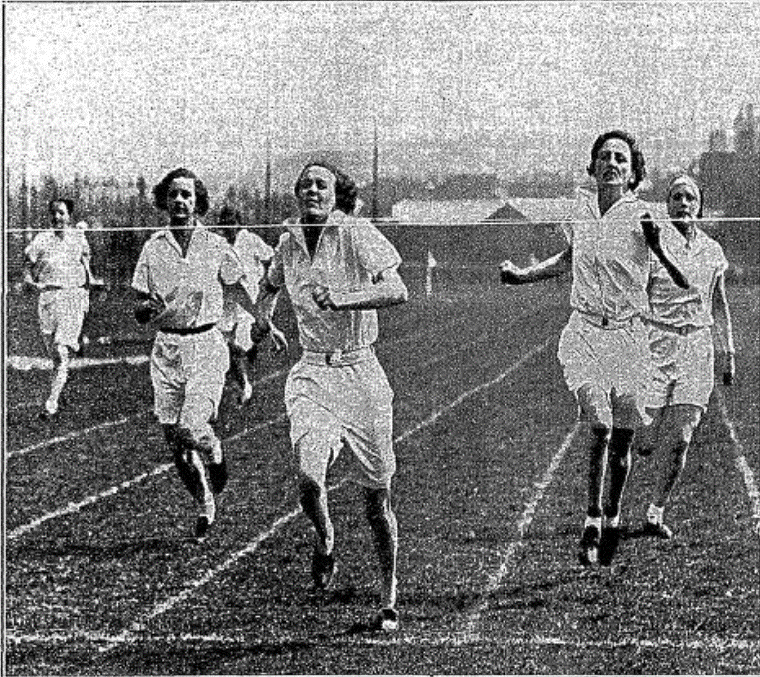
Miss R White winning the EU Ladies 100 yards at Craiglockhart in 1930


The two photographs below are from the Press and Journal for Monday, 9th June, after Aberdeen University hosted the Inter-Universities Sports, held in ideal conditions for good performances but unfortunately before a disappointing crowd..    The ‘Scotsman’ had the headline ‘EASY WIN FOR EDINBURGH’, the ‘Glasgow Herald’ had ANOTHER TRIUMPH FOR EDINBURGH’, and the ‘P&J  EDINBURGH THE CHAMPION UNIVERSITY’.   In the points contest, Edinburgh had 49 1/2, Glasgow had 34 3/4, and Aberdeen had 20 3/4 points.    The ‘Scotsman’ remarked “There were one or two surprising results at the Inter-Universities contest …. but the Edinburgh University students, thanks largely to a superiority in the field events, were able to record another victory.   After adjustments, the final placings gave Edinburgh University a margin of nearly 15 points over their Glasgow rivals, with Aberdeen University making one of their best performances for years.   Instead of being well out of the running, they had over twenty points, including two first places.”

Start of the three miles at the Inter-University sports in Aberdeen

The event that sparked most controversy was the shortest on the programme, the 100 yards.   The P&J reported:   “An unprecedented state of affairs arose in the 100 yards sprint, in which JC Thom, for Aberdeen registered a sensational victory.   He bounded away at the start, whil IC Borland, Glasgow, and FP Reid, Edinburgh, who were expected to fight out the finish, appeared to hang back, and the race was half run before they made their effort, which was too late, and Thom won by a yard and a half.   Subsequently the Edinburgh and Glasgow runners registered a protest regarding the start, but the judges decided that it had been fair, and the result stood.”   

Another shock result was the failure of Lapsley to get a place in the first three in the Hammer Throw, although he won the Javelin, was 2nd in the Discus and 3rd in the Broad Jump.

Miss Winnie Neilson wins the women’s relay race for Aberdeen.

Winners were: 100 yards: JC Thom (A) 10.8;  220 yards: IH Borland (G) 22 sec;  440 yards: IG Borland (G)  52.2;  880 yards: HC Maingay (E) 2:02.6;  Mile: N Morrison (G)  4:41.6;   Three Miles: R Deans (E)  15:49.8; 120y Hurdles: AD McDonald (E) 16.8 sec.    High Jump:  L Higney (G) 5′ 6 3/4″;  Broad Jump: TD Bowken (E)  22′ 3 1/4″; Pole Vault: WT Dalgarno (A) 9′ 6 1/2″;  Hammer: R Mackay (E)  120′ 10″; Putting the Weight:  AH Ewen (E) 36′ 8 1/2″;  Javelin:  AA Lapsley (G).   Discus: AH Ewen (E) 114′ 10 1/2″; Mile Relay: Glasgow 3:52.8.

Women’s events: 100 yards:   LMH Greig (A) 11.6; High Jump: E McGill (G) 4′ 5″; 440 yards relay:  Aberdeen 53.8 seconds.

The season progressed and the SAAA Championships were held on 28th June at Hampden Park in Glasgow.   The students did well.   Winners there included Borland in the 440 yards in 51.8,  and Maingay in the 880 yards in 2:00.4 while Ewen was second in the discus (114′) and Lapsley third in the javelin (150′).   This was followed by the International against England and Ireland on 12th July at Hampden Park where Borland was second in the 440 yards.   The Universities season was at an end although many of the athletes competed for their clubs or for the Atalanta Club.


Empire Exhibition Marathon, 1938

The Empire Exhibition, Scotland 1938 was an international exposition held at Bellahouston Park in Glasgow from May to December, 1938, culminating in a Sports Meeting incorporated into the Rangers Sports in August that year.

Postcard in 1938 of the public logo of the Empire Exhibition held in Glasgow

The Exhibition offered a chance to showcase and boost the economy of Scotland and celebrate Empire trade and developments, recovering from the depression of the 1930s. It also marked fifty years since Glasgow’s first great exhibition, theInternational Exhibition (1888) held at Kelvingrove Park. It was the second British Empire Exhibition, the first having been held at Wembley, London in 1924 and 1925.  The 1920’s were a time of serious depression, photographs of athletic clubs were totally different from photos taken after the second war (1939-45) in that those emigrating were going – almost in desperation – seeking a better life, hoping for a better life than was possible in post-war Britain.   James Reston of Clydesdale Harriers, a Scottish international runner and winner of many races and medals, left for America, settled in Dayton, Ohio, and his son, born in Clydebank, became one of America’s greatest ever journalists; known as Scotty Reston he interviewed and wrote about every American president from Eisenhower until he died, including Nixon, Kennedy, Johnson, Carter and the rest.   After the second war, many athletes left Britain, mainly for New Zealand, Canada and the United States but in a better frame of mind: the war had been won, the atmosphere was happier than in the 1920’s and they were emigrating in a can-do optimistic fashion.

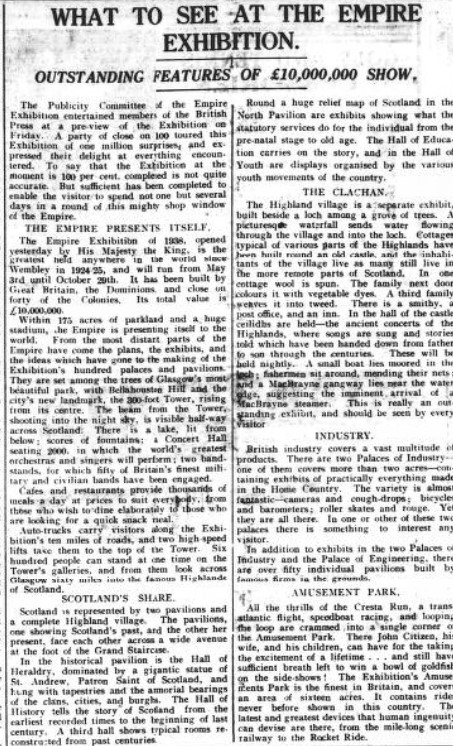
So the Exhibition was a celebration of the end of the miseries of the 20’s and a return to the Scotland that the people knew, and there was also an element of showing the increasingly threatening Germany of the strength of Britain and the commonwealth.    It was declared open by King George VI and Queen Mary on 3 May 1938 at the Opening Ceremony in Ibrox Stadium, attended by 146,000 people.   In addition to the Royal Patrons and the Honorary Presidents representing governments and institutions here and in the Dominions, the Exhibition President was the Earl of Elgin who was also President of the Scottish Development Council, initiators of the exposition.   There were many attractions to educate people about what the Empire could do and how far the power of Britain still spread.  The following is from the Kirkintilloch Herald of 4th May, 1938.


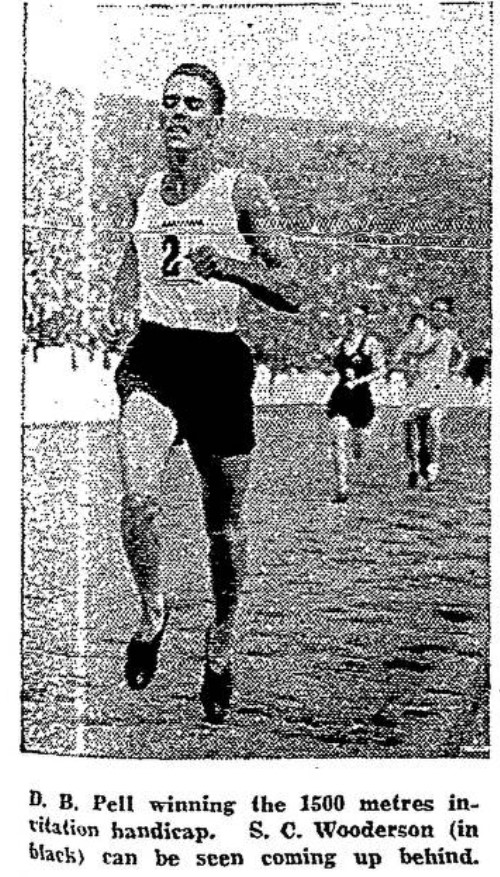
There were all sorts of special events and established events had a kind of celebratory twist to the proceedings.    For the sportsman, athletics and other events were held in August with exhibitions of various sports such as shinty.  The Sports at Ibrox Park  in August that year were quite special.   The international flavour associated with the Rangers Sports at the start of August was, if anything, enhanced for the occasion with a big team of Americans competing.  70,000 spectators went along to the meeting where the highlight was  Sydney Wooderson’s attempt on the world 1500m record.   He only failed by 1.2 seconds to break Lovelock’s record when, in a handicap race he just failed to overhaul the entire field , he was timed at 3:49. 

There were however four Scottish all-comers records broken –

*the quarter mile was won by W Fritz of Canada in 48 seconds running from scratch in the handicap race with JW Loring of Canada second off 6 yards and CF Campbell of Springburn third;

*the half mile was won by FR Handley of Salford in 1:52.4 off 6 yards but the third placed AH Colyer of Watford,running from scratch, ran 1:52.8 which was a new all-comers record’

*the 120 yards hurdles was won by Don Finlay of the RAF in 14.7 from J Patterson and A Tolmich, both USA;

*and pole vault where DM Hastie of Hill HS with a handicap of three feet nine inches won the competition but C Warmerdan cleared 14′ 3″ to create new Scottish and British all-comers records.   

The open events too had many top class fields, two examples from many –

Allan Watt of Shettleston (2 yards) won the 100 yards from A Maitland (7 yards), Victoria Park, and WTO Waddell, (3 yards) unattached in 10.7; 

the first three in the 8 laps steeplechase were JC Ross of Shettleston, Gordon Porteous of Maryhill and Adam McLean of Greenock Glenpark.

There were also exhibitions by American athletes in the shot and discus where the distances would have been Scottish records too had they been done in bona fide competitions.   Then there was the Marathon.


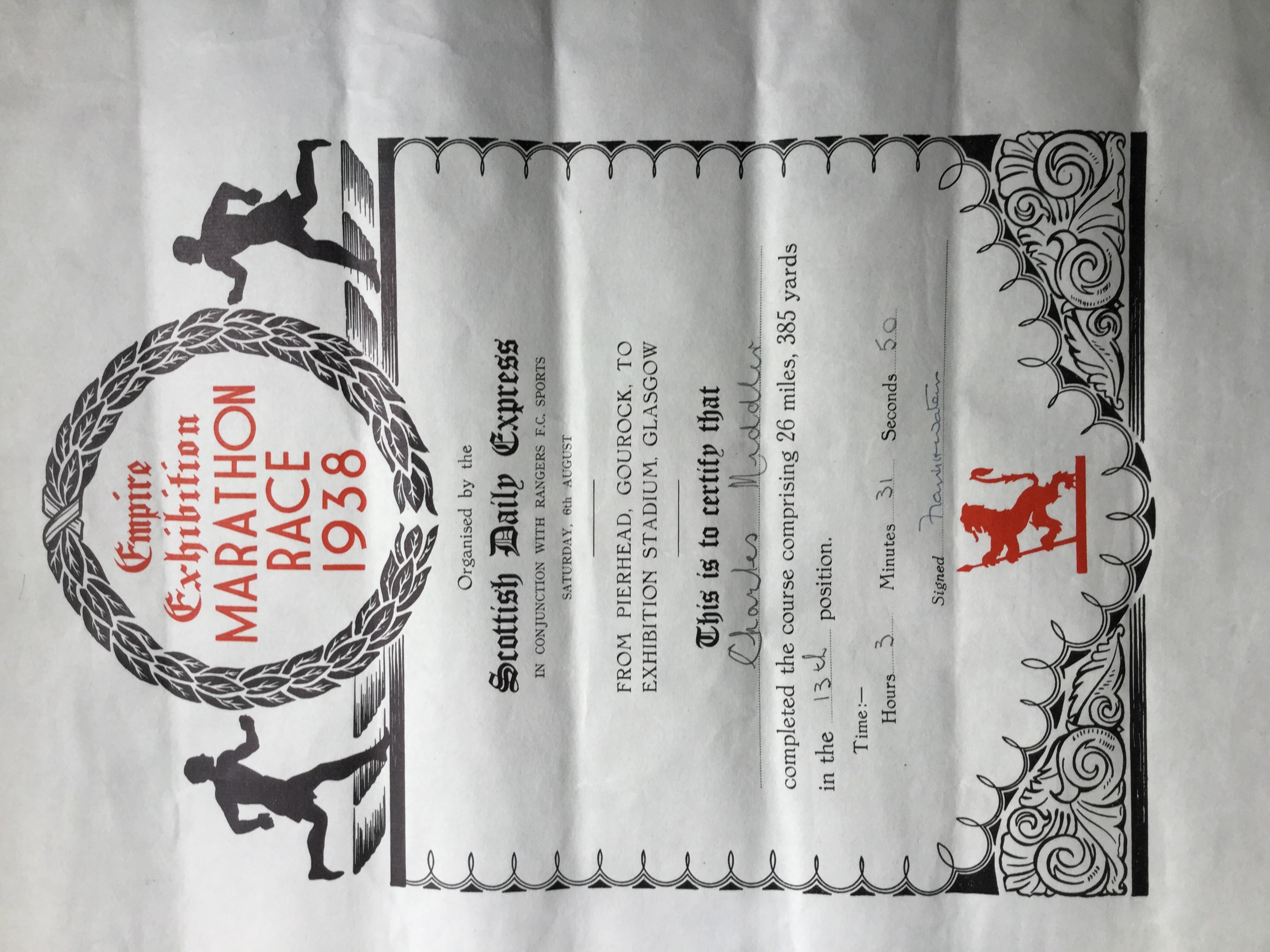
There was a genuine 26 miles 385 yards marathon race.   There had always been a ‘marathon’ race at the Rangers Sports but it had usually been over 17 miles.   On this occasion it was the full distance.   At this time, point to point races were in vogue with events like Drymen to Firhill being run: the organisation and mild chaos of the start being conducted away from the arena but the sports promoters would put up the prizes and have the finish of the race in their arena as part of the sports.   The race started at the Pierhead in Gourock and terminated in Ibrox.    Road races usually went off perfectly but this time there was a wee hitch.   There were so many runners entered for the mile that two well populated races were held – the first won by Andy Coogan of Maryhill (110 yards) in 4:12.8, the second by J Kerr, Hillington, (160 yards) in 4:14,6.   So far so good but the winner of the marathon – TF Lalande of South Africa, and a member of Herne Hill Harriers in London, – entered the arenawhile the mile was in full swing and the track crowded with bodies.   He had to make his way through as best he could after 26+ miles of running, to make it to the finish through what the Herald called ‘a maze of runners’.   Fortunately he was approximately a mile ahead of the next runner, T Strachan of Glasgow YMCA.    The race result:

  1.   TF Lalande,  South Africa   2:46:58
  2.    TA Strachan, Glasgow YMCA   2:54:12
  3.    LH Griffiths, Herne Hill Harriers   2:57:27
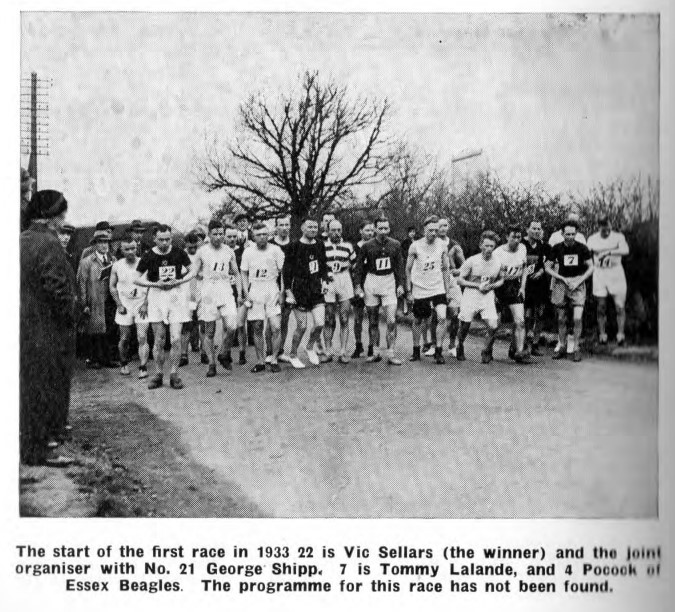
  4.    VB Sellars   Finchley Harriers   3:10:57
  5.    E Browne,  Lancaster Primrose   3:13:20
  6.    J O’Brien,  Port Talbot AC   3:14:30

There was only one Scot in the top six.   Lalande was born in Durban, Kwa Zulu-Natal, South Africa on 31st December 1904.   He ran in the 1936 Olympic Games in Berlin where he finished down the field in 27th place of the 42 finishers from 60 entries, in 2 hours 57 minutes 20 seconds – the Scottish temperature seemed to suit him better if the time is anything to go by.   His personal best was 2:36:18 which was run in 1936, but the Berlin Games can’t have been much fun for a black South African.   He moved to London and ran for Herne Hill Harriers where he finished second in the second ever Finchley 20.


International Coaching Conference: 2005

Scottish Athletics International Coaching Conference – Nov 05
Long Term Athletics Development

I have been asked to share with you an overview of my experience in the LTAD of Scottish World Class Athletes, Tom McKean, Yvonne Murray-Mooney and Susan Scott. The timescales involved were: –

Tommy Boyle Coaching Career – Club – World Class Athletics
1968-Present
Tom McKean
Phases I – IV Coached through all stages of development – recruitment – training to win at World Level
1974 – 1993
(age 10) (age 29)
Yvonne Murray-Mooney
Phases III – IV Coached last part of competition development – training to win at World Level
1987 – 1998
(age 23) (age 34)
Susan Scott
Phases III – IV Coached through competition development – Currently being coached – training to win at World Level
2001-Present
(age 28)

The results achieved in the development of these athletes were only possible due to combining the vast experience which I have gained over many years working with young athletes in the club situation and equipping myself with a balanced mix of coaching theory and practical experience much of which was gleaned from attending coach education courses in Scotland, learning from the experience of many top Scottish coaches and researching literature from the rest of the world.

Ultimately, however, to be successful in coaching athletics, the coach must have the inner desire to be the very best.

I will use the experience gained with Tommy McKean to outline a successful example of LTAD from recruitment to World Class.

Clearly, I cannot go into great detail in the time allocated for today’s lecture. However, I shall try to give you an overview of the key elements in the development process and include a more detailed summary in your hand out lecture:-

Fundamental Coaching Principles

Each coach gradually develops their own ideas on what is important. Thankfully, athletes are still individuals and, as such, require varying approaches to achieve their optimum level of performance. There is no one way in coaching but some things are more essential than others in the development of the athlete.

The important thing for the coach is that you take a sound knowledge of current training theory, mix it together with practical work in the field and gradually improve the blend as you gain in experience and are able to adopt a more critical assessment as to the effectiveness of your training programmes. A few of the key points which I feel are important in the overall development process are:-

• Training must be enjoyable – first measure of a successful coach – do the kids come back to training?
• The variety of training is restricted only by the limits of one’s imagination;
• Ensure a sound base of general conditioning is established and that it is progressive – absolutely fundamental in today’s society;
• Do not specialise too soon – let the young athletes sample the full spectrum of athletics events – multi-sided approach;
• Gradually install the discipline of training;
• Excessive loads for prolonged periods have a negative effect on the future development of the young athlete;
• High mileage/one-paced running must be avoided;
• Basic running technique must be taught early and improved in parallel with the physical development of the athlete;
• Life must be kept as simple as possible until the athlete has emerged through the myriad of problems which surround the pubertal growth spurs and adolescent revolutions;
• Prepare to meet the enormous challenges when the athlete stops progressing through natural growth and becomes totally dependent on the stimulus of training for improved performance;
• Know why you are doing each session what effect you are going to get and be ruthless in the evaluation of the effect;
• Scrutinise the requirements of the events and the projected progressions – what time must an athlete do for 200/800?
• Be objective in the assessment of the athlete’s potential to meet those requirements;
• Do not compromise on your principles – no matter how good the athlete;
• Pursuit of excellence is not only for the athlete – it is every bit as important that the coach has the desire to improve and is not afraid to venture into the upper echelons of the sport. I want to be World Class!
• There are no magic solutions, however, through the application of sound principles, combined with a common sense approach, an abundance of patience, enthusiasm and a lot of hard work, one can ensure that both coach and athlete produce their very best.
• If the coach has ambition and provided the athlete has 100% confidence in the coach then the athlete gradually gains 100% confidence in their training (the key to success at World Class);
• Finally, my experience working with World Class athletes in Scotland is that you must leave no stone unturned in the pursuit of excellence – you must be prepared to take risks – be totally aware that you will be a big fish in a small pond and when the inevitable poor performances occur you will be criticised totally out of context of the performance – you and your athlete will be given a wide berth by your athletics colleagues and officials. You must have faith – support your athlete 100% – go where the critics fear to tread – rebuild the athlete’s confidence – both live your dream – it can be done by Scottish Athletes and coaches !
Tom McKean – Phases of Development Process

Phase I – Introduction to Athletics (11-16) – (Base of the Pyramid)

Tommy was like many youngsters attracted to athletics by establishing a role model via media coverage of major championships – being encouraged to participate in school cross country – by an enthusiastic head teacher and actually enjoying the amazing feeling of being good at the sport of athletics – he was recruited to the local club, Bellshill YMCA – where the foundation for LTAD was laid – the basic principles being:-

• Multi-sided approach – fun and games training;
• Solid aerobic foundation through team games, cross-country;
• Basic disciplines instilled in the individuals/teams;
• Coaching pass through system utilised U11, 11-13, 11-15, 15-16;
• Group session games – aerobic running – running round the streets;
• School – competition given priority;
• Competition emphasis – Teams – Inter-Club – County – Inter-County– National Schools – British Schools and Age Group Internationals;
• Tommy was good at cross country and showed his first real spark when in 6 inches of snow at the National Cross Country he came up from 60th to 3rd in the last 800 metres – he had that desire to win!
• He was just one of many good young athletes who formed the recruitment base of Club Athletics. He was not the best in that age group, but most importantly he enjoyed the variety of training and was given a very broad base of the conditioning foundation for future development!!

Phase II – 17

Cross country was still used as conditioning but circuit training was now of increasing importance as the emphasis was swinging more emphatically towards sprinting. Stricter disciplines were learned through training with older age groups and working towards targets was encouraged, motivation ensured via team competitions but now in sprint relays and 400 metres whilst still competing at all distances through to 1500 metres.

Phase II – Junior Man – 17-19

Cross country is now seen only as conditioning with races as fitness tests or fun with the boys. Weights were introduced in the circuit format with the major training objective being the development of sprinting ability and refinement of technique – aiming to significantly improve 200/400 metre times which would be the limiting factor in subsequent specialisation at 800 metres if we recognise where the event was going with Sebastian Coe’s world record 1m41.73.

Success as a second year junior indicated that Tommy was now responding very well to the stimuli of specific training for sprinting whilst still retaining through conditioning work the ability to race at 800 metres. Fundamental to future development!!

Phase II – First Year Senior 19-20

The plan was to reduce his 200/400 metre times but with a shift in emphasis via the introduction of structured track training for 800 metres. However, disaster struck when we increased intensity too quickly during the transition in track training: result – shin problems which, combined with a typical cavalier approach by a 19 year old, we had a bad injury which almost finished his athletics career through the sheer frustration of having trained hard all winter only to miss the full track season. Fortunately, Tom Craig (his physio at that time) did an excellent job – gave Tommy one race where he finished second in the Scottish 800m Championship. This kept him in the sport, but only just. The increased free time, meeting girls, loss of the training discipline, resulted in the gradual realisation that he was not going to fulfil the promise which the previous year’s performances were suggesting he was capable. I had a head on collision with Tommy where the hard facts were laid on the table: either 100% or nothing, and for some three months, he messed about before eventually recognising that he was throwing away the very thing he was good at. As a coach, I learned much from the situation: you can be the best in the world with the most talented athlete but unless he wants success more than anything else – forgot it – you’re wasting your time! The other harsh fact which emerged was the reality of our sport in Scotland: here we had another talented athlete out for a year and no-one asked a single question why. It was a case of facing up to the facts and organising myself accordingly to ensure that I was suitably equipped to breach the chasms which existed in the athletics system.

Phase II – Second Year Senior 20

The first objective was to consolidate the pre-injury performance and then to begin the next phase of development which was to specialise in the 800 metres event. Tommy was gradually introduce to increased workloads, training plans, short and long term objectives and gradually the process of transferring greater responsibility to the athlete was underway. Major and minor objectives were established and achieved – confidence in the coaching and training increased through realisation of mutual goals – discussions were now common with valuable feedback flowing in both directions. The year was concluded by introducing Tommy to a four year plan, aimed at Edinburgh/Stuttgart and, as we were now half way through having successfully achieved all objectives, it served the dual purpose of establishing confidence and presenting even greater challenges.

Phase III – Third Year Senior 21

This was the crucial year where we planned meticulously for the break-through and transition to full UK international. The key steps were:

a. Breakthrough – win UK closed – easier in a low year
b. Get Time for Selection – Rather difficult if you cannot get races, therefore, we used an agent as this was the only way to get a race abroad unless you had a time!
c. Consolidate Selection – It was crucial to either win or be second.
d. Gain Experience at Back/Back – This was important for next year’s games. “Training on the track became more specific to the requirements of the event with many sessions involving competition specific and race simulation situations faster than race pace.

In parallel with the planning for on-track activities, it was essential that we maximise on the publicity and organise the off-track activities to ensure that Tommy could concentrate 100% on producing his best performances in the correct competitions. I ensured that the correct level of exposure was obtained from each success, a fine balance was maintained, sponsorship was negotiated and a job secured that would allow the correct mix of training – leisure – work – for progression in the next year.

The competition season went as planned with one exception – with Europa Cup selection and win was a bonus which unfortunately upset our plans to use Zurich – Berlin – Cologne as back-to-back situations.

The big question which I was now being asked was – “Is he a one-season wonder or do you really know what you are doing?” – We shall see!

Phase III – Fourth Year Senior 22

Careful analysis of the previous year’s situation clearly indicated that we had several flaws in our armoury. To reinforce these weak spots necessitated strengthening the support team. Fortunately, Tommy’s major sponsor, Glen Henderson, in addition to being a very successful motor dealer, was also a very knowledgeable sports enthusiast who specialised in speed skating and was able to advise which direction we should move if we were to continue to progress in the cut and thrust arena of World Class athletics. This was gradually achieved by the recruitment of the best help which we could find: every aspect was improved.

Training workloads were increased in line with the requirements of three-round championships. Physiological testing was commenced to monitor the effect of present and past training and to provide a more accurate guidance of future training. Physiotherapy was made more readily available and this, as Glen Henderson had predicted, proved to be a crucial factor when Tommy was injured in three separate occasions but was still able to complete “safely” and “successfully”.

The objectives were established – competition plans compiled in such a manner that the minimum of exposure would obtain the desired effect – recognising the degree of expectancy which would inevitably exist and gather momentum leading up to the Commonwealth Games. Experiments were conducted in minor races, previous personal bests achieved but, importantly not surpassed, offers to run in major races were politely refused, the opposition and their ploys totally ignored as we became engrossed in the seemingly impossible task of getting Tommy through the injuries in the correct mental attitude. This was done and the final preparation for Edinburgh checked and re-checked by Stuart Hogg, long time friend and senior sprints coach. Nothing was left to chance in our quest for competitive advantage for the athlete – result: 2nd position – 1m44.80, new Scottish National/Native Record.

The next task was to overcome the vacuum created by the post Games anti-climax. This proved to be an ever bigger problem than I had thought it would be and this is where the team approach really “proved its weight in silver”. Our solution to the problem was a total change in environment – training partners – coach – and probably most important to escape family pressures – a very high risk some might say but we prefer to think that the final week’s preparation in Glenrothes was a sensible response to a very difficult situation – result: Coe 1st, McLean 2nd, Cram 3rd – new Scottish Record – new PB.

Phase III

The final year of the fourth year plan was focused totally on preparation for the Olympic Games; the training year was carefully planned with the emphasis on ensuring Tommy had enough high level competitions to give him the confidence which would help him overcome the mental scar of 1987. Unfortunately, a training overload error, coupled with a frosty morning on the grass at Strathclyde Park, resulted in an achilles tendon injury – 6 weeks out of running.

Thankfully, by this time we had a World Class back-up team and collectively Dave McLean, Prof. Myra Nimmo and myself combined every last grain of experience we had to develop a training program which would ensure Tommy was physically conditioned to the highest possible level utilising circuits/weights/aqua area/jogging. We developed our own regime of training and experimented with effort/recovery until we simulated as near as possible what was required – ultimately succeeding in that vital minefield where most athletes fail the transition to running load intensity increase.

By the end of June Tommy was competing at World Class level and arguably had one of his most successful seasons at GB level tipping the world rankings and winning the GP final.

This was not translated into Olympic results primarily due to an off track issue which resulted in a front page exposure in the Sun Newspaper on the day the team left for the Olympics.

Consequences – mind blown – lost his focus in the 2nd round – pushed an athlete – qualified for the semi but was subsequently disqualified when I believe he was in the condition of his life and would have won a medal for Britain.

– Disaster recovery programme implemented – !

Phase IV
The next five years were dedicated to the task of developing Tommy’s ability to win at World Level. During this five year period, he ran 10 of his best times:-

1989
• Increase in exposure to Grand Prix Competition
• Taking on the best in the world week after week
• Front running the Scottish Championships and new Native Record 1:44.79
• Chasing and beating Paul Erang (Olympic Champion) unbeaten over 20 races in one of the best races of his career (1:43.9 – Scottish National Record at Crystal Palace)
• Winning Grand Prix Final
• Finishing Top world rank at 800m

1990
• Commonwealth Games in Auckland – insufficient comps
• AAA Indoor gold
• European Indoor Gold
• Increasing number of major wins
• Climax in superb win front running the European champs in split

1991
• Fourth European Cup Win
• Major wins in Europe
• Minor mistake – major impact eliminated in heat of World Champs finishing 2nd to Mark Everett, a World Class 400m runner

1992
• Re-established confidence and regaining winning ways
• Major wins in Grand Prix
• Qualified for Olympics – ran bad race

1993
• Won AAA Indoor
• Won World Indoor Gold
• End of coach/athlete partnership

Age
Year / Date PB Event Psn Time
200 800
Phase IV 29 ‘93 World Indoor Gold 1st 1:47.29
28 ‘92 GP Final (Bronze) 3rd 1:46.06
1:44.39 Cologne GP 3rd 1:44.39
27 ‘91 1:44.20 Malmo GP 2nd 1:44.20
Stockholm GP 1st 1:44.41
Europa Cup (Gold) 1st 1:45.60
26 ‘90 1:44.76 European Champs (Gold) 1st 1:44.76
Example of a Competition Year 14/9/90 Sheffield 1st 1:46.50
9/9/90 Rietie 2nd
29/8/90 Peak Split 1st 1:44.70
17/8/05 Gateshead 1st 1:45.50
7/8/05 Malmo 1st 1:45.30
4/8/90 1:44.44 AAAs – Trials 2nd 1:44.44
20/7/90 Crystal Palace 4th 1:45.15
12/7/90 Lausanne 1st 1:45.67
6/7/90 Edinburgh 1st 1:44.96
2/7/90 Stockholm 2nd 1:45.75
29/6/90 GB v GDR v Canada 1st 1:46.98
1/90 C Games Auckland
2/90 UK
2/90 AAAs Birmingham 1st 1:46.90
3/90 European Indoor Champ (Gold) 1st 1:46.22
25 ‘89 World Cup (Kiproketch) (Gold) 1st 1:44.95
Zurich Champs 5th 1:44.20
Scottish Native Crown Point (Gold) 1st 1:44.79
Scot. Nat. Record 1:43.88 London GP – “Erang” 1st 1:43.88
European Cup (Gold) 1st 1:46.94
Phase III 24 ‘88 Olympic Games H2 Disq. Personal Issues
GP Final 1st 1:47.60
1st 800 IAAF Ranking
23 ‘87 1:44.45 World Champ Final 8th Media Expectation
Europa Cup (Gold) 1st 1:45.96
Luagana GP – “Konchela” 1st 1:44.45
22 ‘86 1:44.61 European Champ (Silver) 2nd 1:44.61
1:44.80 Commonwealth (Silver) 2nd 1:44.80
21 ‘85 21.60 1:46.05 Budapest GP 2nd 1:46.05
Europa Cup (Gold) 1st 1:49.11
UK Champs (Gold) 1st 1:49.12
Phase II 20 ‘84 22.38 1:48.04 Scot Cat. 1st Scottish International
19 ‘83 22.40 1:49.80 Scottish Champs 2nd 1:49.18
Injured – shins
18 ‘82 22.80 1:49.30 Scottish Champs 400 1st 1:49.30
8 Nations 1st Exposure
17 ‘81 22.90 1:52.60 W. Dist. 800 1st
Scottish Junior 400 1st
Phase I 16 ‘80 23.50 1:54.10 British School 800 1st
W. Dist. 200 1st
15 ‘79 24.00 1:59.70 British School Cross Country 16th
14 ‘78 24.50 2:08.00 Scottish School Cross Country 4th
13 ‘77 25.70 – School and Club Competition
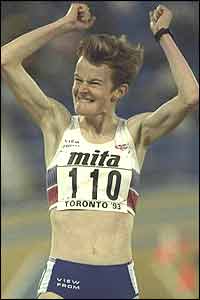
Yvonne Murray-Mooney – Phase III – 1987/1988

I started coaching Yvonne in late 1987. She had by that time been successful in reaching international level with many age groups and best times to her credit – she now wanted to win at World Class Level.

The challenge was to take the vast reservoir of coaching knowledge, the support of the back up team already in place and to quickly conduct a total assessment.

• The requirement of the event at World Class Level;
• The training required to meet those requirements;
• The current status of the athlete relative to the requirement.

This was completed over the first few months and a clear set of objectives put in place to ensure that Yvonne was both physically and mentally prepared for the Olympics in Seoul, a gigantic task given the added challenge of location and climate. The main elements of the change process included:-

• Implementation of the professional support developed for T McKean;
• Total review of lifestyle balance;
• Establishment of supporting sponsorship – job/car/finance;
• Total review of training load/intensity;
• Commence the learning process coach/athlete/support team.

What emerged was a much stronger athlete both physically and mentally prepared and more confident entering the competition season – result Bronze Medal in Seoul. A fantastic team effort in the process of developing world competitive performance – and peaking at the correct time.

1989 – The final Year in Learning to Compete

This year consisted of consolidation of the training regime which we had implemented.

• Increasing load – reducing recovery/increasing intensity
• Improving every aspect of technique – circuits/weights/running
• Construction of a competition programme which allowed experimentation in the manner Yvonne would win her races
• Lifestyle balance was again improved with every aspect scrutinised and corrective actions implemented
• Learning to change pace – kick from various distances

During the complete season I spent three weeks on the European circuit with Tom and Yvonne learning how they coped with the situations and each other this was to prove a very valuable experience in preparing for the Europeans in 1990 – result was an extremely successful competition season with many fine performers – experimenting in every race – and finishing in winning the Grand Prix final in Barcelona.

Grand Prix Final Kick 200 (Gold) – 9:02.59 3k
World Cup Final Kick 800 (Gold) – 8:44.34 3k
First British Winner of Women’s Track Event at World Cup Final.

1990 – Phase IV – Winning at World Class Level

The objective was to develop a double periodised competition plan aimed at preparing an athlete to compete in the Commonwealth Games in Auckland, New Zealand in January with a second competition phase aimed at winning the European 3k in split Yugoslavia in August.

The challenge was immense, and included:-

• Further refinement of all training loads;
• Meticulous planning of double periodised year;
• Travel – accommodation – medical – physio – communication;
• Pre-Games Australia  Games Auckland
• Coach support in Auckland – T Boyle/S Hogg;
• Competition opportunity – 1 Comp – Result Silver 3000;
• Transition back into volume training in Scotland.

The main objective that year was to prepare for European Champs split. This consisted of:-

• Meticulous planning of load intensity;
• Thorough evaluation of competition;
• Competition season designed to create picture in opposition mind;
• Final preparation – in warm up area – knowing Tom McKean had just won Gold !

Result – Gold Medal 3k Kick from 550

1991

Yvonne was very keen to give altitude a try. This was World Champs. Year and we decided that it would be best to use this year – we planned carefully with time spent in Johannesburg then Capetown and back to Johannesburg before returning to Scotland – it was not a success the variables were too many and we certainly learned the greatest issue was Yvonne training on her own. I was shocked when I arrived in Capetown to see how much she had lost v. plan and was obviously aware that this was not right so yet again coaching recovery plan – rebuild, reassure, realign – we got things back on track but the experiment did not work.

The main competition season:-

• Major mistake in Europa Cup, Frankfurt when we decided to experiment with Yvonne going after one lap. She went too fast on that first two laps and really suffered. As a consequence, an experiment which backfired
• Quickly back on course with good victory at Meadowbank in 8:36.05;
• The Worlds went reasonably well but it was clear that the opposition were ready to pounce when Yvonne kicked – we knew that would be the case – result 4th.

Phase IV – 1992 – Objective – Olympics

• The year was focused at preparation for the Olympics
• Main competition season went well – most objectives achieved
• Major issue was trying to overcome the acclimatisation to heat
• Result Olympics – did not perform to capability in the conditions.

1993 – Objective World Indoor – Grand Prix – Success

• Warm weather/altitude in Arizona – M Ritchie
• World Indoor – Gold Montreal
• Excellent performance in GP throughout the year
• 2nd in Grand Prix Final

1994 – Objective – Commonwealth – 10k

• Transition to 10k training
• Scottish National Record in Oslo Mile 4:22.64
• Scottish/Uk Record in Edinburgh 2k 5:26.93
• Silver in European Champs 3k 8:36.48
• Gold in World Cup 3k 8:56.81
• Gold in Commonwealth Games 10k 31:56.7

Arguably, Yvonne’s highest level of performance in her career 5 1st places and 7 2nd places at World level. A fantastic year in what was effectively her final serious track season.

1995-1998 – Transition to Road

The next few years were spent in transition to road racing with varying degrees of success and failure, but never really consolidating a successful recipe.

End of coach/athlete partnership!

Summary of Achievements

Bronze Medal 1985 European Indoor Championships
Silver Medal 1986 European Indoor Championships
Bronze Medal 1986 Commonwealth Games at Edinburgh
Gold Medal 1987 European Indoor Championships
Bronze Medal 1988 Olympic Games at Seoul
Gold Medal 1989 World Cup at Barcelona
Silver Medal 1990 Commonwealth Games at Auckland
Gold Medal 1990 European Championships at Split
Gold Medal 1993 World Indoor Championships at Toronto
Silver Medal 1994 European Championships at Helsinki
Gold Medal 1994 Commonwealth Games at Victoria
Gold Medal 1994 World Cup at Crystal Palace

– Ranked Number Two in the World in 1994 for the Mile, 2000m and 3000m
– First British Female to win a Gold Medal in the World Indoor Championships
– First British Female to win an individual track Gold Medal in the World Cup
– First British Female athlete in 21 years to win a European Championship Gold Medal in a track event
– The Honour of MBE was bestowed upon Yvonne at Buckingham Palace on 12th March (New Year Honours List 1991)

Appendix III
Y Murray-Mooney –
Progression and Significant Achievements (including ex 1994 Comp Year)

Age Year / Date
1500m
3000m Other Major Event Psn
Training to Road 33 1998
32 1997
31 1996 1:12.25 Half Marathon
30 1995 53:3.50 10 Miles – Portsmouth
14:56.44 5 Miles – Crystal Palace (Scot. Nat. Record)

Phase IV 29 1994
Example of a Competition Year 11/9/04 8:56.81 Crystal Palace World Cup 3000m (Gold) 1st
4/9/04 5:38.0 Sheffield GP 2000m 2nd
24/8/04 31:56.97 Victoria Commonwealth 10k (Gold) 1st
10/8/04 8:36.48 Helsinki 3000m – Euro. Champs (Silver) 2nd
22/7/04 4:22.64 Oslo – Bislett 1 mile 2nd
20/7/04 4:04.18 Gateshead 1500m (Front Run) 1st
15/7/04 8:29.6 Crystal Palace 3000m (0.5 off PB) 2nd
8/7/04 5:26.93 Meadowbank Inv. 2000m (Scottish Nat Record) 2nd
12/6/04 4:01.44 AAA 1500m (Silver) 2nd
22/5/04 15:23 Aberdeen S/CD R/Race 2nd

28 1993 8:41.59 GP Final 2nd
5:36.03 Sheffield GP 1st
8:32.43
Brussels GP 2nd
8:33.62 London GP 1st
8:30.70 Oslo GP 2nd
4:17.5 Europa Cup (Bronze) 3rd
15:20.01 SK Road Aberdeen 2nd
8:50.55 World Indoor Toronto (Gold) 1st
27 1992 Olympic Final Barcelona
5:35.38 London GP 1st

26 1991 World Champs, Tokyo 4th
8:36.05 Edinburgh GP 1st
25 1990 8:43.06 European Champs (Gold) 1st
16/9/90 5:35.53 Sheffield GP 1st
19/9/90 8:39.46 Commonwealth Games, Auckland (Silver) 2nd

Phase III 24 1989 9:02.58 GP Final (3rd World) 1st
8:44.34 World Cup Barcelona (Gold) 1st
31/8/89 4:03.13 Brussels GP 3rd
7/8/89 4:03.58 Edinburgh GP 3rd
European Cup (Silver) 2nd
23 1988 8:29.02 Olympic/Scot. Nat. Record (Bronze) 3rd
10/7/88 8:37.22 Nice GP 1st
22 1987 4:01.20 8:48.15 Europa Cup (Silver) 2nd
21 1986 4:11.20 8:55.32 Commonwealth Games Edinburgh (Bronze) 3rd
20 1985 9:00.94

Appendix IV
Susan Scott

I started coaching Susan at the end of 2001, at which time she had progressed through Phases I-II with her previous coaches and had achieved a good level of success at Scottish age group level with a clear bias towards 1500 and cross-country.

Phase III – Competition Development

The first objective was to conduct a total review of both her training and lifestyle and identify a more professional approach which would ensure she was being equipped to meet the requirements of the event and to give her the foundation from which she could over subsequent years achieve performance to the optimum of her capability. The areas included:-

• Use of pulse monitor to control effort in OBLA;
• Aerobic running at correct sub-OBLA pace;
• Structured circuit training – intensive/extensive;
• Performance of basic weight technique and structured programme;
• Inclusion of technique running/sprinting sessions;
• Introduction to pyramid concept for all training;
• Education on lifestyle balancing – recovery – nutrition;
• Total review of athlete’s ability v. event requirements.

The changes were significant. However, the training was successful and resulted in an improvement in every aspect of training performance which was subsequently translated into a major breakthrough winning Scottish, AAAs and finishing 4th in the Commonwealth Games with a time of 1:59.30. The first Scot to break 2 mins !

2003

This year was totally focused on teaching Susan how to race at World Class level in 800m and refining the training regime ensuring consolidation of the multi-sided approach. The major points of focus were:-

• Training loads increased – recover cut – intensity increase;
• Lifestyle balance improved – more recovery;
• Financial support – reviewed – major issues identified not resolved!!
• Race programme – learning to peak;
• Competition exposure – International/Europa Cup/Grand Prix;
• Susan did exceptionally well but had much to learn about the art of running 800m at World Class Level!

2004

The objective was simple – gain Olympic qualification

• Training refined, loads increased to meet requirement of event;
• Year plan developed – training – all objectives met;
• Competition Plan – MAJOR PROBLEM AREA;
• Funding reviewed – Inadequate to allow full-time training (3 day week)

In summary, the result was that Susan (despite being in tremendous physical condition) spent most of her competition season trying to consolidate a competition programme which would ensure the correct level of exposure at the appropriate time to provide the requisite number of opportunities to obtain qualification – she narrowly failed to do so.

Indeed, athletics failed Susan Scott.

2005 – Phase IV – Learning to Win at World Level

The first part of the winter was spent conducting a total review of the support and competition requirements with Aileen McGillivary, High Performance Athletics Manager, SIS. Major issues and improvements identified were:-

• Improvement in communication loops/timeframe SIS/coach/athlete/support team;
• Refinement of Sports Science –support including
o Field testing of OBLA/track reps/blood test/nutrition/physio
• Securing a Race Agent to provide the requisite level of competitions;
• Review of funding – still a major issue;
• Competition objective simple qualification/CG/800/1500 win AAA
• Training – Emphasis changed to include 1500m.

In summary, 2005 was a successful year for Susan, the key highlights being:-

• Recovering from tremendous disappointment of failing to qualify for OG;
• Successful adaptation to increase workload for 1500m;
• Improved competition plan – agent support;
• Qualification times for 1500m and 800m achieved;
• Winner of AAAs in tactical race;
• Bonus – qualification for Worlds;
• Experience gained in Heats/S Final
• Raw sessions best in World Championships.

In conclusion, the remainder of Phase IV will be invested in refinement of the total preparation of Susan to provide her with the maximum opportunity to achieve her dream in athletics.

My advice to Scottish Coaches is:-

• Decide what you want to do in your coaching career;
• How much time can you give up and still maintain a quality balance to your life?
• The time taken to travel the full athletics development pathway is fairly significant and will probably require in the pass through system being fundamental to future success;
• For me, every coach in the conveyor of success must be part of the team. If a pass through system is to be ultimately successful in long term athletics development;
• Enjoy your coaching !!

Appendix V
S Scott –
Progression and Significant Achievements (including ex 2003-2005 Comp Years)

Age Year / Date PB 800 Major Event Psn Time
Phase IV 32 2010 C Comm. Games/European Champs
31 2009 World Champs
30 2008 Olympic Games
29 2007 World Champs
28 2006 Comm. Games/European Champs
27 2005
Example of a Competition Year 21/8/05 Norwich Union Super GP 2nd 2:03.77
14/8/05 Scottish Champs (Gold) 1st 2:02.85
7/8/05 2:01.17 IAAF World Champs (Season Best) 8th 2:01.17
22/7/05 Norwich Union Super GP 3rd 2:02.06
10/7/05 AAA Champs & Trials (World & Comm)
(Gold) 1st 2:02.97
27/6/05 Josef Odlozil Memorial GPII (1500m) 2nd 4:14.84
12/6/05 Lille GP (1500m) 6th 4:09.10
Phase III 26 2004
Example of a Competition Year 15/8/04 Scottish Champs (Gold) 1st 2:02.85
14/8/04 Scottish Champs (Gold) 1st 4:17.0
30/7/04 2:00.71 Crystal Palace GP 4th 2:00.71
24/7/04 GB Match 6th 2:03.00
17/7/04 BMC 1st 2:01.70
14/7/04 Lahiti Games 1st 2:01.46
11/7/04 AAAs (Bronze) 3rd 2:02.13
27/6/04 Gateshead GP 6th 2:01.40
19/6/04 Euro. Cup (Bronze) 3rd 2:01.35
12/6/04 BMC 1st 2:00.77
2/6/04 Open Graded 2:01.87 mx
22/5/04 BMC 2nd 4:10.56
25 2003
Example of a Competition Year 1/8/03 North Down Games (Silver) 2nd 2:03.9
26/7/03 AAAs (Silver) 2nd 2:04.13
29/6/03 GB v. USA v. Russia 6th 2:03.16
21/6/03 Euro. Cup 6th 2:04.28
12/6/03 Ostrava GP 5th 2:01.85
1/6/03 2:01.08 Hengelo GP 2nd 2:01.08
GB Int. 5th 2:03
Scottish (Gold) 1st 2:02
24 2002 1:59.30 Commonwealth Games Scot. Nat. Record 4th 1:59.30
AAAs (Gold) 1st 2:03.84
23 2001 Scottish (Gold) 1st 2:06
European U23 Champs (1500m) (heat)
Phase II 22 1999 AAAs U23 (1500m) (Gold) 1st
20 1998 Scottish Champs 800m (Gold) 1st
19 1996 Scottish Champs (1500m) 3rd John Montgomery
Scottish Schools CC 2nd
Scottish CC Champs (Gold) 1st
British Schools Indoors (Gold) 1st
Phase I 15 1992 Scottish 800m Champ U15 (Gold) 1st Graham Greenham
14 1991 British Schools CC West District Champ
13 1990 Scottish CC Champ (Gold) 1st Glen Harrow
11 1988 Scottish CC Champ (Gold) 1st

Appendix VI
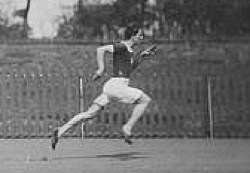
• End of coach/athlete partnership

Age
Year / Date PB Event Psn Time
200 800
Phase IV 29 ‘93 World Indoor Gold 1st 1:47.29
28 ‘92 GP Final (Bronze) 3rd 1:46.06
1:44.39 Cologne GP 3rd 1:44.39
27 ‘91 1:44.20 Malmo GP 2nd 1:44.20
Stockholm GP 1st 1:44.41
Europa Cup (Gold) 1st 1:45.60
26 ‘90 1:44.76 European Champs (Gold) 1st 1:44.76
Example of a Competition Year 14/9/90 Sheffield 1st 1:46.50
9/9/90 Rietie 2nd
29/8/90 Peak Split 1st 1:44.70
17/8/05 Gateshead 1st 1:45.50
7/8/05 Malmo 1st 1:45.30
4/8/90 1:44.44 AAAs – Trials 2nd 1:44.44
20/7/90 Crystal Palace 4th 1:45.15
12/7/90 Lausanne 1st 1:45.67
6/7/90 Edinburgh 1st 1:44.96
2/7/90 Stockholm 2nd 1:45.75
29/6/90 GB v GDR v Canada 1st 1:46.98
1/90 C Games Auckland
2/90 UK
2/90 AAAs Birmingham 1st 1:46.90
3/90 European Indoor Champ (Gold) 1st 1:46.22
25 ‘89 World Cup (Kiproketch) (Gold) 1st 1:44.95
Zurich Champs 5th 1:44.20
Scottish Native Crown Point (Gold) 1st 1:44.79
Scot. Nat. Record 1:43.88 London GP – “Erang” 1st 1:43.88
European Cup (Gold) 1st 1:46.94
Phase III 24 ‘88 Olympic Games H2 Disq. Personal Issues
GP Final 1st 1:47.60
1st 800 IAAF Ranking
23 ‘87 1:44.45 World Champ Final 8th Media Expectation
Europa Cup (Gold) 1st 1:45.96
Luagana GP – “Konchela” 1st 1:44.45
22 ‘86 1:44.61 European Champ (Silver) 2nd 1:44.61
1:44.80 Commonwealth (Silver) 2nd 1:44.80
21 ‘85 21.60 1:46.05 Budapest GP 2nd 1:46.05
Europa Cup (Gold) 1st 1:49.11
UK Champs (Gold) 1st 1:49.12
Phase II 20 ‘84 22.38 1:48.04 Scot Cat. 1st Scottish International
19 ‘83 22.40 1:49.80 Scottish Champs 2nd 1:49.18
Injured – shins
18 ‘82 22.80 1:49.30 Scottish Champs 400 1st 1:49.30
8 Nations 1st Exposure
17 ‘81 22.90 1:52.60 W. Dist. 800 1st
Scottish Junior 400 1st
Phase I 16 ‘80 23.50 1:54.10 British School 800 1st
W. Dist. 200 1st
15 ‘79 24.00 1:59.70 British School Cross Country 16th
14 ‘78 24.50 2:08.00 Scottish School Cross Country 4th
13 ‘77 25.70 – School and Club Competition

Yvonne Murray-Mooney – Phase III – 1987/1988

I started coaching Yvonne in late 1987. She had by that time been successful in reaching international level with many age groups and best times to her credit – she now wanted to win at World Class Level.

The challenge was to take the vast reservoir of coaching knowledge, the support of the back up team already in place and to quickly conduct a total assessment.

• The requirement of the event at World Class Level;
• The training required to meet those requirements;
• The current status of the athlete relative to the requirement.

This was completed over the first few months and a clear set of objectives put in place to ensure that Yvonne was both physically and mentally prepared for the Olympics in Seoul, a gigantic task given the added challenge of location and climate. The main elements of the change process included:-

• Implementation of the professional support developed for T McKean;
• Total review of lifestyle balance;
• Establishment of supporting sponsorship – job/car/finance;
• Total review of training load/intensity;
• Commence the learning process coach/athlete/support team.

What emerged was a much stronger athlete both physically and mentally prepared and more confident entering the competition season – result Bronze Medal in Seoul. A fantastic team effort in the process of developing world competitive performance – and peaking at the correct time.

1989 – The final Year in Learning to Compete

This year consisted of consolidation of the training regime which we had implemented.

• Increasing load – reducing recovery/increasing intensity
• Improving every aspect of technique – circuits/weights/running
• Construction of a competition programme which allowed experimentation in the manner Yvonne would win her races
• Lifestyle balance was again improved with every aspect scrutinised and corrective actions implemented
• Learning to change pace – kick from various distances

During the complete season I spent three weeks on the European circuit with Tom and Yvonne learning how they coped with the situations and each other this was to prove a very valuable experience in preparing for the Europeans in 1990 – result was an extremely successful competition season with many fine performers – experimenting in every race – and finishing in winning the Grand Prix final in Barcelona.

Grand Prix Final Kick 200 (Gold) – 9:02.59 3k
World Cup Final Kick 800 (Gold) – 8:44.34 3k
First British Winner of Women’s Track Event at World Cup Final.

1990 – Phase IV – Winning at World Class Level

The objective was to develop a double periodised competition plan aimed at preparing an athlete to compete in the Commonwealth Games in Auckland, New Zealand in January with a second competition phase aimed at winning the European 3k in split Yugoslavia in August.

The challenge was immense, and included:-

• Further refinement of all training loads;
• Meticulous planning of double periodised year;
• Travel – accommodation – medical – physio – communication;
• Pre-Games Australia  Games Auckland
• Coach support in Auckland – T Boyle/S Hogg;
• Competition opportunity – 1 Comp – Result Silver 3000;
• Transition back into volume training in Scotland.

The main objective that year was to prepare for European Champs split. This consisted of:-

• Meticulous planning of load intensity;
• Thorough evaluation of competition;
• Competition season designed to create picture in opposition mind;
• Final preparation – in warm up area – knowing Tom McKean had just won Gold !

Result – Gold Medal 3k Kick from 550

1991

Yvonne was very keen to give altitude a try. This was World Champs. Year and we decided that it would be best to use this year – we planned carefully with time spent in Johannesburg then Capetown and back to Johannesburg before returning to Scotland – it was not a success the variables were too many and we certainly learned the greatest issue was Yvonne training on her own. I was shocked when I arrived in Capetown to see how much she had lost v. plan and was obviously aware that this was not right so yet again coaching recovery plan – rebuild, reassure, realign – we got things back on track but the experiment did not work.

The main competition season:-

• Major mistake in Europa Cup, Frankfurt when we decided to experiment with Yvonne going after one lap. She went too fast on that first two laps and really suffered. As a consequence, an experiment which backfired
• Quickly back on course with good victory at Meadowbank in 8:36.05;
• The Worlds went reasonably well but it was clear that the opposition were ready to pounce when Yvonne kicked – we knew that would be the case – result 4th.

Phase IV – 1992 – Objective – Olympics

• The year was focused at preparation for the Olympics
• Main competition season went well – most objectives achieved
• Major issue was trying to overcome the acclimatisation to heat
• Result Olympics – did not perform to capability in the conditions.

1993 – Objective World Indoor – Grand Prix – Success

• Warm weather/altitude in Arizona – M Ritchie
• World Indoor – Gold Montreal
• Excellent performance in GP throughout the year
• 2nd in Grand Prix Final

1994 – Objective – Commonwealth – 10k

• Transition to 10k training
• Scottish National Record in Oslo Mile 4:22.64
• Scottish/Uk Record in Edinburgh 2k 5:26.93
• Silver in European Champs 3k 8:36.48
• Gold in World Cup 3k 8:56.81
• Gold in Commonwealth Games 10k 31:56.7

Arguably, Yvonne’s highest level of performance in her career 5 1st places and 7 2nd places at World level. A fantastic year in what was effectively her final serious track season.

1995-1998 – Transition to Road

The next few years were spent in transition to road racing with varying degrees of success and failure, but never really consolidating a successful recipe.

End of coach/athlete partnership!

Summary of Achievements

Bronze Medal 1985 European Indoor Championships
Silver Medal 1986 European Indoor Championships
Bronze Medal 1986 Commonwealth Games at Edinburgh
Gold Medal 1987 European Indoor Championships
Bronze Medal 1988 Olympic Games at Seoul
Gold Medal 1989 World Cup at Barcelona
Silver Medal 1990 Commonwealth Games at Auckland
Gold Medal 1990 European Championships at Split
Gold Medal 1993 World Indoor Championships at Toronto
Silver Medal 1994 European Championships at Helsinki
Gold Medal 1994 Commonwealth Games at Victoria
Gold Medal 1994 World Cup at Crystal Palace

– Ranked Number Two in the World in 1994 for the Mile, 2000m and 3000m
– First British Female to win a Gold Medal in the World Indoor Championships
– First British Female to win an individual track Gold Medal in the World Cup
– First British Female athlete in 21 years to win a European Championship Gold Medal in a track event
– The Honour of MBE was bestowed upon Yvonne at Buckingham Palace on 12th March (New Year Honours List 1991)

Appendix III
Y Murray-Mooney –
Progression and Significant Achievements (including ex 1994 Comp Year)

Age Year / Date
1500m
3000m Other Major Event Psn
Training to Road 33 1998
32 1997
31 1996 1:12.25 Half Marathon
30 1995 53:3.50 10 Miles – Portsmouth
14:56.44 5 Miles – Crystal Palace (Scot. Nat. Record)

Phase IV 29 1994
Example of a Competition Year 11/9/04 8:56.81 Crystal Palace World Cup 3000m (Gold) 1st
4/9/04 5:38.0 Sheffield GP 2000m 2nd
24/8/04 31:56.97 Victoria Commonwealth 10k (Gold) 1st
10/8/04 8:36.48 Helsinki 3000m – Euro. Champs (Silver) 2nd
22/7/04 4:22.64 Oslo – Bislett 1 mile 2nd
20/7/04 4:04.18 Gateshead 1500m (Front Run) 1st
15/7/04 8:29.6 Crystal Palace 3000m (0.5 off PB) 2nd
8/7/04 5:26.93 Meadowbank Inv. 2000m (Scottish Nat Record) 2nd
12/6/04 4:01.44 AAA 1500m (Silver) 2nd
22/5/04 15:23 Aberdeen S/CD R/Race 2nd

28 1993 8:41.59 GP Final 2nd
5:36.03 Sheffield GP 1st
8:32.43
Brussels GP 2nd
8:33.62 London GP 1st
8:30.70 Oslo GP 2nd
4:17.5 Europa Cup (Bronze) 3rd
15:20.01 SK Road Aberdeen 2nd
8:50.55 World Indoor Toronto (Gold) 1st
27 1992 Olympic Final Barcelona
5:35.38 London GP 1st

26 1991 World Champs, Tokyo 4th
8:36.05 Edinburgh GP 1st
25 1990 8:43.06 European Champs (Gold) 1st
16/9/90 5:35.53 Sheffield GP 1st
19/9/90 8:39.46 Commonwealth Games, Auckland (Silver) 2nd

Phase III 24 1989 9:02.58 GP Final (3rd World) 1st
8:44.34 World Cup Barcelona (Gold) 1st
31/8/89 4:03.13 Brussels GP 3rd
7/8/89 4:03.58 Edinburgh GP 3rd
European Cup (Silver) 2nd
23 1988 8:29.02 Olympic/Scot. Nat. Record (Bronze) 3rd
10/7/88 8:37.22 Nice GP 1st
22 1987 4:01.20 8:48.15 Europa Cup (Silver) 2nd
21 1986 4:11.20 8:55.32 Commonwealth Games Edinburgh (Bronze) 3rd
20 1985 9:00.94

Appendix IV

Susan Scott

I started coaching Susan at the end of 2001, at which time she had progressed through Phases I-II with her previous coaches and had achieved a good level of success at Scottish age group level with a clear bias towards 1500 and cross-country.

Phase III – Competition Development

The first objective was to conduct a total review of both her training and lifestyle and identify a more professional approach which would ensure she was being equipped to meet the requirements of the event and to give her the foundation from which she could over subsequent years achieve performance to the optimum of her capability. The areas included:-

• Use of pulse monitor to control effort in OBLA;
• Aerobic running at correct sub-OBLA pace;
• Structured circuit training – intensive/extensive;
• Performance of basic weight technique and structured programme;
• Inclusion of technique running/sprinting sessions;
• Introduction to pyramid concept for all training;
• Education on lifestyle balancing – recovery – nutrition;
• Total review of athlete’s ability v. event requirements.

The changes were significant. However, the training was successful and resulted in an improvement in every aspect of training performance which was subsequently translated into a major breakthrough winning Scottish, AAAs and finishing 4th in the Commonwealth Games with a time of 1:59.30. The first Scot to break 2 mins !

2003

This year was totally focused on teaching Susan how to race at World Class level in 800m and refining the training regime ensuring consolidation of the multi-sided approach. The major points of focus were:-

• Training loads increased – recover cut – intensity increase;
• Lifestyle balance improved – more recovery;
• Financial support – reviewed – major issues identified not resolved!!
• Race programme – learning to peak;
• Competition exposure – International/Europa Cup/Grand Prix;
• Susan did exceptionally well but had much to learn about the art of running 800m at World Class Level!

2004

The objective was simple – gain Olympic qualification

• Training refined, loads increased to meet requirement of event;
• Year plan developed – training – all objectives met;
• Competition Plan – MAJOR PROBLEM AREA;
• Funding reviewed – Inadequate to allow full-time training (3 day week)

In summary, the result was that Susan (despite being in tremendous physical condition) spent most of her competition season trying to consolidate a competition programme which would ensure the correct level of exposure at the appropriate time to provide the requisite number of opportunities to obtain qualification – she narrowly failed to do so.

Indeed, athletics failed Susan Scott.

2005 – Phase IV – Learning to Win at World Level

The first part of the winter was spent conducting a total review of the support and competition requirements with Aileen McGillivary, High Performance Athletics Manager, SIS. Major issues and improvements identified were:-

• Improvement in communication loops/timeframe SIS/coach/athlete/support team;
• Refinement of Sports Science –support including
o Field testing of OBLA/track reps/blood test/nutrition/physio
• Securing a Race Agent to provide the requisite level of competitions;
• Review of funding – still a major issue;
• Competition objective simple qualification/CG/800/1500 win AAA
• Training – Emphasis changed to include 1500m.

In summary, 2005 was a successful year for Susan, the key highlights being:-

• Recovering from tremendous disappointment of failing to qualify for OG;
• Successful adaptation to increase workload for 1500m;
• Improved competition plan – agent support;
• Qualification times for 1500m and 800m achieved;
• Winner of AAAs in tactical race;
• Bonus – qualification for Worlds;
• Experience gained in Heats/S Final
• Raw sessions best in World Championships.

In conclusion, the remainder of Phase IV will be invested in refinement of the total preparation of Susan to provide her with the maximum opportunity to achieve her dream in athletics.

My advice to Scottish Coaches is:-

• Decide what you want to do in your coaching career;
• How much time can you give up and still maintain a quality balance to your life?
• The time taken to travel the full athletics development pathway is fairly significant and will probably require in the pass through system being fundamental to future success;
• For me, every coach in the conveyor of success must be part of the team. If a pass through system is to be ultimately successful in long term athletics development;
• Enjoy your coaching !!

Appendix V
S Scott –
Progression and Significant Achievements (including ex 2003-2005 Comp Years)

Age Year / Date PB 800 Major Event Psn Time
Phase IV 32 2010 C Comm. Games/European Champs
31 2009 World Champs
30 2008 Olympic Games
29 2007 World Champs
28 2006 Comm. Games/European Champs
27 2005
Example of a Competition Year 21/8/05 Norwich Union Super GP 2nd 2:03.77
14/8/05 Scottish Champs (Gold) 1st 2:02.85
7/8/05 2:01.17 IAAF World Champs (Season Best) 8th 2:01.17
22/7/05 Norwich Union Super GP 3rd 2:02.06
10/7/05 AAA Champs & Trials (World & Comm)
(Gold) 1st 2:02.97
27/6/05 Josef Odlozil Memorial GPII (1500m) 2nd 4:14.84
12/6/05 Lille GP (1500m) 6th 4:09.10
Phase III 26 2004
Example of a Competition Year 15/8/04 Scottish Champs (Gold) 1st 2:02.85
14/8/04 Scottish Champs (Gold) 1st 4:17.0
30/7/04 2:00.71 Crystal Palace GP 4th 2:00.71
24/7/04 GB Match 6th 2:03.00
17/7/04 BMC 1st 2:01.70
14/7/04 Lahiti Games 1st 2:01.46
11/7/04 AAAs (Bronze) 3rd 2:02.13
27/6/04 Gateshead GP 6th 2:01.40
19/6/04 Euro. Cup (Bronze) 3rd 2:01.35
12/6/04 BMC 1st 2:00.77
2/6/04 Open Graded 2:01.87 mx
22/5/04 BMC 2nd 4:10.56
25 2003
Example of a Competition Year 1/8/03 North Down Games (Silver) 2nd 2:03.9
26/7/03 AAAs (Silver) 2nd 2:04.13
29/6/03 GB v. USA v. Russia 6th 2:03.16
21/6/03 Euro. Cup 6th 2:04.28
12/6/03 Ostrava GP 5th 2:01.85
1/6/03 2:01.08 Hengelo GP 2nd 2:01.08
GB Int. 5th 2:03
Scottish (Gold) 1st 2:02
24 2002 1:59.30 Commonwealth Games Scot. Nat. Record 4th 1:59.30
AAAs (Gold) 1st 2:03.84
23 2001 Scottish (Gold) 1st 2:06
European U23 Champs (1500m) (heat)
Phase II 22 1999 AAAs U23 (1500m) (Gold) 1st
20 1998 Scottish Champs 800m (Gold) 1st
19 1996 Scottish Champs (1500m) 3rd John Montgomery
Scottish Schools CC 2nd
Scottish CC Champs (Gold) 1st
British Schools Indoors (Gold) 1st
Phase I 15 1992 Scottish 800m Champ U15 (Gold) 1st Graham Greenham
14 1991 British Schools CC West District Champ
13 1990 Scottish CC Champ (Gold) 1st Glen Harrow
11 1988 Scottish CC Champ (Gold) 1st

Appendix VI
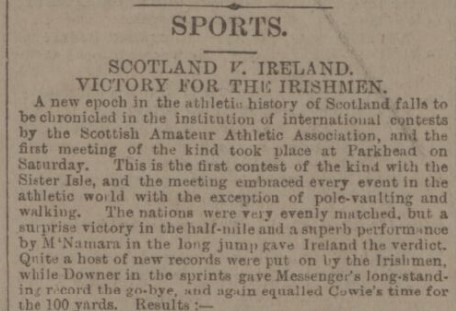
Lanark Police Sports, 1960, Programme

The Lanarkshire Constabulary Sports was a very popular meeting and another which, like the Rangers Sports. was held at a football stadium – in this case Shawfield, the home of Clyde FC, which was also used by the greyhound racing fraternity.   The result was a track marked out on the grass of the football pitch surrounded by the dog track with its floodlights.   This programme from the 1960 sports was passed to us by Chris Holloway and apart from the races and competitors is a useful piece of social history – have a look at the adverts for a start!


100 Years Ago: A Look Back At 1922

Scottish distance running 100 years ago: Flashback to the year that was 1922

Alex Wilson

Today, in 2022, Scottish distance running has arguably never been stronger at the elite level, with Laura Muir and Josh Kerr winning silver and bronze respectively in the 1500 metres at last year’s Tokyo Olympics. We presently have what you might call an embarrassment of riches, with the likes of Josh Kerr, Neil Gourley, Jake Wightman, Andy Butchart and Callum Hawkins leading the way on the men’s side, and Laura Muir, Jemma Reekie and Eilish McColgan on the women’s side. Not only that, we have a number of very good athletes “waiting in the wings”, as it were. This year we can look forward to a World Championships, a European Championships and a Commonwealth Games. It remains to be seen how our athletes will fare, but the prospects are looking good.
How was the situation 100 years ago in 1922? Things were very different then. There were no major international track and field championships. 1922 was right in the middle of the quadrennial Olympic cycle. The first Commonwealth (British Empire) Games were eight years away. The first European Championships were 12 years in the offing. The first World Student Games were however just around the corner and would be held in Paris in May of 1923.
The war had been over for just over three years. The athletics scene had quickly returned to some semblance of normality after the cessation of hostilities. Fortunately for athletics, it was a cheap sport. Money was tight, owing to a stagnating British economy, sky-high unemployment and drastic austerity measures. In the period after the war, the clubs again saw their membership increase. However, many clubs still lacked the financial resources to promote a meeting. However, the situation improved from 1922 onwards, as reflected in the performances of UK athletes and increased strength in depth.
In 1922 the presidency of the S.A.A.A. passed into the safe hands of William Struthers, the energetic driving force behind the success of the Greenock Glenpark Harriers. This was the man they needed at the helm of Scottish Athletics, a man who knew how to generate revenue from his experience as a meeting promoter.
The S.A.A.A. championships were held in Edinburgh at Powderhall Grounds, where local student Eric Liddell wowed the home crowd by winning both short sprints and leading the E.U.A.C. relay team to victory in the one-mile relay race. Duncan McPhee of the West of Scotland Harriers wasn’t to be outdone, though, also pulling off the difficult half-mile / mile double. Officials were in such a quandary over who was the most meritorious performer that they awarded the Crabbie Cup jointly to McPhee and Liddell. It is also worth noting that heavy eventer Tom Nicholson lived up to expectations by adding another three gold medals to his trophy cabinet.
In 1922, for the first time since 1914, Scotland hosted the Triangular International Contest against England and Ireland at Hampden Park. However, the Scots were unable to repeat their 1921 victory, with England fielding a stellar team and running away with most of the points.
The star of Scottish middle-distance running, Duncan McPhee, still shone brightly in 1922. This veteran of pre-war athletics, a 1500 metres finalist in the 1920 Olympics in Antwerp, was still going strong. He had little reason to retire: he still had the measure of his compatriots in the half-mile and in the mile. Approaching thirty, McPhee was arguably stronger over the mile these days. With double Olympic gold medallist Albert Hill having hung up his spikes for good, the A.A.A. mile championship at Stamford Bridge was wide open that year. It had been 11 years since the last Scot, the late Douglas McNicol, had accomplished the feat of winning. Before that, you’d have to go all the way back to 1899 when the phenomenal Hugh Welsh won the A.A.A. title for the second time in succession. The mile was the blue ribband event of the A.A.A. championships and the race everyone wanted to win. Famed Bellahouston postman John McGough had thrown his hat into the ring several times in the early 1900s but had failed to advance beyond a runner-up medal, finishing in that position three times in succession, in 1904, 1905 and 1906. In the end, experience told, McPhee timing his sprint perfectly to win by three yards over emerging middle-distance prospect Henry Stallard in 4:27.4.

Duncan McPhee (W.S.H.) winning the 1922 AAA mile championship from Henry Stallard

McPhee had arguably been pushed harder in the S.A.A.A. mile championship, where he had to pull out all the stops to win by a bare yard from E.U.A.C.’s Charles Brown in 4:31.2. He only ran faster that year on one occasion, and that was in the mile at the Rangers Sports at Ibrox, which he won in 4:23.8. This was close to his pre-war lifetime best of 4:22.7, set when finishing third in the 1914 A.A.A. mile championship.
The Old Firm athletics meetings were back in full swing and as popular as ever, with the event at Ibrox attracting 20,000 spectators. The Celtic FC event a week later attracted slightly fewer spectators (15,000), due to the vagaries of the Scottish weather. Scottish mile champion Duncan McPhee took part in both events, winning the open mile handicap at Ibrox in 4:23.8 and the half mile handicap at Celtic Park in 1:58.0 from 6 yards. He also finished second in the open mile at Celtic Park in 4:28.0 from scratch.
How did the individual distance events shape up in 1922?
Women’s athletics was in its infancy at the time, and there were no female middle-distance performances of note in Scotland, so the focus is, by necessity, exclusively on the men.
The fastest time run in Great Britain over the half mile in 1922 was 1:55.6, set by Edgar Mountain at the A.A.A. Championships, where he won by a hair’s breadth from Welshman Cecil Griffiths. Fastest Scot was McPhee who was a distant fourth in the A.A.A. race in 2:00. The next fastest was William Rankine Milligan of O.U.A.C., later Lord Milligan, M.P. for Edinburgh North, who finished second to Edgar Mountain in 2:02.4 in the annual Varsity Match at the Queen’s Club in London. The bespectacled Milligan was a prodigiously talented half-miler. He had run 1:57.4 in New York the year before on the back of light training but, for academic reasons, competed sparingly that year. Behind them the field was thin and the standard poor. Charles Mein, runner-up in the S.A.A.A. Championships in 2:04, and Charles Brown, Scottish Universities champion in 2:04.4, were the only other Scots who bettered 2 minutes 5 seconds that year.

O.U.A.C. half-mile specialist William Milligan in action

The fastest Briton in the year over the mile was Henry Stallard of Cambridge University, who made the distance in 4:21.0 at Cambridge on March 9. He also won the Varsity mile in 4:22.4. Stallard would have been the undisputed No. 1 in Britain that year had it not been for our own Duncan McPhee, who showed him a clear pair of heels at the A.A.A. Championships. Behind McPhee there were several performances of note, both north and south of the border. 1922 Scottish Universities Champion Charles Brown posted a 4:31.4 on the slow track at Craiglockhart on May 27, so his performance at the S.A.A.A. championships should not have come as a surprise. C.U.A.C.’s William Seagrove, silver medallist in the 3000-metre team race at the Antwerp Olympics two years earlier, turned out only once over the mile. And that was in Cambridge on March 9 where he negotiated the distance in about 4 min 33 seconds. His speciality was of course the 3 miles. Scotland’s other Blue, William Milligan, also got his name on the board in 1922, posting a 4:33.9 at Oxford on March 3. No other Scots managed to better 4 minutes 40 seconds.
Now to the 3 miles. Here one would also have to consider the international equivalent, the 5000 metres, and the (then standard) 4 miles as well. Joe Blewitt of Birchfield Harriers produced arguably the best individual performance by a Briton in 1922 when he clocked 15:15.2 over 5000 metres at Paris on October 8. He was also best Briton over 4 miles at the A.A.A. Championships where he finished second behind the “invincible” flying Finn Paavo Nurmi in 20:04.0. In terms of times, however, Scotland’s own William Seagrove was almost on a par with the Birchfield runner. Seagrove made only two appearances over 3 miles, but they were quite something. On March 11, he ran 14:50.0 at the Fenner’s ground in Cambridge, the fastest time over that distance in the UK that year. A fortnight later, he won the Varsity race by the length of the straight in 15:02.6. The S.A.A.A. four miles title went to Jimmy McIntyre (Shettleston Harriers), who finished 10 yards ahead of Frank Watt (E.U.A.C.) in 21:00.8. The Universities Championship was secured by Charles Johnston (G.U.A.C.) who won at Aberdeen on June 17 ahead of James Hill Motion (E.U.A.C.) in 16:01.8. Motion, however, accomplished the third fastest time over 3 miles by a Scot that year, when he completed the distance in 15:18.8 at Craiglockhart on May 20. Otherwise, there were no performances of note, except perhaps a rare track appearance by 39-year-old George Wallach, Greenock Glenpark Harriers, who ran the four miles in Manchester on June 10 in 21:35.0. Although he missed five of his best years because of the war, Wallach could look back on a long and distinguished career, capped by a runner-up finish at the 1914 International Cross-Country Championships.

C.U.A.C.’s William Seagrove was UK #1 over 3 miles in 1922

The last long-distance track championship in question in 1922 was the 10-mile race. In the three years from 1919, Scottish athletes had set the fastest times in the United Kingdom. Professional runner George McCrae posted scratch times of 53:32.0 and 53:16.0 in the “Marathon” race at Powderhall Ground in 1919 and 1921 respectively. McCrae also notched up a fast time of 53:23.8 in 1920, but this was bettered by Jimmy Wilson of Glenpark Harriers, who set a Scottish amateur record of 52:04.0 in winning the S.A.A.A. championship at Celtic Park. The situation in 1922 was less rosy, with no Wilson around to provide any cosmetics. The S.A.A.A. championship went to Jimmy McIntyre, who won at Celtic Park in a modest 54:59.0, good enough to see off future Scottish marathon star Duncan McLeod Wright, Shettleston Harriers, by over 300 yards. Little did we know that McIntyre would blossom into a world-beating cross country runner within the space of a year. It was not until the following year that “Dunky” made a not so auspicious marathon debut in Aberdeen. In all, eight men broke the hour for the 10 miles that year, which was a marked improvement in terms of strength in depth. The A.A.A. title went to Derby veteran Halland Britton in 53:24.2, but the fastest time in the United Kingdom was again claimed by a professional – Bob Cole of Hereford – who won the “Powderhall Marathon” on January 2 in 53:17.0.

Jimmy McIntyre (Shettleston Harriers) is seen here on the right of picture

That just leaves the cross-country and, of course, the International Cross-Country Championship. In 1922 the event was held at Hampden Park in Glasgow, where the S.C.C.U. played hosted to five nations: England France, Ireland, Scotland and Wales. The win went to the great Frenchman Joseph Guillemot, who led France to the team championship. The Scottish team acquitted themselves admirably, packing well to take third. Despite being in his 40th year, George Wallach proved age is no barrier by rolling back the years and finishing an astounding fourth in the individual race.

In 1922 George Wallach proved that age is no barrier by running fourth in the International Cross-Country Championship

So that was the year that was 1922 from the standpoint of Scottish middle and long-distance running. It was one of those watershed years with several torch bearers, amateur and professional like, in the twilight of their careers and not a lot of strength in depth. However, the harrier scene was alive and kicking, with the likes of John Suttie Smith, Frankie Stevenson, Walter Calderwood, Robbie Sutherland, Jimmy Wood and Tom Riddell coming through the junior ranks. And Dunky Wright had yet to find his true calling.