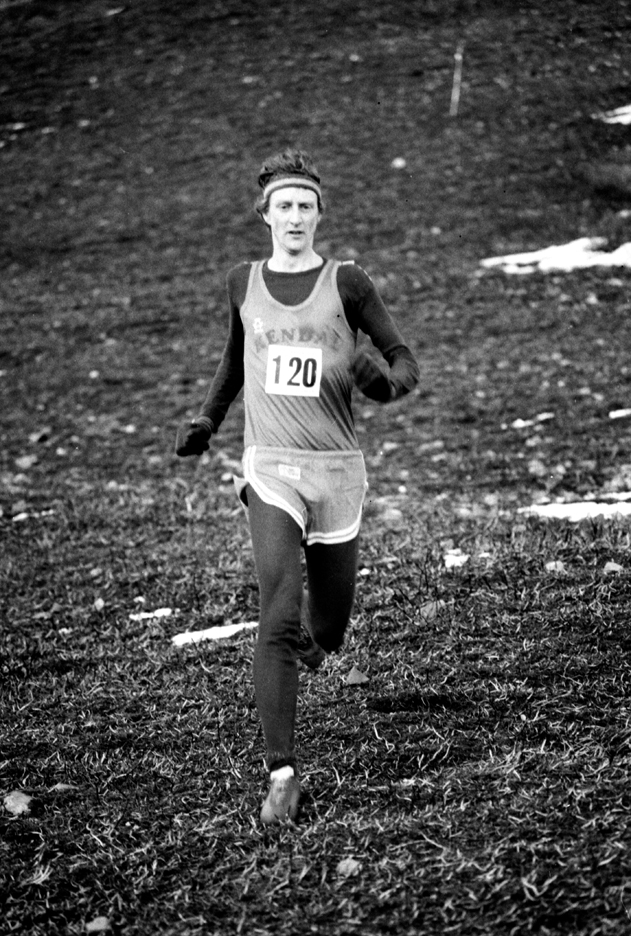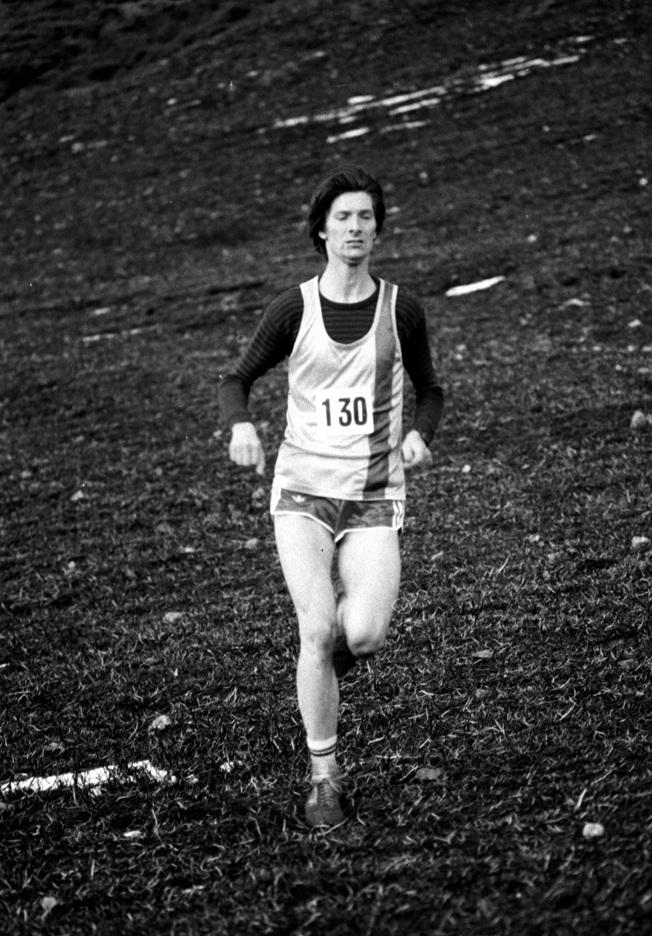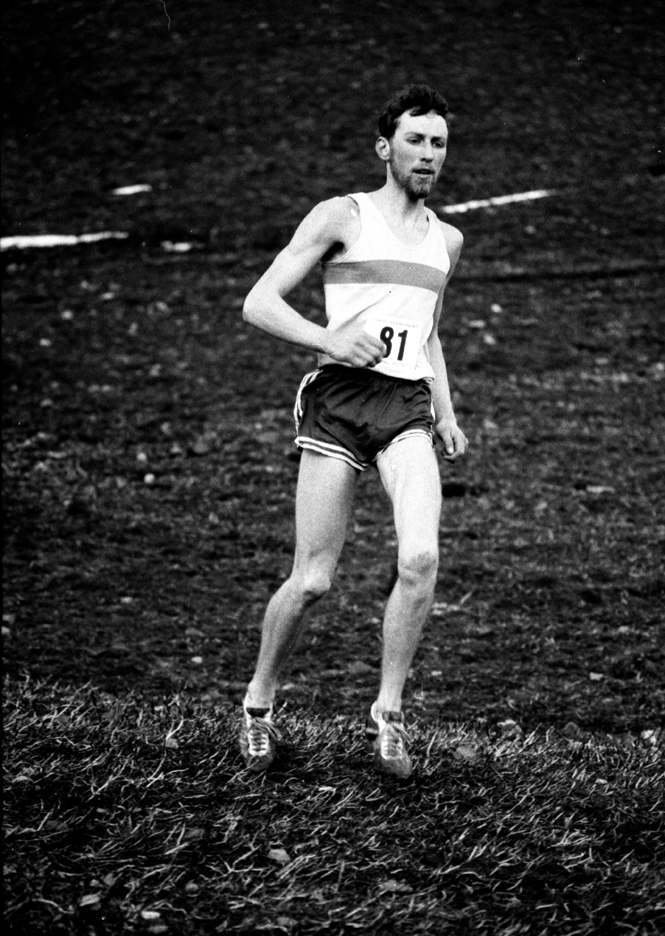
Jimmy Campbell

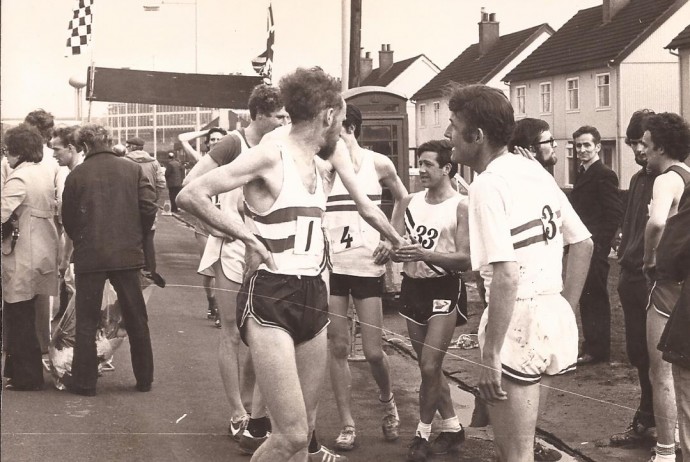
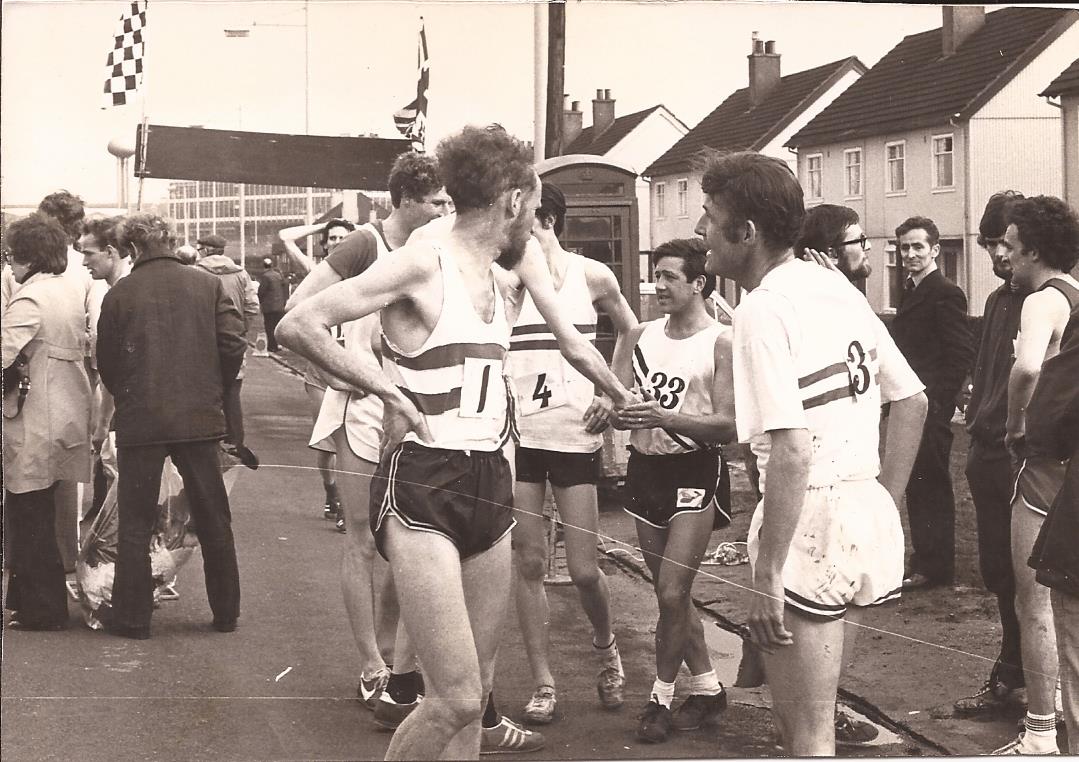
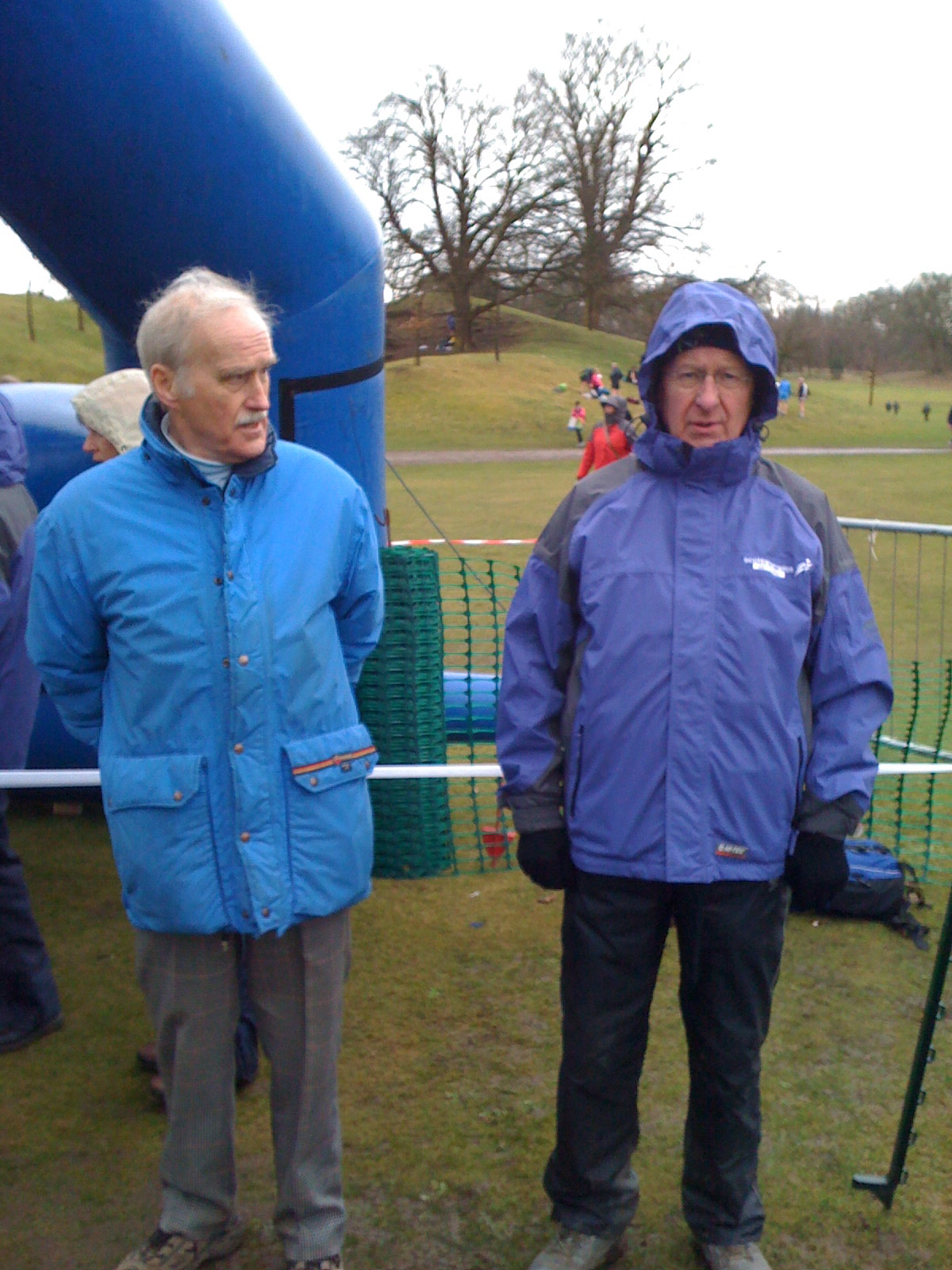
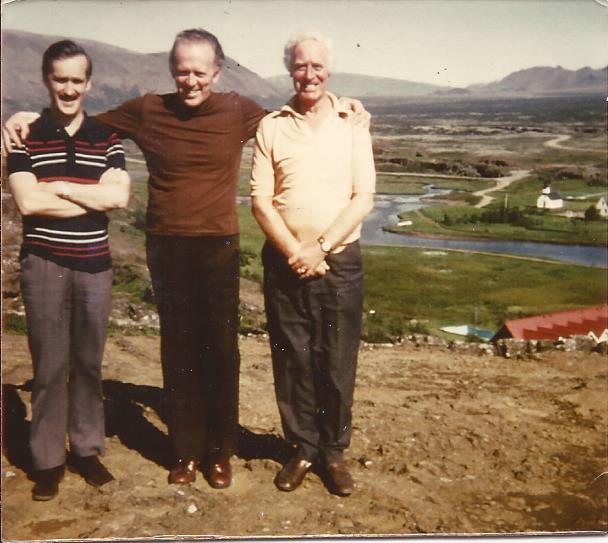
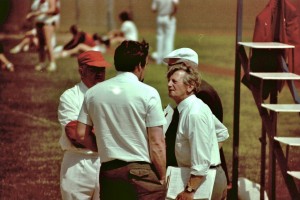
Jimmy CampbellJimmy, centre with clipboard

Jimmy Campbell was a great character who had led a wonderfully varied life – even within athletics he was a grade 1 official, a mastercoach and a top-notch administrator.    Always busy, always organised and always willing to help: on one occasion I decided that my middle distance squad needed some specialist speed input from specialist sprint coaches and Jimmy was one that I spoke to.  He was very helpful, willing to take a session with a small group and during the session he was only interested in them and the session.   On another occasion I mentioned speedball training and his enthusiasm was such that I received a full lecture – almost a master-class on the topic in the cafeteria at Crown Point!    When coaches travel with athletes to championships all over the United Kingdom, they invariably become friends and I remember there were four of us having dinner in a Chinese restaurant in Bedford and Jimmy started talking about his footballing before and during the war – one of the company was all for getting his wife, a professional writer, to do his biography.   Jimmy was having none of it.   We could all learn something from watching him work with children at coaching sessions he was in his element.   I , and I suspect that I am not alone in this, often used phrases that we had heard for the first time from Jimmy – “The baton lives in the midle of the lane” is one that GB Men’s 4 x 100 teams could well take to heart!   At the other end of the scale, he could talk to international athletes and they would listen and take on board what he had to say: unlike many he would actually listen carefully to what they were saying, and address his reply to their remarks and concerns.

He was always active in the field of coach education: he had an article in the excellent but unfortunately short-lived magazine “Athletics in Scotland” explaining the coaching of sprinters with drills described, sessions given with their purposes clear which was a model of its kind.   I had it re-printed and gave many copies to athletes and other coaches.   Thre was apparently an introductory lecture to beginner athletics coaches at which he took the chalk broad-sided and wrote on the board DIVORCE and said that if they did their job properly, that was where it could lead!   Coaching is very rewarding but not an easy option and he made that clear.

Jimmy became a Master Coach – a title awarded rather than studied and examined for – and I can think of no one better qualified.   What follows is his obituary from the ‘Glasgow Herald’ on 24th November, 2011.

Jimmy Campbell who has died aged 92 was a dentist and sportsman for whom life was a continual process of betterment and a series of fresh challenges to be relished.   Torn between dentistry and football, he successfully combined both, signing for Celtic on the eve of the Second World War, the advent of which saw him train the guerillas of the French Resistance for action behind enemy lines and act as bodyguard to Lt Colonel Hardy Amies, later to become the Queen’s couturier.

He went on to play for Leicester City, establish his own dental practice back home in Bothwell Street, join Glasgow Dental Hospital and take up marathon running as he retired while continuing to coach ghenerations of schoolchildren, runners and footballers.   Throughout it all he was supported by his wife Maryin a partnership that endured for 70 years.

He was born in Bridgeton, in the East End of Glasgow, to Annie and James Campbell, a turner in an engineering works and a former professional footballer with Reading.    Educated at Bernard Street School and Whitehill Academy – where his stammer was cured by an astute teacher who cast him as Puck in “A Midsummer Night’s Dream” – his schooldays came to halt when his father arranged for him to become an apprentice dental mechanic.   Apparently he was given no choice in the matter: his family needed the income, 5/- a week initially, rising to 7/6d.   His employer was his father’s friend, George Boreland, also a professional football player who had played for Hibernian and who understood his passion for the game.

The young Campbell played for St Mungo Juniors and pined to get out on the pitch on Saturdays, which was a working day at the dentist’s.   His boss eventually relented and as his apprentice moved through the amateur ranks he was spotted by Celtic.   He also had offers from Aberdeen and Hearts but opted for Celtic with a signing on fee of £20 and a weekly wage of £5.

He had been encouraged by Boreland to go to nightschool and gain the qualifications required to study for the Licentiate in Dental Surgery.   The studies deferred his army call-up but only until after Dunkirk in 1940 when he was enlisted into the Royal Army Dental Corps training school at Aldershot.   He immediately won a place in the RADC football team and later made guest appearances with Aldershot, Folkeston Town, Leyton Orient and Chelsea.    Within six months of joining the Corps he took a PE course and was promoted to Corporal.   He tried to flunk his Laboratory Aptitude Test in a bid to be transferred to the Army Physical Training Corps but the move was resisted because there was a pressing need for dental technicians as many of the recruits had such appalling dental health that they needed dentures before being passed as fit for combat.   He was eventually moved to the APTC in 1942 and became a Sergeant Instructor, posted to an artiullery regiment manning the South Coast defences where he organised morale-boosting inter-battery athletic and boxing competitions and met famous footballers including Denis Compton and Stan Cullis.

Ordered, unexpectedly, to report for an interview in Montague Mansions, Baker Street, London, one of the bases of the Special Operations Executive, he was recruited and sent to its training school in Berkshire.   Having a knowledge of French he was attached to its Belgian group, under the command of Hardy Amies, and instructed members of the Maquis in  parachuting and one-to-one combat.   His final posting was to the Infantry Training Battalion of the Parachute Regiment, an experience he described as the best year of his Army career.

He had married his wife Mary whom he had met at a party in Dennistoun in 1943, and by the end of the War he was a father with responsibilities.   He had set up terms to play for Leicester City, which had provided a means of earning, but he also wanted to pursue his studies and was accepted by Birmingham University on the strength of an interview.   He graduated as a Bachelor of Dental Surgery in 1952 and returned to Glasgow, working initially as an assistant in Greenock before moving to Paisley.   In 1954 he bought the practice in Bothwell Street and was supported by Mary as his receptionist, surgery assistant and book keeper.   The practice moved to Douglas Street in 1965.   He was appointed Assistant Dental Surgeon in the Glasgow Dental Hospital’s oral surgery department in 1970, initially on a part-time basis but became a full-time associate specialist in 1975.    

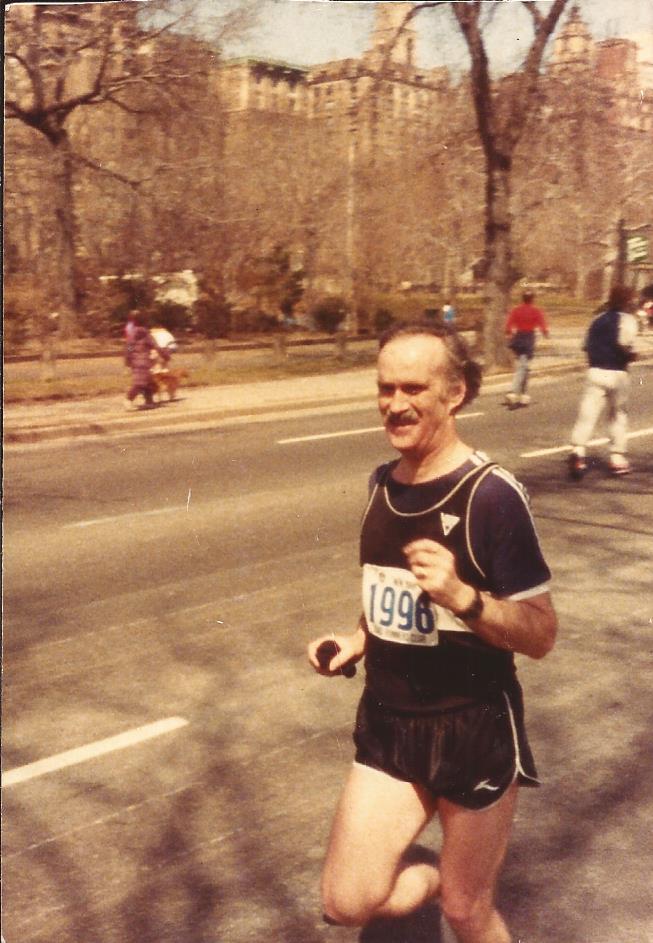
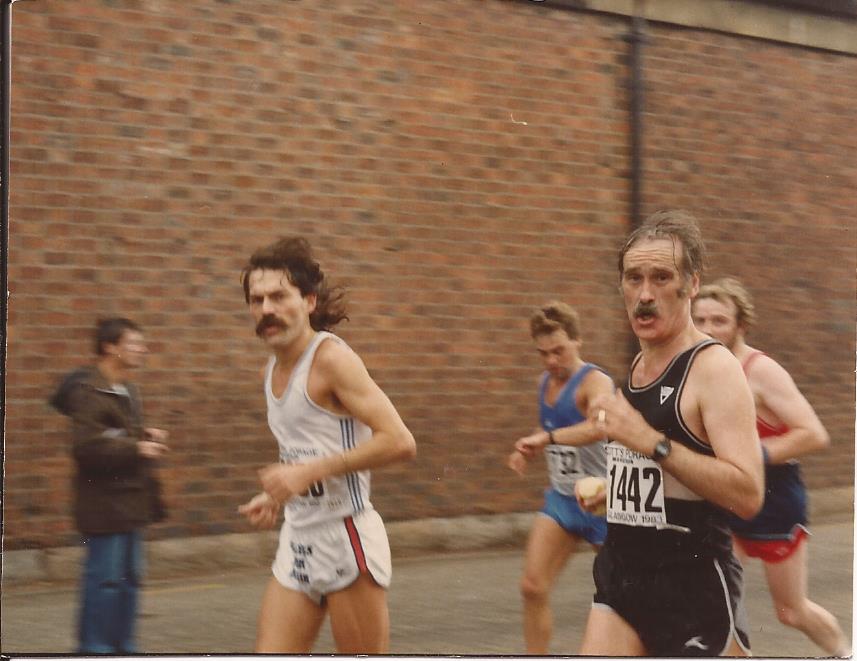
Meanwhile he was coaching Bellahouston Harriers and was a key figure in the Maryhill Ladies Athletic Club, coaching runners to British and Olympic standard.   He took up marathon running when he was 64 and in retirement coached footballers at Motherwell and St Johnstone, who allegedly had trouble keeping up with him on training runs.  

His contribution to sports was  marked with a special recognition award from the then Scottish Sports Council and even into his 90’s he still remained active.   “He was never content to sit back,” said his elder daughter Mary.   “He was always striving to move on to something bigger and better.”   Campbell is survived by his wife Mary, daughters Mary and Anne, grandchildren Tracey, her brother, the US based actor Scott Speedman, Kate and Campbell and two great-grandchildren.

That’s the end of the obituary and it gives a full account of his life in every sense.   The note about his active life style is well taken – someof us were talking at a West District Cross-Country Championhip at Rouken Glen in Glasgow and Jimmy had already told us that he was 77 years old at the time.   Further through the conversation he spoke about the mini circuit that he was doing every day: he emphasised that the press-ups he did were not from the floor but from the side of the bath and on occasion from the wash basin “because you can make it more dynamic from the higher position!”

Jimmy was one of the very best coaches I have ever known.   The very first issue of  ‘PB’, the very glossy quarterly put out by Scottishathletics, in 2011 had some tributes from John Anderson, Frank Dick and Sandy Sutherland and they are reproduced below.   The article was written by Sandy who incorporates John’s and Frank’s remarks into it.

“Jimmy Campbell was one of those people I am glad to have known because he made me feel better about life every time Imet him; always cheery, witty, full of stories; yet such was his modesty that I never knew about his multitude of achievements, including courageous wartime service, which have been covered elsewhere far better than I could.   Who knows where his football career might have taken him had not |World War II not intervened in 1939 just after he had signed for Celtic – he went on to play for Leicester City at the end of the War – but his war-time experience as a PTI during which time he organised athletics and boxing competitions must have contributed to his later heavy involvement with our sport.   Much later, after he had moved back to Glasgow Jimmy began coaching at Bellahouston Harriers and even as late as 1994 he was assisting the Scottish men’s sprint relay squad, but it was through his involvement with Maryhill Ladies AC that he really made his mark.   Two former Scottish National coaches who worked closely with him have paid these tributes:

John Anderson said: “I brought Jimmy into coaching at Maryhill Harriers when he took his daughter Mary (Speedman – a noted 800m runner who represented Scotland at the 1970 Commonwealth Games) to the club and he took over the running of the club when I moved south.   I thought I knew him well but had no idea what a rich life he had enjoyed – he was a remarkable man.”

Frank Dick, who succeeded Anderson, said:  “Jimmy Campbell may not have been a physical giant but my goodness he was a thinking colossus as a coach and an inspiration and role model for many other coaches.   Countless young women achieved athletics success through his guidance at Maryhill AC head coach and there was not one sprints or middle distance coach in Scotland who did not benefit from his advice.      My personal debt to him is giving me the chance o grow as a young national coach and keep me on track when I could often have got things wrong.”


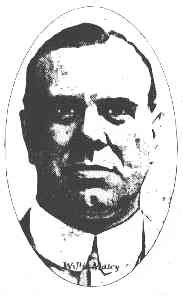
Maley’s 100 yards and other footballers

There is continuing interest in the athletic  exploits of footballers.   This has encouraged me to start printing reports of some of these exploits.   I start with the Glasgow Herald report on Willie Maley’s victory in the SAAU 100 yards in June 1896.    It reads: “The 100 yards was carried off by W Maley whose victory came as a surprise to many.   A week ago we prepared ur readers for a turn-up in this event, and Maley’s name was mentioned as the one most likely to bring this about.   The final was a close finish between Maley, Auld and Wilson who reached the post in that order.   Wilson was not powerful enough to cope with the breeze, and it is the general feeling that he might have succeeded in retaining the title had the wind been in his favour and not against him.”

In 1893, Johnny Gow of Rangers and Clydesdale Harriers was a very good hurdler and won silver in 1889, bronze in 1890, silver again in 1891, nothing at all in 1892 before he won the SAAA 120 yards hurdles in 1893 and although praise was heaped on him by Andrew Hannah, all the ‘Glasgow Herald’ had to say was “JR Gow’s hurdles win was very popular.”   He won silver again in 1894 (“In the 120 yards hurdles, last year’s champion JR Gow was beaten by Graham (1st LRV) who had the race won all the way.)  making it one gold, three silvers and one bronze.   Gow went on to become Secretary and then President of The Rangers.   There is an interesting comment in the Herald report  of June 1891 that the championships of athletics and cycling,“rid Glasgow of the reproach so often levelled against it of being wholly given up to the football worship.”

Charles Pennycook was a football player who became a runner.   The following pen portrait appreared in the Scottish Referee of 9 June, 1890.

“C Pennycook: Vice Captain, Clydesdale Harriers 

One Mile amateur champion of Scotland, he started as a half back in Strathmore FC, Dundee, before coming to Glasgow three years ago.   There was no superior half back in Perthshire.   At Our Boys FC Sports in Dundee he won the Mile off 50 yards.   The handicapper predicted that he would be the best in Scotland.   “Mr Pennycook knows that it is a mistake to suppose that men succeed through success – they much oftener succeed by failure and knowing this he has always persevered until last year he gained highest honours and surprised himself and all his clubmates by winning the One Mile Championship in 4 minutes 29 and four fifth seconds.   In Cross Country he takes a foremost position and has placed to his credit in this year’s SHU 10 miles Championships.   25 years old, 5’9” and 12½ stone he is of reticent disposition.”

At that point he had won the SAAA Mile in the time noted above which was the first Scot to run under 4:30 for the distance.  In 1988, at Queens Park Sports he was timed at 4:31 and two fifths for the Mile and at Camelon Sports he ran the Mile in 4:32 3/5th (both times were off 15 yards in handicap races).   He won the SHU cross-country championship in 1890 despite losing a shoe two miles from the finish, and in 1891 he defeated Andrew Hannah for the SCCU title.   He remained active in Clydesdale Harriers until after the 1914 – 18 war but retained his involvement in football and when he was President of the SAAA in 1907-8 he represented Arthurlie FC.

More about the footballers to come!

Tom Blakely

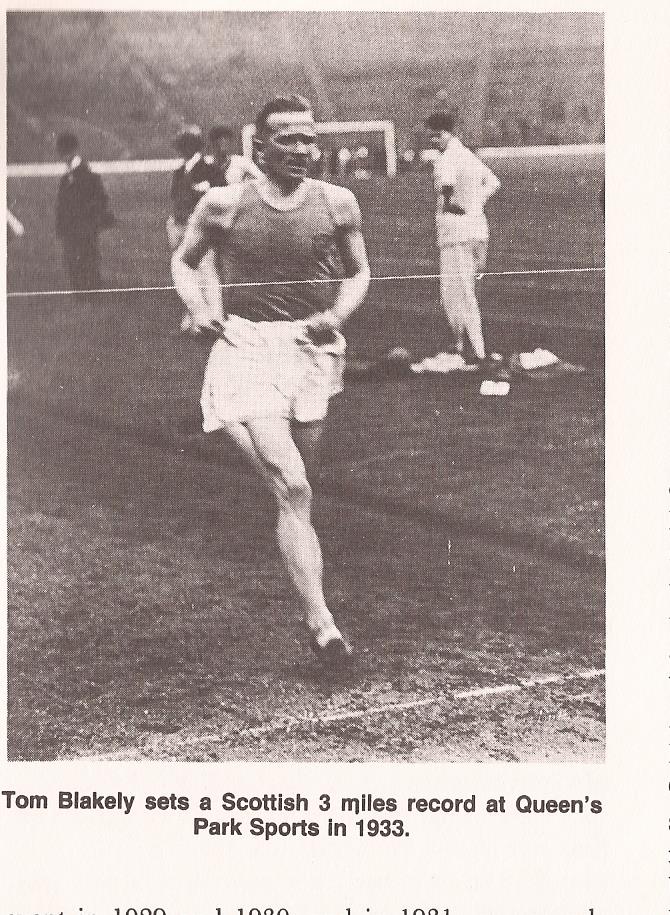
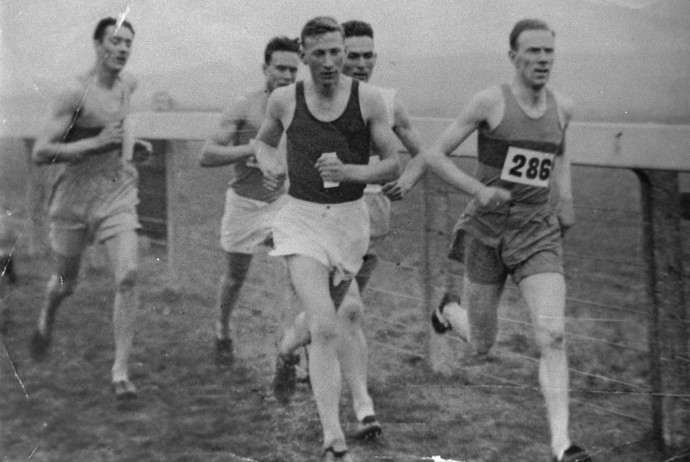
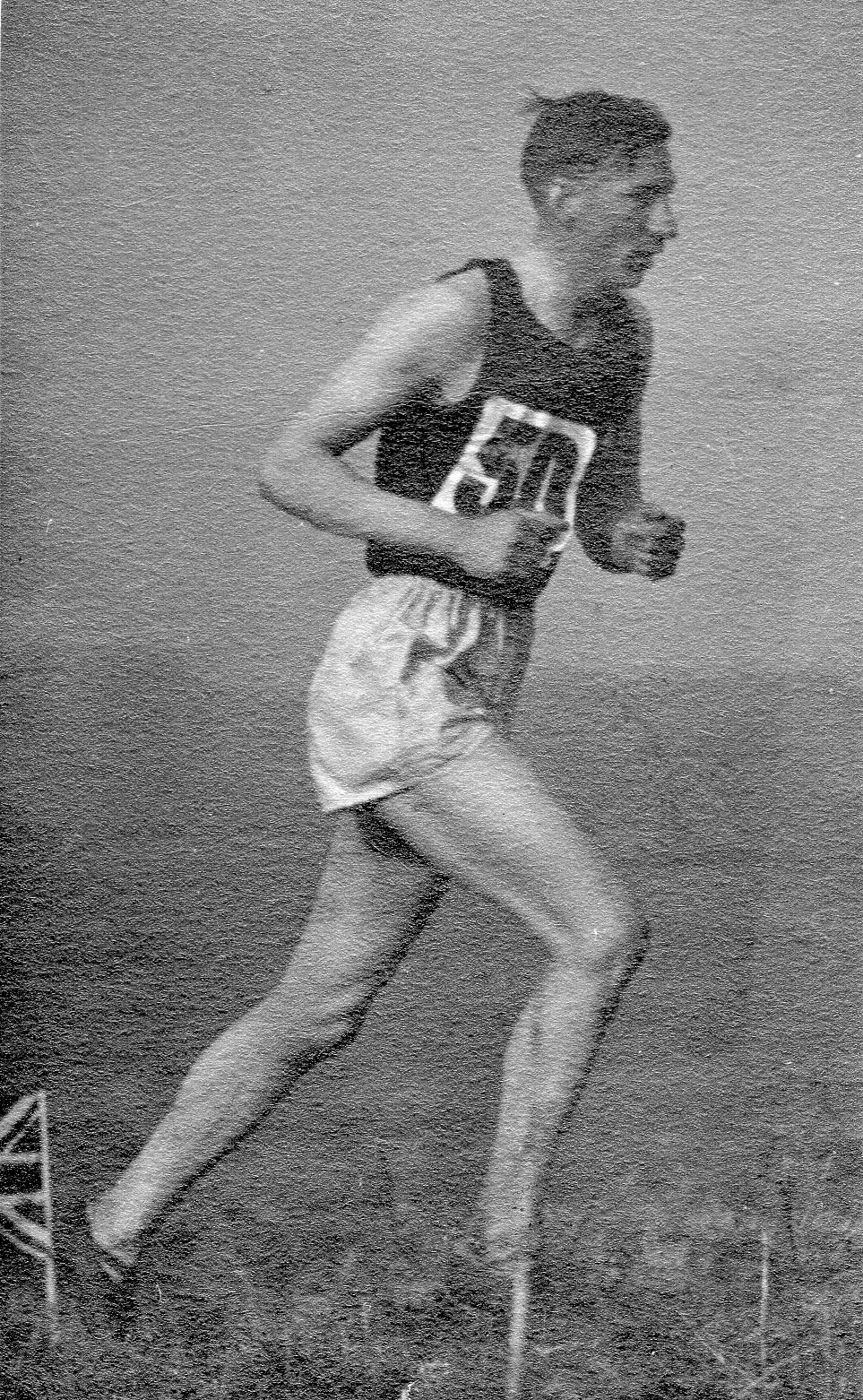
Blakely 1933Tom Blakely of Maryhill Harriers was born in Glasgow 11th July 1904 and in the course of his career set two records for the Three Miles, one for Two Miles, and won a Scottish title over Four Miles as well as being a good cross country and road runner.   Unlike some others, he did not spring immediately to prominence.   Despite winning team gold in the National in 1926, he was by no means a fixture in club teams either cross-country or on the track – indeed in the St Peter’s inter-club championship which featured relays over One Mile, Two Miles and Four Miles with a Two Miles Team Race he seldom featured for most f his career.   He took  his time to mature.

Not among the prize-winners over the 1926 summer season, his first run in the National Cross-Country Championships was in season 1926-27 when he was fifth counter for the winning Maryhill Harriers team having finished in 14th.  The following summer his name appeared several times in the results (eg Maryhill Harriers championships mile which he won) but not in any major meeting.   Although he ran well the following summer, he did not appear too often in the Press: possibly because although there were many two mile team races, only the first three across the line plus the three counters for the winning squad were listed.   Given that J Suttie Smith, D McLean, F Stevenson and Dunky Wright were among the top men of the time, it was perfectly possible for Blakely to be fourth in such a and not have his result reported.

On 4th June 1927, Blakely was fourth in the invitation three miles team race at the Queen’s Park Sports.   Maryhill won with the counting men being McLean first, Blakely and Dunky Wright eighth and a total of 13 points to Monkland’s 14.    After missing the SAAA Championships in June, Blakely won the Four Miles at the Ayrshire Championships at Rugby Park, Kilmarnock, in late July in 21:24.   He was not a prize winner at any recorded meeting subequently in summer 1927.

Winter 1927/28 and with Maryhill not in the first six at the District Relay and Blakely not in their scoring runners in the National, it was on to the summer of ’28.   Maryhill Harriers was a very strong club at that time as the comment in the ‘Glasgow Herald’ of 4th June makes clear: “It was generally exected that with the strength at their command Maryhill Harriers would take pride of place at the inter-club contest organised by that enterprising young club, St Peter’s AAC.   In the mid-distances with D McLean, WH Calderwood, W  McRoberts, G Inglis and A Maer, they have a string that no other club can compete with at the moment.”   Blakely was given time to mature as an athlete without demands being made upon him – although he might have liked some team competition to help the process along.   The first mention of Blakely in the ‘Glasgow Herald’ that summer was on 23rd July at Beith where he contested the Four Miles Ayrshire Championship – he is reported to have had little difficulty in retaining the title and finished the race alone.   It is intriguing to realise that with all the events contested by members of his club, this is his first noted victory of the season.

That cross-country season there was no sign of Blakely in the club team in the District Relays on 25th November, nor was he in the winning national team, which was made up of DT Muir, D Wright, WH Calderwood, AW Adams, Kellas and D McNab Robertson.   No shortage of talent over the longer distances either.  Summer 1929, and again no sign of Blakely among the team membership or prize winners.

We next see him at the end of season 1929-30, when Maryhill Harriers team won the National championship and Tom Blakely in sixteenth place was the team’s third counting runner.  In the Edinburgh to Glasgow – the first of its kind – held on 26th April, Tom ran on the sixth stage and maintained third place for the team that would finish third.   He had not run in either of the Maryhill teams in the Midland Relays in November 1929 but these were two very good races for a relative newcomer.  There was no place for him in the scoring six in the National and his name did not appear among the prizes all summer of 1929, not even being named as an ‘also ran’ in the SAAA Championships.   His best running however was just about to begin.

In the winter of 1929-30, he was not a member of either A or B teams in the first Midlands Relay at Bothwell.    By the National however, he was racing well enough to be sixteenth and third club counter for the winning Maryhill team to pick up his second team gold.   The first ever Edinburgh to Glasgow eight man relay was held on 26th April  and Blakely was fastest runner on Stage 7 where he maintained third place for the team that finished in that position.   Straight into the summer programme after that.   On 7th June 1930 he was in action again as third team counter in the Maryhill team which won the two miles team race at the Queen’s Park FC meeting at Hampden, with McLean winning the race, Calderwood being third and Blakely finishing in seventh.   But again, he was not to be seen in the SAAA Championships, the Rangers Sports, any of the Ayrshire meetings or indeed anywhere for the rest of the season.

In the West District Relays in November 1930, he was only in Maryhill Harriers B Team, running on the fourth stage but running faster than one of the A Team.   Missing the Districts, he was 15th in the National to be the Maryhill last counter for the winning team to take his third National team gold.   In the Edinburgh to Glasgow in April, he had fastest time and set a new record on the seventh stage as part of the silver medal winning team.

On 13th June, 1931, Blakely was part of the squads for the Mile team race with D McLean and WH Calderwood and also of the Three Miles Team race at the St Peter’s inter-club event at Celtic Park.   His next outing was in the SAAA Championships on the 27th of the month where he is noted as among the also rans in the Four Miles, won by RR Sutherland.   At the popular West Kilbride Sports on 18th July, Blakely was third in the One Mile championship of Ayrshire which was won by clubmate WH Calderwood.

His biggest moment of his career so far was at Ibrox on 1st August when he won the Four Miles from W Beavers of York and JF Wood of Heriots.   Behind him Paavo Nurmi ran 19 minutes 20 2-5th seconds, a new all-comers record.   Blakely was running from 400 yards, Beavers from 190 and Wood from 200 yards and he won by 15 yards.    Then on  August 15th at Springburn Harriers meeting, he was third in the Mile off 60.  One week later at  Darvel Week Sports, he was second in the Mile off 55 yards.    Regardless of the Ibrox race, it had ben his most successful season yet but next summer would be even better.

In November 1931 at the District Relays  Maryhill Harriers finished  6th.   Blakely ran second for the first team and had second fastest time for the club.   The club won the National in March, 1932,   Tom Blakely was 21st and  fifth counter .   There was no Edinburgh tro Glasgow in 1932 so it was into the summer season.

He set his first 3 Miles record of 14:38.2 at the St Peter’s meeting at Celtic Park in 1932.   After the run on 4th June the Glasgow Herald on June 6th said: “T BLAKELY’S TRIUMPH.    The 3 Mile record of 14:41 1-5th which J Suttie Smith created at Hampden Park has not had a long life, as in Saturday’s race over the same distance T Blakely of Maryhill clipped another three seconds off it.    Another instance of the now commonplace that Scottish distance running is better at the moment than ever it was.   It was prophesied after the Rangers meeting last August that this Maryhill Youth would go far.   He runs so easily and with his confidence in his own running power growing with each outing may soon reach the very top.   His was not the only good performance in the race as SK Tombe of Plebeian Harriers was only 30 yards away when the tape was broken and this must represent time that Tombe has never touched in previous races.”     

Later that month, after the SAAA’s championships on 25th June, the headline read “BLAKELY’S FIRST HONOUR.”  and read “RR Sutherland did not defend his Four Mile title, and JF Wood, who has been cognisant of feeling of staleness for several weeks, also did not turn out, preferring to give himself a chance for the AAA’s championships.   This dual absence robbed the race of much of its interest and with J Suttie Smith moving much below his best, T Blakely earned his first honour in comfortable fashion.   Blakely’s advance during the present season has been rapid and in view of the manner of his victory it is remarkable that his entry was made only in the nature of an afterthought.   He knew his powers over Three Miles, but was scared of that extra mile.   He need not be in future as his time of 20 min 15 sec has only twice been bettered – by Stewart Duffus in 1906, the year of the split, and by RR Sutherland last year.   JR Wilson, the Army champion, ran a good race here and finished well, but left too much to the last two laps.”   

It had been a very good season for Blakely with a record and a national title and the remarks of the press reporters on the ‘rapid rise’ are interesting.

In winter 1932-33, Blakely he again ran the second stage of the Midland District relay and was fastest Maryhill runner but in the top ten overall.   When it came to the National  the club was 3rd but  Blakely did not run and in fact, he had run his last National cross-country.   On 8th April he ran on the first stage of the Edinburgh finishing second, four seconds behind Walter Gunn of Plebeian Harriers.   The team was third.   On to the track and the headline in the ‘Glasgow Herald’ on Tuesday, May 22nd read “BLAKELY SETS RECORD.” and the article read: “The annual sports meeting of Maryhill Harriers was held last night at Hampden Park in wet weather.   Despite the rain the track was in excellent condition and there were several notable performances.   Tom Blakely, the Scottish Four Mile champion, ran a magnificent race in the Two Miles and created a new native record by returning 9 min 19 4-5th sec – actually 11 1-5th sec inside Donald McLean’s time of 9 min 31 sec made at Ibrox Park in 1927.   Blakely was with his men at the end of the first mile, run in 4 min 36 sec, he took the lead at a mile and a half in 6 min 59 sec and from this point there ensued a struggle with J Gifford, the youthful Victoria Park runner which lased until the tape.  Blakely apparently had the race won entering the straight, but Gifford challenged boldly and in the end was only beaten by inches.   He ran from the 45 yard mark  so he must have smashed the old record had he run the distance set.”

One week later at the Queen’s Park FC Sports, he set yet another record, in the three miles this time.

ANOTHER SCOTTISH RECORD FOR BLAKELY.   The conditions which prevailed at Hampden Park, Glasgow, on Saturday during the course of one of the most successful sports meetings ever held by the Queen’s Park Football Club were conducive to good performances.    The track was fast, there was little or no wind, and the temperature was of a level that brings the best out of a runner.   The somewhat moderate crowd that graced the terracing was not disappointed, for in almost every race the times ruled fast and one new Scottish record was created.    This was by Tom Blakely in the Three Miles which he covered in 14 min 33 sec, 5 1-5th sec faster than his own time set up at Celtic Park a year ago.   This was his second record of the week as he had set up fresh figures of 9 min 19 4-5th sec for the Two Miles.    These two performances within six days of each other stamp the Scottish Champion as a really good runner.   Saturday’s time was only 5 4-5th sec outside Alfred Shrubb’s all-comers record for the distance.   Blakely is a stylist and gets his effects with such apparent ease that the future holds distinct possibilities of more records.   His chief drawback so far has been a modesty that bred a distrust in his own capabilities.   These two performances should have improved his confidence.   He took the lead at the end of the first mile and remained there until the end.   The first mile was covered in 4 min 45 sec and the second in 9 min 42 sec.   JC Flockhart was second, 100 yards behind.”  

The SAAA Championships were at the end of June 1933, and the results reported ‘Holder T Blakely did not compete.’    In fact I can’t find him among the prize winners for the remainder of that year, nor was he in any of the Maryhill teams that won a few races.   Their dominance was being challenged by Shettleston and Plebeian in a way that it had not at the start of the 30’s and Maryhill was changing from the middle distance dominated club of Calderwood and McLean to the distance orientation of Wright, Robertson and Farrell.   Given the form that he had displayed, the chances that Blakely was handicapped out of the prizes are high.   In winter 1933-34, he ran the third stage of the District relay and was fastest Maryhill Harrier again but did not run in the Edinburgh to Glasgow.   As has been noted, did not run in the National, or at least was not in the counting six men.

He did not appear again in any championship race, and as far as can be ascertained was never again among the prize winners.    His had been a very interesting career – a long slow burn over four or five years then another four years or so of brilliance with two Scottish Three Miles records and one Two Miles record, a Scottish championship, gold, silver and bronze medals from the Scottish cross country championships, the West and Midlands cross-country relays, and the Edinburgh to Glasgow relay.   Tom Blakely died in Glasgow on 3rd September 1980.


Peter J Allwell – The Ayrshire Meteor

peter Allwell p

Scottish athletics had many very talented runners in the period between the wars who are not remembered at all now.   This seems to me to be more than a pity, it is almost a disgrace.   We are less aware of our athletic inheritance than any generation before us.   Alex Wilson is an expert on this period and a very good writer into the bargain.   He has made several contributions to the Scottish distance running history website and he has now written this excellent account of the career of Peter Allwell – one whose athletics were unfortunately curtailed by the 1939 – 45 War.    

By Alex Wilson 

In the 1930’s, Scottish athletics was blessed with a surfeit of gifted middle and long-distance runners. This was a veritable golden era during which national records went by the board at practically every distance from the half-mile to the Marathon. In fact, a number of records created in the decade of the Great Depression would remain unbeaten until the 1950’s; performances such as James Stothard’s 1 min 53.6 secs for the 880 yards, Bobby Graham’s 4 mins 12.0 secs for the mile, Jimmy Woods’ 30 mins 34.0 secs for six miles, Dunky Wright’s 2 hrs 32 mins 41 secs for the Marathon and Peter Allwell’s 9 mins 13.4 secs for two miles. The last-mentioned runner is arguably the least well known of these record holders, due mainly to the brevity of his fame. This is the story of Peter Allwell, the soft-spoken Ayrshireman whose short but brilliant career was by definition meteoric.

The Allwell family were from the Lochwinnoch/ Kilbirnie area but Peter Allwell first saw the light of day in London on 1st October 1913 owing to the circumstance that his father, John Allwell, had moved south to work as a groom and married an Englishwoman. Allwell was a toddler when the First World War broke out the following year, but for him the real upheaval occurred in 1916 when his father enlisted in the Army and he was sent to live with his grandparents in Kilbirnie. His grandfather Peter Allwell, was the long-serving coachman to Mr. Bryce Muir Knox of Redheugh, Kilbirnie, proprietor of Knox Threadmills. Allwell’s upbringing in Kilbirnie was, by his own account, a happy one, and he did not return to live with his parents in London after the war. In fact, sadly, he would not see his mother again until the 1950’s. When the death of his grandfather occurred in 1926, he went to live with his aunt and uncle. However he had to leave school at the age of fourteen and did not get the opportunity for higher education. To earn his keep, Allwell started at his uncle’s business, Watt’s Rope Works in Kilbirnie, but was always keen to improve his lot in life and later left to work in the building trade before seizing a job opportunity at ICI Ardeer.

As he told the Ardrossan and Saltcoats Herald in 1990, Allwell took up running at an early age. “It all began for me when I was a hamper boy for Kilbirnie Ladeside. Two famous runners at the time, Jock Calder and Willie Murdoch of Beith Harriers, came to train at the park. Someone said that they had a boy who could run the legs off both of them. We did 25 laps and I did seem to have them puffing a bit!” The youngster was promptly recruited by Beith Harriers, where he came under the auspices of trainer Tom Maxwell. Jack Millar, National Novice Champion of 1929, once told that Allwell would leap over high fences even though leading by half a mile. It obviously helped that he was relatively tall for a distance runner (5 ft 10¾ in or 180 cm), lithe and long-limbed. In 1990 Allwell also recounted how he began to make his mark as a young runner at Beith. “I remember running against Tom McAllister [a founding member of Beith Harriers in 1923 (sic)], who was one of the best athletes at that time, in a handicap race at Bellsdale where Beith junior football club play today,” he said, adding: “I recall enjoying a victory, but they did give me 100 yards of a start!”

Allwell’s athletics career really began to blossom after he joined Ardeer Recreation Club AC as a first claim in 1937, having started training seriously in 1936. Like a number of other runners from the area, he was attracted to Ardeer Recreation by the offer of a job at the I.C.I. Ardeer factory. Ardeer Recreation Club was formed in Stevenston, Ayrshire, in 1929 as the workers social and recreation club of the Noble’s Explosives Factory (which later became I.C.I.). At that time, the company was in the process of expanding its operations at Ardeer and taking on hundreds of new workers. Ardeer Recreation Club catered to a variety of sports and pastimes and was central to the community. During its 1930’s heyday Ardeer Rec. had notable success in junior football, rugby and athletics. The Athletic Section of Ardeer Rec. was formed in October 1936. In keeping with the times, there were men’s and ladies’ sub-sections; they trained on a grass track at Ardeer Recreation Ground, Stevenston, a place described by one contemporary as a “thriving hub of activity” in those days.

1937 also saw the emergence of Ardeer Rec. as a rising force in athletics. Thanks to fresh intake from Eglinton and Beith Harriers, Ardeer came literally from nowhere to place 12th in the team contest in the “National” at Redford Barracks. As a knock-on effect of Ardeer’s emergence, Eglinton Harriers became defunct in 1935 and their members joined Ardeer Rec., as, incidentally, did athletes from Beith and Irvine.

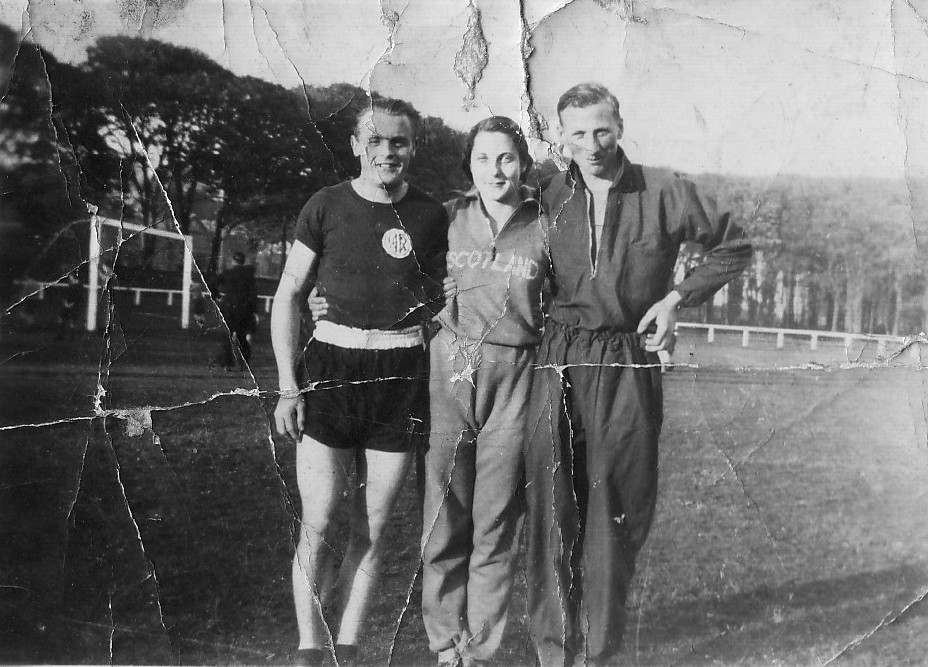
In addition to Peter Allwell, Ardeer Rec. had several other well-known athletes in their ranks; notably Willie Fulton, a former winner of the South-Western District cross-country championship; Dan Mulholland, a noted hill and cross-country runner; Charlie Wilson, formerly of Irvine, a four-time winner of the Ben Nevis Race; and Margaret Monie McDowall, who was just 17 years old when she represented Scotland at the 1938 British Empire Games in Sydney. McDowall won a string of S.A.A.A. sprint titles between 1937 and 1939 and set up Scottish records for 100 yards and 220 yards of 11.2 secs and 25.8 secs respectively. In fact, it is thought that she was coached by Peter Allwell whose role-model status and teaching aptitude saw him elected trainer at the Ardeer club’s 1937 A.G.M.
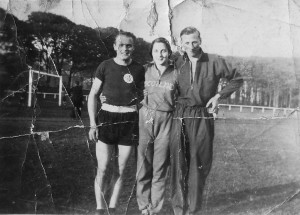
 Peter Allwell 18 (Margaret McDowall)2

 Pictured at Ardeer Recreation Ground (left to right): Willie Fulton?, Margaret McDowall and Peter Allwell.  

Cross-country 

With no more than a couple of pack runs a week with the Beith Harriers, Allwell was never going to set the athletics world alight. Even so, he gave a glimpse of his potential when he finished 10th in the Scottish Novice Cross-country Championship at Hamilton on 3rd November 1934. Then, on 26th November, he ran the third fastest lap in the South-Western District 10 miles relay championship at Largs and, in doing so, helped Beith Harriers wrest the coveted title from Greenock Glenpark Harriers.

On 2nd February 1935, Allwell continued his form by running 2nd to Alec McDonald, Auchmountain Harriers, in the South-Western District Cross-country Championship at Beith, 40:23 to 40:41.

However his form was up and down that season, mostly down in fact. After a spell with the Beith Harriers’ “B” team, however, he bounced back to form late in the season to finish 2nd behind Willie Murdoch in the Beith Harriers’ annual seven-mile championship.

Beith Harriers officially opened their 1935/36 cross-country season with a five-mile cross-country race for the Crawford Cup, and Allwell became the first holder of the trophy.

On New Year’s Day 1936, he finished only 16th in the 1936 Beith Harrier’s race, some two minutes behind Jimmy Flockhart, Shettleston Harriers, who covered the six mile course in 33 mins 34 secs, but won first prize in the open ballot team race. In those days teams of three were selected by ballot, which meant that luck of the draw ultimately decided who won the team prizes – an egalitarian idea which then was quite popular as it gave slower runners a shot at glory. The race still exists to this day and is one of the longest-running annual fixtures in the Scottish racing calendar. In Allwell’s day it was a prestigious event which was always well-attended by runners from big Glasgow clubs like Plebeian, Shettleston, Bellahouston, Maryhill and Victoria Park. A list of winners can be found here: www.arrs.net/HP_Kilbirnie4.htm

Ten days later, Allwell was in the running for victory in the Ayrshire Cross-country Championship at Ayr Racecourse, which proved one of the most exciting on record with just 47 seconds separating Maxwell Stobbs, the winner in 43:11, from J. Calder the twelfth man. Beith’s Willie Murdoch was 2nd past the post in 43:12 and Allwell 5th in 43:21.

On 10th February 1936, Allwell showed further improvement by finishing runner-up to Kilbarchan’s Willie Kennedy in the South-Western District cross-country championship at Inchinnan, and over half a minute ahead of Willie Murdoch. Beith Harriers, led home by Allwell, became the first club to win the team contest since the race was instituted in 1930.

The 1936/1937 cross-country season got off to an auspicious start on 5th December 1935 when Beith Harriers returned victorious from the Ayrshire Cross-country Relay Championship at Ayr. Allwell ran the first leg and recorded the 7th best individual time of 18 mins 2 secs to give Beith a 75-yard lead over new club Ardeer Recreation which they never reliniquished.

Later that month, Allwell finished 2nd in the Beith Harriers’ club championship for the Watson Cup, which was run off on Boxing Day. He finished about 150 yards behind Jim Barr who covered the 8 mile course in 46:16 to 46:44 for Allwell.  
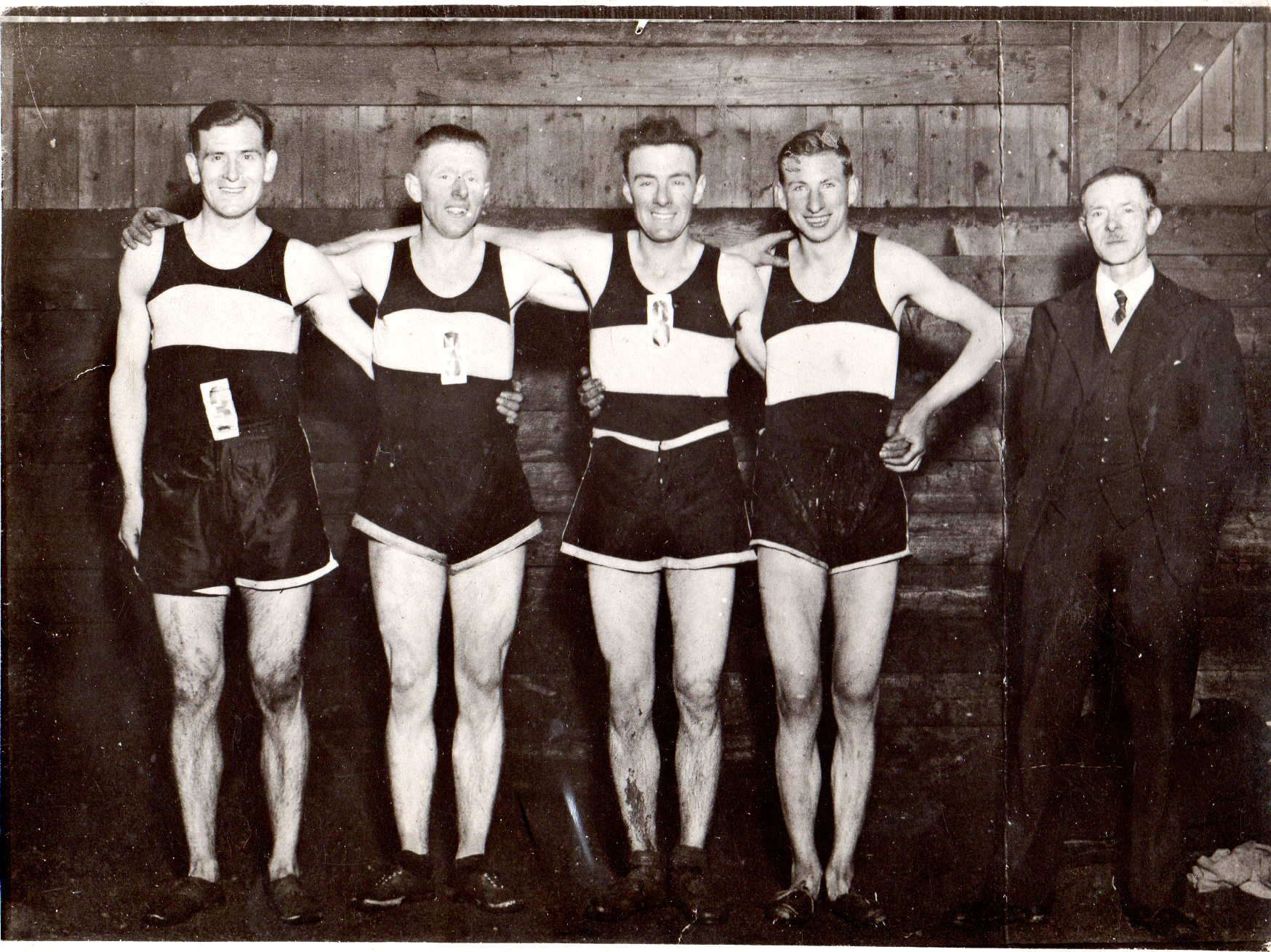
 Peter Allwell S.W. Relay Champs J.Barr G.Murdoch W.Murdoch P AllwellThe winning Beith Harriers team in the 1936 Ayrshire cross-country relay championship (left to right): Jim Barr, George Murdoch, Willie Murdoch, Peter Allwell. 

Although this performance was solid enough, it gave little indication of the breakthrough Allwell was about to achieve just six days later in the 1937 New Year’s Day race at Beith which was run over a two-lap, six-mile course starting and finishing at Gateshead near Kilbirnie. Allwell went straight to the front and made a hot pace which not even the Scottish champion Jimmy Flockhart, of Shettleston Harriers, seemed able to follow, with the result that he had a 40 yard lead over Flockhart at the end of the first lap. The Ardrossan and Saltcoats Herald explains what happened next: “Although Allwell held a commanding lead at half distance, and still had when crossing the road a mile round on the second lap, few of the spectators considered he would hold it till the finish against the more fancied Shettleston runner who was looked on as a sure winner. When the runners came into view less than half a mile from the finish, it was seen that the local man had increased his lead, and he broke the tape 150 yards ahead of the champion.” Individual placings: 1, P. Allwell (Beith H.) 32:56; 2, J.C. Flockhart (Shettleston H.) 33:17; 3, W.C. Murdoch (Beith H.) 33:18; 4, W. Nelson (Maryhill H.) 33:50; 5, G. Murdoch (Beith H.) 33:59

What a turn-up for the books that was! “Allwell’s performance,” wrote the Herald, “was a revelation of speed and stamina which surprised Flockhart”.

It is worth noting that Flockhart would go on to win the International Cross-country Championship a few months later. A crushing defeat on Ne’ers Day at the hands of a relative unknown may have been just the spur he needed!

After that bombshell, Allwell’s only early-season result of any note in 1937 was a 15th-place finish for Beith Harriers in the Ayrshire Cross-country Championship at Irvine on 20th February. Beith’s Willie Murdoch won the individual title and Ardeer Rec. the team contest on that day. It was to be his last race in the Beith Harriers’ vest before he switched allegiances to Ardeer Recreation Club AC because, for some reason, he was not in the Beith Harriers team which finished 5th equal in the national cross-country championship at Redford Barracks the following month.

When the 1937/38 winter season got under way on 2nd October 1937, Allwell led the Ardeer team to 3rd place in the Victoria Park AAC McAndrew Trophy road relay race at Whiteinch. He shared with S.A.A.A. six miles champion Willie Donaldson (Shettleston Harriers) the honour of recording the fastest individual time, both men being credited with 15 mins 53 secs. The much-fancied international champion Jimmy Flockhart was only 10th with 16 mins 32 secs.

On 21st November, Allwell led Ardeer to victory over his former club in the South-Western District relay championship at Stevenston, returning the third fastest individual time.

Then, on 10th December, Allwell helped Ardeer lift the Ayrshire 10 Miles Cross-country Relay Championship title at Kilmarnock. “P.J. Allwell,” wrote Ardrossan and Saltcoats Herald , “ran a magnificent race and virtually won for Ardeer, for, when he handed over to his team mate, he held a lead of 300 yards over his nearest opponent. He also secured the fastest lap honour.”  
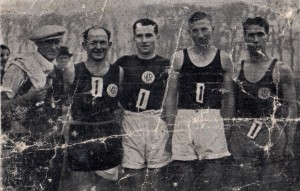
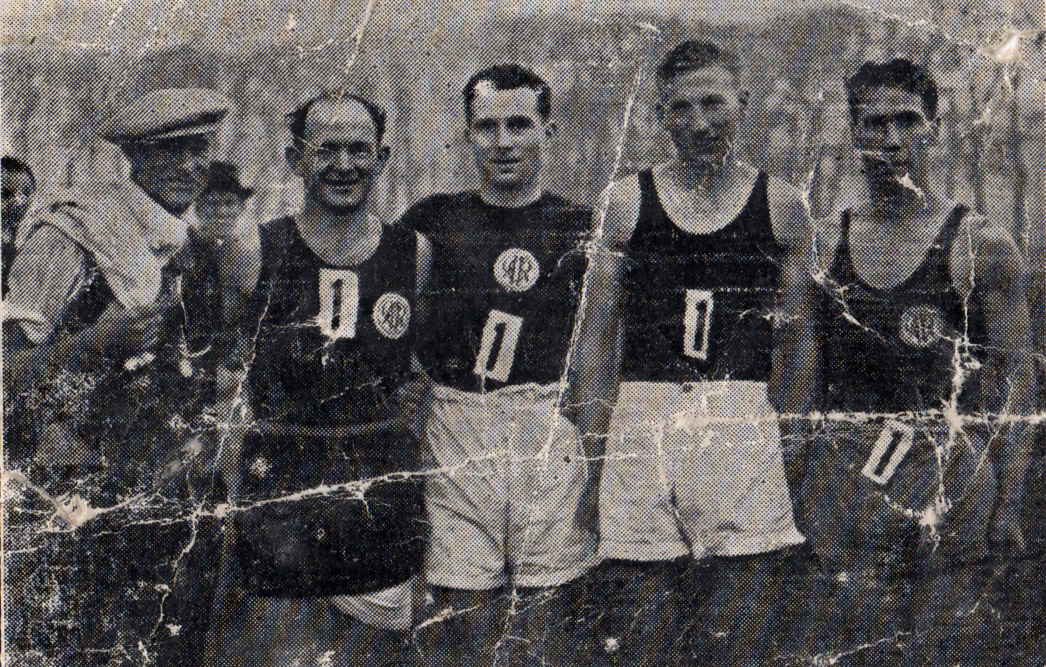
Ardeer R.C., S.W. cross-country relay champions 5.12.1937

Ardeer Recreation Club, 1937: SW District Cross-Country Relay Champions: Willie Fulton, JG Wilson, Peter Allwell, G Maxwell

 On 1st January 1938 Allwell retained his title in the Beith New Year’s Day race, which for the first time since its inception in 1928 was run as an open ballot relay team race. There were 13 teams competing and, in all, 39 runners were engaged. Allwell ran the first lap for his team and, finishing 80 yards ahead of Alec McDonald, Auchmountain Harriers, clocked 12 mins 36 secs for the 2 miles 955 yard (4.1 km) course, to smash the previous record of 13 mins 20 secs, held by George Murdoch, of Beith. As far as is known, his course record was never beaten.

Four weeks later Allwell won his club’s cross-country championship at Stevenston, and followed up on 19th February with a hard-earned victory in the Ayrshire Cross-country Championship over a distance of seven miles at Benwhat, the remote hilltop village near Dalmellington where Doon Harriers were based. Beith won the team race and in a close finish Allwell beat 18-year-old prodigy Bobby Reid, of Doon Harriers, for the individual title by the slender margin of two yards. A couple of weeks later, Reid would defend his Scottish youth three miles’ championship at Ayr with embarrassing ease. Incidentally, anyone trying to find the village of Benwhat on a current map will look in vain. The villagers were resettled in the early 1950’s and later all the buildings including the school were demolished. Today, the only traces of this once thriving mining community are some scattered remnants of building foundations and a war memorial on the hillside above Dalmellington. 
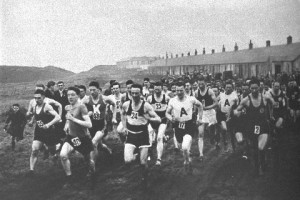
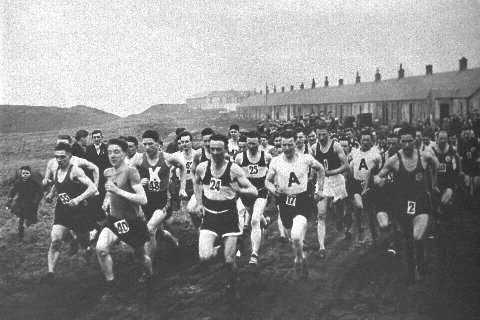
 Peter Allwell 6

Start of the 1938 Ayrshire Cross-country Championship at Benwhat. Bobby Reid (40) and Peter Allwell (1) are already well to the fore.

 This relatively minor win aside, Allwell sprung a big upset in the Scottish Cross-country Championship at Ayr Racecourse on 12th March. Running with the confidence of a seasoned campaigner, he was in the leading group right from the go and cut out the pace for stretches of the gruelling 9 ½ mile course to claim 3rd place behind Emmett Farrell, of Maryhill Harriers, and Alec Dow, of Kirckaldy YMCA. Allwell was on his last legs at the finish, the distance being the furthest he had ever raced, but what a breakthrough it was!

Result: 1, Emmett Farrell (Maryhill H.) 52:26; 2, Alec Dow (Kirkcaldy YMCA) 52:55; 3, Peter Allwell (Ardeer Rec.) 53:18; 4, Tommy Gibson (Bellahouston H.) 53:25; 5, Tommy Lamb (Bellahouston H.) 53:32; 6, Jimmy Flockhart (Shettleston H., holder) 53:40; 7, James Freeland (Hamilton) 53:44; 8, Archie Craig (Shettleston H.) 53:46, 9, Alex Donnett (Dundee Thistle H.) 54:01, 10, David Cockburn (Dundee Thistle H.) 54:23, 11, Willie Fulton (Ardeer Rec.) 54:28, 12, Jim Ross (Shettleston H.) 54:28

Ardeer Rec. were the surprise package, finishing 4th in the team contest behind Maryhill, Shettleston and Bellahouston and ahead of well-established harrier clubs like Springburn, Plebeian, Victoria Park, Garscube, Edinburgh Southern, Clydesdale etc.  
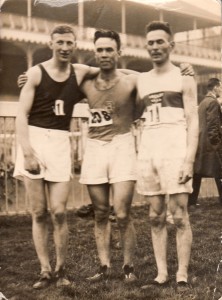
 Peter Allwell Emmett Farrell and Alec Dow at Ayr

(Left to right) Peter Allwell, Emmett Farrell and Alec Dow (Ayr, 1938).


A couple of days later, Allwell was duly selected by the Scottish Cross Country Union to wear his country’s colours in the International Cross-country Championship at Balmoral Showgrounds, Belfast, on 2nd April 1938. A second Ardeer man, Willie Fulton, 11th at Ayr, was named as a non-travelling reserve. The under-strength and largely inexperienced Scottish team went to Belfast with only outside chances of a team medal given the absence of experienced Anglo Scots such as Robbie Sutherland or W.C. Wylie and the fact that reigning international champion Jimmy Flockhart was not fully fit. Scotland, led home by Emmett Farrell in 8th, in fact finished only 5th in the team contest – their worst showing since the inception of the championship in 1903. The performance of Jimmy Flockhart was symptomatic, the Scottish captain running one of the poorest races of his career to finish only 37th. Allwell was said to have been very nervous, which was understandable given the circumstances, but acquitted himself well in heavy conditions unsuited to his loping running action and was the fifth counter for his team. England once again provided the individual champion in Jack Emery , who won by 19 seconds in 49:57.

The placings and times of the Scots were: 8, Emmett Farrell, 50:59; 24, Archie Craig, 51:57; 24, Alec Dow, 52:07; 27, Tommy Lamb, 52:21; 36, Peter Allwell, 52:35; 37, Jimmy Flockhart, 52:38. Unplaced: 44, James Freeland, 53:02; 45, Tommy Gibson, 53:03; 47, Alec Donnett, 53:19. 

When the 1938/39 cross-country season began in earnest on 3rd December 1938, Ardeer were beaten into 3rd place in the South-Western District 10 miles relay championship by Beith and Doon Harriers at Benwhat. Allwell (15:37) returned the second fastest individual time behind Bobby Reid (15:29), the Doon youngster of whom great things were already being predicted.

Allwell had little difficulty retaining his senior club championship at Ardeer House on 28th January 1939. Covering the seven-mile course in 35:37, he defeated Willie Fulton by a margin of 1 min 34 secs. “Allwell is running well at the moment,” wrote the Ardrossan and Saltcoats Herald, adding “and on present form stands a good chance of winning the national event in March”.

But as Allwell found out in the county cross-country championship at Ardeer House on 11th February, his main rival for national honours was a fellow Ayrshireman. The Ardrossan and Saltcoats Herald takes up the story: “Before the start of the race there were many, including myself, who thought that the individual championship would be won by P.J. Allwell, who has been running very well this year. These ideas were shattered when R. Reid, of Doon Harriers, ran a brilliant race to win comparatively easily from Allwell, who finished about 100 yards after the younger man. Reid`s victory over a runner of Allwell’s calibre shows what may be expected from this brilliant youth. He is definitely amount Scotland’s best and should win the national title at Lanark to-morrow week. Of course, Allwell will be there also.”

The 1939 Scottish Cross-country Championship, held over a course of 9 ½ miles at Lanark Racecourse on 4th March, went by the form book. Allwell produced an outstanding run to finish 2nd behind his new-found nemesis Bobby Reid, who annexed both the junior and senior titles. The young Doon Harrier produced a phenomenal performance, making light work of the heavy turf to win by some 200 yards. It actually was the first time that Reid had raced a greater distance than seven miles and his first test against the entire array of Scotland’s experienced distance runners. Allwell in turn passed the finishing post about 200 yards ahead of the holder, Emmett Farrell, and in so doing added a coveted S.C.C.U. individual medal to his growing collection.

Result: 1, Bobby Reid (Doon Harriers) 53:07; 2, Peter Allwell (Ardeer Rec.) 53:44; 3, Emmett Farrell (Maryhill H.) 54:23; 4, Archie Craig (Shettleston H.) 54:27; 5, Jim Ross (Shettleston H.) 54:31; 6, Bob McPherson (Maryhill H.) 54:39; 7, Willie Kennedy (Kilbarchan AAC) 54:45; 8, Jimmy Flockhart (Shettleston H.) 54:46; 9, Willie Sutherland (Shettleston H.) 54:49; 10, Alec Donnett (Dundee Thistle H.) 55:01; 11, Tommy Gibson (Bellahouston H.) 55:05, 12, Alec MacLean (Greenock Glenpark H.) 55:19

After the previous year’s 4th-place finish, Ardeer Rec. produced another strong team performance to place 7th out of 23 teams.

“Versatile P.J. Allwell, of Ardeer, who was second,” prophesied “D.B.R.”, “gave a fine display, and one that deserves high commendation. On track and across-country, Allwell is a power to be reckoned with in Scottish athletics.”
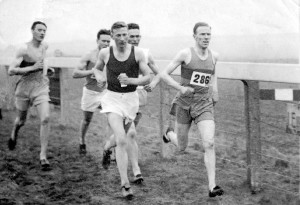
 

Allwell A&S Herald 045 

Left to right: Archie Craig, Emmett Farrell, Alec Dow and Willie Sutherland (Lanark, 1939).  

 The first nine runners to finish in the national formed to the Scottish team for the international contest at Cardiff on 1st April 1939. The atmosphere was somewhat more upbeat than in the previous year, with Scots hopes largely resting on the shoulders of Bobby Reid.. “Scotland’s men,” wrote W.B., “are out to regain prestige after the collapse which last year left them in fifth place. We have a hopeful team, with good leaders and able supports. All are more than plodders, and have the pace for the light going such as the Ely Racecourse is expected to give.” Allwell, in particular, found the light conditions to be in his favour and produced a storming run to finish 23rd. The Scottish team, led home by Emmett Farrell in 7th, packed well with all six counters finishing in the top thirty, but were unfortunate to miss out on a team medal by a tantalising five points. Luck was not on their side: unfortunately, Scots prodigy Bobby Reid was well below par after sustaining nasty burns in the Dallmellington Co-op bakehouse where he worked as an appentice and failed to even make the counting six. England’s Jack Holden won the individual title for a record fourth time in 47:19.

The placings and times of the Scots were: 7, Emmett Farrell, 48:21; 12, Jimmy Flockhart, 48:48; 22, Bob McPherson, 49:17, 23, Peter Allwell, 49:20; 27, Willie Sutherland, 49:31, 29, Jim Ross 49:35. Unplaced: 31, Bobby Reid, 49:43; 54, Willie Kennedy.
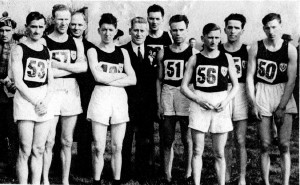
 

p allwell 033t1

Left to right: Jim Ross, Willie Sutherland (captain), W.S. McCarthy (President S.C.C.U.), Bobby Reid, S.C.C.U. official, Archie Craig, Emmett Farrell, Jimmy Flockhart, Willie Kennedy, Peter Allwell (Cardiff, 1939).

 The outbreak of the war later that year mean that Allwell was regretably unable to gain any further Scottish cross-country caps. Ironically, the 1940 International Cross-country Championship had been awarded to Scotland and would in all likelihood have been decided virtually on his doorstep in Ayr. 

On the track

Despite Allwell’s record of success in cross-country, he rarely raced beyond two miles on the track. Nevertheless, his track career merits special attention.

Allwell’s earliest track result of any note was a 2nd place finish in the 1936 Ayrshire mile championship. However his track career did not begin in earnest until 1937, and it was meteoric.

On 12th June 1937 he produced an outstanding performance in the Babcock & Wilcox Athletic Club sports at Renfrew. The Scotsman led with the heading “Ardeer man’s fast time in the mile handicap” and wrote, “Running off the short mark of 65 yards in the open mile handicap, P.J. Allwell, Ardeer, worked through a large field, to win the fast time of 4 mins 13.7 secs.” This incidentally works out at 4:06.4 for 1500 metres.

Two weeks later he made his mark in the S.A.A.A. mile championship at Hampden Park where he ran in the mile representing Beith Harriers, and not Ardeer. There were eleven entries and Allwell finished 2nd sixty yards behind Maryhill`s Bobby Graham in around the standard time of 4 mins 30 secs.  
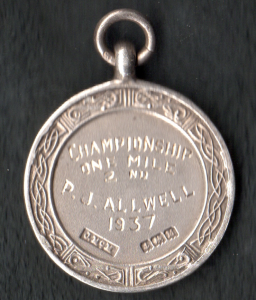
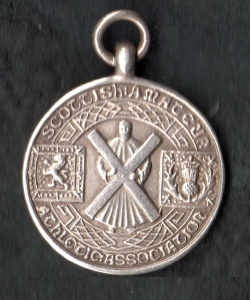
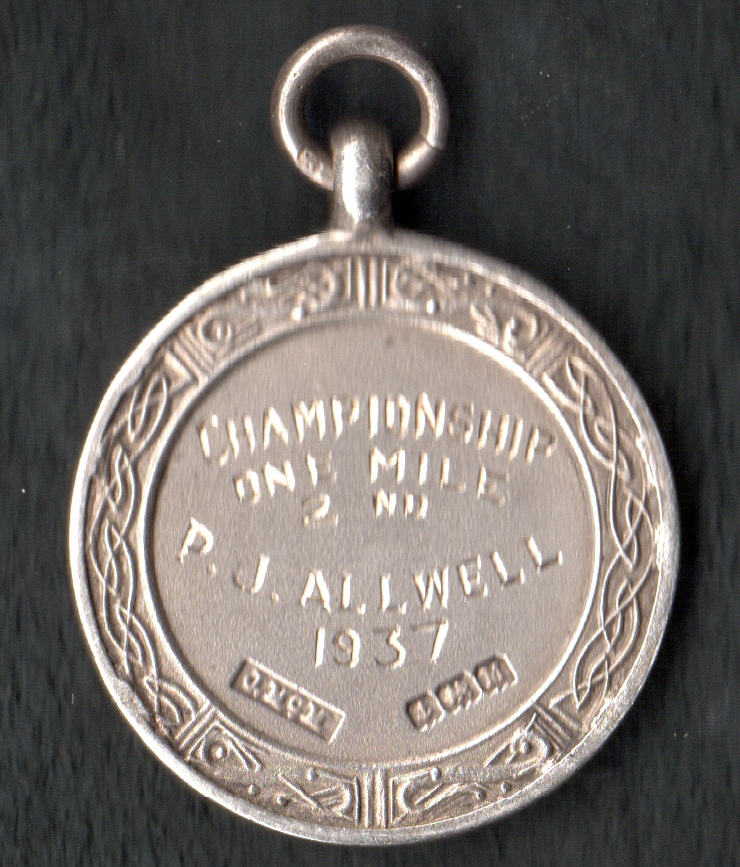
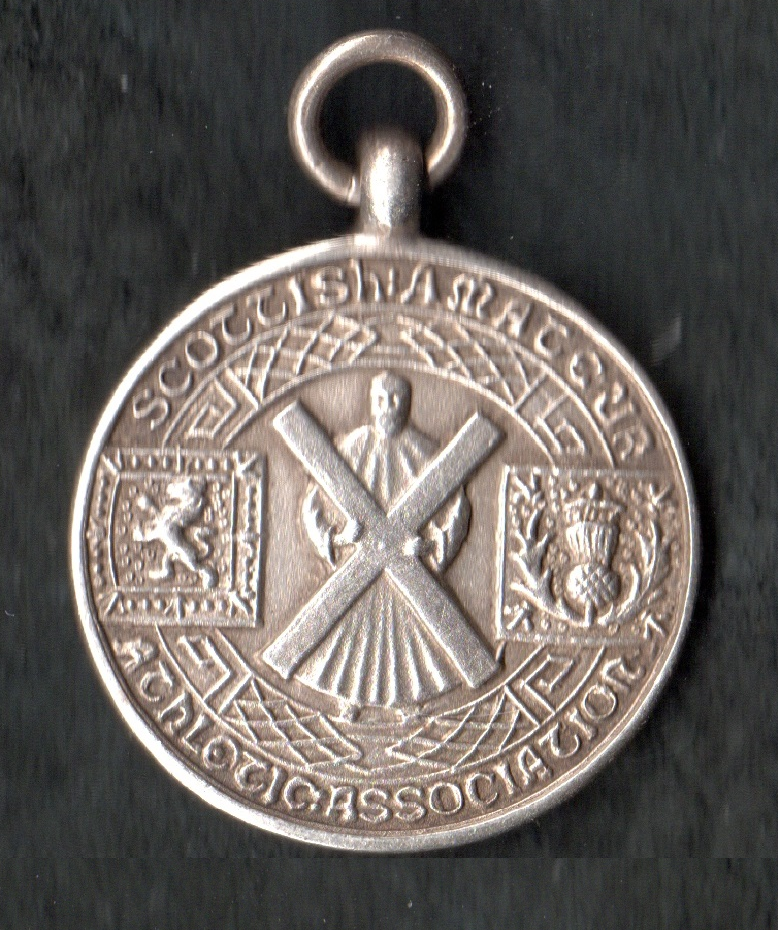
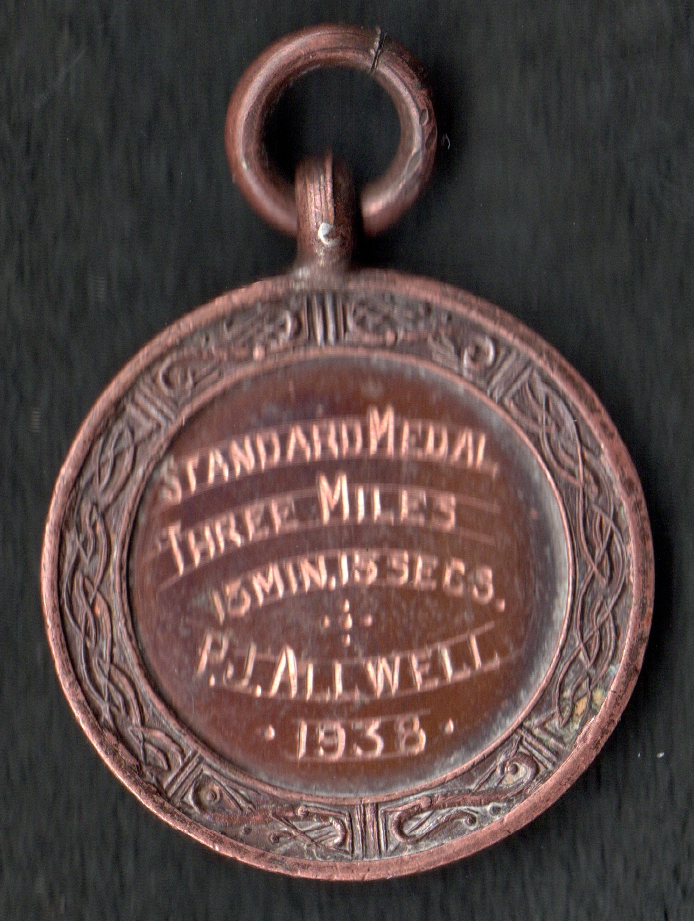
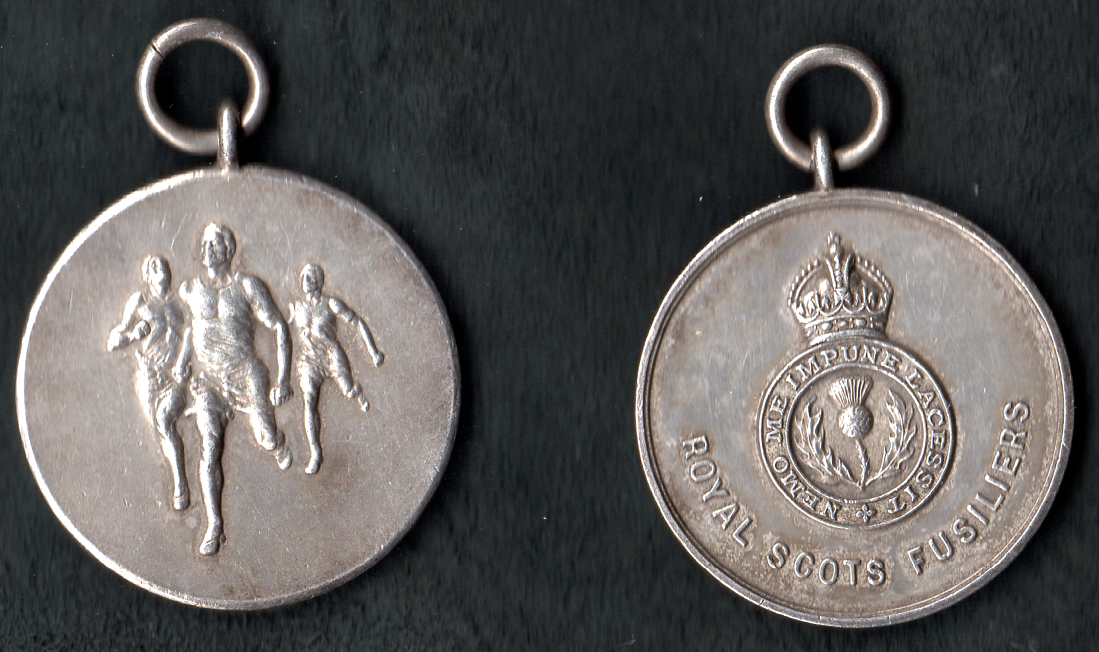
Medal On 3rd July 2Medal On 3rd July

On 3rd July, Allwell notched up another win in the confined mile handicap in the Ardeer Recreation Club’s annual sports with a 4:34.8 scratch clocking in rough conditions.

Then, on 8th July, he took on, among others, James Stothard in a mid-week mile race at Craiglockhart and gave the Scottish half-mile record holder something to think about in returning a time of about 4 mins 28 secs. “Allwell,” wrote the Scotsman, “cut out the pace until the last , when Stothard took command to win by about eighteen yards. Time: 4 mins 24 7-10 secs.” Two days later, Allwell was back in action in the invitation mile in the Ayr A.C. sports. The Ardrossan and Saltcoats Herald reported: “P.J. Allwell, who has been hitting the high spots of late, ran a splendidly judged race to finish first in 4 minutes 20 1-10th seconds”. Then on 19th July he continued his winning form with another strong performance in the Maryhill Harriers’ Sports at Largs where he won the 3000m handicap at a canter from Beith’s Willie Murdoch in 9:00.5 off 84 yards.

These performances earned Allwell an invitation to run in the invitation mile at Clyde F.C. Sports, held at Shawfield before a large crowd of 12,000 spectators on Saturday 31st July. Allwell (off 20 yards) proved his worth by finishing a close 3rd behind England’s Reg Thomas (who ran on to complete the full mile in 4:15.0) and 12 yards behind Bobby Graham (4:18.5) in around 4 mins 21 secs. The invitation events were the feature of the major athletics meetings held in Glasgow between May and September and were run separately from the open races. For Allwell to have reached this standard within such a short space of time was pretty remarkable in itself, but also indicated that there was more to come.

Allwell kicked off the 1938 track season with an impressive win in the invitation three-quarter mile handicap in the Maryhill Harriers’ Sports at Firhill on 23rd May. Starting with an allowance of 20 yards, he won by 25 yards from Springburn’s W.R. Struthers (38 yds). His time of 3:13.8 was an excellent performance considering the six-laps-to-the-mile grass track. Bobby Graham, making his first appearance in an open meeting since his return from the Empire Games in Australia, was still a little rusty and finished 3rd off scratch in 3:16.8. “Graham showed up well for two laps and at one period looked a probable winner,” wrote athletics columnist Ggroe, “but P.J. Allwell, Ardeer, to whom he was conceding 20 yards, opened out over the last lap to finish strongly, fully 25 yards in front of Graham.”

Five days later, Allwell posted a 9:10.0 off 45 yards in the two miles handicap in the Monkland Harriers’ sports at Coatbridge, prompting speculation that he could be in the running for a Scottish two-mile record. The Daily Record identified Allwell as “the pick of the runners in the two miles,” adding: “From the short mark of 45 yards he sailed along with consummate grace to make short work of the generous handicap allowances given to men like J.E. Farrell, W. Sutherland and A. Craig (Shettleston), and J.N. Lapraik (Glasgow University). He had all his field practically at a mile to go, and ultimately raced home a victor from A. Craig (to whom he conceded 105 yards) in the excellent time of 9 min. 10 sec. Given an early opportunity on a good track, Allwell is certain to get close to the present two mile record figures of 9 min. 17 sec.” “P.J. Allwell, Ardeen Recreation Club,” wrote The Scotsman, “revealed unexpected improvement on last year’s form when winning the two miles handicap at Monkland Harriers Sports, held at Cliftonhill Park, Coatbridge, on Saturday. Allowing for his 45 yards start, his time of 9 mins 10 secs is almost equal to the Scottish record set up last year at Cowal Games by Robert Graham (Maryhill Harriers). The Ardeer man’s feat was more exceptional in view of the conditions. Rain fell heavily, and the track, on grass, measured six laps to the mile. If he concentrates on the three miles, Allwell holds outstanding prospects in the Scottish A.A.A. championships.”

On 2nd June in the Atalanta v Western District meeting at Westerlands, Allwell finished the length of the straight ahead of Bellahouston’s Jack Gifford in the mile in 4:33.5.

Two days later he was back in action at the Balmoral Grounds in Belfast, having been invited to run for Scotland at the Royal Ulster Constabulary international sports meeting against athletes from England, Scotland, Germany, Eire and Northern Ireland. The event was broadcast live on radio and Allwell added to his new-found celebrity by achieving the only Scottish victory in the mile in which he defeated, among others, England’s Bernard Wright in 4:30.4. The Herald ran its report on the meeting with the heading “Scot’s victory at Belfast, P.J. Allwell wins mile race”. “P.J. Allwell, the Scottish athlete who recently won the three-quarter mile handicap at Maryhill Harriers’ sports and the two miles invitation race at Monkland Harriers’ sports, further distinguished himself on Saturday by winning the mile. That was the only Scottish success.”

Allwell ran the three miles, and not the mile, in the S.A.A.A. championships at Hampden on 25th June. Despite having no prior form over this distance, he was regarded as one of the favourites alongside holder George Carstairs, Edinburgh University; and the in-form Jackie Laidlaw, Edinburgh Northern, who had clocked a fast 14:41.2, missing Tom Blakely’s native record by just 8.2 seconds, at Craiglockhart only ten days earlier. Here is how the race unfolded according to the Herald: “Expectations of spirited challenges and counter-challenges in the three miles were realised for half of the distance, when P.J. Allwell and J.P. Laidlaw endeavoured to outmanouevre G.M. Carstairs, Edinburgh University. Neither of his rivals, however, had the pace to equal the champion, and when he applied pressure in the third mile he soon disposed of his challengers. Running on strongly on his own, he won by fully 150 yards in excellent time indeed, when the force of the wind against him in the home straight is considered.” Ultimately, then, it was a cut and died decision in favour of Carstairs, who clocked 14:40.8. Laidlaw was 2nd in 15 mins 6 secs. Allwell, 3rd, gained a standard medal by running exactly 15 mins 15 secs.
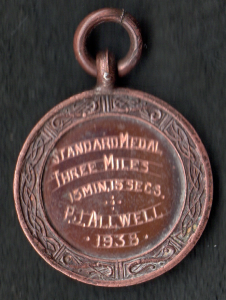
Medal Allwell clearly did not

 Allwell clearly did not produce his best form in the national championships but rediscovered it three days later in the Glasgow Transport Sports at Helenvale Park where he defeated S.A.A.A. mile champion Bobby Graham for the second time that season to win the mile-and-a-half mile scratch race by five yards from Graham in 6:54.8. But for adverse weather conditions (heavy rain and a sodden track), the British record of 6:36.5 set by Tommy Riddell at the same venue in 1935 would have been in jeopardy.

On 2nd July, Allwell defeated Emmett Farrell, the S.A.A.A. six miles’ champion, by almost fifty yards in a two-mile team race at Ardeer Recreation Club’s annual sports in a good time of 9:35.5.

On the evening of Tuesday 5th July, after work, Allwell dashed up to Glasgow for the 7 p.m. start and did what he had been threatening to do all year. Running off scratch in the two miles handicap in the Shettleston Harriers’ meeting at Helenvale Park, he made up big handicaps on the entire field but was just beaten by Shettleston’s Jim Ross, off 120 yards, who produced a great burst approaching the line and just managed to overhaul Allwell. Allwell’s time of 9:13.4 was a Scottish record, 3.9 seconds inside Bobby Graham’s national record set at Dunoon the previous year.

Allwell maintained his form streak in the invitation mile handicap in the Dundee Police Sports at Den’s Park on Saturday 9th July. Running from a virtual scratch mark of 10 yards and conceding Jackie Laidlaw 20 yards, he worked his way through the field to take 2nd, five yards behind Laidlaw, 4:20.6 to 4:21.6. “Considering the five laps to the mile grass track and the stiff wind blowing down the home straight,” wrote the Evening Telegraph, “these performances are very good indeed.”

On the evening of Tuesday 12th July, he rounded of a few hectic weeks by running a leg in the winning one mile medley relay in a triangular contest at the Ardeer Recreation Grounds between Ardeer Rec., Ayr A.C. and Kilmarnock Harriers.

On the strength of his performances Allwell was subsequently selected to represent Scotland in the mile in the triangular athletic contest against England and Ireland at Dublin on 23rd July. It was his biggest track race to date, and he rose to the occasion by finishing a close 3rd behind England’s Jim Alford and Jack Gifford. The times were excellent: 4:20.6 for Alford, 4:22.0e for Gifford and 4:22.4e for Allwell. Despite stand-out performances by Dick Littlejohns in the half-mile, Jackie Laidlaw and Peter Allwell in the mile and an Irish record of 14:29.8 by George Carstairs in the three miles, the Scots team was missing a number of leading athletes and unfortunately finished last.  

Allwell was later invited to run in the Glasgow Rangers’ Sports at Ibrox on 6th August, where he started off 54 yards in a specially framed 1500m handicap, which had been billed as an attempt by Sydney Wooderson on Jack Lovelock’s world record of 3:47.8. The bespectacled Englishman failed to get the world record after running the first lap too quickly, but salvaged a British record of 3:49.0. Allwell was unplaced.

On the strength of his performances in the 1939 national and international cross-country championships, it had been widely anticipated that Allwell would be a contender for the S.A.A.A. 10 miles’ championship. What the pundits didn’t know, however, was that Allwell had enlisted with the Territorials – The 6th Battalion, The Royal Scots Fusiliers, to be exact – on 18th March 1939. During the spring and summer of 1939 with war clouds gathering, recruitment drives were a common feature across the country and taking in volunteers in record numbers. It was a difficult decision made by conscience, and it effectively stalled his running career and put paid to any hopes he made have had of winning an S.A.A.A. track title.

Allwell continued to work as normal at I.C.I. after undergoing basic training with the territorials, and attended for military duty as required. Even after his enlistment, he managed to get a few races in before finally being called off to war. His first competitive track outing of any note in 1939 was in the S.A.A.A. three-mile championship at Hampden on 24th June where finished outside the medals behind defending champion George Carstairs, who claimed his 3rd successive title in 14:41.2. As in the previous year, Allwell gained a standard medal by beating 15 mins 15 secs. His only other notable track appearance that year was in the Ardeer Recreation Club’s annual sports, held in atrocious conditions at Stevenston on 8th July. Here, Allwell made up some big handicaps to win the confined mile handicap off 5 yards in 4:35.8. Later he placed 2nd behind Bobby Graham in the two-mile team race, where he led until the last lap when Scottish mile champion sprinted away to win by 50 yards, 9:40.4 to 9:50.0. The Herald reported that Allwell had just returned from the fusiliers’ annual camp, where he had gained quite a collection of awards at the camp sports, but otherwise gave no details.


The war and afterAll well winning army race
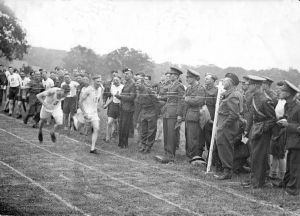
The 6th Battallion, Royal Scots Fusiliers 1939-46 by T.M. Gemmell contains an anecdote about a cross-country run involving Allwell in basic training: “It was decided that with a few hours’ training the duplicate Battalion would mount a guard before the end of camp. It must have been the crushing win of a slim young Fusilier from Saltcoats in the cross-country race that gave them this presumptious idea. Long before anyone was expected a figure appeared all by himself on the brow of a hill; “he must have cut a corner” was everyone’s reaction, for it was not realised that Fusilier Allwell was a Scottish two mile record holder. Minutes later the rest of the field appeared.”

After the declaration of war against Germany in September 1939, the 6th Battalion, RSF were among the first units to see action in France as part of the British Expeditionary Force and fought a rear guard action after the evacuation from Dunkirk in 1940. Allwell suffered a bullet wound which left a nasty scar but otherwise survived unscathed. His skills as a Bren gunner saw him promoted to Corporal in early 1940, and then to Sergeant a few months later. On his safe return to England, he was stationed at Colchester, where he met Prime Minister Winston Churchill, who was accompanied by his wife when he visited the barracks in February 1941. Allwell was subsequently seconded to train the RAF Regiment at Grantham, Lincolnshire, where he spent the rest of his service as a Bren gun instructor. This was a more dangerous occupation than it sounds, because the new recruits trained with live ammunition!

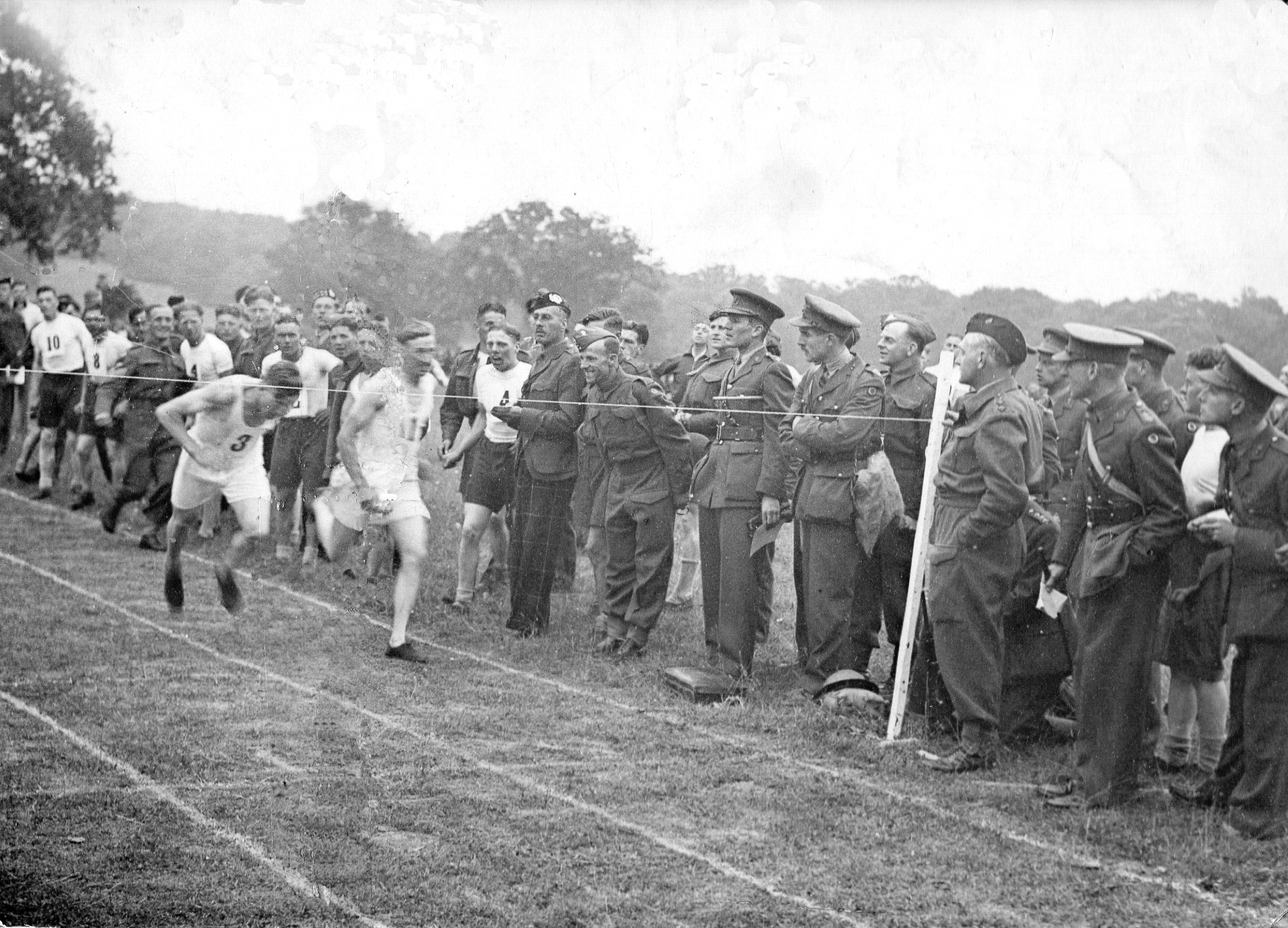
During the last years of the war with the Allied advance well under way in Europe, Allwell represented his battalion with distinction in athletics. There being a keen rivalry between service units, and especially between the British and other Allied Forces, his services as a runner were highly valued; in fact, he was something of a legend within the RSF. His win in the mile flat race in the Infantry Division Army Athletic Championships at Balmoral on 1st August 1945 is particularly noteworthy. 
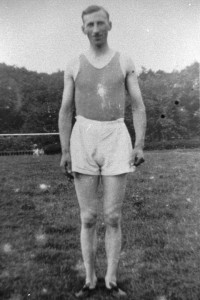
Allwell 1945 After he was

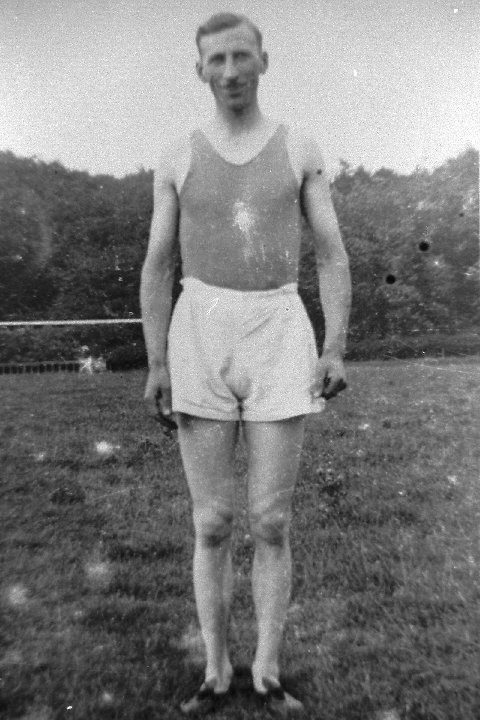
 Peter Allwell photographed in c1945  

After he was demobilised, in 1946, Allwell turned professional. In any case, Ardeer Recreation AC was no more. For the next couple of years, he competed variously as “P.J. Allwell, Ireland” and “P. Allwell, Kilbirnie”. In these times of hardship and austerity any prize money winnings would have been a welcome addition to the family finances. Even though well into his thirties, Allwell showed that he still had a lot of running left in him. Despite starting almost invariably from the scratch mark, he won a string of races, such as the two miles handicap at the 1946 Strathallan Games. Times were seldom kept, let alone reported, for the footraces at professional meetings, which is a shame because he is said to have eclipsed his Scottish amateur two-mile record. This, incidentally, stood until 30th June 1953 when Alex Breckenridge, of Victoria Park A.A.C., lowered it to 9:05.6 at Helenvale Park.

His great rival Bobby Reid settled in Birmingham after the war, where he joined Birchfield Harriers, and competed for Scotland in the International Cross-country Championship for another seven straight seasons between 1946 and 1952.
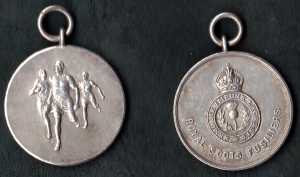
Allwell Army MedalsAllwell’s Army Medals

In 1946 Allwell began training physiotherapy and chiropody in Glasgow and subsequently opened a chiropodist’s salon in Saltcoats, which he ran until the 1960’s when he joined the Health Board and became chief chiropodist in Paisley, retiring in 1978.

Even after his retirement from competitive athletics, Allwell kept up an avid interest in the sport and captained the Boys Brigade in Saltcoats in the late 1950’s and 1960’s, organising races and officiating at B.B. cross-country championships across Scotland until the 1970’s.

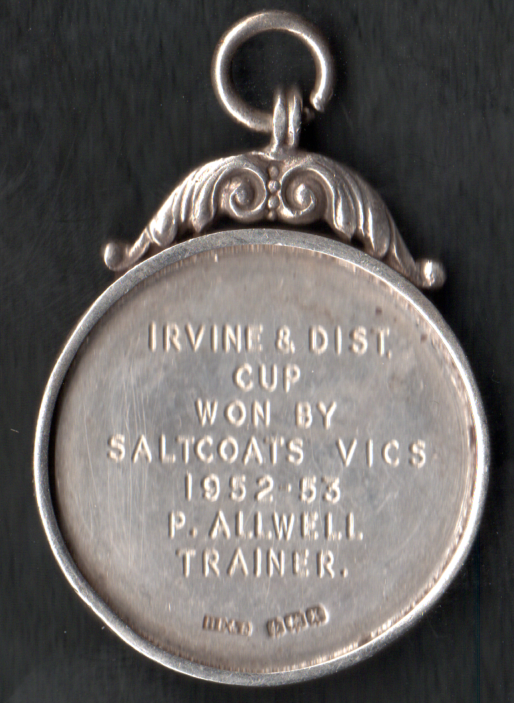
In addition to his involvement in athletics, Allwell lent his expertise as a runner and physio to training Saltcoats Victoria F.C. and Irvine Meadow F.C. during the 1950’s and was instrumental in helping the Saltcoats Vics to lift the Irvine & District Cup in 1953.  
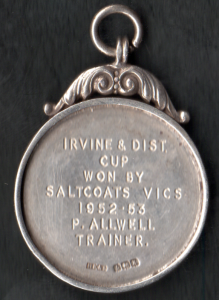
Allwell Saltcoats Vics Allwell was married

Allwell was married to Dorothy Young at Troon in 1941 and the couple had two children. The sporting gene evidently ran in the family for although neither of his children took up athletics seriously, his son was an international sea angler in the 1970’s. A versatile man, Allwell became treasurer of the Saltcoats Sea Angling Association.

Allwell kept his ties with Beith Harriers and often presented the prizes when invited by the club’s Secretary, Jim Swindale. The people of Ayrshire never forgot his services to athletics. In 1990 he was invited to attend the centennial celebration of the Scottish Cross Country Union at Irvine as a guest of honour and, despite his failing health, happily attended just months before he passed away at Saltcoats a couple of months after his 77th birthday. Thus ended an eventful life of a man whose meteoric athletics career marked a still under-documented chapter in the history of the sport. 


Alex acknowledges the assistance given by Kenny Phillips of Beith and Peter Allwell, son of the athlete.
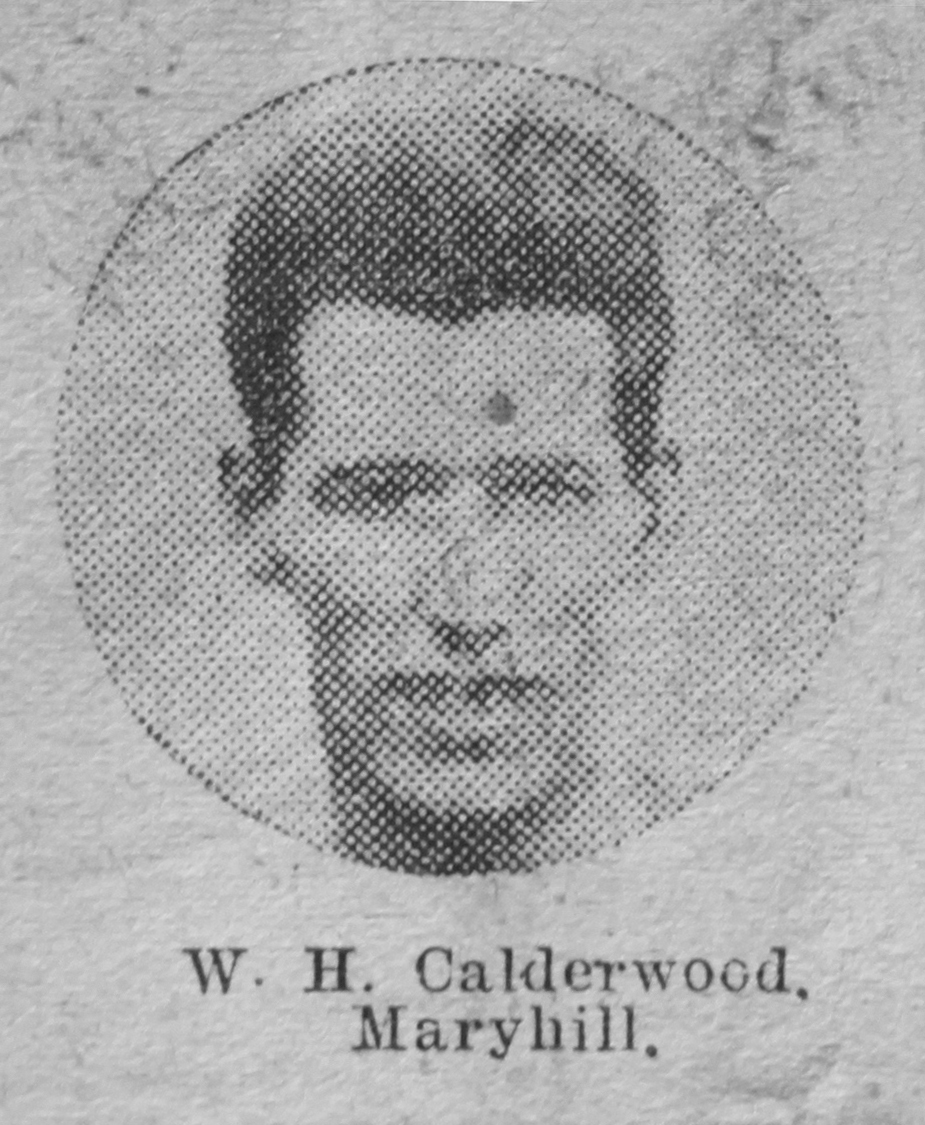
Walter H Calderwood

Walter HC

Walter Calderwood was a Maryhill Harrier whose involvement went from the very early 1920’s right through to the pre-war teams of Emmett Farrell and McNab Robertson.   A whole hearted clubman and always an honest racer, he was an internationalist on track and over the country.

He first came to the notice of the Scottish athletics public as a cross-country runner and we will start with his international debut.

Running in the Scottish Cross-Country Championships at Musselburgh in March 1922 Calderwood did well enough in the Maryhill Harriers team that finished fourth to be selected for the International to be held at Hampden later that month.   The race started at half-time in the Queen’s Park v Celtic FC football match and, possibly as a consequence, 10000 programmes for the race were sold.   Calderwood finished eighteenth in the team that finished third: this was to be the only time in four outings in the International Cross-Country Championship that he was to be a scoring runner.    Finishing as fourth Scot, he was preceded by Wallach (4th), Craig (8th), Wright (10th) and followed by Cuthbert (21st) and Riach (26th).

The following summer, the sport was well supported – eg at the Shettleston Harriers meeting at Celtic Park at the end of May, there were 143 entered for the half-mile, 101 for the three miles, 122 for the 100 yards, 115 for the 220 yards and 75 for the quarter-mile!    Given the handicapping system in operation, it was difficult for runners to make any impression unless they were friendly with the handicapper or of exceptionally good quality.   The coverage in the Glasgow Herald was scanty: there was a weekly column entitled ‘Notes on Sport’ with a sub-heading ‘Cricket and Athletics’.   Cricket took up two thirds of most columns and athletics was always the second sport to be covered.   There was only room for the winners (a state of affairs that obtained for the SAAA Championships) and in most cases only the winners were noted.    This is a roundabout way of saying that Calderwood was not noted in the results at any meeting during the summer of 1922.

In season 1922-23, there was no Maryhill team in the District Championships, but Calderwood ran in the National and ran well.   The report in the Glasgow Herald read: “The race was over a 10 miles course in the policies of Bothwell Castle and there was an entry of 21 teams of 12 runners (6 to count), with 6 aspirants for individual honours.    The field got away to a good start, and early in the race AB Lawrie (Glenpark) went to the front followed by D Wright (Clydesdale) and WH Calderwood (Maryhill).   At the beginning of the second lap the leaders were D Wright, JG McIntyre (Shettleston) and A Craig (Bellahouston)   with W Neilson (West of Scotland), JMcIntyre (Garscube), AB Lawrie and WH Calderwood close up.   When the final lap was entered, Wright had a lead of 50 yards from McIntyre (Shettleston), and Lawrie had moved up to third place.   Wright increased his lead to 100 yards when the final straight was entered, running out a popular winner.”   Calderwood was seventh or eight and was selected for the Scottish team.   The international was held later in March, and Calderwood did not finish the race.

On into the summer of 1923 and the first SAAA Championship medal.    In the SAAA event on 23 June at  Celtic Park  he was 3rd in the 4 Miles.  He had shown some form in the weeks leading up to the event.   In the Queen’s Park FC Sports on 2nd June he led the Maryhill Harriers team to second place in the Two Miles team race.    On 3rd August he ran well at Ibrox in the Rangers Sports in the one-and-a-half-mile invitation handicap where, after Duncan McPhee dropped out of the race, “T Riddell of Glasgow High School almost provided a rich surprise here but the reserve power behind the Maryhill man, WH Calderwood, was too much for this youthful runner.”       It was the best run of the summer for the Maryhill Harrier.

Calderwood is not noted in any of the major championships during winter 1923-24 but he was in serious action the following summer.   On 19 April 1924 at Celtic Park in the SAAA 10 Miles championship, he was  third.   The race was won by JG McIntyre from Dunky Wright by 20 yards and ‘fully 100 yards’ between Wright and Calderwood, who had run at the elbow of the leader for six and a half miles.   At the Shettleston Harriers Sports on 31st May, Calderwood won the Two Miles in  9 min 47 1-5th sec from D McLean (Wellpark).   The Queen’s Park Sports on 7th June held what were grandly called Olympic trials and in that for the 880 yards, Calderwood won by a yard from JD Hope and RB McIntyre.   The SAAA Championships in 1924 were held on 14th June at  Hampden Park where Calderwood, running in the Mile finished third and was a member of the winning relay team.   Two weeks later, 28th June, he won the Mile at the Glasgow Police Sports by one yard from J Mitchell of Mauchline Harriers, having started from a mark of 40 yards against Mitchell’s 48.      He was not recorded as winning anything at the Partick Thistle or any other sports over the following weeks – cricket was the sport which was receiving all the coverage over the sumer season –  pages and pages of it reporting on Scottish and English cricket plus Test Matches while athletics was often reduced to half a column of close print.   Then on 12th July he was noted as being third in the Mile at Lochwinnoch AAA Sports.    One week later after ‘an exciting race’ he dead-heated with RR McIntyre at the West Kilbride AAC Sports over the Mile for the championship of Ayrshire in 4:30 sec.   Glengarnock Works Social Club held their sports on 27th July and although he was probably racing as an individual, he only appeared on the prize-list as a member of Maryhill’s winning one mile relay team.   Thereafter, despite there being several meetings most weekends there is no sign of Calderwood among the prizes – he was maybe handicapped out of it, of course.

March 7th, 1925 saw the National Cross-Country Championships and Calderwood was part of the Maryhill Harriers team that finished third.    Sixth scoring runner for the club he was forty seventh.   Straight into the summer season.    On 6th June at the Queen’s Park Sports he was running in the three miles team race where he finished third individual behind Tom Riddell and D McLean.   20th June at the Glasgow Police Sports, he was in the winning One Mile Relay team and no doubt took part in other events where he was not among the prizes.   Nor did he seem to have competed in the SAAA Championships at the end of the month with his name not being listed among the medallists.   Second in the half mile at Firhill in the Partick Thistle Sports, it was hinted that the handicapper had not been kind to him.   The main talking point at the West Kilbride Sports was the non-appearance of WH Calderwood who had dead-heated the previous year for first place in the Ayrshire Mile Championship.   In fact he does not seem to have picked up prizes anywhere thereafter, not even at the Rangers or Celtic Sports which were held two weeks apart in August.

The winter started with the cross-country relay in November.  Maryhill was unplaced but Calderwood was fifth fastest of the runners taking part.  The National confirmed his fine form when he was fourth, two places ahead of Alex Pirie of South London Harriers.    This gained him selection for the International held in Brussels later in March where he failed to finish.   The track season coming up was to be another good one for Calderwood who would win his first Scottish track championship.     He started championship month by not winning anything in the first three weeks and then on 26 June 1926 in the SAAA championships at Hampden Park he won the Four Miles in 20:31 4-5th   sec from Frank Stevenson and Dunky Wright.   His first championship victory and some very good scalps!   On 10th July in the International against England at Hampden Park, he ran in the Four Miles but was not in the first three finishers.

In winter 1926-27, and Calderwood was one of four runners tied for third fastest time over the course in the District Relay.   In the National at the other end of the season, he was third Maryhill counter when he finished eighth.   The championship month of 1927 his first award was in the Four Miles at the SAAA Championships on 25 June at Hampden Park where he could only finish third.   He was one of four champions to lose his title, “WH Calderwood turned out in the Four Miles, after all, and up to three miles appeared to have as good a chance as J Suttie Smith, the Eastern District champion, and F Stevenson, the ten miles champion.   When the latter pair crowded on the pace there however, the holder gradually fell behind and was well beaten at the finish.”

He was known to finish the season well, and on 2nd July, at Celtic FC Sports there was a special handicap over 880 yards to give D Hope a chance of breaking the record but “Hope ran well and failed by three yards to give WH Calderwood twelve yards.   The winner’s time of 1 min 57 4-5th sec is the same as the Scottish record.”   Three weeks later in the Ayrshire Championships at Rugby Park, Kilmarnock, Calderwood the most exciting race of the afternoon, the half mile, in a slow time of 2:04 after a tussle with J Calder of Beith and P Nicol of Kilmarnock.     At the Rangers FC Sports on 6th August, Calderwood was second to England’s C Ellis in a ‘first class mile’ in which he had been given 40 yards in the handicap.

In cross-country season 1927-28, There was controversy right at the start.   In the District Relays at Shettleston, the scrutineers took exception to the inclusion of one of the runners in the Maryhill Harriers second team; the club retaliated by pulling both teams out of the event.   This meant no race for Dunky Wright, Tom Blakely or WH Calderwood.   They were in better humour by the time of the National, had the teams entered properly and won the title.   Calderwood ran very well indeed and finished third and first counter for the winning Maryhill team.   If we pick up the ‘Glasgow Herald’s’ report at the end of the second of four laps we read, “At the end of the next lap – time 19 min 06 sec – the leading group included Suttie Smith, Calderwood, Stevenson, Henderson, Wright, Wood and Mitchell.   During the next lap, Smith and Stevenson gradually pulled clear of the field.   At seven miles or thereby, both were together, about 40 yards in front of Calderwood.   Several yards behind Calderwood came JF Wood and Cpl Sutherland.   At this time it was evident that the individual race rested with Smith and Stevenson, the Junior championship for Wood or Sutherland and the team race for the holders,  Maryhill Harriers.      Going for the last lap the leaders steadily increased their pace and tenacious as Frankie Stevenson usually is, he had to allow Suttie Smith to go ahead.   ….  Frank Stevenson beat Calderwood (who also ran very well) for second.”    The difference between Suttie Smith and Calderwood was only 26 seconds and between Stevenson and Calderwood 18 seconds.    Behind him came Sutherland, Wright, Tombe, Gunn and Wood – all very good runners indeed.  Later in March 1928  in the International Cross-Country Championships he finished 37th and not a counting runner.

On 2nd  June St Peter’s AC held an inter-club team contest which included six relays!    Maryhill Harriers won four of them.   The events were the 440 yards relay, 880 yards relay, Mile relay, Two Miles relay, Four Miles relay and 440 yards hurdles relay.   Maryhill won the 880 yards, Two Miles and Four Miles relays and also the Three Miles team race.   Calderwood ran in the Two Miles and Four Miles relays and finished fifth in the Three Miles team race.   A strenuous afternoon running for points for the club in the same month as the National Championships.    On 23rd June 1928  in the SAAA Championships at Craiglockhart, he was second in Mile to clubmate D McLean.   Seven days later he ran as a substitute for McLean in a medley relay race against Edinburgh University and was second after his two lap stint, a gap his team mates were unable to claw back.   On 14th July he was back in action at the West Kilbride Sports where he won the Ayrshire Mile Championship in 4:49.8.   At Greenock on 28th July, Calderwood won another open mile quite comfortably.    Then came the Rangers Sports on the first Saturday of August where he was entered in the special three quarter mile race featuring Ray Watson an American middle distance star.   It was said to be the race of the meeting.

“Watson who was on the scratch mark and conceding starts of up to 77 yards, ran so well in the early stages that he was on terms with the field in the final lap and was apparently under the impression that lying behind the leaders he need only make his effort entering the final straight to win easily.   He however was unaware that during the past month WH Calderwood had been specialising in sprinting in the company of C Ellis, the AAA champion, and although the American was out on his own sprinting to the tape, he was unable to resist the overwhelming challenge delivered by the Maryhill man in the last 80 yards and was beaten at the tape by a clear two yards.   Calderwood’s winning time was 3 min 4 2-5th sec from 22 yards and so well was he moving that it is just a pity that he did not run out the full distance, as D McPhee’s Scottish figures of 3 min  12 2-5 sec seemed well within his grasp.   Although defeated Watson had the satisfaction of returning the excellent time of 3 min 4 4-5th sec which is 1 sec faster than the previous British record created by  AG Hill, the double Olympic winner, at Salford in 1921.   Calderwood’s judgment in this race was perfect and it is questionable if he has ever run a better race in his career.   It was refreshing after some of the performances he has given this season.”     Very complimentary even if the final sentence could be rephrased as “And about time too.”    Maybe a wee bit off after the results noted above.

And so the summer season drew to a close and the new competition season of 1928-29 started.   In the Midland District Relay in November 1928, Calderwood had the third fastest time of the afternoon for the Maryhill team that was fourth.   The men in front of him were Girvan (Garscube) and Stevenson (Monkland).   Came the national in 1929 and he was eleventh – not good enough for selection for the international but good enough to be third counter for the Maryhill team that finished first.   Another gold and bronze for his medal cabinet.   This set him up for a good summer to follow and another SAAA gold medal.

In the Queen’s Park FC Sports on 1st June, Calderwood won the first class mile.   At the time it was not uncommon for popular meetings to have two races in well supported events: the mile was one of the more popular and so the runners were seeded and races held for the Mile (first class) and Mile (second class).   Calderwood was invariably in the first class races.   St Peter’s AC Sports were held on 8th June and again there was a series of relay races involving the top clubs.   Maryhill won the Two Miles Relay and the Four Miles Relay with Calderwood in both teams.   His next outing was in the SAAA Championship at Hampden on 22 June where he won the Mile in  4 min 29 4-5th sec.    The report read: “His previous performances this season had shown that Donald McLean had lost much of his form, but it is questionable if at his best he could have given anything to WH Calderwood, the victor in last Saturday’s mile.   Calderwood not only ran with the better judgment but carried the stronger finish and his time, 4 min 29 4-5th sec represented good running.”    Selected for the triangular international in Cork on 13th July,  he was unplaced in the Mile.   On 20th July at the Beith Harriers meeting, he was third in the 880 yards, running off 5 yards, behind Edmiston of Maryhill (58 yards) and Govan of Shettleston  (47 yards).   He finished his season on 24th August in Yorkshire at the Leeds Cross-Country Association Sports where Maryhill Harriers won the team race with Calderwood being fifth and first club runner home.

In November 1929, the club  relay team in the District Championship was fifth and Calderwood was fourth fastest over all when he ran the last stage.   When the National was run at Hamilton in 1930 there was no WH Calderwood.   The ‘Herald’ noted “Many of the competing clubs started with sadly depleted teams because of illness and other causes.   Among the biggest sufferers were the champions who had to start without WH Calderwood and AH Blair.”  

On to the track and on the first Saturday in June, at Tynecastle, Calderwood two miles team race and finished fourth, first for Maryhill.   On 7th June, he ran in the two miles team race where Donald McLean was first, he was third and Tom Blakely was fifth giving victory.   ran in the relay where the team finished second.   The following weekend it was again the inter-club meeting organised by St Peter’s AC, this time at Celtic Park, and there Maryhill again won the Two Miles Relay and Calderwood was in the team.    The report is worth visiting: “The finest race of the afternoon was the Two Miles relay and it was brought about by the fact that Donald McLean and HC Maingay were in opposition over the last half mile of the race.   In the earlier stages of the race it looked as if the Edinburgh team could not be concerned with the finish but CM Wells put in an excellent race in the third section and made up a lot of ground.   In the burst for the handover however he could not hold WH Calderwood and as a result Donald McLean set out on the final half mile with a lead over Maingay of over 30 yards.   The Scottish champion however was not dismayed.   He went after McLean in fine style, caught him in the back straight of the concluding lap and entered the straight a yard or two ahead.   The effort however had taken too much out of him and McLean had something in reserve and Maingay was beaten in the final burst by three yards.   Maingay was timed as doing 57 1-5th for quarter and 1 min 58 1-5th for the full distance. “

In the Glasgow Police Sports the following week, he ran well in the Mile (first class) buit was not involved in the finish of the handicap race although he ran the full distance in 4:25.

In the SAAA championships on 28th  June Calderwood turned out in the Mile and finished third.     The Glasgow Herald reported on the three races in which he took part as follows.   “Tom Riddell’s victory in the Mile was decisive and the form he displayed indicated that despite his comparative inaction during the past two seasons, he is just as good a runner as when he lived amongst us.   He cut out the pace himself from the start, and only on one occasion did Donald McLean get on terms with him.   Riddell did not run in the half mile but we had an inkling of what might have happened had he had, for he met HC Maingay and WH Calderwood in the half mile of the relay, and decisively defeated them both by the same cutting-down tactics.    The victory of Maingay in the half mile was easily gained as, though both WH Calderwood and Donald McLean turned out, they were obviously using it as a pipe-opener for their main event – the mile. ”     WH Calderwood finished behind Riddell and McLean in the Mile.    That and his form throughout the season was good enough to gain selection for the Triangular International with England and Ireland in July when he was third behind C Ellis of England and T Riddell of Scotland.    Between the Championships and the International, he was to run in an invitation half-mile at the Partick Thistle Sports at Firhill where he finished second ‘after his characteristic finishing burst’.  

Calderwood did not appear in any championship in the winter of season 1930-31, but he did run in the Edinburgh to Glasgow Relay held in April.   Running on the first stage, he was second, only 13 seconds behind Clarke of Plebeian Harriers who set a stage record.    However he was active as usual over the summer of 1931.   Glasgow held a Civic Week in the first week of June that year with athletics meetings being spread over six days.    The experiment was not a success – it was maybe too much to hope that athletics fans would turn out on ever day of the week –  but Calderwood ran in the invitation 880 yards where he was beaten for first by five yards, his conqueror being a new young athlete named CW Wells from Edinburgh.   On Saturday 13th June, St Peter’s AC held their inter club contest at Celtic Park once again and this time Maryhill Harriers made a clean sweep of the track races, except for the Junior One Mile team race where they had not entered a team.   In the One Mile team race, those keen rivals WJ Gunn, Donald McLean and WH Calderwood were again arrayed up against each other, and again they served up a thrilling finish.    Gunn once again proved the better tactician and his final effort proved too much for his Maryhill rivals.   The placings between the Maryhill and Plebeian clubs in this race, were very close – 12 to 13 in favour of the reigning champions.”      He also ran in the Two Miles relay which, of course, Maryhill also won.   The following week, at the last meeting before the SAAA Championships, Calderwood ran in the Glasgow Police Sports over the first half mile of the Two Miles Relay Race against James Hood.   Calderwood won that battle with a time ‘2 -5th sec over even time’ .

The Championships were held at Hampden on 27th June and Calderwood’s target was the 880 yards.   Calderwood won his Heat – held in midweek – before the championship proper on Saturday 27th.    There he was second to James Hood of Shettleston and then in the final won bronze behind Hood and Wells in a slow race, won in 2:04.2.   The report in the ‘Herald’ read: “The necessity of having stewards at the bends was emphasised in the half mile final.   From the stands, it was observed that there was much unnecessary jostling taking place and it culminated when JP Laidlaw was brought down.   It was a slow run race this, the slowest in twelve years.   The first quarter was covered in 64 seconds and the whole in 2 min 4 1-5th sec.   But the final, fought out between James Hood of Shettleston and CM Wells was the keenest for a long time.   Wells was in front entering the straight, but after a stirring finish Hood managed to get on terms 20 yards from the tape to win by inches.”   Calderwood also ran for the Maryhill Harriers team in the Relay where they were second behind Shettleston Harriers.   In the Catrine AAC Sports in early August the report tells us that although Calderwood did not shine in the open half-mile (he was unplaced), he was much too good for others in the relay and his club went on to win.     

Summer over,  Calderwood missed the District relays and the National Championship but he was back in action the following summer.   On 4th June he ran in the inter club event at Celtic Park in the team that was second in the Two Miles Relay and also in the one mile team race where h was the winner in 4 min 36 4-5th sec.   One week later and he was competing at Hamilton where (off a mark of 5 yards) he was second to T Rae of Monkland Harriers (running from 65 yards).     The Glasgow Police Sports were held on the 18th June where the finest relay ever seen in Scotland took place.   It was the One Mile relay where Glasgow University defeated Maryhill, the runners on the first stage being Morison for GUAC, Calderwood for Maryhill and Scott for Springburn.   Following this race, the reporter looked forward to the SAAA Championships the following week: “The half-mile is the most open race on the Championship programme.    On his showing in Saturday’s race and his indifferent form during the present season, James Hood the reigning champion is not likely to repeat his victory but JC Scott of Springburn, WH Calderwood and N Morison, if he reproduces the same form, are distinct possibilities.   JC Scott has made a rapid advance during the season.   He ran a very strong race on Saturday, and although beaten by both Calderwood and Morison it must be recollected that earlier in the afternoon he had won the police half-mile in 1 min 59 1-5th sec.    Calderwood finished so strongly, as he always does, that he too must possess a decent chance.”    

In the SAAA Championships on 25th June, the section of the report dealing with the half-mile was headlined “A Thrilling Finish and read “The half-mile was a fast race, and although scarcely as thrilling as the quarter-mile, was always interesting.   The winning time 1 min 58 1-5th has only twice been equalled in the history of this race – once in 1926 and again in 1929 – and the seeker after coincidence will be interested to note that the three victories have been associated with victories by WH Calderwood.   It was in 1926 that he gained his Four Mile medal, and in 1929 when he gained his Mile title.   In the half-mile n Saturday, Calderwood’s stamina and finish were excellent and he owed something to the cutting-down tactics of TJ McAlister.   The Beith Harrier set and maintained a pace that upset the others but suited Calderwood.”    Following the meeting, the SAAA selectors picked the team to compete against Ireland at Powderhall on 16th July.   The men for the 880 were WH Calderwood and JP Laidlaw with TJ McAlister as reserve.

In the International all the races were run on grass and the report said that Calderwood ran very poorly – a comment that no writer nowadays would make and maybe the sport’s the poorer for that!    “He lost yards on the bends and his usual strong finish was not there.   The time 2 min 2 2-5th sec should have been well within his compass.”   Maybe the scribe should have noted his comments that (a) the race was run on grass and not on the cinders that were more common.   He said earlier in the report that “this was said to favour the visitors, and no doubt it did”, and (b) that Calderwood lost yards on the bends and put the two together!   A ‘home’ international using a grass track which favoured the opposition, when there were good tracks in Glasgow and Edinburgh there for the using.

Then on 23rd July he was back on club duty at the Eglinton Harriers meeting at Saltcoats where he ran the first stage for the winning Maryhill team in the One Mile Relay.   In the Rangers Sports on  a wet 6th August the quality of his running in the 1000 yards race was remarked on right at the start of the report.   The actual race report came later and said: It is questionable whether WH Calderwood has ever shown better track sense than he did in the 1000 yards.   He was given the mark of 15 yards, a surprisingly large concession in view of the quaklity of his running over the same distance at Celtic Park early last month, but even without it he would have proved the winner for his finish, excellently timed, was so powerful that it left the others standing.    His time of 2 min 15 2-5th sec was, under the conditions, splendid and it would have been interesting had he run out the full distance.    The two scratch men in the same race, Tom Riddell and Cyril Ellis, disappointed.   Ellis never at any time during the race appeared happy, and the Scottish champion, although at the elbow of the leader at the bell, did not show much judgment.   He covered the first quarter in 55 2-5th sec, the half-mile in 1 min 58 sec, and seemed like getting there but weakened visibly a furlong from home and faded out.”    Calderwood also ran the first stage of the mile relay which Maryhill won.

On 30th July at Sanquhar, running from scratch he was third in the 880 yards to me running from 3 yards and 50 yards and also took part in the mile relay which was again won by Maryhill.

Season 1932-33 began as usual with the relays in November but Calderwood did not appear in any of them, nor did he take part in the National but he was back in harness for the Edinburgh to Glasgow Relay on 8th April where he ran on the third stage where, in running the equal sixth fastest for the leg, he maintained Maryhill in second place, although they were to finish third.     That summer.   On 3rd June he turned out in the Mile relay at the St Peter’s Inter Club meeting which Maryhill won but did not feature in any of the other events.   In the Mile relay at the Glasgow Police Sports two weeks later he was second on the first stage and it was noted that he had yet to find his best form.   And in the SAAA Championships there was no WH Calderwood mentioned at any point in the report or anywhere else in the results.   His next appearance in the results columnbs was not until 29th July when he took part in the Ross County AAC Sports at Dingwallwhere he won the Mile and was second in the 880 yards: this was meeting supported by quite a few of the best from the West of Scotland so the races were not an easy option!   He did not appear in the results of any subsequent meetings that season not the bigger ones such as the Rangers Sports nor in what were previously happy hunting grounds such as Darvel.   There was another Edinburgh to Glasgow Relay on August  26th but it is unclear whether Calderwood ran in the team which finished sixth.

Absent from all the championships over the ’33-’34 winter, we see Calderwood turn out again in the St Peter’s Inter Club Sports on 16th June in the Two Miles Relay.    The Glasgow Herald reported: “Three championship candidates – R Graham, D McLean,  and WH Calderwood –  ran for Maryhill in the relay but their fourth man was scarcely of the same calibre and the result was that Calderwood with the final sector had to put in a good bit of running to defeat N Morison, the old inter-university champion, who is apparently intending to retain his connection with the track although no longer a student. “

 In the SAAA Championships the following week, he appeared in the result for the Mile: the event was won by Tom Riddell from JP Laidlaw and W Strothers with WH Calderwood being listed as an also-ran.    His next competitive outing was on 14th July at the Coylton Sports in Ayrshire where (off 10 yards) he was third in the 880 behind H Malcolm (Kilmarnock – off 40 yards) and Davie Brooke (Garscube – off 44 yards).   Although he did not appearin the prize winners as listed in the Press, Calderwood continued to race ans was a popular athlete.   He turned out at the Cowal Gathering on 21st August 1934.   “It was pleasing to see the success of WH Calderwood, the back marker in the half-mile, for there is no more enthusiastic runner, week in, week out, than the ex-Scottish champion.”   He won from 10 yards from RP Phoenix of Garscube off 46 yards and RV Lyons, South Glasgow off 40.   Back in Ayrshire on 28th July, he was racing at Lugar.   “J Scott is running into form and he won the half-mile in fair time, while WH Calderwood, another winner who is always at his best towards the end of the season, also figured in the prize list at the end of this race.”   That was his last appearance in the prize-list for that season.

Winter 1934-35 started with no Calderwood in either the District nor Edinburgh to Glasgow Relays.   and finished wth no Calderwood in either District or National Championships.     His return to the track however was as part of a One Mile relay team in the Monkland Sports on the last Saturday of May, 1935 which finished second.   He won no prizes in individual events.   His next recorded appearance was at the SAAA Championships on 22nd June when, with Bobby Graham, TJ McAlister and others,  he was an ‘also ran’ in the half mile won by Stothard of Cambridge University in a new all-comers record of 1 min 53 6-10th sec.   On August 12th, they were starting to talk of Calderwood in the past tense.   When looking forward to a possible duel between Tom Riddell and Bobby Graham, they said that it should be the most interesting duel between two Scottish runners since Graham had raced WH Calderwood three years earlier.

Calderwood did not appear in any results as a prize winner in June, July or the start of August in 1936 and given his absence from any Maryhill cross-country team over the previous winter, his career as a top class runner was probably over.   It had been a remarkably interesting one – where most athletes start out with the shorter faster races and gravitate to the longer ones, Calderwood started with a medal in the 10 miles and worked his way down to the 880 yards via the Four Miles and the Mile.    A genuine racer he was involved in many top class races and his record of running in relays over One Mile, Two Miles and Four Miles plus Team Races at One Mile, Two Miles and Three Miles speaks volumes for his enthusiasm and value to his club.   He should be better known.

Eric Fisher

EF TS 76Eric (33) centre stage after the 1976 Tom Scott Road Race

Eric Fisher was born on 31st May 1946 and would become a very good runner indeed, a very good coach and organiser as well as being a key figure on the Edinburgh Boys Brigade scene.   I first met him as a marathon runner in the SAAA Championships at Meadowbank in the early 70’s.   A friendly, unassuming runner who got on with everyone, he turned into an excellent all round distance runner with medals on the road and over the country.    How did he get started in the running business in the first place?

Eric first got into the sport through the Sunday School picnics where all the races were short sprints which he could never win.   He wanted longer distance races as did another youngster by the name of Doug Gillon.   The picnics were all held at Dalkeith Country Park and when such races were introduced they used to beat everybody else, just ran away from them.   He really started in the sport however at the Boys Brigade of which he had been a member since the age of nine, starting as a Lifeboy.   The Leith Battalion had a big field which had been purchased for them by AJ Letham (Captain, 1st Leith Company) and the Battalion Sports were held at Letham Park every year.  

There were only races at 100 and 220 yards at first but by the time he was 14 there was a half mile – he ran in it and won it.   There was a cross-country championship in March but Eric’s Dad, who had been a PTI in the Royal Artillery and ran the mile at such meetings as Cowal and Ibrox, refused to let him run against 18 year olds.   He relented when it was pointed out to him that he was running away from these same 18 year olds in training.   Came the Battalion Cross-Country Championship – Eric was second and selected to run in the Inter-Battalion Cross-Country Championships for Leith Battalion.   The race was held at Port Seton and was won by a big boy from Motherwell called Brown!    Eric was 23rd in the Senior race against older boys.    He represented the Brigade in all sorts of races.   For instance –  

E Fisher (4th Leith Co, BB), aged 18, on Saturday won the annual race to the summit of Arthur’s Seat (800 feet) and back in 19 min 7.5 sec.   Second was A Kennedy (Restalrig YC) and G Jones ((Colinton YC) was third.   The team prize was won by 4th Leith Co, BB

Glasgow Herald, May, 1969

He was however more involved in football playing centre forward for his school.   He was selected for the Leith school team. Peter Cormack (who went on to play for Hibernian FC, Liverpool and Scotland)  was in the team at outside right.  

He never took any notice of athletics until 1966 when he was about 19 years old and Claude Jones of Edinburgh AC who worked in Ferranti’s asked if there were any runners in the factory who were not involved in the sport.   Eric was pointed out to him and he was invited along.   The first night there he was involved in a 2.5 mile race: it was a handicap race but all athletes started at the same time.  He saw one guy he knew and told the handicapper he could beat him.  It turned out that it was Doug Gillon (again) who had been attending Watson’s College and was ranked number 3 in the United Kingdom for the steeplechase in his age group.   Eric kept up with them for about 100 yards, fell away and finished between two and three minutes behind them.   That wasn’t bad for a youngster on his first night though. 

Knowing nothing about training he thought he could get fit for the National the next year after three months of training but Eric soon realised the sport was a wee bit harder than that.   He was coached initially by Claude Jones but was later helped by JT Mitchell, a senior club member who became President of the SCCU.   Mitchell was a janitor at Drylaw Primary School and he had training sessions on a Tuesday night which involved gym work and weight training as well as running.   After that he was motivated by club members such as Jim Alder and being in the team with all the other guys.   He ran on the road, on the track and over the country.   He reckons his best cross-country race was at Drumpellier Park on the first occasion EAC won the team race.   He was hoping to be the sixth counter – in fact he finished 41st and was fifth counter.  Claude and JT told him the win was partly down to him since he had improved so much, finishing 60 places higher than they had estimated he would!  

I always think of Eric principally as a road runner where he was ranked in the annual rankings seven times in 10 years between 1972 and 1981.   His best time was 2:27:03 in 1977 when he was seventh fastest in Scotland.   Remember that we are talking about what was maybe the highest peak ever in the event in this country.   He also won a bronze medal in the SAAA marathon championship in 1978 with a time of 2:28:14.   The race was won by Anglo-Scot Ian Macintosh with Donald Macgregor second.   Eric told Colin Youngson and Fraser Clyne about his run that day for their book “A Hardy Race – The SAAA Championship 1946 – 2000.”   “He remembers that Willie Day, sensing a chance of Commonwealth marathon selection ‘went for it, despite the heat.   On the return journey, an EAC team mate told Eric that Willie was ‘coming back.’   However Eric couldn’t spot his rival on the long road ahead.   Eventually, at Joppa, a distant view was achieved, and Eric succeeded in passing Willie on the big hill up to Jock’s Lodge.   At the top of the rise, Eric finally dared to look back, and was relieved to find himself safe, 150 yards ahead.   Willie writes that he was impressed by Eric’s excellent run’ but does say that his left knee had become painful because the gristle in his new Gola shoes had snapped at the heel and was giving less support.   At the end, Eric followed tradition, unhygienically cooling his blisters in the steeplechase water jump, and sharing his race tales with the other marathon survivors.”

His marathon ranking appearances were 1972  2.48.53  ranked 25; 1975 2.38.41 Ranked 19th;   1976 2.42.34   23th;   1977 2.27.03   15th;  1978 2.28.14  18th;   1979 2.39.30  52th;   1981 2.36.07  61st and in 1978 he was Scottish Marathon Club champion.   The championship was decided over four races – the Clydebank to Helensburgh 20, the Strathallan 20, the SAAA Marathon championship and the Springburn 12.   It came down to the last race where Eric was battling Willie Day and Davie Wyper for the championship.   If Willie Day (FVH) beat Eric, he won the championship; failing that, if Eric beat Davie Wyper by two places, he won.   Willie Day  had problems  with public transport and missed the start and after the race, Eric and Davie (West of Scotland) were tied in points.   There wa only one champion and it was decided on who was first home in the SAAA marathon.   Eric had beaten Davie, so he was the proud holder of Scottish Marathon Club Champion, 1978!

He was inside 2 hours 30 minutes for the distance six times with a fifth place at Rotherham in 1977 where he was first Scot and finished in front of Jim Alder, Cavan Woodward and several other weel kent runners.   There was also another very good run as part of a large group of Scots at Enschede in Holland in 1971.   Abebe Bikila was there in his wheelchair to support his compatriot who was running in the race.

69 marathon start

Start of the 1969 SAAA Marathon from Meadowbank’s incomplete track: Eric is on the left with the hankie round his neck. 

The other measure of distance running talent on the road was the Edinburgh to Glasgow Road Relay.   Eric ran in five relays between 1967 and 1978.   This was the period when Edinburgh AC was seriously involved in Scottish championships on the road and over the country.   It was also the time when many Anglos were brought up from England for the major races, so to ‘make the team’ was no small feat.   How good was Eric?   Well in 1977 he ran on the eighth stage and turned in the second fastest time of the afternoon and the following year he had the third fastest time of the day.   Remarkable running at that point in Scottish road running history.   Of the 1977 race he says that he took over in the lead with Martin Craven breathing down his neck and Stuart Easton of Shettleston not far behind that.   Martin passed him after about a quarter of a mile but he didn’t hear Stuart getting closer until about the last mile.   He realised from the increasingly frantic pleas from the Shettleston supporters to Stuart to keep it going, not to give in, etc that Stuart had possibly started too fast and he determined to do his best to keep him at bay.  His best was not only good enough but actually gave him second quickest time behind Martin.  His only regret on the roads is not getting inside 50 minutes for the Tom Scott 10 miles, 50:11 was his best time there.

He also ran on the track for his club, where he remembers travelling with Bill Walker as part of a team trying to qualify for the BAL.   Bill doubled up the 400m, 400mH, steeplechase and 4 x 400 while Eric doubled up on the steeplechase and 5000m!   Best times on the track: 15:16 for 5000m,   32 min for 10000m.    

Before his racing days were over he started coaching and soon showed him to be a very good coach indeed.   How did he get into that aspect of the sport?

Coaching began like running with the Boys Brigade involvement.   On BB training night they had set training but Eric kept adding bits on until he was doing up to 3.5 miles.   He was then asked to take over the training.   He was by then a Staff Sergeant, aged about 17, and started doing BB training courses.   These courses were organised by Ron Small from Jordanhill College.   He would come to the BB National Training Centre at Larbert  on particular weekends.  The Saturday started at 3:00 pm but since Eric and some others were racing on Saturday they arrived at 5:00 in time for a lecture, there was a meal about 6:00 pm, gymnastics, box work and so on were covered and although the day was scheduled to end at 10:00 Eric and his friends kept it going for quite a while longer.   Then they carried on on the Sunday until about 5:00 pm.   He did this course for three consecutive years. 

He was also helping Claude Jones at the club but what really turned him on to coaching was the Commonwealth Games in 1970.   He worked on the marathon and long road walks.   He did the Assistant Club Coach award and was asked to help Alex Naylor at an Easter Scottish Schools training week.   Also on the course were men like Eddie Taylor, Sandy Robertson, Bill Walker and David Morrison.   He was given various tasks to carry out such as being asked to take the endurance group for a particular type of session and he could arrange the content himself.   At the end of the week, Frank Dick said that they had been testing Eric out, they were all satisfied and he had got his next coaching certificate!    Having trained with John Anderson and worked with Frank Dick, he has great admiration for both of them and thinks that it was a real pity that they never worked together – Frank’s organisational skills linked with John’s motivational gifts would have been pretty well unbeatable.   Frank was the man whom he credits with organising the Edinburgh parents into a very good coaching force.   He asked John for help when he was a runner and when asked what he wanted to do, said that he wanted to win a particular club race.   John replied that that was no good, aim for a Games medal in the steeplechase – if you aim low, you’ll fail.   Aim high.   Eric won his race and a cup.   

After the Games in 1970, Meadowbank was swamped with new young aspiring athletes while runners like Adrian Weatherhead were trying to get some training done.  So he and Bill Walker took a hand and Eric was working with the younger ones before passing them on to Bill Walker at 13 or 14.   One of the youngsters he was working with at that point was Paul Forbes and tells of the time when Paul as an under 13 Junior Boy won his first cross-country championship in the East District event at Grangemouth.   Paul crossed the line and kept running back to Eric and shouted “We’ve done it, we’ve done it!”  

He also coached Yvonne Murray to World Cross-Country Championships for Scotland, and then she went to the Brisbane Games.  It was after that when point Bill Gentleman, who was one of her school teachers, decided to take over since he could train her during the day at school.  Eric currently has a good group including Lauren Stoddart, Emily Strathdee, Joe Arthur (fourth in the Scottish Cross-Country Championship and Scottish Schools Champion Alex Carcus.   

Tributes about his work that have appeared in the public domain come from Jake Wightman, Brian Aitken and Martin Ferguson.   Currently listed on his club website as a middle distance coach, he is also noted as being a coach for Cross-Country, Road Running and steeplechase.   In a recent interview in Athletics Weekly in the ‘How They Train’ series, Jake Wightman says that over the years he’s been grateful to Eric Fisher and John Lees at Edinburgh.

Young Brian Aitken became involved in running via the Boys Brigade and took part in a race against Leith BB at Riccarton and says –

After the race, Edinburgh AC coach Eric Fisher invited me to come along  to Meadowbank to train. I never took him up on the offer for a number of months, too busy playing with my pals and trying other sports. My running journey was, however, about to become more time consuming and serious.


Eric Fisher’s training was tough but fun. The up-and-down the clock circuit in the underbelly of the main stand at Meadowbank in the winter months was painful as much as it was beneficial. The Monday evening was concluded with hurdles, a form of low level plyometric drills, mixed with sprints afterwards gradually developed strength, cardiovascular and muscle endurance. It was then out on the roads for a lap or two of the Meadowbank perimeter with a few nasty hills. I did not know why I was doing the sessions but  it was doing me good. Even though at times, I felt like a boxer in the last round of the thriller in Manilla. Often the intrepid training group would trot to Lochend park and with nearby road lights acting as floodlights to pierce the winter darkness we would do countless hills reps; the running style and muscles becoming more honed and toned.

The Thursday sessions include 12 slow fast 200  metres progressing to 20 as the winter months went by. Another session was a hill loop at the back then a jog to do a 300 m on the track. Eight or twelve of these had one concentrating on good technique to conserve energy and complete the session. The noise of the of the metal spikes striking  the road at transition from hill to track a welcome break from the concentrated effort of a most demanding  cold, dark evening session. Often the sweat could be seen evaporating and swirling off and above the working runners as they came together during the jog recovery. There was also the odd bit of banter to maintain moral and disguise the pain.

 Sometimes in the depth of winter the track would be iced up and the stride would have to be shortened coming off the final bend as you felt your heel skid on the unwelcome surface.


Spring was speed endurance time.- 2-3 sets 4 x 200m with 30 seconds recovery at 800m racing speed or up and down  the clock from 150 to 200 and back in 5 metre increments.. Then it was pure speed. 3 x 300m with 10 min recovery or 8 x 150m with a jog back recovery.

 A favourite tactical improvement session of Erics’ was when everyone in the training group was given a secret number. A number was called then from 400m to 150m to go the group would jog until the number called decided to put the throttle down. Cat and mouse would take place until someone kicked for home either from the front, middle or the back of the pack. The real speed merchants would wait until 160m and then put the foot to the pedal while the slower guys would wind it up from 350m. Eric always insisted that speed was king and should never be neglected at the expense of endurance, the simple reasoning that endurance could be developed at a later in life more easily than speed once it was lost.”

Martin Ferguson a great club runner over all distance races for many years was also influenced by Eric:   “On Saturday 6th February 2010 I fortunately won my first Scottish title after 30 years of trying!   But first let’s go back to 1980 when l was 15 and a first year youth.   I got knocked out of the 1500m heats and my coach at the time Eric Fisher (yes the same one) asked me why l had not entered the 2000m steeplechase.  I managed to finish 3rd in the young athlete’s final in 1979  when l was a second year Senior boy but being a first year youth  the following year l had not ran a chase  as there were two better runners who were second year youths, John Blair and Nikki Robertson. The Steeplechase is all about confidence as l had not ran one that year l felt it was too big a step running the Scottish final, Eric understood.”

Eric has also worked on the club committee, where he did a lot of work organising the Edinburgh to North Berwick for several years, but his big involvement in administration has been with the Forth Valley Athletic League.   He has been treasurer for the past five years. 

The one aspect that he has not tackled is that of qualifying as a technical official of any sort – which of course doesn’t mean he hasn’t worked in such a capacity at meetings.  

A high quality athlete who is now serving his club as a coach and serving on an area  league committee plus his work with the Boys Brigade, Eric Fisher is about the best role model for a club athlete as you can find and his club and athletes are lucky to have him.    Catherine, Eric’s wife of 40 years, has given her support: travelling in various cars along the route of the Edinburgh to Glasgow relay race, at water-stations on the North Berwick road race and races in Scotland and England.   Now with coaching and admin, she describes herself as ‘an athletics widow’ – a description that could apply to the wives of many athletes.  

Dumgoyne

DumgoyneDumgoyne

When I lived in Killearn, Dumgoyne was part of a favourite walk and the race was always a good event to watch!   The hill is only 1402 feet high but the position on the edge of the Campsies makes it look a bit higher.   The following account of the race is by Manny Gorman.

Dumgoyne Hill Race – Record up & down 22minutes & 8 seconds, Jack Maitland, 1988

I have a list of six of what I would class as the quintessential “classic” current Scottish hill races; if the Dumgoyne race was still running, it would be seven, sitting very near the top of the pile.

If you like your running fast, technical and brutal, then this was the one.

The slevering, colourful melee up and down this famous prominent 1,400ft volcanic plug at the south end of the Campsie Hills was held in trust by the best small-to-medium sized running club in the west-end of Glasgow, the mighty Westerlands CCC; but sadly only lasted ten years before the landowner withdrew permission. However, in that short time the race carved out a notch in the hard history of Scottish hill running, never to be forgotten and to be remembered by those who ran it with reverence, and a cold sweat trickling down the back of the neck.

A shotgun start at the bottom of the narrow farm track would send off an apprehensive pack immediately into a stupid-fast uphill lunge, and within 200m muscles and lungs would be suffering from painful oxygen debt. The track winds its way up through a beautiful broadleaf wood before the runners would burst into the open field and cross the Water Board track which serves the Loch Katrine pipeline. The pack would have already splintered well apart as the hopefuls and the chancers separated into reality.
As a variation on a theme, the tenth and final running of the race was given distinction as a British counter in the Fell Runners Championship, and with such a huge field of runners there was necessity to add an additional small loop in order to allow the pack to split up more substantially before getting onto the hill proper. This entailed the break-out from the woods first being directed back down the grassy field to the bottom, before turning to regain all the precious lost height!

The destination was the same. The runners would find themselves climbing, leaping or falling over the twin fences at the slippy wee burn crossing, then turning to face a virtual cliff of grass and rock. With lungs already burning, any further hope of a running ascent could be abandoned by all but the best of the elite as the gradient steepened. Head down, hands pushing hard on knees or thighs, trying desperately to find sustainable rhythm, each step forward and up more painful than the last. Reaching the bottom of the rocky scree a yell from above to warn of a dislodged rock bouncing downhill, and perhaps sussing out your peers, wondering if any uphill overtaking would be advantageous or simply make you blow-up completely? Conveniently you convince yourself that you will get them on the descent instead!
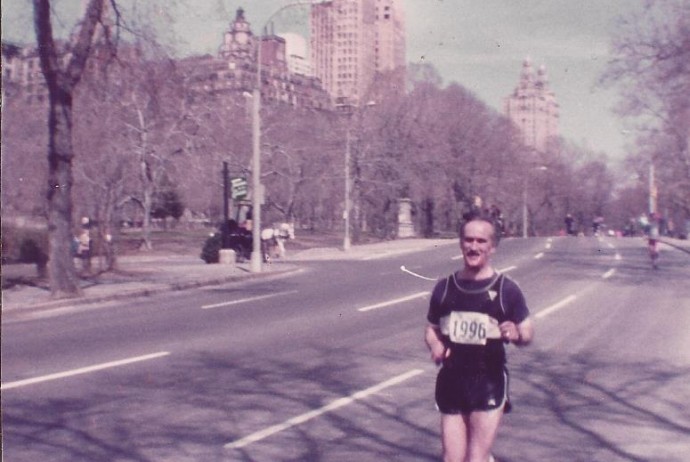
Now above the scree and near the top of the steepest grass, in a notch between the crags, the first leading runners come literally flying down towards you with almost total abandon for their personal safety. Arms flailing for balance, rocks kicking up, grunting, slevers flying in all directions, eyes wide but supremely focussed downwards. But not for you, not yet; still the infinite climb goes on before a series of small ledges gives hope of the end. You try to run again but only manage go at the same speed as the guy in front who’s still walking. A shout from above – the top!!

The view from the summit of this wee hill is brilliant – the Blane Valley, Loch Lomond, the Munros to the north, and of course Glasgow laid out to the south. But there absolutely no hope of seeing it in the race as you simply stare for your next foothold or at the runner in front, looking for any weakness. Turn at the summit marshal, the pain eases, ahhh, different muscles, beautiful relief….for about 5 seconds. Suddenly the reversed route requires your complete attention. Speed is quickly up to maximum on the grassy summit ridge, trying to trim the corners and bends off the path ascent route, dodging ascending runners with their heads still down.  The grassy notch above the scree at high speed is not for the faint hearted. The up-hillers are hogging the path so you are forced out onto the tussocky stuff whilst maybe fighting off some cheeky bugger trying to pass you. Crossing the traverse path you find your quads are smoking, and knees crumbling but you’re trying desperately not to hold back with the stepped erosion luring you in and forcing you into an unnatural rhythm.

The scree arrives. With a tricky entry point it’s only a short fast run for the brave, but fast could gain you a place, or lose you several if you fall on your arse and shred it to raw bleeding beef. You take the gamble and leap into the loose stones only a single step behind the guy in front, and pass him at high speed knowing the horrendously rocky exist is approaching too fast! You re-adjust and hear the guy behind cursing his inferior descending skills and sends a shower of stones rattling painfully around your ankles! You leap out of the rocks and stride off again on the grass, but now nearly back at the twin fences you start to think about holding your place and perhaps reeling in another victim? Avoiding any high speed slithers in the final boggy grass, the fences and burn are crossed and everything you have left, which isn’t much, is thrown into blasting back across the field and plunging back into the dense woods. Here local knowledge applies. To know the corner-cuts through the trees is to know you will gain places over anyone new to the race. Reckless descending with branches whipping your faces and eyes peering for a million deadly tree roots you survive, unsure if you have gained anything, certainly not composure. The final section of track is meant to be fast, but you’re hurting all over and yet you know what is still come – the sting.

At the final corner a marshal suddenly points you off the track and headlong towards a fence…instant decision – stop and climb or hope you have momentum enough to hurdle it??! There’s heavy breathing close behind, hurdle it – aaaargh! Woosh, amazingly you’re safely over and into a wall of trees and bushes when suddenly you plummet downwards, feet gripping nothing on an impossibly steep banking, far too fast to be safe, “MIND THE WALL!” a voice cries…Christ! A three foot drop instantly exits you from the bushes and into the grounds of heaven, the Glengoyne Distillery!!  A loud crashing noise from the jungle behind warns you, don’t stop, a fifty yard sprint along the footpath to the line and then you can collapse in a heap of pain, snot and slevers on the grassy verge, and it’s all over!

With bodies fast piling up at the finish line like a scene from Armageddon, a wonderful hallucinogenic aroma wafts across your salt encrusted dripping face. You recover enough to stand again and instinctively follow the smell to the barbeque stand where free burgers and 12 year old Glengoyne malt whisky are handed to you, although you need to wait for your adrenaline to calm down before you can safely consume it. Runners are still gasping across the line and you are now on your third dram. The noise of races being relived, the sun beating down, the stream supplying the distillery gurgling past, the smells, the craic.

Although the hill is still well used by runners for short training trots, or perhaps going further afield to Earls Seat or Slackdhu, nothing can ever come close to the unique experience that was the Dumgoyne Hill Race.

Dumgoyne Stone

Carnethy Five Hills

Carnethy Michael

The popular Carnethy Five Hills race has its origins in 1971 when it was won by Jim Alder who had the previous year been silver medallist in the Commonwealth Games marathon and Ian McCafferty who had been second in the Games 5000m, with the resut a tie.    It is currently described in the Scottish Hill Racing website (www.scottishhillracing.co.uk )

“Although a relatively short race, the route can be exposed to full winter conditions. 
Breaking the hour is the target for stronger runners in the field.

The route divides into 2 sections:

Start to the Howe
The startline is something to behold. 500 runners like extras from Braveheart lined up for battle, fittingly at the site of The Battle of Roslin. The race starts with a chaotic charge across flat marshland for the gateway to the hill. Then steep climbing up Scald Law in a heather trod where passing is awkward. Once at the summit of Scald Law you are exposed to any freezing cold northerly winds for the ridge run to South Black and the Kips. From the top of West Kip drop rapidly to pick up the trail and fast running down to the Howe.

The Howe to the Finish
Once down at the Howe the climb back up looks a little daunting. Gradual climbing leads into a sheltered gully which steepens until it spits you out onto the ridge where you can see there is fair bit more climbing to reach the summit of Carnethy. Once around the huge summit cairn drop sharply onto a spur, then steeply down rough heather with buckling legs, through the gate, then gather all remaining strength for the dash back across the marsh to the finishing mound.”

Carnethy Hill Race, 1985..

How short is ‘relatively short?   Well, they say it is 9.1 km, and Gifford Kerr’s excellent guide of 1988 says it is 6 miles.   So, say 6-ish.   The climb is listed as 750m on the SHR website and 2500 feet in Kerr.   The current best times for men and women are both quite long standing: the men’s was run by Gavin Bland in 1999 and is 46:56 with Angela Mdge holding the women’s record of 54:20 set in 2002.

Chris Upson’s diagram of the trail is below

Carnethy

Despite the two ‘big track names’ at the front in the inaugural race it has resisted the attentions of road and cross-country champions and become a genuine specialists race.   many such as Alistair Blamire (winner in 1975) and Colin Youngson have run it, few have returned and even fewer have picked up an individual award.

There were only 75 finishers, all Senior Men, in that first year; last year, 2013, there were 530 finishers including Juniors and Seniors of both genders and all ages down to veteran categories for men over 70 and women over 60.    The race is now famous for its mass start.

In 1987 the race organisers produced their first professional programme and were inspired by the reaction to it to provide some background information in the superb 1988 programme.  This ran to 28 pages plus a stiff card cover and I will reproduce some of the content here.

The original idea for a hill race in the Pentlands came from Jimmy Jardine (at that time in 1970 a member of the Octavians AC)  .   He was then travelling all over the country competing in both hill and fell events and it was always in his thoughts that there ought to be some form of hill race close to where he resided in Penicuik.   In September 1970 he wrote to Angus Tait, then the area youth and community service officer, requesting his assistance with regard to contacts, etc.   Angus Tait responded by contacting the local Penicuik and District Community Association whop agreed to take on a hill race as part of their programme of yearly events.   It was also agreed that, to add a bit of interest to the event, it should be as Jimmy Jardine originally wished, run to commemorate the Battle of Rosllin which was fought out in this area in 1302-1303. 

After meetings between Jimmy Jardine, Angus Tait and representatives from Penicuik and District Community Association it was decided to organise the first event for 27th February 1971.   The two joint conveners being William B Scott and Geoff Brooks, with Jimmy Jardine as Technical Adviser.   The 1971 event attracted competitors from the English fells as well as Scottish runners who already competed at other events this side of the border.   As you see from our list of previous winners, Jim Alder and Ian McCafferty were joint winners of the inaugural race and the field included many well known fell and hill runners, notably Dave Cannon, Jeff Norman, Trevor Proctor, N Carrington, Jim Smith, Peter Duffy, DG Weir, Bobby Shields, Martin Craven, MP Nicholson, Robin Morris, Willie Russsell, Mike Davies, Bill Gauld, Brian Covell, Jimmy Jardine, Brian Findlayson and many others.”

  That covers the origins of the race and the programme continued with the history of the race until that date.

“The 1971 race took in only Carnethy Hill, with the start being within the local public park.   A distance of ten miles, competitors ran through a housing estate and a farm before reaching the high road and the approaches to the hills.   After the problems of 1980, when the police asked us to stop the race owing to the very severe fog covering the road in the vicinity of the lay-by, it was decided to alter the course for the 1981 event, making it shorter but covering five hills in the Pentland range.   This has proved to be a very popular change as entries have risen steadily each year since then, and we now believe that we have the correct format for the race. ”  

  There follows a fairly detailed story of the Battle of Roslin as told by Jimmy Jardine as well as the list of entries from John Blair Fish as number one to Robert Winters at 502.   There is of course a map of the trail but the list of trophies on offer is lengthy – no fewer than 28 – along with notes of other awards on offer.   It’s a quite remarkable document.

Most race websites only give race results over the past five or six years, if you are lucky they go back to 2000; some races give the list of winners since the race’s inception but the Carnethy Five Hill website gives full results for every year since 1971.

A good race, justly popular, well organised – what more could anyone want?   Maybe the weather – Steve Fallon’s Classic Hill Races book says “A tough and popular race early in the hill running calendar.  Exposure to harsh weather conditions , steep climbs and sharp descents are a true test of whether the runner’s winter training has paid off.”   Well, it is run in February and we are living in Scotland.   Harsh though the weather conditions may be, who’s to say the weather will be any better at ANY other time of the year?

RL McSwein

Bob and Ian

RL (Bob) McSwein, left, as we normally see him these days, with Ian Clifton, right.

RL McSwein (born on 6th March, 1935 and better known as Bob) has been involved in Scottish Athletics for over 50 years. He is one of the best liked, most respected and level headed officials and administrators of the very top flight.   His father Duncan was heavily involved in the sport and was treasurer of the SCCU from 1948 to 1972, and his brother, also Duncan, was President of the SCCU and of the Scottish Schools Athletic Association.    Bob is also that rare bird – an athletics official who is a runner in the truest sense of the word.

He joined his local club, Greenock Wellpark Harriers in 1947 at the age of 12 but in those days there was no competition allowed until the age of 15.   Frustrated, he had to wait the three years before he could take part in events outside his own club.  On reflection he now feels that it is no bad thing for young athletes to wait a few years before getting into the demands of racing.    Unlike many who were more gifted, Bob just kept on running while he was developing his career in administration and officiating.   In the 1970’s when the ‘running boom’ was taking off, many of the top men in the sport were saying that running was good for your health and should be taken up by everybody who cared about their own well being.   One even came out and said on TV that all you needed were a pair of shorts, a vest and a pair of running shoes and Bob, as they say, was your uncle.   Very few in positions of power actually took their own advice.    Bob had in fact never stopped so he didn’t have to start again.   Not international class at any time but a man who runs because he likes it and loves the sport.   The first record I have for him in a championship is in 1954 and he was still running in 2011 – 57 years later.   In his early days he says that he raced in Dunlop Green Flash tennis shoes and had the temerity to ask the local cobbler to add a sliver of leather under the heels.   He ran in three Glasgow Marathons – 1982, 1983 and 1984 – with a personal best of 3:22 at the age of 48 in 1983: he says he was up at 50 or 60 miles a week at that time.    He was still running in 2011 when a bad road accident (not his fault) broke his neck in two places.    He is now fully recovered from that and plays golf about three times a week but has had to stop running.   Like all runners he has kept a training diary and if you do your adding up properly, you will see that his lifetime mileage is over 48,000 miles.

RLMcS NS Mile 61Bob winning a mile race in 1961 when on National Service

Bob is an Honorary Life member of Scottish Athletics for all that he has done in and for the sport.   If we look at the 1995 – 96 SAF Handbook we see a list of the various posts that he has held.   It tells us that he was at that time  Convener Road Running and Cross-Country Commission;   Road Running and Cross-Country Representative to SAF; delegate to UK Cross Country Commission.    If we delve a wee bit further and check on past holders of the principal offices of the Scottish Cross-Country Union, we find that he was Treasurer from 1972 -93, succeeding his father Duncan who had held the same position from 1946 to 1972.   In other words, the post had been held by the same family, father and son, for a total of 47 years.

Although he liked running, he seemed to decide early on that he could best contribute by becoming an administrator and official and contributing to the sport in that way.  Starting as secretary of Greenock Wellpark Harriers from 1958 to 1963, on moving to Nethervale Avenue on the south side of Glasgow he joined up with Paisley Harriers and immediately was voted into office as secretary of the club, a post he held from 1963 to 1969.   Elected to the post of secretary/treasurer for the South Western District in succession to George Pickering  in 1962 he held this until 1969, combining it with the same roles for the Renfrewshire AAA’s from 1965.

RLMcS Glasgow 1982Glasgow Marathon 1982

 Bob was by now on the SAAA General Committee (elected in 1965) and for a while, four threads – Club, County, District and National – were running in parallel.  Staying on the SAAA  until 1977, he was Honorary President in season 1975-76.    Like all Presidents he was SAAA representative to the British Amateur Athletic Board for three years along with Ewan Murray, SAAA Secretary, and George Donald, SAAA Treasurer.

 In  track and field athletics, two of the high spots had to be when he was a track umpire at the 1970 Commonwealth Games in Edinburgh and marathon referee at the 1986 Games.  He did his share of work with SAAA track & field teams as wellbut it should not be forgotten in this litany of posts held and honours gained that he only operated at the ‘top’ end of the sport.    He was to be seen at many events at local and national level too.   One of his experiences of travelling with Scottish Track and Field teams was the trip to Iceland in the mid 80’s with George Donald.   When they arrived, it was made clear to them that they were expected to sleep on pallets on the floor of a gymnasium.   George and Bob made it clear to the Icelandic authorities that unless there was alternative accommodation provided then the Scottish team would not compete – at that point they were found rooms in the College of Agriculture!   The match went ahead fairly successfuly.

RLMcS Iceland 75

Iceland, 1975.   Bob, left, George Donald, Treasurer of the SAAA, right with the President of the Icelandic Association

Bob worked on the National Committees of both track (SAAA) and Cross-Country (SCCU) disciplines simultaneously.   By 1971 he was well enough known to be elected to President of the SCCU and the following year, 1972/73, he took  over the treasurer’s seat from his father, Duncan, who had been treasurer from 1948 to 1972.  The handover made the headlines in the ‘Glasgow Herald’ of 30th April 1973: McSwein Hands Over To His Son. ‘   He held that post until the formation of the SAF in 1993.    With the formation of that body, Bob ensured a smooth transition by acting as the Commission Convener for 4 years.    Scotland was represented in the international cross-country championships until combined with a GB team in 1967, and Bob served as part of  the SCCU administration at world cross-country championships from 1971 to 1987.     It was a period when the Scottish cross-country running was at heights unreached since the 1930’s and Bob managed many teams to events abroad and within the British Isles.   He also worked with British squads and teams during this period.

As Treasurer of the S.C.C.U., Bob was heavily involved in the staging of the World Cross Country Championships at Bellahouston Park in Glasgow (1978) and held the post of Financial Director.    Thirty years later when the World Championships were next held in Scotland (Edinburgh 2008) Bob acted as Chief Judge.    During the intervening years, and to this day, Bob was and is very active as an official.

At that time Scottish teams were very popular in Europe  and in addition to World Championships, three and four man teams were invited to prestigious local races in Elgoibar, San Sebastian, Madrid and so on.   He recounts the story of the World Championships in San Sebastian when Jim Brown, after winning bronze and silver in the two previous years, finally won gold.   Later that night when they went to the banquet Jim announced that he had lost the gold medal.   No joking, he had lost the medal.   They all went back the way they had come searching for the medal which was finally found in the gutter at the side of a road!    The quality of the teams was very high – witness the Junior team that he travelled with to Madrid – Ron MaDonald who won, Jim Brown who was second and Frank Clement who was twelfth after leading the first of three laps.  The result was a team victory – a rare occurrence on European soil.  He twice went to Elgoibar with Lachie Stewart who was, he says, better known in Spain than he was in Glasgow.   He also adds that Lachie never asked for expenses on tha grounds that if ‘they’ (the SCCU) were good enough to take him to a big race abroad, he wasn’t going to ask for the local expenses.   Expenses requested are another thing altogether – there was one international athletes who included on his claim form ‘two sticky buns’).

RLMcS NYRRC Central Park 841984, NY RRC 10K race in Central  Park

When the SCCU gave way to the SAF in 1993, Bob was elected as first convenor of the Cross-Country and Road Running Commission.   He is still officiating at cross-country events – last seen at the Scottish Cross-Country Championships at Falkirk in 2014 at age 79 – and is hoping for many more.

Such a career, with so many tasks performed so well over such a long period, has inevitably seen his the quality of his work recognised.   These honours include

* receiving the first ever award for  Services to Sport from the Sports Council in 1990;

*Lifetime Achievement Award by Scottish Athletics in 2012 (jointly with Ian Clifton).

Bob has also been secretary of the George Dallas Trust since 1997.  The trust had been set up in 1982 and its function is described in its own literature as follows:

The Trust annually awards the George Dallas memorial Trophy to the person or persons who in the judgement of the Trustees, have achieved distinction in, or made a material contribution to, cross country, road running, track and field or hill running in Scotland in the preceding calendar year, whether they be athletes, administrators, coaches or otherwise involved in the sport. Previous recipients of the awards include Allan Wells, Yvonne Murray, Liz McColgan, Tom McKean, Tommy Boyle. scottishathletics remains extremely grateful to the George Dallas Memorial Trust for its continued support of Coach Education in Scotland, and  for their support of the Coaches Conference in particular.

A married man with two children and five grandchildren (one is a member of Kilbarchan AAC), Bob plays golf three times a week when the Scottish weather is kind enough.   He is of course still to be found at road and cross-country races at all levels around Scotland.

RLMcS Glasgow M 83Bob, 1442, in Glasgow Marathon in 1983